Source Outdoor Alloy Baby Swing for playgrounds, schools, and parks
Compare 30 listings for the Outdoor Alloy Baby Swing suitable for playgrounds, schools, and parks. Buyers can evaluate specifications, materials, and pricing to find the right equipment for family or commercial use.
Key considerations
Products List
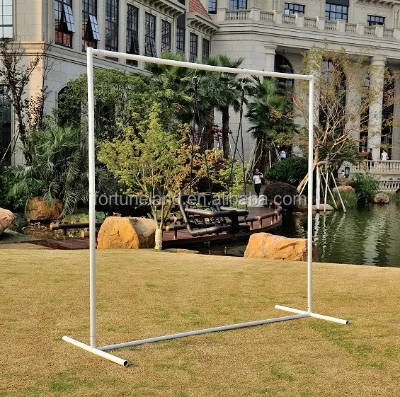


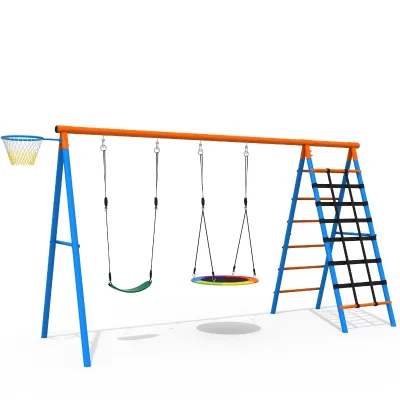
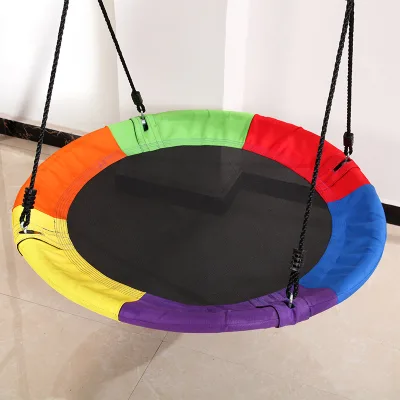
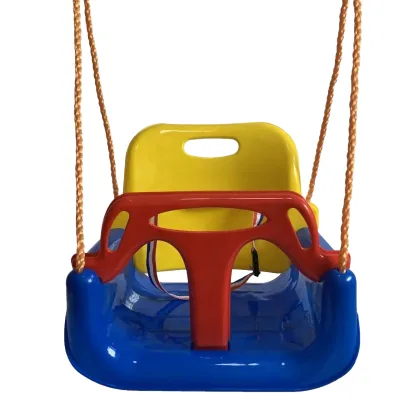


Outdoor Courtyard Playground Baby Green High Back Bucket Full Seat Swing
$14.50 - $16.00
MOQ: 72 Pieces

Outdoor Garden Courtyard Playground Baby Green High Back Full Seat Swing
$14.50 - $16.00
MOQ: 72 Pieces


Comprehensive Sourcing Guide
Strategic Sourcing Guide for Outdoor Alloy Baby Swings
Understanding Product Specifications and Material Composition
When sourcing outdoor alloy baby swings, the primary objective is to identify equipment that balances durability with safety for young children. The core material composition for these units often involves metal alloys, which provide the necessary structural integrity to withstand dynamic loads while resisting corrosion in outdoor environments. In the context of current market offerings, the material is explicitly identified as metal, serving as the foundational component for the swing frame and chain mechanisms. This metal construction is critical for supporting the "With Chains" configuration, a standard design feature for this category of playground equipment.
The physical dimensions of the swing set vary significantly based on the specific model and intended application. Buyers must scrutinize the product standards provided by suppliers, as these define the exact footprint and clearance requirements. For instance, specific models have been observed with dimensions such as 36x42x37cm for the main body, while others may feature a rope specification of PE10mm2.5m. Larger commercial units might adhere to standards like a height of 200cm with a length ranging from 98cm to 29cm, or a swing body dimension of 2000103*45m. It is essential to note that "Optional" is also listed as a standard for certain specifications, indicating that dimensions may be customizable to fit specific site layouts.
Color options are another critical specification variable. While some listings indicate a standard "black" finish, others offer a broader palette including "Yellow," "Red," "Blue," and "Green." Some suppliers provide colors "as The Picture" or "as Per Picture," which implies that the final aesthetic is subject to the specific inventory or customization agreement. For a baby swing, the color choice is not merely aesthetic; it often relates to visibility and safety signaling in a playground environment. The presence of "Rope: PE10mm" suggests that synthetic ropes are integrated into the design, likely for the seating or suspension mechanism, offering a softer alternative to metal chains for the child's contact points.
Compliance and Certification Verification
Safety compliance is the most non-negotiable aspect of sourcing outdoor playground equipment, particularly for the "Kids Outdoor Playground" application. The target demographic for these swings is typically children aged 3-12 years, a range that demands rigorous adherence to international safety standards. When evaluating potential suppliers, buyers must verify the presence of specific certifications that validate the product's safety and quality.
The market data indicates that compliant products often carry a suite of certifications including CE, GS, EN71, ASTM F963, ASTM F1148, and CPSIA. These standards cover various aspects of safety, from mechanical hazards to chemical content. The CE mark indicates conformity with health, safety, and environmental protection standards for products sold within the European Economic Area. GS (Geprüfte Sicherheit) is a German safety certification that is highly respected globally. EN71 is the European standard for toy safety, which is directly relevant to playground equipment intended for children. ASTM F963 and ASTM F1148 are American standards; F963 covers toy safety, while F1148 specifically addresses the safety of public playground equipment. CPSIA (Consumer Product Safety Improvement Act) is a United States law that sets strict limits on lead and phthalates in children's products.
Additionally, some listings mention TUV and ISO certifications. While ISO9001 is a general quality management standard often cited in the background, it is distinct from product-specific safety certifications. Buyers should ensure that the supplier provides valid, current certificates for the specific models being purchased, rather than relying on general company claims. The "Allowable Passenger" section often references these certifications, implying that the equipment is designed to support a specific number of users safely. It is crucial to verify that the "Certification" field on the product listing matches the regulatory requirements of the destination market. For example, a product intended for the US market must strictly adhere to ASTM and CPSIA standards, while European markets require CE and EN71 compliance.
Cost Drivers and Pricing Dynamics
The pricing for outdoor alloy baby swings is influenced by a complex interplay of factors, including material costs, customization levels, and order volume. The observed price range in the market spans from approximately $1.08 to $1,438.46 USD. This wide variance is not indicative of a single product type but rather reflects the diversity of the catalog, ranging from simple swing components to complete, large-scale playground structures.
The Minimum Order Quantity (MOQ) is a significant driver of unit cost. Listings show MOQs ranging from 1 to 500 units. A lower MOQ, such as 100 or even a single item, typically results in a higher per-unit price due to the fixed costs of setup and logistics. Conversely, orders meeting the higher MOQ threshold of 500 units often benefit from economies of scale, potentially lowering the cost per swing. Buyers must align their procurement strategy with their budget and storage capacity. For small projects or testing phases, a single-item purchase might be feasible, but for large-scale installations in schools or amusement parks, bulk ordering is necessary to achieve cost efficiency.
Customization is another major cost factor. The product attributes indicate that "Customized" and "Customization" are available. This allows buyers to specify dimensions, colors, and potentially branding. However, custom orders often incur additional tooling or setup fees and may have longer lead times compared to standard inventory items. The "Supply Ability" of 10,000 pieces per month suggests that suppliers have the capacity to handle large orders, but the lead time for custom configurations must be confirmed individually. Payment options such as L/C (Letter of Credit) and T/T (Telegraphic Transfer) are standard, and the choice of payment method can also influence the final negotiated price, particularly for large transactions.
Typical Applications and Usage Scenarios
Outdoor alloy baby swings are designed for a wide array of environments, making them versatile assets for various sectors. The "General Use" is explicitly categorized as "Outdoor Furniture," but the specific "Application" fields reveal a broader scope. These swings are suitable for "Kids Outdoor Playground," "Patio," "Garden," "Indoor," and "Amusement Park" settings. The versatility extends to commercial and institutional venues, including "Shop," "Supermarket," "School," "Restaurant," and "Family" environments.
The "Suitable for" attribute highlights the adaptability of these units. In a school setting, the swings must withstand high-frequency use by multiple children, requiring robust construction and strict adherence to safety standards like ASTM F1148. In a family or patio context, the focus may shift more towards aesthetic integration and space efficiency, with dimensions like 30x30cm being relevant for smaller residential areas. For amusement parks and public playgrounds, the equipment must meet the highest safety thresholds and often requires custom designs to fit specific landscape layouts.
The "Entertainment Projects" classification as "Swing" confirms the primary function of the product. The "Feature" is described as "Leisure Styles," emphasizing the recreational value. The "Condition" is listed as "New," ensuring that buyers receive fresh, unused equipment. The "Rotary" attribute being "Fixed" indicates that the swing mechanism is designed for a specific range of motion without complex rotating parts, which simplifies maintenance and reduces the risk of mechanical failure. This fixed rotary design is generally safer for younger children, aligning with the "Age: 3-12 Years" specification.
Supplier Evaluation and Logistics Considerations
Selecting the right supplier involves more than just comparing prices; it requires a thorough evaluation of their logistical capabilities and reliability. The "Place of Origin" for these products is consistently identified as "Zhejiang, China (Mainland)," a region known for its manufacturing prowess in metal and playground equipment. The "Port of dispatch" is typically "NINGBO/SHANGHAI," two of the busiest and most efficient ports in the world, which facilitates global shipping.
Logistics modes available include "Express," "Ocean Shipping," and "Air Transportation." For large, heavy metal swings, ocean shipping is the most cost-effective method, though it requires careful planning for lead times. Air transportation may be necessary for urgent, smaller orders, while express shipping is suitable for sample units or critical spare parts. The "Packing Cbm" of 0.2cbm per unit provides a baseline for calculating shipping volume and freight costs. Buyers should verify the "prod_packing" details, which often include "Polybag+Carbon" or similar protective packaging to prevent damage during transit.
The "Warranty" period is a key indicator of supplier confidence in their product. A standard "1 Year" warranty is observed, which covers manufacturing defects. However, buyers should clarify the terms of this warranty, including what constitutes a defect and the process for claims. The "Customized" attribute suggests that suppliers are willing to work with buyers on specific requirements, but this requires clear communication and detailed specifications to avoid misunderstandings. The "Selling Units" being "Single item" indicates flexibility in purchasing, allowing buyers to order exact quantities needed without being forced into large bundles, provided the MOQ is met.
Quality Control and Long-Term Procurement Strategy
Ensuring long-term value requires a proactive approach to quality control (QC). Given the "Material: Metal" and "Rope: PE" composition, QC checks should focus on weld integrity, surface finish, and rope strength. The "Standard" specifications, such as "Thickness: 2.5cm" for certain components, must be verified against the physical product. Visual inspections should confirm that the "Color" matches the agreed-upon sample, whether it is "Black," "Yellow," "Red," or "Green."
For long-term procurement, buyers should consider the "Maintenance" implications of the chosen materials. Metal swings require regular inspection for rust or corrosion, especially in coastal or humid environments. The "Condition: New" status at delivery is the starting point, but the longevity of the equipment depends on the quality of the protective coatings and the durability of the metal alloy. The "Warranty: 1 Year" provides a safety net, but proactive maintenance is essential to extend the service life beyond this period.
Buyers should also evaluate the supplier's ability to provide spare parts. The "Customization: Available" feature implies that the supplier can produce replacement components, which is crucial for maintaining the equipment over many years. The "Supply Ability" of 10,000 pieces per month suggests that the supplier can handle reorders efficiently. Finally, the "Payment Options" of L/C and T/T offer financial security, but buyers should ensure that payment terms are aligned with delivery milestones to mitigate risk. By focusing on these technical and logistical details, buyers can secure high-quality outdoor alloy baby swings that meet safety standards and serve their intended applications effectively.
FAQs
What certifications do outdoor alloy baby swings typically have?
Compliant units often carry CE, GS, EN71, ASTM F963, ASTM F1148, and CPSIA certifications. These standards validate safety for children aged 3-12 years and ensure compliance with European and American regulations for playground equipment.
Which materials are used for outdoor alloy baby swings?
The primary construction material is metal, providing structural integrity for the frame and chains. Some designs also incorporate PE ropes, such as 10mm thickness, for the seating or suspension mechanism to offer a softer contact point for children.
Can buyers customize the color and dimensions of these swings?
Yes, customization is available for colors like black, yellow, red, blue, and green, as well as specific dimensions. Buyers can request variations based on their site layout, though custom orders may involve different lead times and pricing structures.
What is the minimum order quantity for outdoor alloy baby swings?
The minimum order quantity ranges from 1 to 500 units depending on the specific supplier and product model. Lower MOQs allow for smaller purchases, while higher volumes often benefit from economies of scale and potentially lower per-unit costs.
Where are these swings manufactured and shipped from?
Products originate from Zhejiang, China, with dispatch ports typically located in Ningbo or Shanghai. This location offers access to efficient logistics modes including ocean shipping, air transportation, and express delivery for global distribution.
How long is the warranty period for these playground swings?
A standard warranty period of 1 year is typically provided for new units. This coverage generally applies to manufacturing defects, ensuring quality assurance for the metal construction and assembly components upon delivery.