Find Home Use Soy Milk Maker for Kitchen, Cafe, and Home
Source 30 Home Use Soy Milk Maker units with customizable features like stainless steel construction and electric power. Buyers can compare models with varying capacities, control types, and after-sales services to find the right equipment for their needs.
Key considerations
Products List


$6000.00 - $35000.00
MOQ: 1 Pieces


Milk, Nut, Oat, Soy, Juice, Baby Food 8 in 1 Soybean Milk Maker Homemade Nut Milk Maker
$19.50 - $21.50
MOQ: 1000 Pieces


28oz Soy Milk Maker with 8 Blades Multi Functional Nut and Bean Milk Maker Machine
$19.50 - $21.50
MOQ: 1000 Pieces


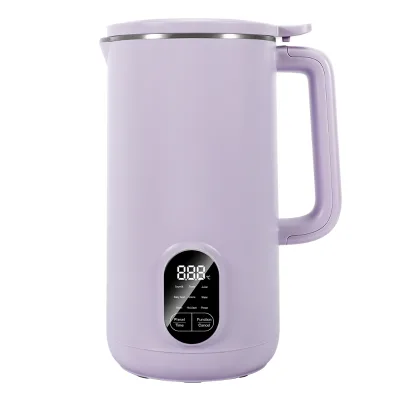
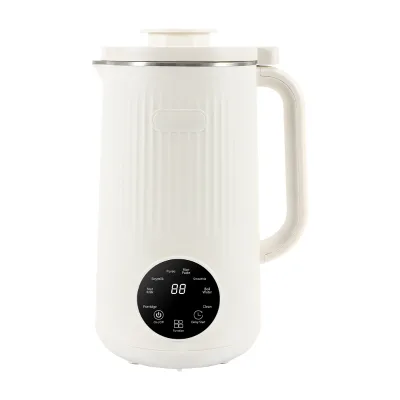

Commercial Stainless Steel Soy Milk Soymilk Maker Soy Bean Milk Maker Machine
$1500.00 - $1800.00
MOQ: 1 Pieces


Electric Tofu Maker / Soymilk Maker / Soya Milk Tofu Machine / Soya Milk Machine
$969.00 - $1199.00
MOQ: 1 Sets


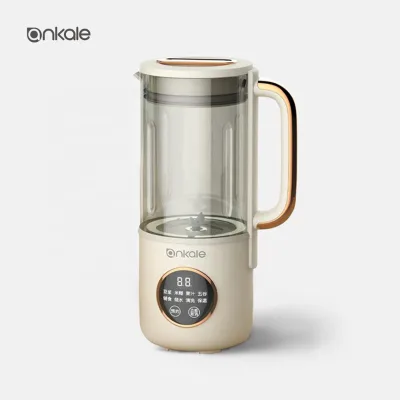
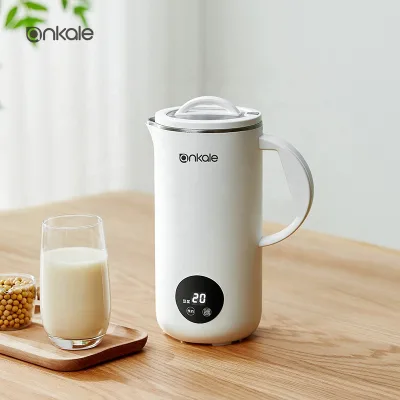
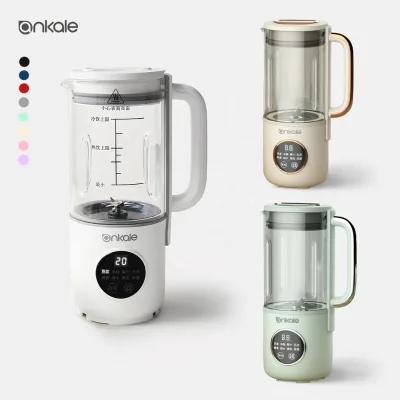
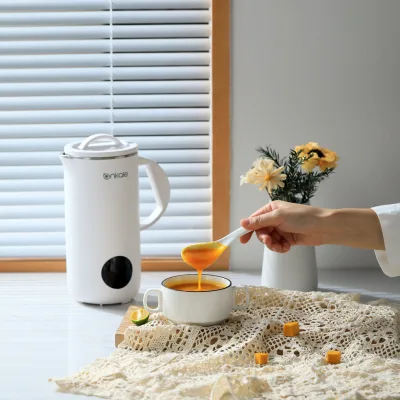


Smart Soy Milk Maker Cooking Blender Soy Milk Maker with Soundproof Cover
$19.50 - $21.00
MOQ: 1000 Pieces


Smart Nut Milk Maker Cooking Blender Soy Milk Maker with Soundproof Cover
$19.50 - $21.00
MOQ: 1000 Pieces

Corn Juice Maker Cooking Blender Soy Milk Maker with Soundproof Cover
$19.50 - $21.00
MOQ: 1000 Pieces
Comprehensive Sourcing Guide
Strategic Sourcing Guide for Home Use Soy Milk Makers
Understanding Product Variability and Core Specifications
The market for home use soy milk makers presents a complex landscape where "one size fits all" specifications rarely apply. Buyers must navigate a wide array of technical configurations that directly influence performance, safety, and suitability for specific household needs. Based on observed market data, the core functionality of these appliances often centers on electric power sources with wattage ratings varying between 800W and 1000W. This power range is critical as it determines the heating efficiency and the speed at which raw soybeans are processed into liquid milk. The voltage requirement is a primary compliance factor; many units in the supply chain operate on 380V, which is typically an industrial standard, yet some models are adapted for residential use. Buyers must rigorously verify the voltage compatibility of any unit intended for home installation to prevent electrical hazards or equipment failure.
Material composition is another defining characteristic. The majority of high-quality units utilize Stainless Steel (SS 304) for the internal processing chamber and heating elements. This material choice is essential for food safety, ensuring that the appliance does not leach harmful substances during the high-temperature cooking process. However, the housing material varies; some models feature plastic exteriors, while others may use different alloys. The distinction between the internal contact materials and the external housing is vital for durability and aesthetic integration into a kitchen environment. Furthermore, the capacity of these machines ranges significantly, with observed specifications including 800ml, 1000ml, and 1000ml (33.81oz) options. This variability dictates the volume of soy milk a single batch can produce, requiring buyers to align the machine's capacity with their household's consumption patterns.
The operational interface also differs across product lines. While some units rely on traditional mechanical controls, the modern trend favors electronic control systems with touchpad interfaces. These touchpad controls often offer multiple speed settings, with observed configurations including eight distinct settings. This granularity allows users to customize the texture and consistency of the soy milk, catering to different preferences for thickness and smoothness. Additionally, the inclusion of a heat preservation function is a common feature, ensuring that the prepared milk remains at a drinkable temperature for extended periods without burning or curdling. The distinction between "Traditional/Work Top" types and specialized "Home Blender" or "Single Serve" models further complicates the selection process, as the form factor dictates the footprint and utility within a home kitchen.
Compliance, Certification, and Safety Standards
Navigating the regulatory landscape for home appliances requires a meticulous approach to certification and standard verification. In the context of sourcing soy milk makers, the presence of ISOCE certification is a notable data point observed in the market. This certification serves as a baseline indicator that the manufacturer adheres to certain international quality management standards. However, buyers should not assume that the presence of one certification guarantees compliance with all local regulations. Different regions have distinct electrical safety standards, food contact material regulations, and energy efficiency requirements. For instance, while the raw material is identified as soybeans, the processing equipment must meet specific hygiene and food safety standards to ensure the final product is safe for human consumption.
The standard for the product itself is often described as "As customer's request," which implies a high degree of customization. This flexibility is a double-edged sword for procurement. While it allows buyers to tailor specifications to their specific market needs, it also places the burden of verification on the buyer. Buyers must explicitly define the required standards for electrical safety, material purity, and performance testing before placing an order. Relying on a generic "stainless steel" standard is insufficient; the specific grade of stainless steel (e.g., SS 304) must be confirmed in the technical documentation. Additionally, the packaging standard, often cited as "Standard Export Package" or "in Wooden Case," must be evaluated to ensure it protects the product during long-distance shipping without introducing contaminants or damage.
Safety is paramount, particularly given the high temperatures and electrical components involved. The "Engineers Available to Service Machinery Overseas" attribute suggests a level of after-sales support that is crucial for maintaining safety standards over the product's lifecycle. However, this service capability does not replace the need for initial safety testing. Buyers should verify that the manufacturer conducts rigorous testing for electrical insulation, thermal overload protection, and material leaching. The "1000x550x1285mm" and "24506101350" dimensions observed in the data highlight the variability in physical size, which must be cross-referenced with the intended installation space. A mismatch in dimensions can lead to installation failures or safety hazards in a confined home environment.
Cost Drivers and Pricing Dynamics
The pricing for home use soy milk makers exhibits a vast range, observed between $13 and $200,000 USD. This extreme variance is not indicative of a linear relationship between price and quality but rather reflects the diversity of product categories, from simple single-serve blenders to fully automated, industrial-grade units adapted for home use. The lower end of the spectrum likely corresponds to basic models with minimal features, such as a single speed setting and plastic housing. In contrast, the higher price points may encompass complex systems with advanced touchpad controls, multiple speed settings, heat preservation functions, and robust stainless steel construction.
Several factors drive these costs. First, the material composition is a primary cost driver. Units constructed entirely from SS 304 stainless steel will inherently cost more than those with plastic housings or mixed materials. Second, the level of automation and control sophistication significantly impacts the price. Models featuring electronic control, touchpad interfaces, and eight speed settings command a premium over traditional mechanical models. Third, the capacity and power output influence the cost; a 1000W motor capable of heating and blending large volumes is more expensive to manufacture than an 800W unit with a smaller capacity.
The Minimum Order Quantity (MOQ) also plays a role in the effective unit cost. The observed MOQ range spans from 1 to 2452 units. For buyers seeking small batches or sample units, an MOQ of 1 is ideal, though the unit price may be higher due to the lack of economies of scale. Conversely, buyers ordering in bulk, potentially up to 2452 units, may negotiate lower per-unit costs. However, the high MOQ for certain models suggests that these are designed for large-scale distribution or commercial use rather than individual home consumption. Buyers must balance their volume requirements with their budget constraints to find the optimal price point.
Typical Applications and Functional Versatility
The application of home use soy milk makers extends beyond the simple preparation of soy milk. While the raw material is explicitly listed as soybeans, the versatility of these machines allows for the processing of various grains, nuts, and legumes. The "Single Serve" and "Home Blender" classifications indicate that these appliances are designed for individual or small family consumption, making them ideal for modern households seeking personalized nutrition. The "Heating" function is a critical feature that distinguishes these machines from standard blenders, as it allows for the cooking of raw soybeans, which contain anti-nutritional factors that must be neutralized through heat.
The "Heat Preservation" function adds another layer of utility, allowing the machine to keep the prepared milk warm for extended periods. This feature is particularly valuable in households where breakfast preparation is rushed, as the milk can be ready and warm when the family is ready to eat. The "8 Settings" for speed control provide the flexibility to create different textures, from thin, smooth soy milk to thicker, more textured blends suitable for smoothies or other beverages. The "Touchpad" control interface enhances the user experience, offering precise control over the cooking and blending cycles.
Furthermore, the "Customized" nature of these products allows for adaptation to specific dietary needs. Buyers can request modifications to the capacity, material, or control interface to suit the preferences of their target market. The "As customer's request" standard for product specifications underscores the potential for customization in terms of branding, packaging, and functional features. This versatility makes home use soy milk makers a valuable addition to a diverse range of kitchen appliances, catering to health-conscious consumers and those seeking convenience in their daily routines.
Supplier Evaluation and After-Sales Support
Evaluating a supplier for home use soy milk makers requires a focus on their technical capabilities, quality assurance processes, and after-sales support infrastructure. The observation that "Engineers Available to Service Machinery Overseas" is a significant indicator of a supplier's commitment to long-term customer satisfaction. This level of support is crucial for resolving technical issues, providing maintenance guidance, and ensuring the longevity of the product. Buyers should verify the scope of this service, including response times, availability of spare parts, and the geographical reach of the engineering team.
The "Free Spare Parts Provided" attribute is another positive signal, suggesting that the supplier is confident in the durability of their products and is willing to support repairs without additional cost. This can significantly reduce the total cost of ownership for the buyer. However, buyers must clarify the terms of this warranty, including the duration (observed as 1 year for some models) and the conditions under which spare parts are provided. The "Private Mold: No" attribute indicates that the supplier may use existing molds rather than developing custom tooling, which can impact the uniqueness of the product and the potential for customization.
When evaluating suppliers, buyers should also consider the "Standard Export Package" and "in Wooden Case" options to ensure that the products are protected during transit. The "Carton" and "Color Box" packaging options suggest a range of presentation styles, from basic industrial packaging to retail-ready boxes. The supplier's ability to provide these different packaging options can be a deciding factor for buyers targeting different market segments. Additionally, the "Operating Language: English" attribute is essential for ensuring that the user manual and control interface are accessible to English-speaking consumers, reducing the risk of user error and enhancing the overall product experience.
Quality Control and Long-Term Procurement Considerations
Implementing a robust quality control (QC) strategy is essential for mitigating risks in the procurement of home use soy milk makers. Given the variability in specifications, from "SS 304" materials to "Plastic" housings, and the wide range of power ratings, buyers must establish clear acceptance criteria for each order. QC should focus on verifying the material composition, electrical safety, and functional performance of the units. Pre-shipment inspections should include checks for dimensional accuracy, packaging integrity, and the correct labeling of specifications such as voltage, power, and capacity.
Long-term procurement considerations involve building a sustainable relationship with suppliers who can consistently meet quality standards and adapt to changing market demands. The "Customized" and "Customization: Available" attributes suggest that suppliers are willing to work with buyers to develop unique products. However, this requires clear communication and detailed specifications to avoid misunderstandings. Buyers should also consider the lead times associated with different MOQs and customization levels. While the exact lead times are not specified in the provided data, the high MOQ of 2452 units implies that larger orders may require longer production schedules.
Finally, buyers must remain vigilant regarding the "As customer's request" standard. This flexibility can lead to inconsistencies if not managed carefully. Buyers should require detailed technical drawings and specifications for every custom order to ensure that the final product matches the agreed-upon requirements. By maintaining a disciplined approach to quality control and supplier evaluation, buyers can secure a reliable supply of high-quality home use soy milk makers that meet the needs of their customers and maintain their reputation in the market.
FAQs
What voltage do home use soy milk makers typically require?
Many units operate on 380V, which is an industrial standard, though some models are adapted for residential use. Buyers must verify voltage compatibility to prevent electrical hazards or equipment failure in home environments.
Which materials are used for the internal processing chamber?
High-quality units utilize Stainless Steel SS 304 for the internal processing chamber and heating elements. This material ensures food safety by preventing harmful substance leaching during the high-temperature cooking process.
Can these machines provide heat preservation for the prepared milk?
Yes, many models include a heat preservation function to keep milk warm for extended periods. This feature ensures the prepared milk remains at a drinkable temperature without burning or curdling while waiting for consumption.
What is the typical capacity range for home use soy milk makers?
Observed specifications include capacities of 800ml, 1000ml, and 1000ml options. This variability dictates the volume of soy milk a single batch can produce, requiring alignment with household consumption patterns.
Are electronic controls and touchpads available on these models?
Modern trends favor electronic control systems with touchpad interfaces offering multiple speed settings. Some configurations include eight distinct settings to customize the texture and consistency of the soy milk for different preferences.
How does the price range vary for these appliances?
Prices range from 13 to 200000 USD depending on the product category and features. Lower prices often correspond to basic models, while higher points encompass complex systems with advanced controls and robust construction.
What after-sales support is typically provided by suppliers?
Suppliers often provide engineers available to service machinery overseas and free spare parts. This support is crucial for resolving technical issues and ensuring the longevity of the product over its lifecycle.