Source Patient Gown for Hospitals, Clinics, and Medical Facilities
Compare 30 Patient Gown options from verified Chinese manufacturers. Buyers can evaluate materials like non-woven fabric and cotton/polyester, sterilization methods, and customization features for hospital and medical applications.
Key considerations
Products List


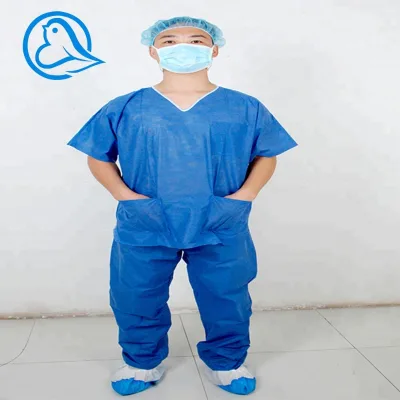


Yellow Isolation Gown Hospital Gown Visitor Gown Surgical Gown Medical Gown
$0.13 - $0.25
MOQ: 20000 Pieces


Comprehensive Sourcing Guide
Patient Gown Sourcing Guide
Procuring patient gowns requires a clear understanding of the specific clinical environment and the intended duration of use, as the market offers distinct variations ranging from disposable SMS (Spunbond-Meltblown-Spunbond) fabrics to reusable cotton-polyester blends. The observed product landscape includes items designed for surgical settings with knitted cuffs and specific sterilization methods, alongside general hospital gowns that prioritize durability and comfort for extended wear. Buyers must distinguish between these categories early in the sourcing process, as the material composition directly dictates the appropriate application, whether for high-risk surgical procedures requiring barrier protection or for general patient care where breathability and anti-static properties are paramount.
Commercial terms and logistical capabilities are equally critical when selecting a supplier for medical textiles, as the supply chain for these items often involves complex sterilization and packaging requirements. The available data indicates that suppliers typically operate from specific manufacturing hubs in China, such as Hubei, with major loading ports in Wuhan and Shanghai, which influences freight costs and lead times. Furthermore, payment structures often involve Letters of Credit (LC) or Telegraphic Transfer (TT), and minimum order quantities can vary significantly, ranging from 50 units for trial orders to 50,000 units for bulk procurement, necessitating a careful alignment of order volume with budget and storage capacity.
Product Scope and Observed Listing Signals
The product scope for patient gowns is defined by a diverse array of materials, including non-woven fabrics like SMS and PP, as well as traditional woven blends of cotton and polyester. Listings frequently highlight specific features such as disposable status, anti-wrinkle capabilities, and quick-dry properties, which are essential for maintaining hygiene and operational efficiency in busy medical facilities. The observed color palette extends beyond standard white to include blue, green, and black options, with some suppliers offering custom color requests to match institutional branding or specific departmental requirements.
Listing signals also reveal significant variation in design and functionality, with some gowns featuring open-fronted structures, tie-on waists, and V-collar or round collar options. The presence of knitted cuffs on certain surgical models suggests a focus on fluid resistance and secure fit during procedures, while other listings emphasize the availability of various sizes and weights to accommodate different patient demographics. Buyers should scrutinize these signals to ensure the selected product matches the specific clinical need, noting that some items are explicitly marked as having ethylene oxide sterilization while others are not, a distinction that fundamentally alters the product's readiness for immediate use.
Technical Specifications to Verify
When evaluating technical specifications, the gram weight of the fabric is a primary indicator of barrier performance and durability, with observed ranges spanning from 16 to 40 GSM for non-woven options. This metric directly correlates with the gown's ability to resist fluid penetration and maintain structural integrity during use, making it a critical parameter for surgical applications where high-level protection is required. Buyers must verify the specific GSM for their intended use case, as lighter weights may suffice for general patient transport, whereas heavier weights are necessary for invasive procedures to prevent cross-contamination.
Dimensional specifications and packaging details are equally vital for ensuring the product fits the operational workflow and storage constraints of the facility. Standard sizes observed include dimensions such as 115 x 127 cm and 130 x 150 cm, but suppliers also offer custom sizing to meet specific patient needs. Packaging configurations typically range from individual bagging for sterile items to bulk carton packing, such as 50 pieces per carton, which affects handling efficiency and inventory management. Additionally, the presence of accessories like labels and the specific structure of the garment, such as open-fronted designs, must be confirmed to ensure compatibility with existing medical protocols.
Compliance and Safety Documentation
Compliance and safety documentation form the backbone of any medical procurement strategy, with certifications such as CE, FDA, and ISO 13485 serving as essential markers of quality and regulatory adherence. The observed listings frequently reference these standards, indicating that suppliers are capable of meeting international requirements for medical device manufacturing and distribution. However, buyers must verify the current validity of these certificates and ensure they cover the specific product model being purchased, as certification status can vary between different product lines within the same supplier's catalog.
Sterilization methods and quality assurance periods are critical safety factors that must be explicitly confirmed before finalizing a purchase. Some surgical gowns are supplied with ethylene oxide sterilization, ensuring they are ready for immediate use in sterile fields, while other products are delivered non-sterile and require facility-based sterilization. The quality guarantee period, observed as two years in some listings, provides a baseline for product longevity and performance expectations, but buyers should also request detailed test reports and batch-specific quality records to validate that the sterilization and material integrity meet the specific safety standards of their region.
Cost Drivers and Commercial Terms
Cost drivers in the Patient Gown market are heavily influenced by material selection, sterilization requirements, and the complexity of the manufacturing process. Non-woven fabrics like SMS and PP generally offer a cost-effective solution for disposable applications, while cotton-polyester blends may incur higher costs due to the weaving and finishing processes required for reusable garments. The inclusion of ethylene oxide sterilization adds a significant layer of cost and logistical complexity, as it requires specialized facilities and rigorous testing, which is reflected in the final unit price and the minimum order quantities required to make production runs economically viable.
Commercial terms such as payment methods and loading ports play a substantial role in the total cost of ownership and supply chain reliability. The observed payment terms of LC or TT suggest a need for financial security and clear contractual agreements, particularly for large-volume orders. Loading ports in Wuhan and Shanghai indicate that buyers must factor in inland transportation costs and potential delays associated with these specific locations. Additionally, the wide range of minimum order quantities, from 50 to 50,000 units, allows for flexibility but requires careful financial planning to balance inventory costs with cash flow constraints.
Supplier Qualification and Quality Control
Supplier qualification should extend beyond basic certification checks to include an assessment of production capacity and quality control systems. The observed production ability of 10,000 pieces per day suggests that some suppliers have the scale to handle large orders, but buyers must verify if this capacity is consistent and if it can be scaled up during peak demand periods. It is essential to confirm that the supplier maintains a robust quality management system, ideally aligned with ISO 13485, to ensure that every batch of gowns meets the specified standards for material strength, sterility, and dimensional accuracy.
Quality control processes must be transparent and verifiable, with suppliers expected to provide detailed documentation on their manufacturing and testing procedures. Buyers should inquire about the specific steps taken to ensure product consistency, such as in-process inspections and final random sampling, particularly for critical attributes like gram weight and sterilization efficacy. The presence of a two-year quality guarantee period indicates a level of confidence in the product, but this should be backed by a clear policy on how defects are handled and what recourse is available if the product fails to meet the agreed-upon specifications upon delivery.
Long-Term Procurement Checks
Long-term procurement checks involve establishing a framework for continuous performance monitoring and supplier relationship management to ensure sustained value and reliability. Buyers should implement regular audits of supplier performance, focusing on metrics such as on-time delivery, defect rates, and responsiveness to quality issues. Given the variability in product attributes observed in the market, maintaining a dynamic supplier list that can adapt to changing clinical needs and regulatory requirements is essential for mitigating supply chain risks and ensuring a steady flow of high-quality patient gowns.
Regular re-evaluation of product specifications and compliance status is necessary to keep pace with evolving medical standards and technological advancements. As the market for medical textiles continues to evolve, buyers must stay informed about new materials, sterilization technologies, and regulatory updates that could impact the suitability of their current suppliers. Establishing a proactive communication channel with suppliers to discuss future product developments and potential customization options will help ensure that the procurement strategy remains aligned with the long-term goals of the healthcare facility.
FAQs
What materials are used for SMS patient gowns?
SMS patient gowns are primarily manufactured from Non-woven Fabric or PP materials. Some variants also utilize Cotton/Polyester blends for specific comfort needs. These materials ensure the gowns are disposable and suitable for single-use medical environments, providing a balance of fluid resistance and breathability for healthcare workers.
Can patient gowns be customized with a logo?
Yes, logo printing is available for these surgical supplies. Customization options allow buyers to add their branding to the gowns. This service supports hospitals and medical suppliers in maintaining consistent visual identity across their protective equipment inventory while ensuring the garments meet necessary hygiene and safety standards.
What certifications do these surgical gowns hold?
The products hold CE, ISO 13485, and FDA certifications. These standards verify compliance with international medical device regulations. Buyers can rely on these documented credentials to ensure the gowns meet rigorous quality and safety requirements for use in hospitals, clinics, and other medical facilities globally.
What are the standard sizes for SMS patient gowns?
Standard sizes include L and XL, with specific dimensions such as 115x127cm, 115x136cm, 115x145cm, and 130x150cm. Various sizes, weights, and colors are available to meet different user requirements. This range ensures a proper fit for diverse body types in clinical settings.
How are the gowns sterilized and packaged?
Sterilization options include Ethylene Oxide Sterilization or non-sterile variants. Packaging typically consists of 1PC per EO bag, with 50PCS per carton. This method ensures hygiene during transport and storage, allowing medical facilities to maintain sterile conditions until the gown is ready for immediate use in patient care.
What is the production capacity for these gowns?
The production ability is listed as 10,000 pieces per day. This capacity supports bulk orders for hospitals and medical suppliers. The manufacturing process is designed to handle high-volume demands while maintaining consistent quality standards, ensuring timely delivery for large-scale medical procurement needs.