Source PE Knitted Flower Protection Net for fruit, vegetable, and flower uses
Find 27 listings for PE Knitted Flower Protection Net designed for flower protection, fruit bagging, and vegetable transport. Buyers can compare specifications like material, dimensions, and safety factors to select the right woven or plastic net for their needs.
Key considerations
Products List


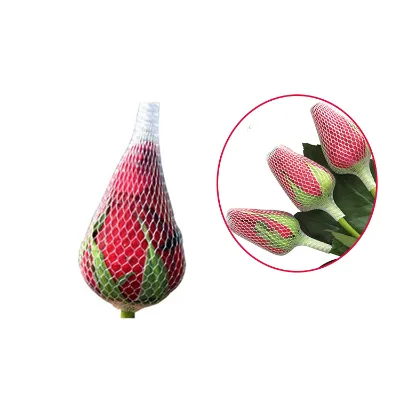
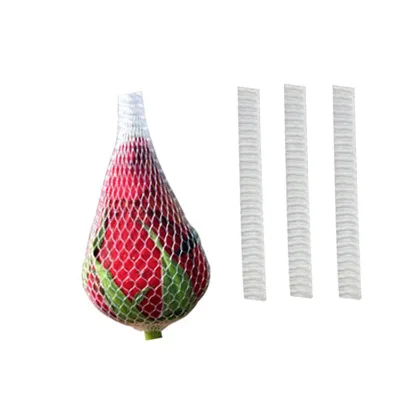
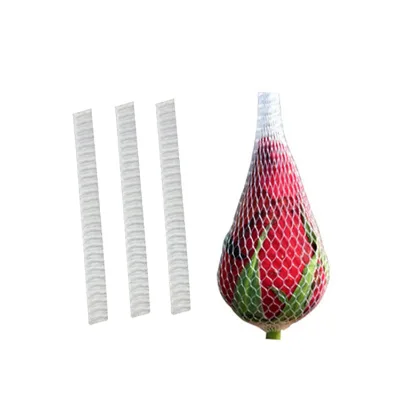
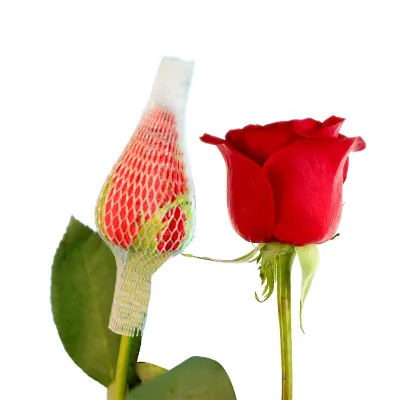


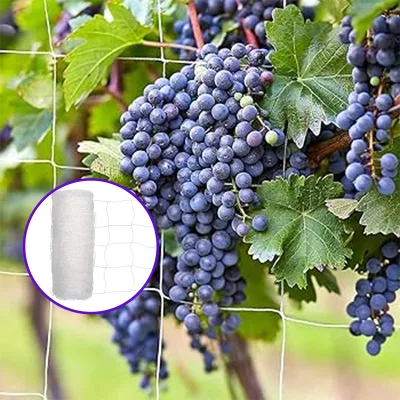

Comprehensive Sourcing Guide
Strategic Sourcing Guide for PE Knitted Flower Protection Net
Understanding Product Architecture and Technical Specifications
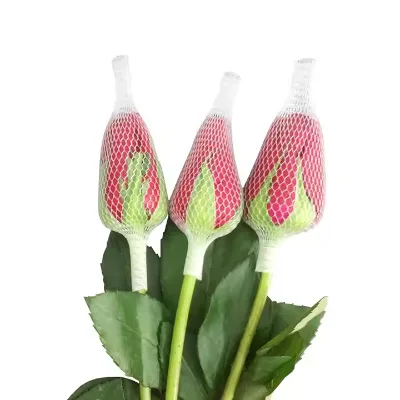
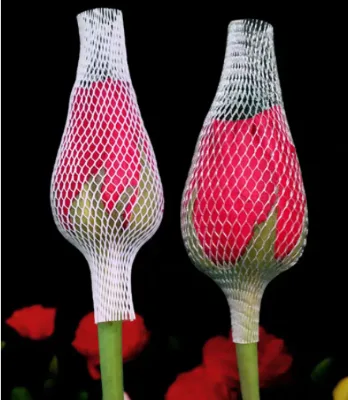
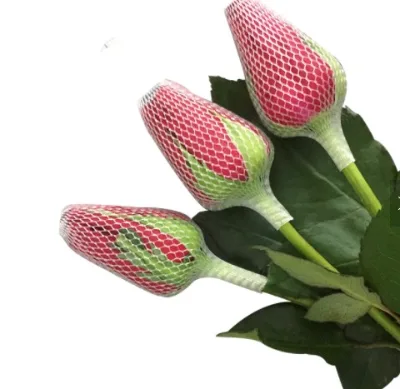
The core of sourcing a PE (Polyethylene) knitted flower protection net lies in recognizing that this is not a monolithic product but a category defined by specific material compositions, structural designs, and functional applications. Based on available market data, the primary material composition for these nets is consistently Polyethylene, often blended with Polypropylene (PE/PP) to optimize flexibility and durability. The manufacturing technique is distinctively identified as "Wrap Knitted" or "Plastic Bags" technology, which differentiates it from woven or non-woven alternatives. This knitted structure is critical as it allows the net to stretch and conform to the irregular shapes of flower buds and foliage without causing damage, a feature explicitly noted in product attributes as "Wrap Knitted."
When evaluating technical specifications, buyers must look beyond generic descriptions to precise dimensional data. The market presents a variety of length specifications, ranging from standardized sizes like 8.5 cm, 10 cm, 11 cm, and 12 cm to fully customizable lengths based on customer requests. This variability is essential for different flower types; a small bud requires a tighter fit than a large bloom. Furthermore, the standard dimensions often reference specific measurements such as 4.5 inches, 4.8 inches, or 5 inches, which likely correspond to the diameter or circumference of the net when expanded. Thickness is another critical parameter, with observed specifications indicating a thickness of 10 mm in certain product lines, though this may vary by application.
The physical configuration of the net is equally important. The product is frequently described as a "Straight Bag" with a "Top Full Open" and "Bottom Full Open" design. This open-ended structure facilitates the easy insertion of the flower stem or bud. Some variations may include a "Plastic Net" classification specifically for "Safety Net" applications, suggesting a denser weave or higher tensile strength for broader agricultural protection. The "Wire Type" is also a consideration, with options available in "Flat" or "Tape Wire" formats, which influence the net's rigidity and how it interacts with the plant surface. Understanding these granular specifications allows buyers to match the product precisely to their horticultural needs rather than settling for a generic solution.
Compliance, Certification, and Safety Standards
In the B2B procurement of agricultural protection materials, compliance and safety are paramount, even for seemingly simple items like flower nets. While specific certification bodies are not universally mandated for all regions, the "Safety Factor" is a quantifiable metric that buyers must verify. Market observations indicate safety factors ranging from "Strong" to a specific ratio of "8:1." This ratio implies a critical engineering standard where the net can withstand eight times the expected load before failure, ensuring that the net does not tear under the weight of the flower or during handling.
Buyers should rigorously verify the "prod_standard" listed by suppliers. The data shows standards such as 4.5", 4.8'', and 5'', which serve as dimensional benchmarks. However, beyond dimensions, the material safety is crucial. The product is described as having a "High Quality" feature and "UV Resistance," which are essential for outdoor applications where prolonged sun exposure can degrade standard plastics. The "UV Resistance" attribute suggests that the PE material has been treated or compounded to resist photodegradation, a common failure mode in agricultural plastics.
Regarding origin and regulatory compliance, the supply chain often traces back to specific manufacturing hubs. Products are frequently noted as originating from "Anping, Hebei" or "Wuhan, China," regions known for their plastic processing industries. While specific certifications like ISO or CE are not explicitly listed in the provided facts, the presence of a "Warranty" period of "2-5 years" serves as a proxy for quality assurance and manufacturer confidence. A warranty of this duration implies that the product is expected to maintain its structural integrity and UV resistance properties over multiple growing seasons. Buyers should request documentation confirming that the material meets local agricultural safety standards, particularly regarding the absence of harmful leaching agents that could affect the flower or soil quality.
Cost Drivers and Pricing Dynamics
The pricing structure for PE knitted flower protection nets is influenced by a complex interplay of material costs, customization requirements, and order volume. The observed price range in the market is notably low, spanning from 0 to 3.2 USD per unit. This low entry price point is typical for high-volume commodity plastics but requires careful scrutiny to ensure that the low cost does not compromise the "High Quality" or "UV Resistance" attributes.
The primary cost driver is the material composition. The use of PE or PE/PP blends is standard, but the quality of the resin and the presence of UV stabilizers will significantly impact the final price. Products with higher UV resistance and a longer warranty period (2-5 years) will likely command a premium over basic, non-treated variants. Additionally, the "Processing Service" capabilities, such as "Moulding" and "Cutting," add value and cost. Customization is explicitly listed as "Available," and this flexibility is a major cost variable. Orders requiring specific lengths, thicknesses, or colors (Black, Green, White) will incur higher setup and production costs compared to standard off-the-shelf items.
Order volume, defined by the Minimum Order Quantity (MOQ), is the second significant cost factor. The observed MOQ range is vast, stretching from 1 unit to 100,000 units. For smaller buyers, an MOQ of 1 Ton or even single items is available, but the unit price will be higher. Conversely, bulk buyers can leverage the lower end of the price spectrum. The "Packing" method also influences logistics costs; products are shipped in "Plastic Weaving Bags," "Boxes," or "Cartons." The choice of packaging affects the "Single gross weight," which ranges from 0.020 kg to 0.200 kg per unit, directly impacting shipping expenses. Buyers must balance the unit price savings from bulk orders against the increased inventory holding costs and the logistics of handling larger shipments.
Typical Applications and Functional Use Cases
The versatility of PE knitted flower protection nets makes them suitable for a wide array of horticultural and agricultural applications. The primary use case, as indicated by the product name and attributes, is "flower protection." This involves shielding delicate flower buds from environmental stressors such as wind, hail, and excessive sunlight. The "Shade Rate" of these nets, which can range from 30% to 99%, allows growers to tailor the level of protection to specific plant needs. A lower shade rate might be used for light wind protection, while a higher shade rate could be necessary for preventing sunburn on sensitive blooms.
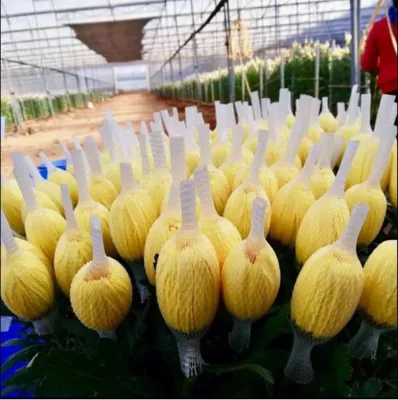
Beyond simple protection, these nets serve as "flower bud nets" and "flower sleeve nets," acting as a physical barrier against pests and birds without the need for chemical pesticides. This organic-friendly approach is increasingly valued in modern agriculture. The "Application" field lists "Vegetable Bag," "Transport," "Sand Bag," and "Fruit Bag," suggesting that the same material technology is often repurposed for transporting produce or protecting other agricultural goods. The "Straight Bag" shape and "Top Full Open" design make them ideal for wrapping around individual stems or clusters of flowers, ensuring a secure fit that does not restrict growth.
The "Color" options, including white, transparent, black, and green, also dictate the application. Transparent nets allow for maximum light transmission, which is crucial for photosynthesis, while colored nets can provide specific shade levels or deter specific pests through visual cues. The "Usage" is explicitly stated as "for flowers," but the robust "Safety Factor" and "Strong" attributes suggest they can also be used in broader contexts, such as general packaging or temporary fencing in agricultural settings. Understanding these diverse applications helps buyers select the right variant for their specific crop and environmental conditions.
Supplier Evaluation and Sourcing Strategy
Evaluating suppliers for PE knitted flower protection nets requires a focus on technical capability, consistency, and logistical reliability. The supply chain is dominated by manufacturers in China, with specific hubs in Anping, Hebei, and Wuhan. These regions have established ecosystems for plastic processing, offering access to raw materials and specialized machinery. However, the presence of multiple models, such as "HS-FL010," "HS-FL001," "PE-36-7-80," and "FJ-FBN-001," indicates a fragmented market with various manufacturers offering similar but distinct products.
Buyers should prioritize suppliers who demonstrate clear technical specifications and transparency. The availability of "Customization" is a key differentiator; suppliers who can accommodate specific length requests, color choices, and thickness requirements offer greater value. The "Brand Name" "Feiju" is one example of a known entity in this space, but buyers should not rely on brand recognition alone. Instead, they should verify the "Product name," "Model Number," and "Single package size" (e.g., 40X20X20 cm) to ensure the supplier can meet the logistical requirements of the buyer's operation.
Logistics and packaging are critical evaluation criteria. The "prod_packing" varies between "Plastic Weaving Bag" and "Box," and the "Package" is described as "In cartons or woven bags." Buyers must assess whether the supplier's packaging aligns with their storage and distribution capabilities. The "Single gross weight" and "Single package size" data are essential for calculating freight costs and warehouse space requirements. Additionally, the "Warranty" period of 2-5 years is a strong indicator of supplier confidence; a supplier offering a longer warranty is likely more committed to product quality and after-sales support.
Quality Control and Long-Term Procurement Considerations
Implementing a robust quality control (QC) regime is essential for maintaining the integrity of PE knitted flower protection nets. Given the "High Quality" feature and the "UV Resistance" requirement, QC should focus on material consistency and durability testing. Buyers should verify the "Safety Factor" through independent testing or supplier-provided test reports, ensuring the 8:1 ratio or "Strong" classification is met. The "Shade Rate" must also be verified, as inconsistent shading can lead to uneven plant growth or sunburn.
Long-term procurement considerations involve managing the lifecycle of the product. The "Warranty" of 2-5 years suggests that these nets are designed for multi-season use. However, environmental factors such as UV exposure, wind, and temperature fluctuations can degrade the material over time. Buyers should plan for periodic replacement and factor this into their total cost of ownership. The "Process" of "Moulding" and "Cutting" should be monitored to ensure that the edges of the nets are smooth and do not fray, which could damage the flowers.
Sustainability is another emerging consideration. While the material is PE, which is recyclable, the disposal of agricultural plastics is a growing concern. Buyers should inquire about the recyclability of the nets and whether the supplier offers take-back programs or uses recycled content in their production. The "Application" of these nets in "Vegetable Bag" and "Fruit Bag" contexts also highlights the potential for circular economy practices, where the same material can be reused for multiple purposes.
Final Procurement Recommendations
In conclusion, sourcing PE knitted flower protection nets requires a balanced approach that weighs technical specifications, cost drivers, and supplier reliability. The market offers a wide range of options, from standard sizes like 8.5 cm to fully customizable solutions. Buyers must prioritize suppliers who can provide clear evidence of "UV Resistance," "Safety Factor," and "Warranty" compliance. By focusing on the specific needs of their crops and leveraging the customization options available, buyers can secure high-quality protection nets that enhance crop yield and reduce chemical usage. The low price range of 0-3.2 USD makes these nets an accessible solution for a broad range of agricultural operations, provided that the quality and durability are rigorously verified.
FAQs
What material is used for pe knitted flower protection nets?
The primary material used is Polyethylene, often blended with Polypropylene. This composition ensures flexibility and durability for wrapping flower buds without causing damage.
Which dimensions are available for the flower sleeve nets?
Standard lengths include 8.5 cm, 10 cm, 11 cm, and 12 cm. Custom lengths are also available upon customer request to fit specific flower types.
Can these nets be customized for specific color requirements?
Yes, customization is available for colors such as white, transparent, black, and green. Buyers can select the shade rate ranging from 30% to 99% based on needs.
How long is the warranty period for these plastic nets?
The warranty period typically ranges from 2 to 5 years. This duration indicates the product's expected durability and resistance to UV degradation over multiple growing seasons.
What is the minimum order quantity for bulk purchases?
The minimum order quantity varies from 1 unit up to 100,000 units. Some suppliers list an MOQ of 1 Ton for specific bulk transactions.
Where are these pe knitted flower protection nets manufactured?
Products originate from manufacturing hubs in Anping, Hebei, and Wuhan, China. These regions are known for their established plastic processing industries.