Source Peplum Top for Summer Events, Daily Wear, and Vintage Style
Compare 30 Peplum Top options from Guangdong suppliers featuring floral patterns, V-neck designs, and smocked backs. Buyers can evaluate materials like polyester blends, customization services, and lead times for bulk orders.
Key considerations
Products List
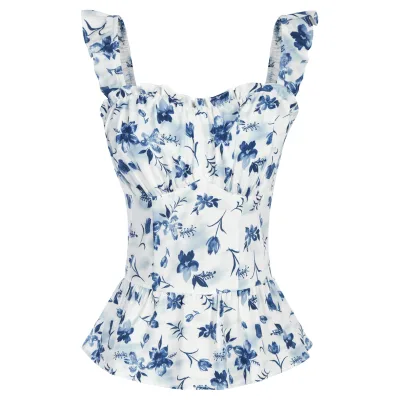


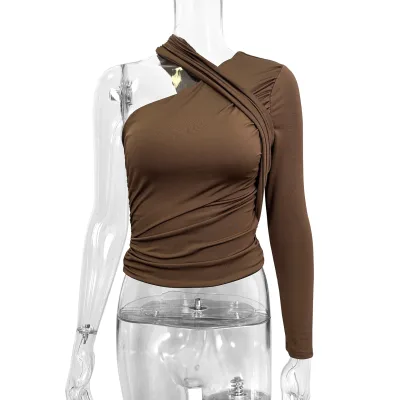
One Shoulder Sequin Crop Top for Women, Cutout Detail with Asymmetrical Hem
$5.00 - $25.00
MOQ: 100 Pieces
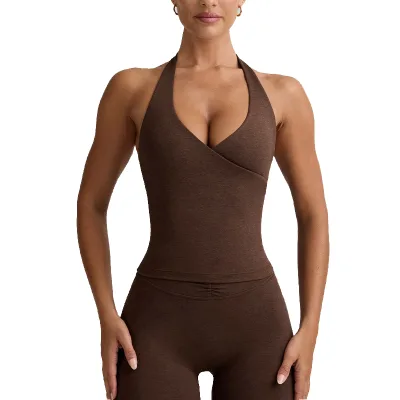
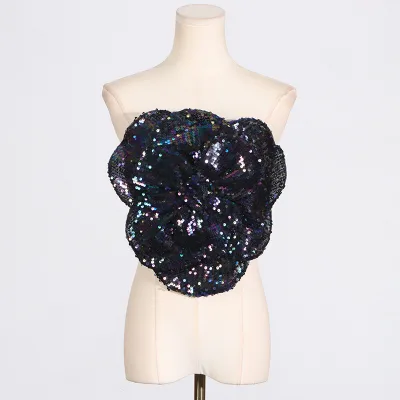

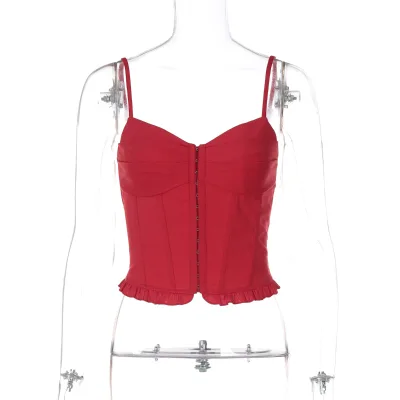


Comprehensive Sourcing Guide
Strategic Sourcing Guide for Peplum Tops in the B2B Apparel Market
Understanding Product Specifications and Variations
When sourcing peplum tops for wholesale or private label operations, buyers must first navigate the diverse technical specifications that define this garment category. The peplum silhouette, characterized by a flared ruffle attached at the waistline, appears across various sub-categories including tank tops and casual wear. Based on current market data, the product attributes for these items vary significantly in terms of material composition, cut, and design features. A primary observation in the supply chain indicates that material composition is a critical differentiator. Buyers will encounter listings specifying blends such as 95% Polyester with 5% Elastane, which offer stretch and recovery, alongside options listed as 100% Polyester, which may provide a different drape and breathability profile. The fabric type is consistently identified as woven, utilizing automated cutting techniques to ensure precision in the complex peplum construction.
Design variations are equally important for buyers targeting specific market segments. The market data reveals a spectrum of styles ranging from vintage aesthetics to modern casual wear. Specific design elements observed include smocked backs, which provide a tailored fit, and ruffle decorations that define the peplum structure. The neckline also varies, with V-neck and sweetheart neck options being prominent features. Length specifications are not uniform; while some products are categorized as short or regular length, others are listed as medium length, indicating that the "Peplum Top" keyword encompasses a broad range of silhouettes rather than a single standardized cut. Color options are often standardized as single items or specific codes, such as #1, though customization is frequently available. Buyers should note that while some listings specify "Girls" as a suitable demographic, others target "Adults" or "Women," necessitating careful verification of the intended age group and gender alignment before placing orders.
Compliance, Certification, and Safety Standards
In the realm of B2B apparel procurement, verifying compliance and safety standards is paramount, particularly when sourcing from manufacturing hubs in China. The supplied data indicates that the place of origin for many of these items is Guangdong, China, with specific mentions of Guangzhou as a production location. Shenzhen is frequently cited as the port of dispatch, which is a major logistical hub for international trade. However, the provided facts do not explicitly list specific third-party certifications such as OEKO-TEX, GRS, or specific ISO standards for these peplum tops. Consequently, buyers must treat the "Eco-Friendly" and "Breathable" features listed in product descriptions as claims that require independent verification rather than guaranteed certifications.
When evaluating suppliers, it is essential to request documentation regarding fabric safety and chemical compliance. While the material is identified as polyester-based, the presence of elastane in certain blends introduces questions regarding the safety of the synthetic fibers used. Buyers should verify that the manufacturing processes adhere to the destination market's regulations regarding textile safety. The "Standard" attribute in the data is listed as "1kg," which likely refers to a packaging weight standard rather than a safety certification. Therefore, procurement teams must not assume compliance based on the provided product attributes alone. Instead, they should mandate that suppliers provide test reports for color fastness, shrinkage, and fabric strength, especially given the "Anti-Shrink" feature claimed for some items. The "Machine Washable" care instruction suggests a need for durability testing to ensure the garment maintains its shape and color after repeated laundering, a critical factor for maintaining brand reputation.
Cost Drivers and Pricing Dynamics
The pricing structure for peplum tops in the B2B market is influenced by a complex interplay of material costs, production complexity, and order volume. The observed price range in the market data spans from 3 to 1560 USD, a variance that highlights the difference between basic sample units and high-volume, customized orders. This wide range suggests that the "Selling Unit" is often a single item for sampling, while the actual transaction price is derived from bulk purchasing. The Minimum Order Quantity (MOQ) is a significant cost driver, with observed ranges varying from 3 to 3000 pieces. Specific listings indicate MOQs of 120 pieces or 100 pieces, which sets a baseline for the minimum financial commitment required from buyers.
Several factors contribute to the final unit cost. The "Supply Type" is listed as "Oem Service," indicating that customization is a primary cost variable. Customization involves additional steps in the design, pattern making, and production phases, which can increase the per-unit cost compared to stock items. The "Printing Methods" are noted as Digital Printing, which offers high detail but may carry different cost implications compared to screen printing, depending on the order size. Furthermore, the "Single package size" of 20x20x10 cm and a "Single gross weight" of 0.150 kg are critical for calculating shipping costs. Buyers must factor in these logistical metrics, as the cost of freight can significantly impact the landed cost, especially for smaller MOQs where shipping costs per unit are higher. The "Supply Ability" of 100,000 pieces per week suggests that suppliers have the capacity to handle large orders, which can help stabilize pricing for high-volume buyers through economies of scale.
Typical Applications and Market Segmentation
Peplum tops serve a versatile role in the apparel market, finding applications across various occasions and consumer demographics. The data indicates that these garments are suitable for "Daily" wear and "Leisure" activities, suggesting a strong position in the casual fashion segment. The "Season" is identified as "Summer," aligning with the breathable nature of the polyester and elastane blends, which are ideal for warmer weather. The "Vintage" style attribute points to a specific fashion trend that appeals to consumers looking for retro-inspired aesthetics, while the "Smocked back" and "Ruffles" features cater to a demographic seeking feminine and decorative elements.
The target audience for these products is diverse. While some listings explicitly mention "Girls," others specify "Women" and "Adults," indicating that the Peplum Top is a unisex or multi-generational product depending on the specific design and sizing. The "Size" range from S to 2 XL ensures a broad fit for various body types, which is crucial for mass-market distribution. The "Occasion" attribute of "Daily" implies that these tops are designed for everyday wearability rather than exclusive formal events, making them suitable for a wide range of retail channels, from fast fashion boutiques to online marketplaces. Buyers should consider the specific design elements, such as the "Sweetheart neck" or "V-neck," when determining the appropriate market segment, as these features influence the perceived style and target consumer profile.
Supplier Evaluation and Verification
Evaluating suppliers for peplum tops requires a rigorous assessment of their capabilities, reliability, and alignment with buyer requirements. The "Place of Origin" is consistently listed as Guangdong, China, a region known for its robust textile industry. However, buyers must verify the specific factory capabilities beyond the general location. The "Model Number" varies widely, with codes such as SL0390S23, Z066, Z071, L367, L321, L372, and L364, indicating a diverse product portfolio. This variety suggests that suppliers may offer a wide range of styles, but buyers should ensure that the specific model they select meets their quality and design standards.
The "Lead Time" for sample orders is noted as 7 days, which is a critical metric for buyers planning product launches or seasonal collections. A 7-day turnaround for samples allows for rapid iteration and design validation, but buyers must confirm if this timeline extends to bulk production. The "Customization" attribute is marked as "Available," which is a significant advantage for brands seeking private label solutions. However, the extent of customization, including design changes, packaging, and labeling, should be clearly defined in the contract. The "Packaging Details" are listed as "standard package," but buyers should verify if this meets their branding requirements or if custom packaging is an additional cost. Additionally, the "Port of dispatch" being Shenzhen is a positive logistical factor, as it is a major port with established infrastructure for international shipping.
Quality Control and Inspection Protocols
Implementing a robust quality control (QC) protocol is essential to ensure that the received peplum tops meet the expected standards. The "Technics" are described as "Automated cutting," which implies a high level of precision in the initial production stages. However, automation does not eliminate the need for human inspection, particularly for complex features like ruffles and smocked backs. Buyers should establish clear inspection criteria based on the observed attributes, such as the consistency of the "Pattern Type" (Floral), the integrity of the "Decoration" (Ruffles), and the accuracy of the "Collar" (V-neck or Sweetheart).
The "Feature" list includes "Breathable" and "Eco-Friendly," which should be verified through physical testing rather than relying solely on supplier claims. For the "Anti-Shrink" feature, buyers should conduct wash tests to ensure the garment maintains its dimensions after laundering. The "Care Instruction" of "Machine Washable" further necessitates testing for color fastness and fabric durability. Given the "Single gross weight" of 0.150 kg, buyers should also inspect the packaging to ensure that the weight is accurate and that the "Single package size" of 20x20x10 cm is consistent across the batch. Any discrepancies in weight or dimensions could indicate quality issues or packaging inefficiencies. Establishing a pre-shipment inspection (PSI) protocol is recommended to catch any defects before the goods leave the factory, ensuring that the final product aligns with the buyer's expectations.
Long-Term Procurement Considerations
Sourcing peplum tops for long-term business success requires a strategic approach that goes beyond immediate transactional needs. The "Supply Ability" of 100,000 pieces per week indicates that suppliers have the capacity to scale, but buyers must assess their ability to maintain consistent quality and delivery timelines as order volumes increase. The "OEM Service" nature of the supply chain suggests a partnership model where communication and collaboration are key. Buyers should build strong relationships with suppliers to facilitate smooth customization processes and ensure that design changes can be implemented efficiently.
The "Season" of Summer suggests that demand for peplum tops may be cyclical, requiring buyers to plan their inventory and ordering schedules carefully to avoid stockouts or overstock situations. The "MOQ" ranges of 100 to 120 pieces offer flexibility for smaller buyers, but larger buyers may need to negotiate lower MOQs or consolidate orders to optimize costs. The "Design" elements, such as the "Smocked back" and "Ruffles," should be monitored for trend longevity. While vintage styles have enduring appeal, buyers should stay attuned to fashion trends to ensure their inventory remains relevant. Finally, the "Standard" of 1kg for packaging should be reviewed periodically to ensure it remains cost-effective and environmentally sustainable, aligning with growing consumer demand for eco-friendly practices. By focusing on these long-term factors, buyers can build a resilient and profitable supply chain for peplum tops.
FAQs
What material composition is used for these peplum tops?
The tops are primarily made of polyester, with options including 95% polyester blended with 5% elastane or 100% polyester. These woven fabrics offer breathability and are suitable for summer wear, ensuring comfort and durability for daily use.
Can I customize the design and packaging for bulk orders?
Yes, customization is available for these peplum tops, including design changes and packaging options. Buyers can request specific features like floral patterns or smocked backs, though standard packaging is typically used unless otherwise arranged with the supplier.
What is the minimum order quantity required for these items?
The minimum order quantity varies by listing, with observed values ranging from 100 to 120 pieces per order. Some suppliers may accept lower quantities for samples, but bulk orders generally require meeting the specific MOQ to proceed with production.
How long does it take to receive a sample order?
Sample orders typically have a lead time of 7 days for production. This quick turnaround allows buyers to verify quality and design before committing to larger bulk orders, provided the supplier supports sample requests as indicated in their specifications.
Which locations are the primary manufacturing hubs for these tops?
The products originate from Guangdong, China, with specific mentions of Guangzhou as a production location. Shipments are dispatched from the Shenzhen port, which is a major logistical hub for international trade in the region.
What are the available size ranges for these peplum tops?
The tops are available in sizes ranging from Small to 2XL, catering to adult and women demographics. This size range ensures a broad fit for various body types, making them suitable for mass-market distribution across different retail channels.