Source Pet Food Extruder Machine with Pre-conditioner for Dog Fish Bird
Find a pet food extruder machine with pre-conditioner for manufacturing dog, fish, and bird feed. Compare 30 new electric units featuring automatic thermal processing, aluminum alloy or steel construction, and customizable voltage options from Jinan suppliers.
Key considerations
Products List


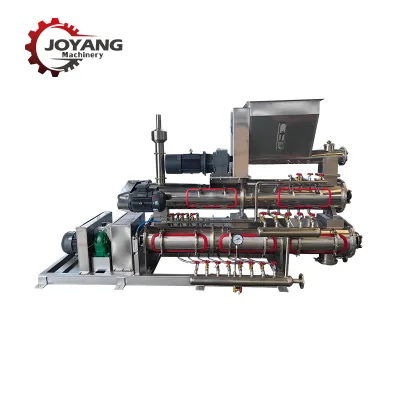
Stainless Steel Twin-Shaft Pre Conditioner for Pet Food Dog Food Extruder Machine
$2891.65 - $6196.39
MOQ: 1 Minimum


Dog Food Extruder Pet Food Production Line Food Extruders Machine for Sale
$9999.00 - $13000.00
MOQ: 1 Sets


Comprehensive Sourcing Guide
Strategic Sourcing Guide for Pet Food Extruders with Pre-Conditioners
Understanding the Core Technology and Operational Scope
The modern pet food manufacturing landscape relies heavily on twin-screw extrusion technology, where the integration of a pre-conditioner is not merely an optional add-on but a critical component for product quality and process efficiency. When sourcing a pet food extruder machine with a pre-conditioner, buyers must recognize that the pre-conditioner serves as the primary thermal processing stage before the material enters the extruder barrel. This stage is essential for gelatinizing starches, hydrating proteins, and ensuring uniform moisture distribution, which directly impacts the final texture, density, and digestibility of the pet food.
Based on available industry data, the core technology for these systems often features an automatic grade with full intermeshing engagement systems. This configuration ensures that the material is thoroughly mixed and sheared, which is vital for handling diverse feed types ranging from meat and bone meal to soybean meal. The machinery is typically designed as a separate type extruder, allowing for modular maintenance and specific customization of the processing line. The application scope is broad, covering the production of dry kibble for dogs, fish, birds, and cats, as well as aquatic feed. The process is fundamentally a thermal processing method, utilizing electric power sources to drive the mechanical actions required for extrusion.
Buyers should note that the system often includes advanced control interfaces, such as touch screens from reputable manufacturers like Siemens, to manage the heating temperature, which is adjustable to meet specific recipe requirements. The inclusion of an inverter, such as those from Rexroth, further enhances the precision of motor control, allowing for variable speed operations that adapt to different material viscosities. The core components of these machines are primarily electric, with motors serving as the heart of the operation, ensuring consistent torque and speed stability during high-volume production runs.
Technical Specifications and Material Construction
When evaluating the technical specifications of a pet food extruder with a pre-conditioner, the construction materials and mechanical design are paramount for longevity and food safety. The primary structural materials observed in high-quality units include steel and aluminum alloy. Steel is typically utilized for the main barrel and screw components due to its durability and resistance to wear under high pressure and temperature, while aluminum alloy may be employed in specific housing or non-contact parts to reduce weight and improve heat dissipation.
The precision of the manufacturing process is another critical technical factor. Many advanced units feature CNC machining and micro machining capabilities, which ensure tight tolerances for the screw elements and barrel liners. This level of precision is necessary to maintain the integrity of the full intermeshing engagement system, preventing material slippage and ensuring efficient energy transfer. The standard dimensions for certain models, such as the SET-100 or TLTE series, vary, with some specifications noting dimensions like 500500500mm for specific configurations, though buyers must verify the exact footprint against their facility layout.
The power requirements for these machines are often customizable, with voltage and wattage varying according to the specific machine type and capacity. For instance, the power consumption is listed as "according to the machine type," indicating that a 1200-unit capacity machine will have different electrical demands compared to a 100,000-unit capacity line. The heating temperature is adjustable, allowing operators to fine-tune the thermal processing parameters to achieve the desired starch gelatinization without degrading the nutritional value of the ingredients. The feed type compatibility is extensive, supporting a wide range of raw materials including meat and bone meal, soybean meal, and various grain-based formulations.
| Feature Category | Typical Specification | Verification Requirement |
|---|---|---|
| Material Grade | Steel, Aluminum Alloy | Verify food-grade certification for contact surfaces |
| Machining Type | CNC, Micro Machining | Confirm tolerance levels for screw elements |
| Control System | Touch Screen (Siemens), Inverter (Rexroth) | Check compatibility with local electrical standards |
| Engagement System | Full Intermeshing | Inspect screw geometry for material mixing efficiency |
| Power Source | Electric | Confirm voltage and wattage for facility compatibility |
| Assembly Structure | Separate Type Extruder | Assess maintenance access and modularity |
Compliance, Certification, and Safety Standards
Navigating the compliance landscape for pet food extruders requires a rigorous approach to verifying standards and certifications. While the supplied data indicates that some machines adhere to European Standards and may come with machinery test reports provided, buyers must independently verify the specific certification status of any unit they consider. The presence of a CE mark or ISO 9001 certification is often a baseline expectation in the industry, but these should not be assumed without documentation. Similarly, ISO 22000 compliance is relevant for food safety management systems, though its direct application to the machinery hardware must be confirmed through the supplier's quality management documentation.
Safety and hygiene are paramount in pet food production. The touch food parts of the machine are explicitly noted as being food-grade use, which is a critical requirement to prevent contamination. Buyers should request detailed material certificates for all food-contact surfaces to ensure they meet the regulatory requirements of their target market. The condition of the machinery is typically listed as "New," but the warranty coverage, often cited as one year for core components, provides a baseline for risk management. However, the scope of this warranty should be clearly defined in the contract, specifying what constitutes a core component and the terms for service and replacement.
The marketing type for these machines is often described as "Hot Sale," which can indicate high demand but does not inherently guarantee quality. Buyers should rely on the provided machinery test reports and the availability of a core component warranty as tangible indicators of reliability. The standard for the machinery, such as the European Standard, suggests a baseline for design and safety, but local regulations in the buyer's country may impose additional requirements. It is essential to verify that the machine's design complies with local electrical codes, pressure vessel regulations, and food safety laws before finalizing a purchase.
Cost Drivers and Financial Considerations
The financial landscape of sourcing a pet food extruder with a pre-conditioner is influenced by several key cost drivers, primarily related to customization, capacity, and component quality. The observed price range for these machines spans from $1,200 to $100,000, reflecting the vast difference between small-scale pilot units and large industrial production lines. This wide range underscores the importance of defining the exact production capacity and level of automation required before requesting quotes. The "Selling Units" are typically listed as single items, meaning the price is for the complete machine or line, not per unit of output.
Customization is a significant factor in the final cost. The availability of customization options allows buyers to tailor the machine to specific feed formulations and production goals, but this inevitably increases the price. The level of automation, indicated by the "Automatic Grade" and "Automatic" advantages, also drives costs up. Machines with advanced features like Siemens touch screens and Rexroth inverters command a premium over basic models. Furthermore, the material quality, such as the use of high-grade steel and aluminum alloy, contributes to the overall cost, as these materials are more expensive but offer superior durability and performance.
The minimum order quantity (MOQ) for these machines is generally low, often starting at 1 piece, which makes it accessible for small and medium-sized enterprises. However, buyers should be aware that while the MOQ is low, the lead time and shipping costs can be substantial, especially for international orders. The origin of the machinery, often listed as Jinan or Shandong, China, can influence shipping logistics and import duties. Buyers should factor in the total cost of ownership, including installation, training, and potential spare parts, rather than focusing solely on the initial purchase price. The "Energy-Saving" advantage is another cost driver, as machines designed for energy efficiency may have a higher upfront cost but offer long-term savings in operational expenses.
Typical Applications and Production Versatility
The versatility of pet food extruders with pre-conditioners is one of their most significant advantages, allowing them to handle a wide array of applications and feed types. The primary application areas include aquatic feed and pet food production, catering to dogs, fish, birds, and cats. The ability to process diverse raw materials, such as meat and bone meal and soybean meal, makes these machines highly adaptable to different market demands and seasonal ingredient availability. The pre-conditioner plays a crucial role in this versatility by ensuring that the material is properly hydrated and heated before extrusion, which is essential for achieving the desired texture and nutritional profile.
The production process is designed to be flexible, with adjustable heating temperatures and customizable power settings. This flexibility allows manufacturers to produce a variety of pet food products, from high-density kibble for large dogs to low-density, floating pellets for aquatic species. The "Full Intermeshing" engagement system ensures that the material is thoroughly mixed, which is critical for maintaining consistency across different product lines. The "Separate Type Extruder" assembly structure further enhances versatility by allowing for easy changes in screw configurations to accommodate different recipes.
Buyers should consider the specific needs of their target market when selecting a machine. For instance, a manufacturer focusing on premium dog food may require a machine with advanced control systems to ensure precise temperature and pressure control, while a producer of aquatic feed may prioritize the ability to handle high-moisture ingredients. The "Advantages" listed, such as "Excellent Quality" and "Energy-Saving," are relevant to all applications, but the specific benefits will vary depending on the production volume and product type. The "Marketing Type" of "Hot Sale" suggests that these machines are widely used and proven in the industry, making them a reliable choice for new entrants and established manufacturers alike.
Supplier Evaluation and Quality Assurance Protocols
Evaluating suppliers for pet food extruders requires a systematic approach to verifying their capabilities and track record. Buyers should prioritize suppliers who provide comprehensive machinery test reports and offer a clear warranty on core components, typically one year. The availability of ODM and OEM services is another key indicator of a supplier's flexibility and ability to meet specific customization needs. The "Service" attribute, including ODM and OEM, suggests that the supplier can tailor the machine to the buyer's unique requirements, which is essential for achieving optimal performance.
Quality assurance should be a central part of the supplier evaluation process. Buyers should request detailed documentation on the manufacturing process, including the use of CNC and micro machining, to ensure that the machine meets high precision standards. The "Condition" of the machine, typically listed as "New," should be verified through factory inspections or third-party audits. The "Place of Origin," often Shandong or Jinan, China, should be cross-referenced with the supplier's physical location to ensure transparency and accountability.
Buyers should also assess the supplier's after-sales support capabilities, including the availability of spare parts, technical training, and maintenance services. The "Core Component Warranty" of one year is a baseline, but buyers should inquire about the availability of extended warranties and the response time for technical support. The "Advantage" of being "Energy-Saving" and "Automatic" should be validated through performance data or case studies from existing customers. By thoroughly evaluating these factors, buyers can mitigate risks and ensure that they are investing in a reliable and high-performing pet food extruder system.
Long-Term Procurement and Operational Sustainability
Long-term procurement considerations for pet food extruders extend beyond the initial purchase price to include operational efficiency, maintenance costs, and scalability. The "Energy-Saving" advantage is a critical factor in reducing long-term operational expenses, as energy costs can accumulate significantly over the lifespan of the machine. Buyers should evaluate the energy efficiency of the machine based on its power consumption and the effectiveness of its thermal processing capabilities. The "Automatic Grade" and "Automatic" advantages also contribute to long-term sustainability by reducing labor costs and minimizing human error in the production process.
Scalability is another important consideration, as the pet food market is dynamic and subject to fluctuating demand. Buyers should select a machine that can be easily upgraded or expanded to meet future production needs. The "Separate Type Extruder" assembly structure and the availability of customization options make it easier to adapt the machine to changing requirements. The "Standard" of European compliance and the availability of machinery test reports provide a foundation for long-term reliability, but buyers should also consider the availability of local support and spare parts to minimize downtime.
Sustainability in the broader sense also involves the environmental impact of the production process. The use of energy-efficient motors and the ability to handle a wide range of raw materials, including by-products like meat and bone meal, can contribute to a more sustainable production model. Buyers should inquire about the supplier's commitment to environmental standards and the availability of eco-friendly options, such as recyclable packaging materials like the "Wooden Case" mentioned in the specifications. By focusing on long-term operational sustainability, buyers can ensure that their investment in a pet food extruder with a pre-conditioner remains viable and competitive in the evolving market.
FAQs
What customization options are available for pet food extruder machine with pre-conditioner?
Customization is available for this machine to meet specific production needs. Buyers can request tailored specifications for feed types like meat and bone meal or soybean meal, ensuring the equipment fits their unique manufacturing requirements.
Which materials are used to construct the pet food extruder machine with pre-conditioner?
The machine is constructed using steel and aluminum alloy for durability and food safety. Steel is typically used for the barrel and screws, while aluminum alloy may be employed in housing parts to reduce weight and improve heat dissipation.
Can the heating temperature be adjusted on the pet food extruder machine with pre-conditioner?
Yes, the heating temperature is adjustable to meet specific recipe requirements. This feature allows operators to fine-tune thermal processing parameters for optimal starch gelatinization without degrading the nutritional value of ingredients like dog or fish feed.
What is the minimum order quantity for a pet food extruder machine with pre-conditioner?
The minimum order quantity is one piece for this equipment. This low MOQ makes it accessible for small and medium-sized enterprises looking to start production without committing to large initial inventory volumes.
How long is the warranty period for core components of the pet food extruder machine with pre-conditioner?
The core component warranty is provided for one year. This coverage offers a baseline for risk management, though buyers should verify the specific scope of what constitutes a core component in the supplier contract.
Which application areas does the pet food extruder machine with pre-conditioner support?
The machine supports aquatic feed and pet food production for dogs, fish, birds, and cats. It is designed to handle diverse raw materials, ensuring versatility in manufacturing different types of kibble and pellets for various animal species.