Source Polarized Golf Sunglasses for Driving, Walking, and Sports
Compare 30 verified listings of Polarized Golf Sunglasses with features like UV400 protection and TAC lenses. Buyers can evaluate frame materials, customization options, and MOQs ranging from 2 to 1200 pieces for bulk procurement needs.
Key considerations
Products List


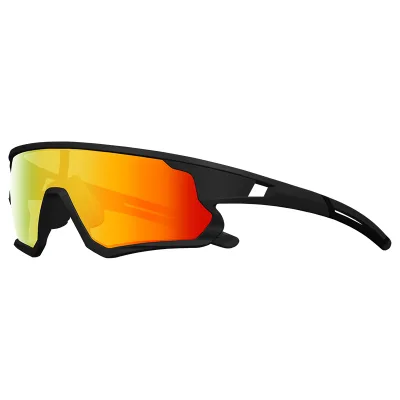


Best Mirrored Polarized Magnetic Sport Sunglasses for Baseball and Golf Glasses
$3.42 - $4.88
MOQ: 100 pieces


Customized Logo Sun Shades UV Protection Baseball and Golf Sport Sunglasses
$6.15 - $7.08
MOQ: 50 Pieces

High Quality Custom Logo Sun Glasses UV400 Baseball Golf Sport Sunglasses
$3.42 - $4.88
MOQ: 100 pieces


Comprehensive Sourcing Guide
Strategic Sourcing Guide for Polarized Golf Sunglasses
Understanding Product Specifications and Optical Performance
When sourcing Polarized Golf Sunglasses, buyers must first distinguish between general sports eyewear and products specifically engineered for the dynamic lighting conditions of a golf course. The core requirement for this category is the elimination of glare from water hazards, wet grass, and sand traps, which is achieved through polarization technology. In the current market, optical attributes vary significantly between models. Some listings explicitly identify lenses as "Polarized," while others may only claim "UV Style: Sports Sunglasses" or generic "UV 400" protection. For golf applications, the distinction is critical; a standard UV-blocking lens does not necessarily filter horizontal light waves, which is the primary function needed for visual clarity during play.
Material composition is the second pillar of specification. The frame material often dictates durability and weight, two factors that influence comfort during long rounds. Observed market data indicates a split between Polycarbonate (PC) and Acetate frames. PC frames are lightweight and highly impact-resistant, making them suitable for active sports where accidental drops or swings are a risk. Conversely, Acetate frames offer a premium aesthetic and rigidity, often associated with "Fashion Sunglasses" or "Visor Sunglasses" styles. The lens material also varies, with Triacetate Cellulose (TAC) being a common choice for polarized films due to its clarity and cost-effectiveness. Buyers should verify if the specific model utilizes TAC or other materials, as this affects the longevity of the polarization layer.
Size specifications are equally vital for fit and coverage. Golf sunglasses often require a wider field of view to track the ball against the sky. Available data points to specific dimension sets such as 52-17-140, 56-20-146, and 54-16-145, representing lens width, bridge width, and temple length respectively. A model with a 56mm lens width generally offers better peripheral vision than a 52mm model. Additionally, the "Type" classification varies between "Light-colored Sunglasses" and "Visor Sunglasses," suggesting different form factors that may suit different head shapes or personal preferences. The "Suitable for" attribute often lists "Long Face" or "Unisex," indicating that sizing and shape are designed to accommodate a broad demographic, which is beneficial for bulk procurement where gender-specific sizing might complicate inventory.
Compliance, Certification, and Market Standards
Navigating the regulatory landscape is a non-negotiable step in B2B procurement. While specific test reports are not always visible in initial product listings, buyers must demand evidence of compliance with recognized standards. The market data frequently references the "CE Standard" and "CE Certification." In the context of eyewear, this typically refers to compliance with European safety directives regarding optical quality and material safety. However, the presence of a CE mark alone does not guarantee that the polarization meets specific optical performance thresholds required for professional sports.
Buyers should verify that the "prod_standard" or packaging dimensions align with export requirements. For instance, some products list standard packaging dimensions like 832439 or 833724, which are critical for calculating freight costs and container utilization. Others may list non-standard dimensions like 1.9"x16.4", which could indicate a specific accessory or a unique packaging format. The "Market" designation often points to the intended region of sale, but it is the buyer's responsibility to ensure the product meets the specific regulatory requirements of their target market, whether that is the EU, North America, or Asia.
Certification checks should extend beyond the frame and lens to the packaging and labeling. Some suppliers offer "Customization" services, which can include branding on the packaging or the product itself. This is a significant advantage for private label buyers, but it requires strict quality control to ensure that the customization process does not compromise the integrity of the optical components. The "Age" attribute is consistently listed as "Adult," which simplifies compliance regarding child safety standards, as these products are not intended for pediatric use. However, buyers must still ensure that the materials used, such as the "Plastic" or "Acetate" mentioned in the specs, are free from harmful substances like lead or phthalates, which are often regulated in various jurisdictions.
Cost Drivers and Minimum Order Quantity Analysis
The pricing structure for Polarized Golf Sunglasses is influenced by a complex interplay of materials, customization, and order volume. The observed price range in the market spans from $0.25 to $19.99, a variance that reflects the difference between basic unbranded models and premium, fully customized units. The lower end of the spectrum typically corresponds to simple PC frames with basic TAC lenses and minimal packaging, often sold in high volumes. The higher end includes acetate frames, advanced polarization technologies, and custom branding options.
Minimum Order Quantity (MOQ) is a primary cost driver. The data reveals a wide range, from as low as 2 pieces to as high as 1200 pieces. This flexibility allows buyers to tailor their procurement strategy based on their risk tolerance and capital availability. Some models offer a very low entry point, such as an MOQ of 2 PCS, which is ideal for sampling or small boutique orders. Others, particularly those with complex customization or specific stock availability, may require an MOQ of 300 PCS or even 1200 PCS. It is important to note the distinction between "MOQ" and "MOQ for Ready Goods." For ready-to-ship items, the requirement might be lower, such as 12 pieces per color, whereas custom orders often demand higher volume commitments to justify the setup costs.
The "Advantage" attribute often highlights "Low MOQ Fast Delivery," suggesting that some suppliers have optimized their supply chains to offer agility. However, buyers should be cautious not to equate low MOQ with low quality. The cost per unit often decreases as the order volume increases, so the "Low MOQ" option might carry a higher unit price. Additionally, the "Sample Time" of 5-7 working days is a standard metric that affects the overall lead time. Buyers should factor this into their planning, especially if they are launching a new product line and need to validate the product before committing to a large order.
Typical Applications and User Demographics
Polarized Golf Sunglasses serve a specific functional niche within the broader sports eyewear market. The primary application is on the golf course, where the glare from the sky and the ground can significantly impact a player's ability to read the green and track the ball. The "Style" attribute often lists "Fashion Sunglasses" or "Visor Sunglasses," indicating that these products are designed to be worn not just for utility but also as a fashion statement. This dual purpose is crucial for the golf demographic, which often values the aesthetic of their equipment as much as its performance.
The "Suitable for" attributes, such as "Long Face" and "Unisex," suggest that the design is versatile. Golf is a sport played by a wide range of demographics, and a unisex design simplifies inventory management for retailers. The "Kind" attribute listing "Bands" might refer to the temple tips or a specific design element that ensures the glasses stay secure during the swing. This is a critical feature, as glasses that slip or fall during a swing can be distracting and dangerous.
Furthermore, the "Colors" available, including Blue, Pink, Orange, and Green, along with the option for "Any Pantone Color," allow for extensive customization. This is particularly relevant for corporate gifting, team uniforms, or brand-specific merchandise. The ability to match specific Pantone colors ensures that the sunglasses align perfectly with a company's branding guidelines. The "Lenses Color" of "Smoke" is a common default, offering a neutral tint that works well in various lighting conditions, but the availability of other colors allows buyers to target specific market segments or seasonal trends.
Supplier Evaluation and Quality Control Protocols
Evaluating a supplier for Polarized Golf Sunglasses requires a rigorous approach to verifying their capabilities and consistency. The "prod_origin" is frequently listed as "Wenzhou, China" or "Guangzhou, China," both of which are established manufacturing hubs for eyewear. While these locations indicate a mature supply chain, buyers should not assume that all suppliers in these regions offer the same level of quality. It is essential to verify the supplier's production capacity, quality control processes, and ability to meet specific customization requirements.
Quality control should begin with the verification of the "prod_packing" specifications. Consistent packaging is a sign of a disciplined manufacturer. Data shows various packing standards, such as "10PCS/Inner Box, 300PCS Per Export Carton" or "1PCS/Paper Box, 120PCS/Carton." Buyers should ensure that the packaging is robust enough to protect the lenses and frames during transit. The "Standard" for packing, such as "Opp Bags or Custom Package," should be clearly defined to avoid damage or confusion upon arrival.
When evaluating the optical quality, buyers must request samples to test the polarization efficiency. The "Lenses Optical Attribute" of "Polarized" must be verified through physical testing, as a label alone is insufficient. The "Advantage" of "Low MOQ Fast Delivery" is attractive, but it should not come at the expense of quality. Buyers should establish a clear quality assurance protocol that includes visual inspections for frame defects, lens clarity checks, and polarization testing. The "Sample Time" of 5-7 days is a reasonable benchmark, but buyers should also inquire about the time required for bulk production and the reliability of the supplier's delivery schedule.
Long-Term Procurement Considerations and Scalability
Sourcing Polarized Golf Sunglasses is not a one-time transaction but a long-term strategic partnership. Buyers should consider the scalability of the supplier's operations. The "Customization" availability is a key factor here, as it allows for brand evolution and product line expansion. A supplier that can accommodate changes in design, color, and packaging as the brand grows is invaluable. The "prod_model" numbers, such as FCZKS001, FCFSK9244, and FCLS8117, indicate a structured product catalog, which suggests that the supplier has a systematic approach to inventory management and product development.
Scalability also involves the ability to handle fluctuations in demand. The wide range of MOQs, from 2 to 1200 pieces, offers flexibility. However, buyers should plan for the possibility of needing larger volumes during peak seasons. The "MOQ for Ready Goods" of 12 pieces per color is a useful metric for maintaining a baseline inventory without overcommitting. For custom orders, the higher MOQs may require more advanced planning and forecasting.
Finally, buyers should consider the total cost of ownership, which includes not just the unit price but also shipping, duties, and potential returns. The "prod_standard" dimensions are critical for logistics planning, as they determine how many units can fit in a shipping container. A supplier that offers efficient packing solutions can significantly reduce freight costs. Additionally, the "Certification" status should be reviewed periodically to ensure ongoing compliance with changing regulations. By focusing on these long-term factors, buyers can build a resilient supply chain that supports their business growth and maintains high product standards.
Comparative Analysis of Product Attributes
To facilitate decision-making, the following table summarizes key attributes observed in the market data, highlighting the variations that buyers should consider when selecting a supplier.
| Attribute | Observation A | Observation B | Observation C | Observation D |
|---|---|---|---|---|
| Frame Material | PC | Acetate | Plastic | TRLenses Material:TAC |
| Lens Attribute | UVStyle:Sports | Polarized | UV 400 | N/A |
| MOQ | 2 PCS | 300 PCS | 12 PCS (Ready) | 1200 PCS |
| Size | 52-17-140 | 56-20-146 | 54-16-145 | N/A |
| Model ID | FCZKS001 | FCFSK9244 | FCLS8117 | OFFA1009 |
| Origin | Wenzhou, China | Guangzhou, China | China | N/A |
| Packing | 10PCS/Inner Box | 12PCS/Inner Box | 1PCS/Paper Box | CTN |
| Standard | CE Standard | CE | 832439 | 1.9"x16.4" |
This comparison underscores the diversity in the market. Buyers must align their specific needs with the appropriate product attributes. For instance, a buyer seeking a low-risk entry might choose Observation A with its low MOQ and PC frame, while a buyer looking for a premium, fashion-forward product might prefer Observation B with its Acetate frame and Polarized lenses. The key is to match the product specifications to the intended application and budget constraints.
FAQs
What frame materials are available for Polarized Golf Sunglasses?
Available frame materials include Polycarbonate and Acetate. Polycarbonate offers lightweight impact resistance suitable for active sports, while Acetate provides a premium aesthetic and rigidity often found in fashion styles.
Which lens optical attributes ensure glare reduction for golf?
Look for lenses explicitly labeled as Polarized to eliminate glare from water and grass. Standard UV protection alone does not filter horizontal light waves, which is critical for visual clarity during play.
Can I find suppliers with low minimum order quantities?
Yes, suppliers offer Minimum Order Quantities ranging from 2 pieces to 1200 pieces. Some ready goods options allow orders as low as 12 pieces per color, while custom orders may require higher volumes.
What certifications are standard for these eyewear products?
Products frequently carry CE Standard certification and CE marks. This indicates compliance with European safety directives regarding optical quality and material safety, though specific optical performance thresholds should be verified.
How do I verify the size specifications for a proper fit?
Check the size specifications listed as lens width, bridge width, and temple length, such as 52-17-140 or 56-20-146. A wider lens width generally offers better peripheral vision for tracking the ball.
Which supplier locations are common for sourcing these items?
Common manufacturing origins include Wenzhou and Guangzhou in China. These established hubs offer mature supply chains, but buyers should verify specific quality control processes for each facility.