Source Pleated PP Water Filter Element for Industry Uses
Find 30 options for the Pleated PP Water Filter Element designed for high-flow applications in medicine, food and beverage, and industrial settings. Compare specifications such as micron ratings from 0.1 to 100um, pressure limits, and material compositions to identify the right solution for your wastewater treatment or chemical processing needs.
Key considerations
Products List


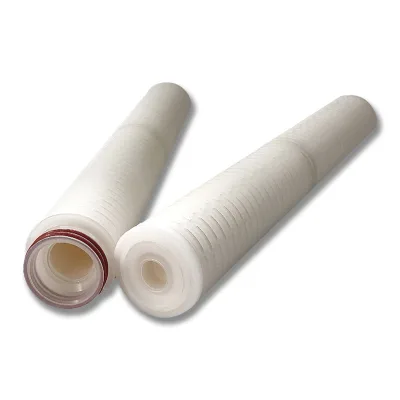

Wastewater Treatment Polypropylene High Flow Pleated Water Filter Element
$16.00 - $20.00
MOQ: 100 Pieces


Darlly 40 Inch High Flow PP Pleated Filter Elements for Water Filtration
$35.00 - $80.00
MOQ: 4 Pieces


Comprehensive Sourcing Guide
Pleated PP Water Filter Element Sourcing Guide
Buyers must first align the observed product attributes with their specific process requirements, noting that these elements are explicitly designed for applications in medicine, food and beverage, industry, and metallurgy. The available listings indicate a filtration grade ranging from pre-filter to medium filter, with a structure that is consistently pleated to maximize surface area. This configuration supports high-flow capabilities, making the component suitable for demanding wastewater treatment and chemical industry processes where efficiency is paramount.
Procurement teams should verify that the physical dimensions match their housing systems, as observed specifications include a 40-inch length with a 152mm outer diameter and an 89mm inner diameter. The media composition is primarily polypropylene, though some listings suggest options involving glass fiber or specific nominal and absolute ratings. Understanding these material variations is critical before placing an order, as the choice between PP nominal and PP absolute media directly impacts the removal rating and overall filtration performance for the intended application.
Product Scope and Observed Listing Signals
The market signals for this category reveal a diverse range of removal ratings, specifically 0.1, 0.22, 0.45, 1, 3, and 5 microns, which allows for precise selection based on particulate load. Buyers will encounter models such as HMK, HMD, and HMPHF, each potentially serving different operational needs within the same product family. The observed price range of 0.43 to 159 USD suggests significant variation based on micron rating, media density, and customization levels, requiring careful budget alignment with technical specifications.
Packaging methods vary across suppliers, with options including carton boxes, polybags with boxes, or shrink wrap and box packages, which influences logistics planning and storage requirements. The minimum order quantities observed span from 1 to 1000 units, offering flexibility for both pilot testing and large-scale industrial deployment. Sourcing teams must confirm whether the supplier offers customization for size and structure, as standard offerings may not fit non-standard housing configurations found in older or specialized processing lines.
Technical Specifications to Verify
Verification of the maximum working pressure and temperature limits is essential to ensure system safety and longevity, as observed data indicates a limit of 0.42 MPa and 80 degrees Celsius, with a normal operating temperature of 60 degrees. The flow direction is consistently specified as from inside to outside, a critical detail for proper installation that prevents media collapse or bypass. Buyers must confirm that the end covers are made of polypropylene to maintain chemical compatibility with the filter media and the process fluid being treated.
The support layer composition is another vital technical parameter, with polypropylene identified as the standard material for structural integrity. Gasket and O-ring options typically include EPDM, silicone, or PTFE-coated materials, which must be selected based on the chemical resistance required for the specific fluid. Additionally, the motive force is identified as pressure-driven, meaning the system design must provide adequate differential pressure to achieve the desired flow rate without exceeding the element's structural limits.
Compliance and Safety Documentation
While specific certification documents are not listed in the provided facts, buyers should request evidence of compliance with relevant industry standards for materials used in food and beverage or pharmaceutical applications. The presence of polypropylene as the primary material generally implies a baseline of chemical inertness, but verification of FDA or equivalent regulatory compliance is necessary for sensitive applications. Procurement teams must ensure that the supplier can provide material safety data sheets (MSDS) that confirm the absence of harmful leachables in the final product.
Documentation regarding the removal ratings should be supported by independent test results, particularly for critical micron ratings like 0.1 or 0.22 microns. Buyers should ask for validation of the efficiency claims, such as "Efficient Filtration," through standardized testing protocols rather than relying solely on manufacturer assertions. Ensuring that the supplier maintains a clear audit trail for the production of these elements helps mitigate risks associated with product failure in regulated environments.
Cost Drivers and Commercial Terms
The final cost of the filter element is heavily influenced by the selected removal rating and the complexity of the media structure, with finer ratings like 0.1 microns typically commanding higher prices than coarser 5-micron options. Customization of size and structure adds a variable cost component that must be factored into the total budget, as standard 40-inch models are generally more economical than bespoke dimensions. Buyers should analyze the trade-off between initial unit cost and the expected service life, as higher-quality media may reduce replacement frequency despite a higher upfront price.
Commercial terms regarding minimum order quantities and lead times are critical for supply chain planning, with observed MOQs ranging from single units to thousands. The origin of the product, primarily from China and specifically Zhejiang, impacts shipping costs and delivery schedules, which should be calculated into the total landed cost. Negotiating favorable payment terms and understanding the supplier's capacity to handle rush orders can significantly affect the overall procurement strategy and operational continuity.
Supplier Qualification and Quality Control
Evaluating the supplier's manufacturing capabilities is crucial, as the observed product origin points to a specific region known for filtration manufacturing but requiring due diligence on individual facility standards. Buyers should assess the supplier's ability to maintain consistent quality across different production batches, especially given the variation in removal ratings and media types. Requesting samples for internal testing is a standard practice to verify that the physical attributes, such as pleat density and end cap integrity, match the provided specifications.
Quality control processes should include checks on the structural integrity of the pleated design and the bonding of the support layer to the end covers. Since the product is used in critical applications like wastewater treatment and chemical processing, the supplier must demonstrate a robust system for detecting defects before shipment. Buyers should inquire about the supplier's history of handling returns or complaints related to premature failure, as this provides insight into their commitment to product reliability and customer support.
Long-Term Procurement Checks
Establishing a long-term relationship with a supplier requires regular performance reviews to ensure that the filter elements continue to meet the evolving needs of the production line. Buyers should monitor the consistency of removal ratings over time, as variations in media quality can lead to unexpected breakthroughs or increased pressure drops. Maintaining a stock of critical spare parts, such as specific micron ratings or custom sizes, helps prevent operational downtime during unexpected equipment failures or maintenance schedules.
Periodic re-evaluation of the supplier's pricing and lead times is necessary to adapt to market fluctuations and changes in raw material costs. As the industry evolves, new standards or more efficient filtration technologies may emerge, requiring buyers to stay informed about potential upgrades or replacements for their current inventory. Building a flexible procurement strategy that allows for adjustments in order volume and specifications ensures that the organization remains resilient against supply chain disruptions and changing operational demands.
FAQs
How does a Pleated PP Water Filter Element work?
A Pleated PP Water Filter Element filters water from inside to outside, so contaminants collect on the pleated polypropylene media surface while clean water passes outward. The pleated structure increases filtration area within a compact footprint, supporting high flow rates at lower pressure drop. Typical models operate at pressures up to 0.42MPa and temperatures up to 80 degrees, normally 60 degrees.
What micron ratings are available for Pleated PP Water Filter Element products?
Pleated PP Water Filter Element products commonly cover a filtration range of 1 to 100 microns, with removal ratings offered at 0.1, 0.22, 0.45, 1, 3, and 5 microns on specific models. The right rating depends on your water quality target and downstream equipment. Pre-filter grades handle coarser particles, while finer ratings polish water before sensitive processes.
What sizes and lengths can Pleated PP Water Filter Element suppliers provide?
Suppliers list common lengths of 20, 40, and 60 inches, with outer diameters around 152mm or 160mm and inner diameters around 89mm. Customized sizes are also available, since most listings state that customization and custom sizing are supported. Confirm your housing dimensions, end cap configuration, and gasket material before ordering to ensure a proper seal.
Which applications suit a Pleated PP Water Filter Element?
Listed applications include wastewater treatment, medicine, food and beverage, industry, metallurgy, textile, and chemical processing. The polypropylene media and end covers suit aqueous and general industrial liquids. Choose the filtration grade, media type such as glass fiber or PP nominal or absolute, and micron rating based on your process requirements and fluid compatibility.
Can Pleated PP Water Filter Element products be customized for my housing?
Yes, customization is available on listed products, covering size, length, and filtration specifications. Buyers can specify dimensions, micron rating, and gasket or O-ring materials such as EPDM, silicone, PTFE coated, or others. Provide your housing model, required flow rate, and operating conditions so the manufacturer can match the element design and confirm packing options like polybag and box.
What operating conditions can a Pleated PP Water Filter Element handle?
Listed specifications show a maximum working pressure of 0.42MPa and a maximum working temperature of 80 degrees, with 60 degrees as the normal operating level. Staying within these limits preserves media integrity and seal life. The support layer and end covers are polypropylene, so check chemical compatibility with your fluid before continuous hot or aggressive service.