Source PLC Trainer Systems for University Labs and Training
Source 30 PLC Trainer models for university didactic equipment, basic program logic control, and microcontroller learning. Compare specifications, certifications, and pricing to find the right industrial gray training systems for your educational needs; compare the available evidence and request quotations based on your requirements.
Key considerations
Products List


$2000.00 - $19900.00
MOQ: 1 Sets


Vocational Training Equipment Teaching Equipment Microcontroller Trainer
$1.00 - $10000.00
MOQ: 1 Pieces

PLC Communication Trainer with Software PLC Training Equipment Educational Equipment
$1000.00 - $8000.00
MOQ: 1 Sets

Conveyor Trainer Motion Control Trainer Vocational Training Equipment Mechatronics Lab
$1000.00 - $3000.00
MOQ: 3 Sets


$50.00 - $100.00
MOQ: 1 Pieces

$50.00 - $100.00
MOQ: 1 Pieces


Programmable Logic Controllers PLC Controlling System
$1000.00 - $5000.00
MOQ: 1 Pieces
LIAONING XINLAI INTELLIGENT EQUIPMENT MANUFACTURING CO LIMITED
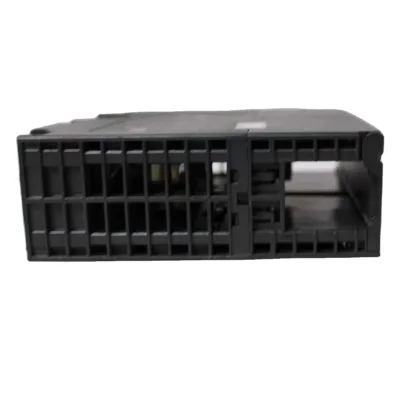

PLC Module PLC Programm Controller Make
$99.72 - $150.62
MOQ: 1 sets
Ji' Nan Tian Chuan Zhong Cheng Electricity Equipment Co., Ltd.


PLC Controller Server Driver Brand
$38.00 - $57.00
MOQ: 1 Pieces
Ji' Nan Tian Chuan Zhong Cheng Electricity Equipment Co., Ltd.


Comprehensive Sourcing Guide
PLC Trainer Sourcing Guide
Procurement professionals evaluating PLC Trainer systems must first distinguish between basic logic control units and advanced microcontroller platforms. The market presents distinct configurations, ranging from compact 25kg industrial gray units to heavy-duty 190kg systems designed for university didactic environments. Buyers should verify whether the specific model supports custom programming requirements or operates as a standardized non-customized unit, as this dictates the flexibility of the curriculum integration.
The observed product range spans from entry-level microcontroller trainers to comprehensive PLC systems with varying power requirements. While some units operate on standard 220V/50Hz power, others may require specific voltage adaptations depending on the regional grid. Sourcing teams must carefully align the physical dimensions and weight of the equipment with their laboratory space constraints, ensuring that the selected trainer fits within the available footprint without compromising safety or accessibility for students.
Product Scope and Observed Listing Signals
Buyers analyzing current listings will encounter a diverse array of product models, including the SR6121, ZE4119, and GC-PLCB01/24, each serving different educational tiers. The scope extends from basic program logic control trainers to specialized analog input modules, with some units explicitly marked as new products while others represent active product lifecycles. It is critical to note that not every listed product satisfies all observed attributes, such as the specific 650600550mm dimensions or the 16509001980mm footprint, requiring careful filtering based on the intended teaching application.
Commercial signals indicate that suppliers offer flexible packaging options, including wooden pallets, plywood crates, and plastic film with cardboard boxes. The sales units are often subject to actual availability, and the functional purpose is consistently defined as teaching and learning for technical institutions. Procurement teams should scrutinize the "Customized" attribute, as some listings offer available customization while others are strictly non-customized, directly impacting the ability to tailor the trainer to specific course modules or institutional branding needs.
Technical Specifications to Verify
Technical due diligence requires a rigorous comparison of dimensional data and power specifications against the physical constraints of the training facility. The observed data includes specific dimensions such as 650600550mm and 16509001980mm, alongside weight variations from 20kg to 190kg. Buyers must confirm that the selected unit's power rating of 220V/50Hz matches the local electrical infrastructure to prevent operational failures or the need for costly voltage conversion equipment during installation.
Material composition and structural integrity are equally vital, with listings citing aluminum and PVC as primary construction materials. The weight specifications, ranging from light 25kg units to heavy 190kg systems, influence logistics planning and floor load requirements. Procurement officers should verify the exact model number, such as ZE3196 or TB241022S03, to ensure the hardware supports the required programming languages and I/O configurations, as the internal architecture varies significantly between microcontroller trainers and full-scale PLC systems.
Compliance and Safety Documentation
Safety and regulatory compliance are paramount when acquiring educational equipment that students will handle directly. The supplied facts indicate that many units carry ISO9001 certification and CE marks, which are essential for demonstrating adherence to international quality and safety standards. Buyers must request valid certification documents for each specific model to ensure that the equipment meets the regulatory requirements of the destination country, particularly regarding electrical safety and electromagnetic compatibility.
Warranty terms provide a critical layer of protection for the educational institution, with observed durations ranging from one year to two years. It is imperative to verify the specific warranty coverage for the chosen model, as terms may vary between the basic program logic control trainer and more complex microcontroller systems. Procurement teams should also confirm the origin of the product, noting that many units are manufactured in China or specifically in Shandong, to assess the reliability of the supply chain and the availability of local technical support.
Cost Drivers and Commercial Terms
Pricing for PLC trainers is influenced by a complex mix of factors, including the complexity of the internal circuitry, the quality of the enclosure materials, and the level of customization offered. The observed price range is extensive, spanning from $1 to $19,900, reflecting the difference between simple microcontroller boards and comprehensive industrial-grade trainer systems. Buyers must understand that the final cost is not merely a function of the hardware but also includes the value of the included software, documentation, and the depth of the didactic support provided.
Commercial terms such as FOB and CIF are standard for international transactions, requiring careful calculation of total landed costs. Payment modes typically include T/T and L/C, offering flexibility for different transaction sizes and risk profiles. The minimum order quantity (MOQ) is generally low, ranging from 1 to 3 units, which allows educational institutions to purchase single units for pilot programs or small batches for specific courses without committing to large inventory volumes.
Supplier Qualification and Quality Control
Supplier qualification should focus on verifying the consistency of product standards and the robustness of the manufacturing process. The presence of ISO9001 certification suggests a commitment to quality management, but buyers must ensure this applies to the specific production line for the ordered model. It is advisable to request recent test results or quality assurance reports that confirm the unit meets the specified dimensions and weight tolerances, ensuring that the delivered product matches the technical specifications provided in the listing.
Quality control extends to the packaging and shipping process, where options like wooden boxes and plywood crates are used to protect sensitive electronic components. Buyers should verify that the packaging is suitable for the specific weight and fragility of the unit, particularly for heavier models weighing up to 190kg. Ensuring that the supplier has a proven track record of delivering products in "New" condition is essential to avoid receiving refurbished or damaged equipment that could disrupt the academic schedule.
Long-Term Procurement Checks
Long-term procurement success depends on establishing a reliable supply chain for spare parts and future upgrades. Buyers should confirm the product lifecycle status, noting that some models are active while others may be transitioning, which affects the availability of replacement components. The export control regulations, such as ECCN 9n9999, must be reviewed to ensure that the equipment can be legally imported and used in the target region without violating international trade restrictions.
Maintenance and support capabilities are critical for the longevity of the training equipment. Institutions should verify the availability of technical documentation, software updates, and the supplier's capacity to provide remote or on-site troubleshooting. Establishing a clear communication channel for warranty claims and technical support ensures that the PLC Trainer remains a functional asset for years, supporting the continuous educational needs of the university or technical college without interruption.
FAQs
What is the typical weight of a PLC Trainer system?
The weight varies significantly by model and configuration. For instance, the SR6121 model weighs 25kgs, while the ZE4119 Basic Program Logic Control Trainer weighs 190kgs. Some units are listed under 200kg, and smaller microcontroller trainers may weigh only 20kgs. Buyers should check the specific product model to determine the exact shipping weight and handling requirements for their facility.
Can I customize the PLC Trainer for my university lab?
Yes, customization is available for many PLC Trainer systems. The product attributes indicate that customized options are offered, allowing institutions to tailor equipment to specific didactic needs. This ensures the training aligns with your curriculum. Buyers should contact suppliers directly to discuss specific customization requirements, such as module selection or interface adjustments, to ensure the final product meets their educational goals.
What certifications do these PLC trainers typically hold?
Common certifications include ISO9001 for quality management and CE for European compliance. The SR6121 model is noted with ISO certification, while other units carry CE marks. These certifications ensure the equipment meets international safety and quality standards for educational use. Buyers should verify the specific certification status for each model before purchase to ensure compliance with their local regulatory requirements.
What is the standard power supply for these trainers?
The standard power supply for many PLC trainers is 220V/50Hz. This specification is common across various models, including the SR6121. Buyers should ensure their facility has the appropriate power infrastructure to support this voltage and frequency. Always verify the power requirements for the specific model you intend to purchase to avoid compatibility issues with your local electrical grid.
How are PLC trainers typically packaged for shipping?
Packaging methods vary by model and supplier. Common options include wooden pallets, wooden boxes, plywood crates, and plastic film with cardboard boxes. The SR6121 uses a wooden pallet, while other models may use plywood or carton packaging. Proper packaging ensures the equipment arrives undamaged. Buyers should confirm the packaging type with the supplier to ensure adequate protection during transit.
What payment modes are accepted for PLC Trainer orders?
Standard payment modes include T/T (Telegraphic Transfer) and L/C (Letter of Credit). These methods are commonly accepted for B2B transactions involving PLC trainers. Buyers should discuss payment terms with the supplier to determine the most suitable option for their financial processes. Understanding the payment mode helps in planning the procurement budget and ensuring smooth transaction completion.