Source Pleated Tennis Workout Set for Gym, Yoga, and Tennis
Compare 30 verified listings for the Pleated Tennis Workout Set, featuring breathable fabrics, custom logos, and flexible MOQs. Buyers can evaluate specifications like fabric weight, size ranges, and packing options to find suitable gym, yoga, or tennis apparel.
Key considerations
Products List


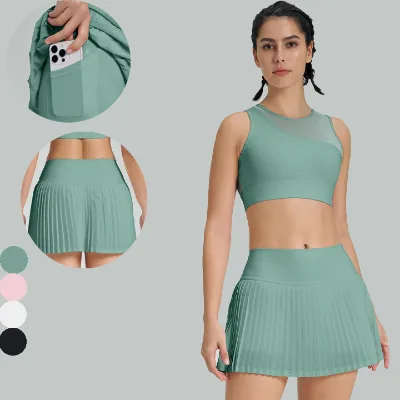
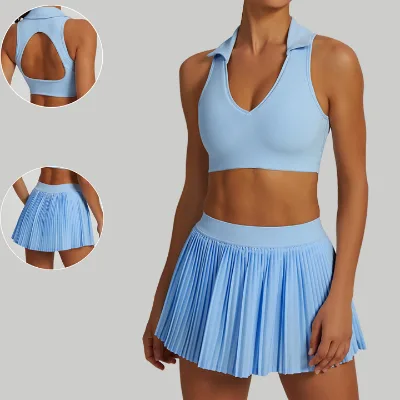
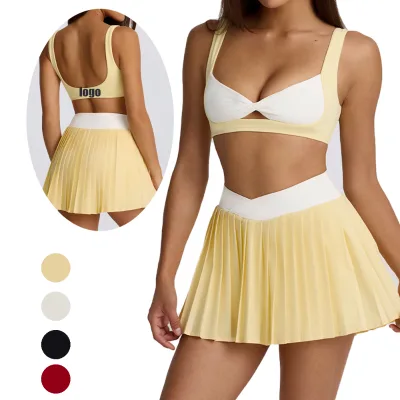
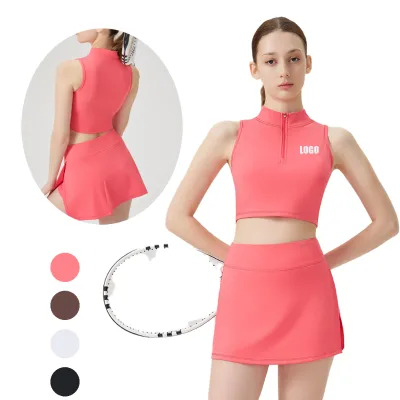


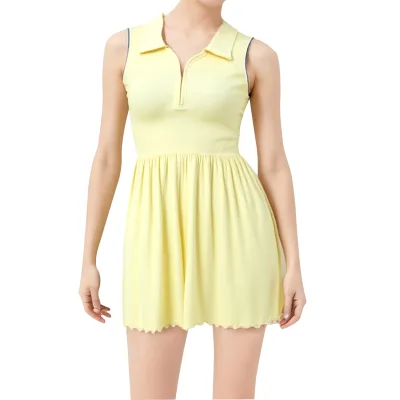
Women's Pleated Tennis Skirt Set with Pockets - 2 Piece Athletic Wear
$10.00 - $12.00
MOQ: 1000 Pieces




Comprehensive Sourcing Guide
Strategic Sourcing Guide for Pleated Tennis Workout Sets
Navigating the global market for athletic apparel requires a disciplined approach, particularly when sourcing specialized items like pleated tennis workout sets. These garments demand a precise balance of aesthetic appeal, functional performance, and supply chain reliability. For procurement professionals, the process begins with a clear understanding of the product's technical architecture and the specific attributes that define a high-quality set. The following guide outlines the essential steps for evaluating suppliers, verifying specifications, and ensuring that the final product meets the rigorous demands of competitive sports and active lifestyles.
Defining Technical Specifications and Material Composition
The foundation of a successful procurement strategy lies in the accurate definition of technical specifications. When sourcing a Pleated Tennis Workout Set, buyers must distinguish between generic athletic wear and items engineered for the specific biomechanics of tennis. The core component of this category is the fabric composition. High-performance sets typically utilize a blend of synthetic fibers designed to manage moisture and provide elasticity. Based on observed market data, common material profiles include Spandex, Nylon, and Polyester combinations. These materials are selected for their ability to offer four-way stretch, ensuring unrestricted movement during lateral court movements.
The construction of the set often involves a two-piece configuration, comprising a top and a bottom. The top may feature a halter strap design or a sleeveless cut, both of which are standard for tennis to maximize shoulder mobility. The bottom component is frequently designed as shorts with a high waist type and an elastic waist closure, providing a secure fit that prevents shifting during play. A critical aesthetic and functional element is the pleating. This design feature not only adds volume and a classic tennis silhouette but also facilitates airflow and freedom of motion.
Buyers should verify the specific model numbers and standard sizing ranges when placing orders. Observed specifications indicate that models often carry alphanumeric identifiers such as TZ5555-2 or RY-2004, which help in tracking inventory and ensuring consistency across batches. Sizing typically ranges from Small to Extra Large, though some suppliers may offer extended ranges up to 3XL. It is imperative to confirm that the "pleated" attribute is explicitly defined in the product description, as this distinguishes the item from standard flat-cut athletic shorts. Additionally, the fabric weight, often observed around 300 grams for the set, is a key indicator of durability and opacity, ensuring the garment is suitable for high-intensity activity without becoming see-through.
Compliance, Certification, and Safety Standards
In the B2B apparel sector, compliance is not merely a formality but a critical risk mitigation strategy. While specific certification status varies by supplier, buyers must rigorously verify that their chosen manufacturer adheres to international safety and quality standards. One notable attribute observed in high-quality athletic wear is the implementation of needle detection systems. This process ensures that no metal fragments remain in the finished product, a crucial safety feature for garments intended for close physical contact and high movement.
When evaluating a supplier, procurement teams should request documentation regarding their quality control protocols. This includes verifying if the factory employs needle detection and other metal detection technologies as part of their final inspection process. Furthermore, the production standards should align with the intended market's regulations. For instance, the standard "S-3XL" sizing and specific fabric compositions like Polyester/Spandex must be consistent with the declared product standards. Buyers should also inquire about the "Needle detection: Yes" attribute as a baseline requirement, ensuring that the supplier has the infrastructure to maintain product safety.
Beyond physical safety, environmental and ethical compliance is increasingly important. Attributes such as "Eco-Friendly" and "Recyclable" are becoming standard expectations for modern athletic wear. While these claims should be treated as observations rather than guaranteed certifications without third-party verification, buyers should ask for evidence of sustainable practices. This includes verifying the source of the raw materials and the dyeing processes used. The "Customized" nature of many logos and patterns also implies a need for strict control over intellectual property and branding rights, ensuring that the supplier respects the buyer's design specifications without unauthorized duplication.
Cost Drivers and Pricing Dynamics
Understanding the cost structure of pleated tennis workout sets is essential for budgeting and negotiation. The observed price range in the market spans from approximately 7.83 to 30 USD per unit, a variance that reflects differences in material quality, production complexity, and order volume. Several factors drive these costs. The primary driver is the material blend; sets utilizing high-grade Spandex and Nylon blends with advanced features like "Seamless" construction or "Heat-Transfer Printing" will command a premium over basic polyester options.
The complexity of the pleating design also influences pricing. Creating uniform, durable pleats requires additional manufacturing steps compared to flat-cut garments. Suppliers offering "Customized" logos and specific colorways, such as Light Green, Pink, White, or Black, may incur higher setup costs, especially for smaller order quantities. The "1 Set/Polybag" or "1 PCS/Poly Bag" packing method is standard, but the choice between sea freight and other shipping methods can impact the landed cost significantly.
Order volume is another critical cost driver. The Minimum Order Quantity (MOQ) observed in the market ranges from 1 to 5000 units. Buyers purchasing at the lower end of this spectrum, such as single items or small batches, will likely face a higher unit price. Conversely, larger orders can leverage economies of scale to reduce the per-unit cost. It is important to note that "In-Stock Items" may offer faster delivery but could come with a different pricing structure compared to made-to-order production. Buyers should analyze the total cost of ownership, including shipping, duties, and potential rework costs, rather than focusing solely on the base unit price.
Typical Applications and Usage Scenarios
The versatility of pleated tennis workout sets extends beyond the tennis court, making them a valuable asset for various athletic and recreational activities. The primary application is, of course, tennis, where the combination of breathability, quick-dry properties, and four-way stretch is essential. The "Breathable" and "Sweat-Wicking" features observed in product attributes are specifically designed to manage body temperature and moisture during intense rallies.
However, the utility of these sets is not limited to tennis. The "Occasion" attribute often lists Yoga, Sports, and Gym, indicating that these garments are suitable for a wide range of fitness activities. The high waist and elastic closure provide the necessary support for core exercises, while the lightweight and active stretch properties make them ideal for yoga flows and gym workouts. The "Style: Kits" designation suggests that these sets are marketed as complete ensembles, which is particularly appealing for team sports or group fitness classes where uniformity is desired.
For buyers, understanding these diverse applications can inform marketing strategies and inventory planning. A set designed with "Seamless" construction and "Lightweight" fabric may appeal to a broader demographic, including casual athletes and fitness enthusiasts who value comfort and style. The "Print" pattern type and available color options allow for customization to match team colors or brand identities, further expanding the potential market reach.
Supplier Evaluation and Quality Control Protocols
Selecting the right supplier is the most critical step in the procurement process. Buyers should prioritize suppliers who demonstrate transparency in their production capabilities and quality control measures. The "Place of Origin" is often listed as China, specifically regions like Zhejiang, which is known for its robust textile industry. However, the location alone is not a guarantee of quality; buyers must assess the supplier's specific track record and infrastructure.
Key evaluation criteria include the supplier's ability to handle "Customized" orders, their lead times, and their sample order support. Many suppliers offer a "7 days sample order lead time," which is a positive indicator of their responsiveness and agility. Buyers should request samples to verify the "Fabric Weight," "Single gross weight," and "Single package size" (e.g., 25X10X2 cm) against the product specifications. This physical verification ensures that the supplier can meet the exact requirements before committing to a large order.
Quality control should be integrated into every stage of the production process. Buyers should verify that the supplier conducts inspections for "Needle detection" and other safety checks. Additionally, the "Technics" used in production, such as "Heat-Transfer Printing," should be consistent with the desired finish and durability. A robust quality control plan includes pre-production, in-line, and final inspections to catch any defects early. Suppliers who offer "Support Custom" for logos and patterns should also have a clear process for approving proofs and ensuring color accuracy.
Long-Term Procurement Considerations and Relationship Management
Building a sustainable supply chain requires a long-term perspective. Buyers should look for suppliers who can scale with their business needs, offering flexibility in order quantities and lead times. The "Supply Type: In-Stock Items" suggests that some suppliers can provide immediate fulfillment, which is beneficial for urgent needs or testing new markets. However, for long-term growth, a partnership with a supplier capable of custom manufacturing is often more valuable.
Communication and reliability are paramount. Suppliers who provide clear information on "Lead Time" and "Packing" methods (e.g., "Carton" or "Polybag") help buyers plan their logistics more effectively. The ability to support "Customized" orders with specific "Colors" and "Patterns" allows buyers to differentiate their products in a competitive market. Furthermore, maintaining a relationship with a supplier who adheres to high standards of "Eco-Friendly" and "Recyclable" practices can enhance the brand's reputation and appeal to environmentally conscious consumers.
In conclusion, sourcing pleated tennis workout sets requires a meticulous approach that balances technical specifications, compliance, cost, and supplier reliability. By focusing on the core attributes such as fabric composition, safety standards, and production capabilities, buyers can secure high-quality products that meet the demands of the modern athletic market. The observed data provides a solid foundation for making informed decisions, but continuous verification and relationship building are essential for long-term success in B2B procurement.
FAQs
What materials are used for pleated tennis workout sets?
These sets typically use a blend of Spandex, Nylon, and Polyester to ensure four-way stretch and moisture management. The fabric weight is often around 300 grams, providing durability and opacity for high-intensity activity without becoming see-through.
Can suppliers customize logos on these workout sets?
Yes, most manufacturers support custom logo placement on the garments. Buyers can request specific branding on the set, which often requires a minimum order quantity that varies by supplier and production complexity.
What is the typical price range for these athletic sets?
The observed market price ranges from approximately 7.83 to 30 USD per unit. This variance depends on material quality, production complexity, and the specific order volume placed with the supplier.
Which safety standards are applied during production?
High-quality production often includes needle detection systems to ensure no metal fragments remain in the finished product. Buyers should verify that the supplier employs this safety check as part of their final inspection process.
How long does it take to receive a sample order?
Many suppliers offer a sample order lead time of 7 days for quick evaluation. This allows buyers to verify fabric weight and package dimensions before committing to a larger bulk order.
What is the minimum order quantity for these sets?
The minimum order quantity observed in the market ranges from 1 to 5000 units. Smaller orders may incur higher unit prices, while larger volumes leverage economies of scale to reduce costs.
Where are these athletic apparel sets typically manufactured?
The primary place of origin for these products is China, with specific manufacturing hubs in Zhejiang. Buyers should confirm the specific location to assess logistics and shipping requirements for their region.