Source Pneumatic Linear Aerosol Filling Machine for Cosmetics, Paint, and Cleaning
Explore 30 listings for the Pneumatic Linear Aerosol Filling Machine designed for cosmetics, paint, and cleaning products. Buyers can compare models like QGQ and QGBW-2 with ISO9001 certification and pneumatic lifting structures.
Key considerations
Products List


$16999.00 - $70000.00
MOQ: 1 Set


Top Quality Pneumatic Aerosol Filling Machine for Pharmaceutical Aerosols
$30000.00 - $80000.00
MOQ: 1 Pieces


Automatic/Full-Automatic Linear Liquid Bottle Aerosol Spray Filling Sealed Machine
$17985.00 - $26582.00
MOQ: 1 Pieces

Advanced Stainless Steel Automatic Aerosol Filling Machine for Efficient Production
$1500.00 - $5000.00
MOQ: 1 Pieces


Linear Auto Aerosol Filling Sealing Capping Machine Line 2400~3600bph
$5000.00 - $56548.00
MOQ: 1 Sets
Comprehensive Sourcing Guide
Strategic Sourcing Guide for Pneumatic Linear Aerosol Filling Machines
The global demand for automated packaging solutions has elevated the importance of pneumatic linear aerosol filling machines in the manufacturing sector. These systems are engineered to handle the specific challenges of pressurized product dispensing, offering a balance between operational speed and precision. For procurement professionals, navigating the market requires a disciplined approach that distinguishes between verified technical attributes and generic marketing claims. This guide synthesizes observed market data and technical specifications to provide a robust framework for sourcing these critical assets.
Technical Architecture and Operational Mechanics
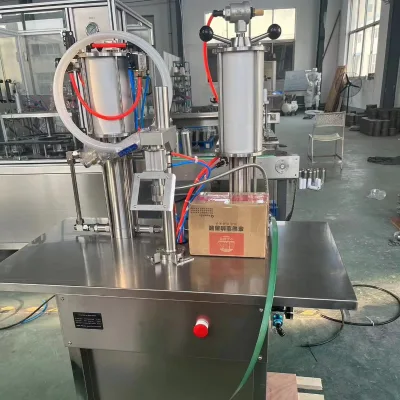
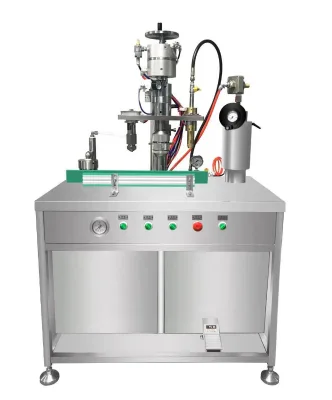
Understanding the mechanical architecture of a Pneumatic Linear Aerosol Filling Machine is the first step in defining procurement requirements. The core of these systems typically relies on a linear structure, which arranges the filling stations in a straight line to optimize floor space and streamline the workflow. The driving force behind the operation is often pneumatic, utilizing compressed air to actuate valves and cylinders. This driven type ensures smooth, consistent motion with reduced mechanical wear compared to purely electric or hydraulic alternatives.
The filling principle is a critical differentiator. While some units operate on atmospheric pressure, high-performance models for aerosol applications often utilize pressure-based filling mechanisms. This distinction is vital because aerosol products require precise control over the propellant and product ratio. The filling valve configuration further dictates capacity and flexibility. Buyers may encounter single-head configurations for low-volume, high-precision runs or multi-head setups designed for high-throughput environments. The choice between these depends heavily on the required output rate and the specific viscosity of the product being handled.
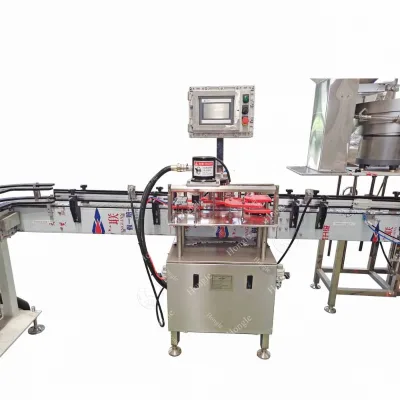
The feeding mechanism is another area of technical variance. Observed specifications include single-room feeding, dual-chamber feeding, and multi-room feeding structures. Single-room systems are generally simpler and suitable for standard canister sizes, while dual-chamber and multi-room designs offer enhanced stability and throughput for complex production lines. The control system is predominantly PLC-based, ensuring programmable logic control that allows for easy adjustment of fill volumes and machine parameters. Accuracy is a key performance metric, with many systems claiming precision levels around 99%, though this must be validated against specific product requirements.
Compliance, Certification, and Regulatory Standards
In the industrial machinery sector, compliance is not merely a formality but a prerequisite for operational safety and market access. When sourcing pneumatic linear aerosol filling machines, buyers must verify that the equipment meets international safety and quality standards. The CE mark is a standard requirement for machinery intended for the European market, indicating conformity with health, safety, and environmental protection standards. Additionally, quality management systems are often certified under ISO9001, with some specific listings referencing the ISO9001:2000 standard.
It is essential to treat these certifications as observations of specific listings rather than universal guarantees for all available units. Procurement teams should request current certification documents directly from the supplier to ensure validity. The origin of the machinery also plays a role in regulatory compliance. Many units are manufactured in Jiangsu Yangzhou, China, a hub for industrial machinery, but the specific export standards applied to these units must be confirmed. The packaging material itself, often metal or composite materials, must also align with the intended product's safety regulations, particularly regarding chemical compatibility and pressure containment.
Cost Drivers and Pricing Variables
The pricing landscape for pneumatic linear aerosol filling machines is characterized by significant variance, reflecting differences in automation levels, capacity, and customization. Market observations indicate a price range spanning from approximately 1,268 USD to 80,000 USD. This wide spectrum suggests that the "base" price often covers a minimal configuration, while the upper end reflects fully automatic systems with advanced features, multi-head configurations, and extensive customization.
Several factors drive these costs. The automatic grade is a primary determinant; fully automatic systems command a premium over semi-automatic or manual variants. The complexity of the filling valve head, whether single or multi-head, directly impacts the manufacturing cost. Furthermore, the inclusion of advanced control systems, such as PLC interfaces with touchscreens, adds to the overall price. Customization is frequently available, allowing buyers to tailor the machine to specific container sizes or product types, but this service invariably increases the final cost.
The Minimum Order Quantity (MOQ) is another critical cost factor. In the observed market, the MOQ is consistently listed as 1 unit, indicating that buyers can procure single machines without needing to aggregate orders. However, the lead time and shipping costs associated with a single unit may differ from bulk orders. Buyers should also consider the "Export-Worthy Package" or "Strong Wooden Cases" required for international shipping, as these packaging standards are often factored into the total landed cost.
Typical Applications and Product Compatibility
Pneumatic linear aerosol filling machines are designed for a diverse range of applications, primarily serving industries that require precise dispensing of liquid and gas products. The material type compatibility is broad, encompassing liquids, gases, and various aerosol formulations. The machine's ability to handle different packaging materials, including metal cans and composite containers, makes it versatile for sectors such as personal care, household cleaning, automotive care, and pharmaceuticals.
The filling volume capacity is another key application driver. Specifications indicate that these machines can handle filling ranges from 10ml to 100ml, making them suitable for small-dose products like essential oils, medical sprays, and precision cleaning agents. The dosing device, often a capacity cup, ensures consistent fill volumes, which is crucial for maintaining product quality and regulatory compliance. The linear structure allows for easy integration with upstream and downstream equipment, such as capping machines and labeling systems, creating a cohesive production line.
Supplier Evaluation and After-Sales Support
Selecting the right supplier is as critical as selecting the right machine. A comprehensive evaluation should extend beyond the initial price quote to include the supplier's technical capabilities and support infrastructure. One of the most valuable attributes observed in the market is the provision of overseas engineering services. Suppliers that offer "Engineers Available to Service Machinery Overseas" provide a significant advantage, ensuring that installation, commissioning, and troubleshooting can be managed effectively regardless of the buyer's location.
The brand name, such as Meitar, may appear in listings, but buyers should verify the reputation and track record of the specific manufacturer. The condition of the machine is typically listed as "New," but buyers should clarify whether the machine is factory-fresh or refurbished. The "No." or serial number provided in listings, such as 2021120604 or 2022022101, can be used to trace the production date and verify the machine's history.
When evaluating suppliers, buyers should also assess their responsiveness to customization requests. The availability of customization allows for the adaptation of the machine to unique production needs, but it requires a supplier with strong engineering capabilities. The packaging standard, whether "Box" or "Strong Wooden Cases," should be discussed to ensure the machine arrives in optimal condition.
Quality Control and Long-Term Procurement Considerations
Implementing a rigorous quality control protocol is essential for mitigating risks associated with machinery procurement. Buyers should verify the accuracy claims, such as the 99% accuracy figure, through independent testing or by reviewing third-party validation reports. The power specifications, typically 380/220V 50-60Hz/1.5kw, must be compatible with the buyer's local power infrastructure. Mismatches in voltage or frequency can lead to operational failures or damage to the machine.
Long-term procurement considerations involve planning for maintenance and spare parts availability. The pneumatic nature of the system means that seals, valves, and cylinders will require periodic replacement. Buyers should inquire about the availability of spare parts and the expected lifespan of critical components. The "Automatic Grade" of the machine, whether fully automatic or semi-automatic, will influence the frequency of maintenance and the level of operator training required.
Furthermore, the standard dimensions of the machine, such as 16808001600mm or 8006001600mm, must be considered in the context of the buyer's facility layout. Ensuring adequate space for operation and maintenance is crucial for long-term efficiency. The "prod_packing" and "prod_standard" details provided in listings should be cross-referenced with the buyer's logistical capabilities to ensure seamless transportation and installation.
Comparative Analysis of Machine Configurations
To assist in decision-making, the following table summarizes the key configuration differences observed in the market for pneumatic linear aerosol filling machines. This comparison highlights the trade-offs between different models and their suitability for various production needs.
| Feature | Configuration A | Configuration B | Configuration C |
|---|---|---|---|
| Filling Principle | Pressure | Atmospheric Pressure | Pressure |
| Valve Head | Multi-Head | Single-Head | Multi-Head |
| Feed Structure | Single-Room | Dual-Chamber | Multi-Room |
| Automatic Grade | Automatic | Semi-Automatic | Fully Automatic |
| Packaging Material | Metal | Composite Materials | Metal |
| Control System | PLC Control | PLC Control | PLC Control |
| Typical Model | QGQ | QGBW-2 | QGQ750 |
| Accuracy | 99% | 99% | 99% |
| Power | 380/220V 50-60Hz | 380/220V 50-60Hz | 380/220V 50-60Hz |
This table illustrates that while the core control and power systems remain consistent across configurations, the filling principle, valve head, and feed structure vary significantly. Buyers should select the configuration that best aligns with their specific product type, volume requirements, and operational constraints.
Conclusion
Sourcing a Pneumatic Linear Aerosol Filling Machine requires a meticulous approach that balances technical specifications, compliance requirements, and cost considerations. By focusing on verified attributes such as the filling principle, valve head configuration, and automatic grade, buyers can make informed decisions that align with their production goals. The availability of overseas engineering support and the flexibility of customization options further enhance the value proposition of these machines. As the market continues to evolve, maintaining a disciplined focus on evidence-based procurement will ensure the acquisition of reliable, high-performance equipment that drives operational efficiency and product quality.
FAQs
What filling principles do these machines use?
These machines primarily use pressure or atmospheric pressure filling principles. The specific principle depends on the model, with some units designed for pressure-based filling to handle aerosol propellants accurately.
Which automatic grades are available for purchase?
Buyers can find fully automatic, semi-automatic, or standard automatic grades. The choice affects operational speed and labor requirements, with fully automatic systems offering higher throughput and precision.
Can I customize the machine for specific containers?
Yes, customization is available to adapt the machine to unique production needs. Suppliers often allow adjustments for container sizes and product types to ensure compatibility with your specific packaging requirements.
What certifications do these machines typically hold?
Many units carry ISO9001 and CE certifications for quality and safety compliance. Buyers should verify current documents as certifications may vary by listing, with some referencing ISO9001:2000 specifically.
How accurate is the filling process on these machines?
The filling accuracy is typically around 99% for standard configurations. This precision ensures consistent product dosing, which is critical for maintaining quality standards in aerosol and liquid packaging applications.
What is the price range for these filling machines?
Prices range from approximately 1,268 USD to 80,000 USD depending on configuration. The cost varies significantly based on automation level, valve head count, and the extent of customization required.
Do suppliers offer overseas engineering support services?
Yes, many suppliers provide engineers available to service machinery overseas. This support ensures proper installation, commissioning, and troubleshooting regardless of the buyer's geographic location.