Find Pneumatic Open Concrete Aggregate Bins for batching plants, road projects, and tunnel construction
Source 30 verified listings for Pneumatic Open Concrete Aggregate Bins designed for high-accuracy batching. Buyers can compare models like PLD2400 and PLD4800 with varying capacities, weighing systems, and matched mixer options to suit diverse construction needs.
Key considerations
Products List

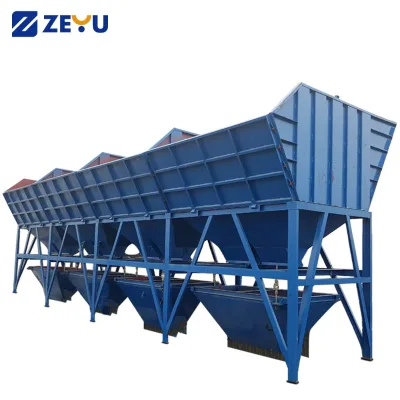
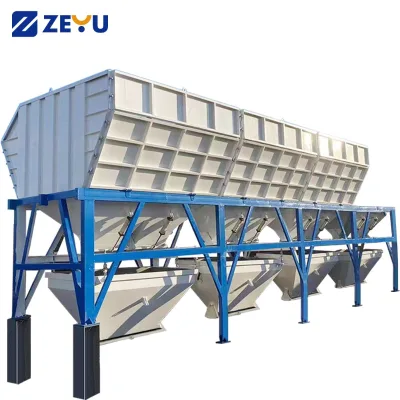
Automatic Efficent PLD2400 Concrete Aggregate Batch Bins for Concrete Batching Plant
$7000.00 - $30000.00
MOQ: 1 Sets


Four Aggregate Bins PLD1600 Automatic Aggregate Batcher for Concrete Batching Plant
$5000.00 - $10000.00
MOQ: 1 Sets


Durable Roll-off Dumpster Bin for Construction and Renovation Projects
$1200.00 - $2200.00
MOQ: 1 Pieces


Automatic Sand Cement Batching Machine for Concrete Aggregate Batching Bin (PL2400)
$1300.00 - $1800.00
MOQ: 1 Pieces

Concrete Mixing Station Using Cement Bin/ Cement Silos / Cement Bunker
$2000.00 - $12000.00
MOQ: 1 unit


$0.10 - $20.00
MOQ: 100 Pieces

Comprehensive Sourcing Guide
Strategic Sourcing Guide for Pneumatic Open Concrete Aggregate Bins
Understanding Technical Specifications and Operational Capacity
When sourcing Pneumatic Open Concrete Aggregate Bins, buyers must first distinguish between the specific configurations available in the current market. The core keyword implies a system where aggregates are stored in open-top bins and discharged via pneumatic mechanisms, often integrated into larger concrete mixing plants. Based on observed product data, the industry offers a range of models, including the PLD2400, PLD3200, and PLD4800 aggregate batchers. These units are not merely storage containers but precision weighing systems designed to handle specific batching categories.
The technical architecture of these bins typically involves a rotor-type structure, which facilitates the efficient movement of materials. A critical specification to verify is the weighing hopper volume, which varies significantly across models. Data indicates capacities ranging from 0.8 cubic meters to 4800 liters, with some configurations offering a range of 2.4 to 4.8 cubic meters. The maximum weighing capacity is equally variable, with observed limits of 1500 kg, 4000 kg, and up to 8000 kg depending on the model's scale. For high-volume operations, the PLD4800 model is associated with a production capacity of 280 cubic meters per hour, while other configurations support capacities between 48 and 120 cubic meters per hour.
The storage hopper volume is another defining characteristic. Buyers should expect configurations such as 3x12 cubic meters, 2x2 cubic meters, or 4x25 cubic meters. The discharge mechanism is a vital component; the "pneumatic open" feature refers to the discharge door operation, which is confirmed to be pneumatic in nature. This ensures rapid and controlled release of aggregates into the mixer. The batching accuracy is a performance metric that requires close attention, with observed standards of ±2%. Furthermore, the weighing process relies on load sensors, ensuring that the mass of the aggregate is measured with high precision before mixing. The matched mixer specifications, such as the JS1500, JS2000, or JS3000, must align with the bin's output rate to maintain a balanced production line.
Compliance, Certification, and Regulatory Standards
In the global procurement of heavy machinery, compliance with international standards is non-negotiable. The products in this category are often required to meet specific certification benchmarks to ensure safety and operational reliability. Current market observations confirm that many units carry CE and ISO9001 certifications. These certifications indicate that the manufacturing process adheres to European safety directives and international quality management systems, respectively. However, buyers must verify that the specific unit they are purchasing holds these certifications, as they are not automatically guaranteed for every listed product.
The production standards for these aggregate bins are often defined by their output capacity. For instance, the PLD3200 is marketed as a large-capacity unit, while the PLD4800 is linked to a standard production capacity of 280 cubic meters per hour. These standards serve as a baseline for performance verification. When evaluating a supplier, buyers should request documentation proving that the specific model meets the stated production capacity and accuracy standards. The machining process for these units is typically hydraulic, which requires adherence to specific safety and operational protocols.
It is essential to understand that while certifications like CE and ISO9001 are present in the market, they represent the condition of "New" products. Buyers should not assume that used or refurbished units carry the same certification status without explicit verification. Additionally, the origin of the product plays a role in regulatory compliance. Many of these units originate from Zhengzhou, China, a major hub for construction machinery. While this location is a known production center, buyers must ensure that the export documentation aligns with the import regulations of their destination country. The standard packing for international transport is also a critical compliance factor, ensuring that the machinery arrives without damage and meets shipping safety requirements.
Cost Drivers and Pricing Dynamics
The pricing of Pneumatic Open Concrete Aggregate Bins is influenced by a complex array of factors, including capacity, customization, and logistical requirements. The observed price range in the market is exceptionally broad, spanning from 0.1 USD to 255,000 USD. This vast disparity reflects the difference between small-scale components and large, fully integrated batching systems. A buyer purchasing a basic PLD800 aggregate batcher will face a significantly different cost structure compared to one acquiring a PLD4800 system with a 280 cubic meters per hour capacity.
Several key drivers influence the final cost. First, the weighing hopper volume and maximum weighing capacity are primary cost determinants. Larger hoppers and higher weight limits require more robust structural materials and more sophisticated load sensors, driving up the price. Second, the storage hopper volume is a significant factor; units with 4x25 cubic meters of storage capacity will cost more than those with 2x2 cubic meters due to the increased material and engineering required. Third, the matched mixer compatibility affects the overall system cost. A bin designed to work seamlessly with a JS3000 mixer may command a premium over one matched with a smaller JS1500 unit.
Customization is another major cost driver. The market data indicates that customization is available for these units. Buyers requiring specific modifications to the discharge mechanism, hopper dimensions, or control systems should anticipate a price increase. The lead time for customized orders may also be longer than for standard configurations, impacting the total cost of ownership through delayed project start dates. Finally, the origin and shipping logistics play a role. Units originating from Zhengzhou, China, must be packed using standard international transport methods, which adds to the overall cost. Buyers should also consider the Minimum Order Quantity (MOQ), which ranges from 1 to 100 units. Purchasing a single unit may incur a higher per-unit cost compared to bulk orders, although the specific pricing tiers are not publicly standardized and must be negotiated.
Typical Applications and Operational Scenarios
Pneumatic Open Concrete Aggregate Bins are primarily utilized in large-scale construction projects where high-volume concrete production is essential. The observed production capacities, ranging from 48 to 280 cubic meters per hour, suggest that these units are designed for infrastructure projects such as highways, bridges, dams, and large commercial buildings. The ability to handle three to four categories of batching aggregates makes these bins versatile for different concrete mixes, allowing for the precise combination of sand, gravel, and other materials.
The specific application of the PLD2400, PLD3200, and PLD4800 models depends on the scale of the project. The PLD2400, with a capacity of 120 cubic meters per hour, is suitable for medium-sized projects that require consistent output but do not need the massive throughput of the PLD4800. The PLD4800, capable of 280 cubic meters per hour, is ideal for major infrastructure projects where time is a critical factor and continuous concrete supply is necessary. The pneumatic discharge mechanism ensures that the aggregates are released quickly and accurately, minimizing downtime between batches.
In addition to large construction sites, these bins are used in ready-mix concrete plants. The integration with mixers like the JS1500, JS2000, and JS3000 allows for a streamlined production process. The weighing accuracy of ±2% ensures that the concrete mix meets the required strength and durability specifications. The storage hopper volume, whether it is 3x12 cubic meters or 4x25 cubic meters, determines the buffer capacity of the plant, allowing for uninterrupted operation even if the aggregate supply chain experiences minor delays. The hydraulic machining process ensures that the machinery can withstand the rigorous demands of continuous operation in demanding environments.
Supplier Evaluation and Quality Assurance
Evaluating suppliers for Pneumatic Open Concrete Aggregate Bins requires a rigorous approach to quality assurance and reliability. Buyers should prioritize suppliers who can provide clear evidence of their certifications, such as CE and ISO9001. The condition of the product, specifically that it is "New," should be explicitly confirmed in the contract. Buyers must also verify the machining process, ensuring that the hydraulic systems are manufactured to high standards to prevent failures during operation.
Quality control should extend to the weighing system. The use of load sensors for aggregate weighing is a standard feature, but the accuracy of these sensors must be verified. Buyers should request test results or calibration certificates that confirm the batching accuracy of ±2%. The discharge door mechanism, which is pneumatic, should be tested for reliability and speed. The structural integrity of the rotor-type design is also crucial; buyers should inspect the materials used and the welding quality to ensure the unit can handle the maximum weighing capacity without deformation.
Supplier evaluation should also consider the delivery time and logistics. The observed delivery time is 15 days, but this may vary based on customization and order volume. Buyers should ensure that the supplier has a proven track record of meeting lead times and that the standard packing for international transport is sufficient to protect the machinery during transit. The origin of the product, often Zhengzhou, China, should be verified, and the supplier should be able to provide documentation regarding the manufacturing location. Finally, buyers should assess the supplier's after-sales support, including the availability of spare parts and technical assistance, to ensure long-term operational success.
Long-Term Procurement and Maintenance Considerations
Procuring Pneumatic Open Concrete Aggregate Bins is a long-term investment that requires careful planning for maintenance and lifecycle management. The standard packing for international transport is designed to protect the unit during shipping, but the long-term durability depends on the quality of the materials and the maintenance practices adopted by the buyer. The hydraulic machining process used in these units requires regular inspection of hydraulic fluids and seals to prevent leaks and ensure smooth operation.
The weighing system, which relies on load sensors, is a critical component that requires periodic calibration. Buyers should establish a schedule for checking the batching accuracy to ensure it remains within the ±2% specification. The pneumatic discharge door also requires maintenance, including the inspection of air lines and valves to prevent blockages or failures. The storage hopper volume and structure should be inspected for wear and tear, especially if the unit is handling abrasive aggregates.
Customization options, while beneficial for specific needs, may introduce additional complexity in terms of maintenance. Buyers should ensure that any custom modifications are supported by the supplier with clear maintenance guidelines. The production capacity of the unit, whether 48, 120, or 280 cubic meters per hour, will dictate the frequency of maintenance; higher capacity units will experience more wear and require more frequent servicing. Finally, buyers should consider the availability of replacement parts, particularly for the matched mixer components, to minimize downtime. By planning for these long-term considerations, buyers can ensure that their Pneumatic Open Concrete Aggregate Bins remain a reliable and efficient part of their concrete production operations.
FAQs
What certifications do Pneumatic Open Concrete Aggregate Bins have?
Many units carry CE and ISO9001 certifications to ensure safety and quality. These standards apply specifically to new products and must be verified for each listed item before purchase.
How is the weighing accuracy maintained in these aggregate bins?
The batching accuracy is typically maintained at ±2% using load sensors for weighing. This precision ensures the correct mass of aggregate is measured before discharge into the mixer.
Which production capacities are available for these aggregate batching systems?
Production capacities range from 48 to 280 cubic meters per hour depending on the model. The PLD4800 model supports up to 280 cubic meters per hour for high-volume operations.
Can buyers request customization for these concrete aggregate bins?
Yes, customization is available for these units to meet specific project requirements. Buyers should anticipate potential price increases and longer lead times for customized discharge mechanisms or hopper dimensions.
What is the typical delivery time for these concrete aggregate bins?
The standard delivery time is 15 days for most orders. This timeline may vary based on the level of customization required and the specific order volume placed with the supplier.
Which weighing capacities are supported by these aggregate batchers?
Maximum weighing capacities vary from 1500 kg to 8000 kg depending on the model. Specific models like the PLD2400 support up to 4000 kg while larger units reach 8000 kg.
How are these units packed for international transport?
Units are packed using standard packing methods designed for international transport. This ensures the machinery arrives without damage and meets shipping safety requirements for global delivery.