Source Polished Crystal Skull Ring for Gifts, Decor, and DIY Jewelry
Compare 30 Polished Crystal Skull Ring options from verified suppliers. Buyers can review materials like stainless steel and 925 sterling silver, customization services, and pricing for gifts, decoration, and jewelry making projects.
Key considerations
Products List


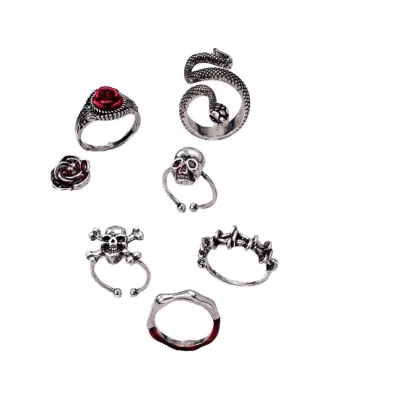

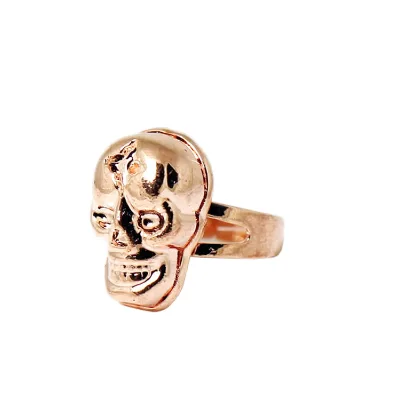
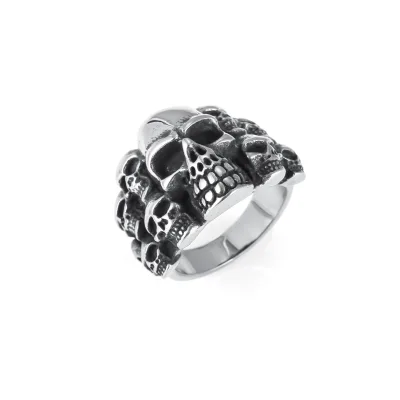
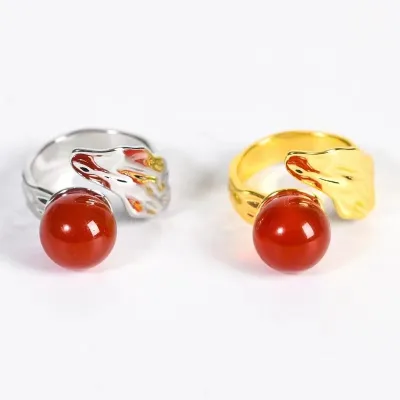
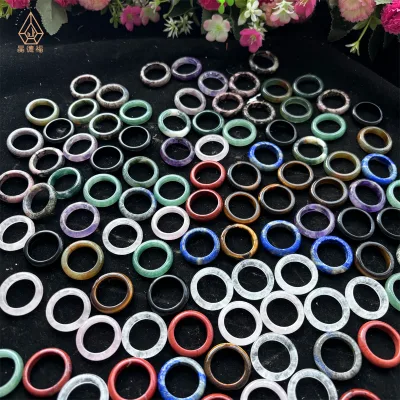
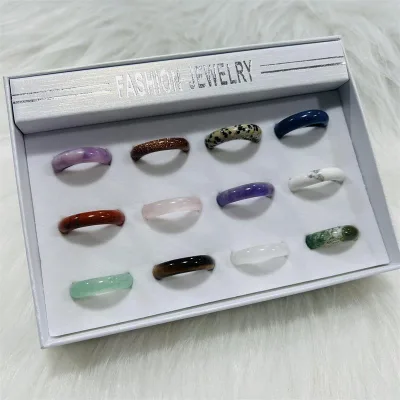
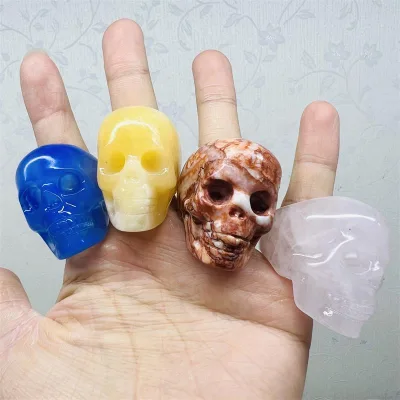


Comprehensive Sourcing Guide
Strategic Sourcing Guide for Polished Crystal Skull Rings
The global market for polished crystal skull rings presents a unique intersection of gothic aesthetics, spiritual symbolism, and high-volume jewelry manufacturing. For B2B procurement professionals, sourcing this specific item requires a nuanced understanding of material properties, fabrication techniques, and the diverse regulatory landscapes governing jewelry imports. The term "Polished Crystal Skull Ring" implies a product where a skull motif is the central design element, crafted with crystal components or crystal-like finishes, and subjected to a polishing process to achieve a high-gloss surface. This guide synthesizes available product data and industry standards to provide a comprehensive framework for evaluating suppliers and defining procurement specifications.
Technical Specifications and Material Composition
When defining the technical requirements for a Polished Crystal Skull Ring, the primary focus must be on the material composition and the specific fabrication processes employed. The product data indicates a significant variance in materials, ranging from stainless steel to 925 sterling silver. Stainless steel is frequently cited as a primary material, often paired with a "polishing" fabrication process. This combination suggests a durable, hypoallergenic base that can be finished to a mirror-like sheen, suitable for the "Retro" and "Classic" styles observed in the market.
The presence of "crystal" in the product title often correlates with specific plating or inlay techniques. Data points reveal attributes such as "Zircon Crystal" and "Gold-Plated" or "Antique Silver Plated" finishes. This indicates that the skull motif may be constructed from a base metal like stainless steel or silver, which is then plated to achieve the desired metallic luster, while crystal elements (potentially cubic zirconia or similar simulants) are set into the design. The "Craft" attribute lists both "Polishing" and "Casting," confirming that the manufacturing process involves casting the metal alloy into a skull shape followed by extensive mechanical or chemical polishing to remove casting marks and achieve the "polished" finish.
Dimensional specifications are critical for inventory planning. Observed standard sizes include "578mm" and "578cm," though the latter likely refers to packaging dimensions or a specific large-format variant rather than the ring size itself. The "prod_model" identifiers, such as R00547, R30021, and Zircon Crystal Rings-060M, serve as unique SKUs that buyers should request to ensure consistency across orders. The shape is predominantly "Round" or "Oval," and the style ranges from "Simple" and "Fashion" to "Hip hop" and "Religious." Buyers must verify that the specific model number aligns with the intended aesthetic, as the "skull" motif can vary significantly from a minimalist outline to a highly detailed, three-dimensional representation.
Compliance, Certification, and Safety Standards
Procuring jewelry for international markets necessitates rigorous compliance checks, particularly regarding metal content and allergen safety. The product data explicitly notes "Allergic?: No" and cites "Surgical Materials" as a mental advantage, which strongly implies the use of surgical-grade stainless steel or nickel-free alloys. For buyers targeting the European Union, verifying compliance with REACH regulations regarding nickel release is essential, even if the supplier claims the material is surgical grade.
Regarding precious metals, the data confirms the availability of "925 Sterling Silver." In this context, buyers must demand assay certificates or hallmarks that verify the 92.5% silver content. The absence of specific certification names in the provided text means that procurement teams cannot assume any third-party accreditation (such as SGS or ISO) without direct verification. The "Standard" attribute lists "customized," which is a red flag for mass production unless the buyer provides a detailed technical drawing. In such cases, the supplier must adhere to the buyer's defined standard, which should reference recognized industry benchmarks for jewelry plating thickness and metal purity.
Safety regarding the "crystal" component is another area requiring attention. If the product contains lead or cadmium in the plating or the crystal setting, it may violate safety standards in North America and the EU. While the text mentions "No" for allergic reactions, this does not automatically cover heavy metal toxicity. Buyers should request test reports specifically for lead and cadmium content, particularly for products marketed to children or general consumer use, as the "Gender" attribute includes "Boys, Girls, Men, Unisex, Women."
Cost Drivers and Pricing Dynamics
The pricing structure for polished crystal skull rings is influenced by a complex matrix of material costs, labor intensity, and customization levels. The observed price range of $0.20 to $60.11 USD highlights the vast disparity between mass-produced fashion jewelry and high-end sterling silver pieces. The lower end of the spectrum likely corresponds to stainless steel rings with basic plating and simple casting, while the upper end reflects 925 silver, intricate crystal inlays, and custom branding.
Material costs are the primary driver. Stainless steel is significantly cheaper than sterling silver, which directly impacts the base price. However, the "Plating" process adds a variable cost; "Antique Silver Plated" or "Gold-Plated" finishes require additional chemical baths and quality control to ensure the plating does not tarnish quickly. The "Craft" of "Polishing & Mop Black" suggests a multi-step finishing process that increases labor costs compared to a standard polish.
Customization is another major cost factor. The data confirms that "Logo Service" is "Available" and "Offered," and "Customized" is "Avaiable." Implementing a custom logo or altering the mold for a specific skull design incurs mold fees and setup costs. The "MOQ" (Minimum Order Quantity) range of 1 to 1000 units allows for flexibility but impacts the per-unit cost. Orders at the lower end of the MOQ spectrum will carry a higher unit price due to the fixed costs of setup and small-batch production. Conversely, orders approaching 1000 units benefit from economies of scale, though the buyer must ensure the supplier can maintain quality consistency across the larger batch.
Typical Applications and Market Segmentation
The versatility of the Polished Crystal Skull Ring allows it to serve multiple market segments, from fashion accessories to spiritual artifacts. The "Usage" attributes listed include "Gift," "Decoration," "DIY jewelry accessories," "Jewelry making," "Wedding," and "Religious" purposes. This broad applicability means that a single product line can target diverse customer bases.
For the "Gift" and "Wedding" segments, the "Retro" and "Classic" styles are particularly relevant. These rings are often marketed as statement pieces for couples or as unique favors. The "Unisex" gender attribute supports this, allowing the product to be sold to men and women alike. In the "DIY jewelry accessories" sector, the ring may be sold as a component for custom jewelry making, where the "OEM" (Original Equipment Manufacturer) capability is crucial. Brands looking to create their own line of skull-themed jewelry will rely on the supplier's ability to provide "Customized" models with specific branding.
The "Mental Advantages" listed as "Surgical Materials" suggest a marketing angle focused on comfort and safety, which is valuable for consumers with sensitive skin. The "Style" attributes, including "Cute," "Trendy," "Hip hop," and "Romantic," indicate that the product is not limited to a single subculture. A "Cute" skull ring might appeal to a younger demographic interested in pop culture, while a "Religious" or "Vintage" version targets consumers interested in symbolism and history. Understanding these segmentation nuances is vital for matching the right product model to the right sales channel.
Supplier Evaluation and Verification Protocols
Evaluating suppliers for polished crystal skull rings requires a multi-faceted approach that goes beyond price comparison. The "Place of Origin" is consistently listed as "Shandong, China," a region known for its jewelry manufacturing capabilities. However, the presence of a specific location does not guarantee quality. Buyers must verify the supplier's capacity to handle "Small Orders" as indicated by the "Small Orders: Accepted" attribute, which is crucial for testing the market before committing to large volumes.
The "Logo Service" and "OEM: Yes" attributes indicate that the supplier offers branding capabilities. Buyers should request samples of previous work to assess the quality of logo engraving or printing. The "prod_packing" attributes, such as "PP Bag" and "OPP Bag," suggest basic packaging standards. For premium products, buyers may need to negotiate for upgraded packaging, such as branded boxes or velvet pouches, to enhance the unboxing experience.
A critical aspect of supplier evaluation is the verification of the "Customization" process. Since "Customized" is listed as available, buyers must establish clear communication channels regarding design changes. The "prod_model" numbers (e.g., R00547, R30021) serve as a reference point, but for custom orders, a detailed technical drawing is necessary. Buyers should also inquire about the supplier's quality control procedures, specifically how they handle the "Polishing" and "Casting" stages to ensure the final product meets the "Surgical Materials" claim.
Quality Control and Long-Term Procurement Strategy
Implementing a robust quality control (QC) strategy is essential for maintaining brand integrity when sourcing polished crystal skull rings. The "Craft" attributes of "Polishing" and "Casting" introduce specific failure points. Casting defects, such as porosity or incomplete filling of the skull mold, must be inspected visually and tactilely. The polishing process must be verified to ensure a uniform finish without scratches or uneven plating.
For long-term procurement, buyers should establish a clear definition of "Standard" for each order. While the data mentions "customized" standards, a written agreement specifying tolerances for dimensions (e.g., the 578mm range) and plating thickness is necessary. The "Allergic?: No" claim should be backed by periodic third-party testing, especially if the supplier changes their material source.
Inventory management is another consideration. The "prod_packing" of "PP Bag" or "OPP Bag" is suitable for bulk shipping but may require repackaging for retail. Buyers should factor in the cost and logistics of secondary packaging. Furthermore, the "Lead time" is not explicitly stated in the data, so buyers must negotiate this metric explicitly. Given the range of MOQs from 1 to 1000, lead times may vary significantly between small trial orders and large production runs.
Finally, the "Brand Name" "Global Art Gifts Co. Ltd" appears in the data, but buyers should not rely on a single supplier. Diversifying the supply chain across multiple manufacturers in the Shandong region can mitigate risks related to production delays or quality inconsistencies. By focusing on the technical specifications, material safety, and customization capabilities outlined in this guide, procurement professionals can effectively source polished crystal skull rings that meet both aesthetic and functional requirements.
FAQs
What materials are used for polished crystal skull rings?
These rings are primarily made from stainless steel or 925 sterling silver. Some models feature zircon crystals and antique silver plating to achieve a polished finish suitable for various styles.
Can I get a custom logo on these rings?
Yes, logo services are available and offered for customization. Buyers can request specific branding on the product, though this may require meeting minimum order quantities and agreeing on design specifications.
Which product models are available for purchase?
Available models include R00547, R30021, R30775, R00945, R4, R30626, and Zircon Crystal Rings-060M. Each model has distinct specifications such as shape, color, and standard dimensions like 5*7*8mm.
How are these rings packaged for shipping?
Rings are typically packed in PP bags or OPP bags depending on the specific model. This basic packaging is suitable for bulk shipping but can be upgraded for retail presentation upon request.
Are these rings hypoallergenic and safe for sensitive skin?
The products are listed as having no allergic reactions and are made from surgical materials. This suggests they are safe for sensitive skin, though third-party testing for heavy metals is recommended for compliance.
What is the minimum order quantity for these rings?
The minimum order quantity ranges from 1 to 1000 units depending on the supplier and customization level. Small orders are accepted, allowing buyers to test the market before committing to larger volumes.
Where are these rings manufactured?
The place of origin for these rings is Shandong, China. This region is known for jewelry manufacturing capabilities, offering a range of styles from retro to trendy designs.