Source Aluminum Pontoon Boat for Fishing, Transport, and Leisure
Explore 30 listings for Pontoon Boat options built with aluminum hulls and outboard engines. Compare models like the SG650 and SG750 series, noting dimensions from 6.5m to 7.5m, seating for 6-20 persons, and various packing methods including 40hc containers. Evaluate specifications such as tube diameter and draft to find the right vessel.
Key considerations
Products List

$23000.00 - $28000.00
MOQ: 1 Pieces


7.50m Aluminum Fishing Boat Pontoon Boat Double Deck Pontoon Boat with Second Deck
$15366.00 - $19899.00
MOQ: 1 Pieces

7.50m Aluminum Fishing Boat Pontoon Boat Double Deck Pontoon Boat with Second Deck
$12000.00 - $19000.00
MOQ: 1 Pieces

Pontoon Boats Aluminum Pontoon Boat Trailer Pontoon Yacht Pontoon
$250.00 - $300.00
MOQ: 5 Square Meters


$1000.00 - $10000.00
MOQ: 1 Pieces

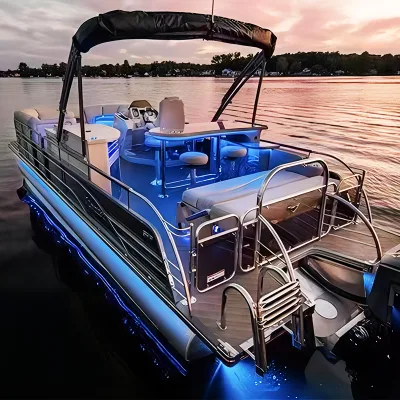
2024 Popular Styles Necessary Pontoon Boat on the Island That Can Repace Yacht Fishing Boats
$10194.36 - $11224.09
MOQ: 1 Minimum

Aluminum Fishing Speed Boat/Aluminium Sport Boat with Pontoon Hull
$28900.00 - $30900.00
MOQ: 1 Pieces


Good Quality Pontoon Floating Boat Dock/ Floating Dock Boat for Sale
$160000.00 - $290000.00
MOQ: 1 Sets


6m 20FT Speed Pontoon Buoyancy Aluminium Fishing Centre Console Boat
$13900.00 - $14900.00
MOQ: 1 Sets


$130000.00 - $150000.00
MOQ: 1 Pieces


Comprehensive Sourcing Guide
Pontoon Boat Sourcing Guide
Procuring a Pontoon Boat requires distinguishing between rigid aluminum structures and inflatable configurations, as the supplied data indicates a primary focus on aluminum pontoon boats with specific dimensions like 6.5m and 7.5m lengths. Buyers must verify whether the vessel is designed for stable recreational use or specialized fishing applications, noting that observed listings include models capable of seating between six and twenty passengers depending on the specific configuration.
The market signals suggest a diverse range of customization options, with some units offered in standard colors while others allow for client-specific requirements. Sourcing teams should prioritize suppliers who explicitly state the condition as new and confirm the material composition, as the presence of aluminum pontoons and fiberglass hulls in the data implies distinct performance characteristics regarding durability and maintenance needs for different water environments.
Product Scope and Observed Listing Signals
The observed product range spans from compact 6.5-meter models to larger 7.5-meter vessels with varying beam widths, indicating that capacity and stability are key differentiators in this category. Listings reveal that some units are designed for specific tasks like trawling or fishing auxiliary work, while others serve as general-purpose fast boats with speeds under 60km/h, requiring buyers to align their operational needs with the specific model designation such as SG650 or SG750PN.
Packing methods vary significantly across the catalog, ranging from 40hc and 40hq containers to nude packing and shipping arrangements, which directly impacts logistics planning and cost estimation. Buyers should note that while some products are listed with standard dimensions, others are built based on client requirements, necessitating clear communication regarding the final specifications before finalizing any purchase order to avoid mismatches in delivery expectations.
Technical Specifications to Verify
Technical due diligence must focus on the engine type and power source, as the data confirms the use of outboard engines powered by petrol or gas, alongside hydraulic systems for specific machinery applications. Verification of the tube diameter, observed at 0.6m, and the draft of 0.3m is essential for ensuring the vessel can operate in the intended water depth without grounding, while the beam width of 2.28m provides critical stability metrics for passenger safety.
Buyers must also scrutinize the working method and harvesting machinery type if the boat is intended for commercial fishing, as the listings mention friction-type winches and fillet machinery integration. It is vital to confirm the fuel type compatibility and the specific power output, such as the tail capacity to hang 40-85 units, to ensure the propulsion system matches the intended load and operational speed requirements for the specific model being sourced.
Compliance and Safety Documentation
Safety compliance is paramount, with observed listings explicitly citing ISO and CE certifications for air chamber components, which suggests adherence to international safety standards for inflatable or hybrid structures. Procurement teams must request valid certification documents for each unit to verify that the manufacturing process meets the required quality benchmarks, ensuring that the vessel is safe for the stated passenger capacity of up to twenty individuals.
Documentation should also cover the condition of the product, which is consistently listed as new, and any specific standards related to the finished processing machinery if the boat includes integrated fishing gear. Buyers should ensure that the supplier provides a comprehensive compliance package that includes material safety data and operational manuals, particularly for hydraulic and friction-type systems, to guarantee that the equipment functions safely under the specified working conditions.
Cost Drivers and Commercial Terms
The price range observed from 250 to 460,000 USD indicates that cost is heavily influenced by the level of customization, the specific model designation, and the inclusion of auxiliary machinery like winches or processing units. Buyers should analyze whether the higher price points correlate with advanced features such as hydraulic power sources or specialized fishing gear, rather than assuming a linear relationship between size and cost across all listed models.
Commercial terms regarding minimum order quantities and packing methods are critical variables, as the data shows MOQs ranging from one to five units and packing options that vary from standard containers to nude shipping. Procurement strategies must account for these logistical differences, as the choice between 40hc, 40hq, or 40fr containers will significantly affect the total landed cost and the efficiency of the supply chain for large-scale acquisitions.
Supplier Qualification and Quality Control
Supplier qualification should prioritize manufacturers located in established industrial hubs like Jiaonan, Huangdao, Qingdao, and Guangdong, which are known for producing aluminum and fiberglass marine vessels. Buyers must verify the supplier's ability to deliver customized solutions, as the data indicates a strong capacity for client-specific requirements, ensuring that the final product aligns precisely with the operational needs of the purchasing organization.
Quality control protocols must include a rigorous inspection of the aluminum pontoon construction and the integration of outboard engines to prevent structural failures or mechanical issues. It is essential to confirm that the supplier maintains a consistent production standard for new condition units and can provide evidence of their manufacturing process, particularly for complex assemblies involving hydraulic systems and fishing auxiliary machinery.
Long-Term Procurement Checks
Long-term procurement success depends on establishing a reliable supply chain for spare parts and maintenance support, especially for specialized components like outboard engines and hydraulic winches. Buyers should negotiate service agreements that cover the lifespan of the vessel, ensuring that the supplier can provide timely replacements for parts that may wear out during regular trawling or passenger transport operations.
Continuous monitoring of the product's performance against the original specifications is necessary to validate the durability of the aluminum and fiberglass materials in various water conditions. Procurement teams should maintain a record of the specific model numbers and their corresponding standards, such as the 6.5m or 7.5m configurations, to facilitate future reordering and ensure consistency in the fleet's operational capabilities over time.
FAQs
What are the standard dimensions for the SG750PN Pontoon Boat?
The SG750PN Pontoon Boat features a standard length of 7.5 meters and a width of 2.8 meters. This configuration provides ample deck space for recreational use. The vessel is constructed from aluminum to ensure durability and lightweight performance. Buyers can verify these exact specifications before placing orders to ensure the boat fits their storage and transport requirements.
Can the Pontoon Boat be customized for specific client needs?
Yes, customization is available for the Pontoon Boat to meet specific client requirements. Manufacturers offer tailored solutions based on individual preferences for layout, color, and equipment. This flexibility allows buyers to adapt the vessel for fishing, leisure, or commercial purposes. Custom orders may require specific packaging arrangements, such as 40HQ containers, to accommodate unique design elements.
What certifications are required for the aluminum Pontoon Boat?
The aluminum Pontoon Boat typically holds CE and ISO certifications to ensure safety and quality standards. These credentials verify that the vessel meets international regulatory requirements for marine craft. Buyers should request documentation to confirm compliance before shipping. The certification process helps ensure the boat is suitable for legal operation in various global markets and reduces liability risks.
How many passengers can the SG650 Pontoon Boat safely carry?
The SG650 Pontoon Boat is designed to safely carry between 6 and 20 passengers. This capacity depends on the specific model configuration and weight distribution. The aluminum construction supports this load while maintaining stability on the water. Buyers should consider the intended use, whether for family recreation or group tours, to select the appropriate seating arrangement and safety equipment.
What is the typical packing method for shipping the Pontoon Boat?
The Pontoon Boat is typically packed in 40HC or 40HQ containers for efficient shipping. Some models may use nude packing or flat rack containers depending on size. This method protects the vessel during transit and minimizes damage risks. Buyers should coordinate with suppliers to determine the most cost-effective packing solution based on the boat's dimensions and destination port facilities.
Which engine type is compatible with the Pontoon Boat models?
The Pontoon Boat models are compatible with outboard engines, including petrol or gas-powered units. This flexibility allows buyers to choose the most suitable power source for their needs. The engine type affects speed and fuel efficiency, with some models reaching speeds under 60 km/h. Buyers should verify engine compatibility with the specific boat model to ensure optimal performance and safety.