Source Porous Rods and Wafer Particles For Filtration
Source Porous Rods and Wafer Particles from 30 verified listings. Compare technical specs including pore sizes, material types like PTFE and PVC, and customization options for industrial filtration and sealing applications; compare the available evidence and request quotations based on your requirements.
Key considerations
Products List






Comprehensive Sourcing Guide
Porous Rods and Wafer Particles Sourcing Guide
Sourcing Porous Rods and Wafer Particles for industrial filtration, sealing, and valve components requires a disciplined approach to both material selection and supplier verification. These products typically appear in fluoropolymer families—most notably PTFE and PCTFE—where sintered or machined porous structures provide controlled permeability, and solid grades deliver exceptional chemical resistance and thermal stability. Buyers operating in valve seats, seals and stems applications, or deploying PTFE sintered filter cartridges, must align rod diameters, pore sizes, and wafer thicknesses with the end-use environment before comparing quotes.
The listings observed for this category span a wide price band from roughly $0.10 to $1,500 per unit and minimum order quantities from a single piece up to 100 units, reflecting everything from stock semi-finished bars to fully customized machined components. This spread makes it essential to clarify early whether you are buying commodity rod stock or engineered porous parts, because the qualification process, documentation requirements, and commercial terms differ substantially between the two.
Product Scope and Observed Listing Signals
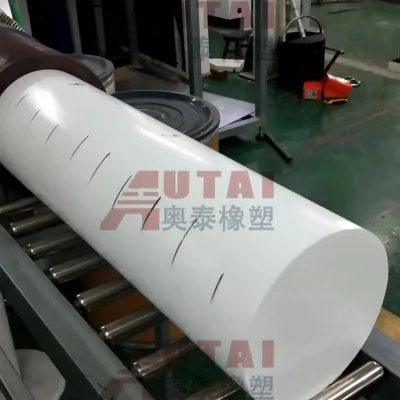
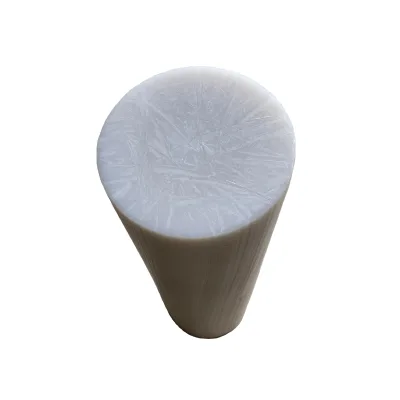
The observed listings fall into two broad groups. The first covers solid and semi-finished plastic bars and sheets, including PTFE rods and transparent PCTFE sheet stock, with some listings noting raw material sourced from Japan. These serve as machining feedstock for seals, valve seats, and stems, and are characterized by properties such as density in the 2.1–2.18 g/cm³ range and strong chemical resistance. The second group covers engineered porous components, including PTFE sintered filter cartridges with pore sizes specified from 0.2 to 100 μm.
Customization is explicitly available across the observed products, and model identifiers such as QL-4, FY-P02, FY-P04, and FY-XJ0245 indicate that many listings are catalog entries for configurable families rather than fixed SKUs. Buyers should treat listed attributes as observations of particular listings, not guarantees that every offer in the category meets the same specification. Color descriptions such as white or natural, and packaging notes ranging from polypropylene woven bags to wooden boxes, further signal the diversity within this category.
Technical Specifications to Verify
For PTFE and PCTFE rod and wafer stock, request a datasheet confirming tensile strength ranges (one observed listing cites 81–130 MPa), elongation at break, hardness, density, and water absorption behavior—observed values span from below 0.01% for fluoropolymers up to 1.5–3.5% for PVC grades, so material identity must be pinned down precisely. Temperature resistance claims such as −200℃ to 260℃ should be validated against the actual polymer grade, and contraction percentage limits (one listing states <0.4%) matter for precision-machined valve components.
For porous and sintered items, the critical verification is pore size distribution: the observed 0.2–100 μm range is broad, so specify your target mean pore size, permeability, and bubble-point test requirements in writing. Also confirm melt flow rate expectations for sinterable powder grades—observed listings cite 0.05–0.13 g/10min—along with volatiles content (≤0.5%) and ash content (≤0.1%) if the supplier supplies powder rather than finished parts. Require batch-level certificates of analysis rather than generic product literature.
Compliance and Safety Documentation
Because these materials are frequently used in valve seats, seals and stems, and filtration duty, buyers should ask what compliance documentation the supplier can actually provide—material safety data sheets, declarations of substance restrictions, and food-contact or medical-grade statements if the application demands them—without assuming any certification exists until evidence is produced. Listings rarely state certification status explicitly, so the buyer's request letter should enumerate the documents needed and the governing standards for the destination market.
Traceability deserves equal attention. One observed listing notes that raw material originates from Japan; where feedstock origin affects regulatory acceptance or performance expectations, require resin traceability to lot level. Ask whether the supplier performs incoming resin inspection, what test methods are used for the stated properties (tensile, density, pore size), and whether third-party laboratories are involved. Retain documentation samples in your qualification file, and require the supplier to notify you of any change in resin source, sintering profile, or post-machining process during the contract period.
Cost Drivers and Commercial Terms
Price dispersion in this category—from roughly $0.10 commodity items to $1,500 engineered components—stems from material grade, porosity control, machining tolerances, and order size. Customized parts carry tooling and setup charges that stock bar sizes do not, so compare quotes on an equivalent-specification basis. Minimum order quantities observed range from 1 to 100 units; low MOQs on customized parts usually indicate sample-friendly suppliers, but unit economics improve substantially at production volumes.
Clarify commercial terms before committing: what the quoted price includes (machining, finishing, testing, packaging), the Incoterms basis, payment structure for first articles versus serial production, and re-quote triggers if resin prices move. Packaging varies across listings—polypropylene woven bags for powder or granule forms, cartons and pallets for rods and sheets, wooden boxes for finished cartridges—and packaging choice affects freight cost and damage risk. For heavy PTFE stock, request weight-based quotations and confirm whether standard 20 kg packing units apply to powder shipments.
Supplier Qualification and Quality Control
Qualify suppliers against the specific product family you intend to buy, not the category label. A sintered filter cartridge producer needs pore-size metrology, sintering oven process control, and leak or permeability testing capability; a rod and sheet stockist needs resin traceability, dimensional control, and storage practices that prevent contamination. Ask for process flow diagrams, key equipment lists, and the quality organization chart, then verify claims through sample orders or third-party audits where the order value justifies the cost.
Define acceptance criteria contractually. Use the observed attribute set as a starting specification template—tensile strength, elongation, hardness, density, water absorption, pore size, temperature limits—but convert each into a test method, sample plan, and rejection threshold. Agree on first-article inspection for customized models such as FY-P02 or FY-XJ0245 derivatives, on marking and batch identification rules, and on how nonconforming lots are handled. Suppliers listing "according to customer" or "full specification" standards signal flexibility, but the buyer must supply the controlling document.
Long-Term Procurement Checks
Once a supplier is qualified, institutionalize periodic re-verification rather than relying on the initial approval. Schedule annual reviews of certificates of analysis against contractual limits, re-test retained samples for drift in properties such as melt flow rate, volatiles, and ash content, and audit any announced changes in resin sourcing—particularly if a listing's stated origin, such as Japanese feedstock, was part of the qualification basis. Track lot-level data over time to detect gradual process drift before it becomes a field failure.
Also monitor commercial resilience. Assess whether the supplier maintains consistent capacity for your customized models, whether packaging and export documentation remain reliable for your lanes, and whether lead times quoted at qualification still hold at production volumes. Maintain a second-source strategy for critical porous components, since sintered PTFE parts often have long qualification cycles. Keep specifications, drawings, and acceptance records in a controlled document system so any successor supplier can be onboarded without renegotiating the technical basis of the part.
FAQs
What materials are used for Porous Rods and Wafer Particles on this page?
The listed Porous Rods and Wafer Particles are primarily made from PTFE, with some PVC-based plastic components also offered. PTFE provides a wide temperature resistance range from -200C to 260C, excellent non-stick properties, and strong chemical resistance. Confirm the exact material grade with the supplier before ordering, since different models serve different industrial applications.
Can Porous Rods and Wafer Particles be customized to specific sizes?
Yes, customization is available for these products. Several listings are marked as customized models, and standards such as according customer or Customed indicate sizes are produced to buyer requirements. You should share drawings or dimensional specifications with the supplier, and note that customized orders may require larger minimum order quantities than stock items.
How are Porous Rods and Wafer Particles packed for shipment?
Packing varies by product model. Options observed on the page include polypropylene woven bags in 20KG standard packing, wooden boxes, cartons, carton packaging with pallets, and export cartons. Wooden boxes are commonly used for sintered filter cartridges, while rods and sheets ship in cartons or on pallets. Confirm the packing method with your supplier before placing an order.
What temperature resistance do PTFE Porous Rods and Wafer Particles offer?
PTFE-based products listed here offer temperature resistance from -200C to 260C, making them suitable for both cryogenic and high-heat industrial environments. This wide range is a core advantage of PTFE over PVC, which suits more moderate conditions. Always verify the temperature rating for the specific model you intend to purchase.
What are the mechanical properties of the PTFE rods listed?
The PTFE products show tensile strength from 81 to 130 MPa, 300% tensile stress of at least 4.0 MPa, break elongation of at least 600%, and hardness of at least 90 Shore A. Additional limits include volatiles at or below 0.5%, ash content at or below 0.1%, zero oil content, and permanent deformation of at most 50%. Request test data per batch from suppliers.
Which applications suit these Porous Rods and Wafer Particles best?
These products are applied in industry, with listed uses including valve seats, seals and stems, and PTFE sintered filter cartridges with pore sizes from 0.2 to 100 micrometers. Chemical resistance and non-stick properties make PTFE versions suitable for filtration and sealing in aggressive media. Match pore size and material grade to your process conditions before ordering.