Source Portable Breathable Pet Travel Bag for Dogs Cats Reptiles
Find 30 options for a Portable Breathable Pet Travel Bag suitable for dogs, cats, and small animals. Compare models with varying sizes, weights, and features like waterproofing or shoulder straps to find the right carrier for your needs.
Key considerations
Products List

Cats and Dogs Travel Crossbody Bag Breathable Portable Comfortable Pet Bag
$1.50 - $2.90
MOQ: 100 Pieces


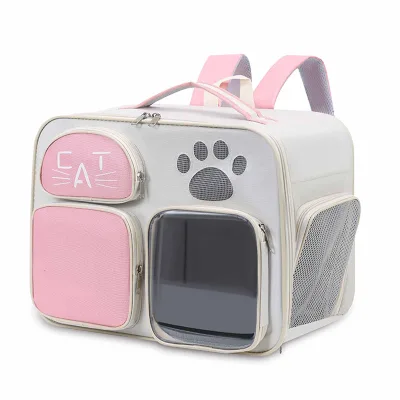

Pet Backpack Going out Portable Backpack Carrying Breathable Cat Travel Pet Bag
$13.67 - $14.52
MOQ: 500 Pieces


Comprehensive Sourcing Guide
Portable Breathable Pet Travel Bag Sourcing Guide
Sourcing portable breathable pet travel bags requires a careful balance between structural integrity, animal welfare standards, and logistical efficiency. These carriers are designed to transport small animals, including dogs, cats, and other small pets, while ensuring adequate airflow and security during transit. Buyers must distinguish between rigid hard-shell carriers and soft-sided mesh bags, as the latter often dominate the "breathable" segment due to their lightweight nature and ventilation capabilities. The primary objective is to select a product that meets the specific weight and size constraints of the target animal while offering durability for repeated use.
The procurement landscape for these items is characterized by high customization potential and varied material compositions. Suppliers frequently offer OEM services, allowing buyers to tailor colors, logos, and specific dimensions to match brand identity. However, this customization introduces complexity in quality control and lead time management. Buyers need to establish clear specifications early in the negotiation process to avoid discrepancies between the sample and the bulk production. Understanding the distinction between stocked items and made-to-order units is critical for aligning inventory expectations with sales cycles.
Product Scope and Observed Listing Signals
The market for portable pet carriers includes a diverse range of carrying types, primarily hand bags and shoulder bags, which cater to different user preferences and mobility needs. Observed listings indicate that many products are designed as hand bags with a maximum weight capacity ranging from 3 to 10 kg, making them suitable for small to medium-sized pets. Other variants feature shoulder straps, often with specific width specifications such as 38 cm wide straps, to distribute weight more evenly across the user’s body. These structural differences directly impact the ergonomic experience for the owner and the stability of the carrier during movement.
Material selection is a key differentiator in this category, with polyester being a prevalent choice due to its balance of durability, weight, and cost. Some products incorporate additional materials such as PC or PE for structural reinforcement, particularly in the base or frame areas. Color options are extensive, ranging from standard black and white to vibrant hues like yellow, green, red, and blue, allowing for significant branding flexibility. Buyers should note that while many products are described as "stocked," others are produced on demand, which affects the availability of specific colors and sizes at any given moment.
Technical Specifications to Verify
Dimensional accuracy is paramount when sourcing pet carriers, as incorrect sizing can lead to customer returns and animal discomfort. Verified product sizes vary significantly, with some models measuring approximately 43x28x35 cm or 46x26x28 cm, while others are standardized as "One Size" or offered in S, M, L, and XL variants. Buyers must verify the internal volume against the expected weight and breed of the pet to ensure compliance with airline regulations if the bag is intended for air travel. The external dimensions also influence packaging efficiency, so understanding the packed size is essential for calculating shipping costs.
Weight specifications for the empty carrier are another critical technical parameter, typically ranging from 0.232 kg to 1.24 kg depending on the model and material thickness. Lighter bags are preferred for travel convenience, but they must still maintain sufficient structural integrity to support the pet’s weight. Waterproofing capabilities vary, with some products explicitly marketed as waterproof while others are not, which affects their suitability for outdoor use or cleaning. Buyers should request detailed technical sheets that specify the fabric denier, zipper quality, and strap attachment points to assess long-term durability.
Compliance and Safety Documentation
Safety standards for pet carriers often involve testing for structural strength, zipper security, and material toxicity. While specific certification statuses like BSCI may be mentioned in supplier backgrounds, buyers should not assume compliance without verifying current audit reports. It is essential to confirm that the materials used, such as polyester and any plastic components, are free from harmful substances like lead or phthalates, especially if the product is marketed for use with pets that may chew on the carrier. Buyers should request material safety data sheets (MSDS) or test reports from accredited laboratories to ensure regulatory compliance in their target markets.
Ventilation and escape prevention are critical safety features that must be verified through physical inspection or third-party testing. Mesh panels should be tightly woven to prevent paws or noses from getting stuck while allowing adequate airflow. Zippers and closures must be robust enough to withstand the pressure of an active animal inside. Buyers should inquire about the specific testing protocols used by the supplier to validate these safety features, such as pull tests on handles and stress tests on seams. Without documented evidence, buyers risk sourcing products that may fail under real-world conditions, leading to liability issues.
Cost Drivers and Commercial Terms
Pricing for portable pet travel bags is influenced by material costs, customization levels, and order volume. Observed price ranges in the market span from $1.50 to $26.99 USD, reflecting the wide variety of quality levels and features available. Lower-priced items often use thinner materials and simpler constructions, while higher-priced options may feature reinforced frames, premium zippers, and branded packaging. Buyers should analyze the cost breakdown to understand how much of the price is attributed to materials versus labor and overhead, which helps in negotiating better terms for larger orders.
Commercial terms typically include a 30% deposit and a 70% balance payment before shipping, which is standard in the industry. Minimum Order Quantities (MOQ) can vary significantly, ranging from as low as 2 pieces for sample orders to 3000 pieces for bulk production, with a common MOQ of 100 pieces for customized orders. Lead times are also variable, with sample production taking around 7 days and bulk production requiring 15-20 days. Buyers should factor these timelines into their inventory planning and ensure that payment terms are clearly defined in the contract to avoid disputes.
Supplier Qualification and Quality Control
Supplier qualification involves assessing their manufacturing capabilities, quality control processes, and past performance. Buyers should verify the supplier’s factory location, with many manufacturers based in regions like Zhejiang, China, known for their textile and bag production expertise. OEM capabilities are common, so buyers should confirm the supplier’s experience in producing customized products similar to their requirements. Requesting references or case studies from previous clients can provide insight into the supplier’s reliability and ability to meet deadlines.
Quality control measures should be established before production begins, including pre-production sample approvals and in-line inspections. Buyers should define clear acceptance criteria for defects, such as stitching errors, zipper malfunctions, or material inconsistencies. Third-party inspection services can be engaged to verify product quality before shipment, ensuring that the goods meet the agreed-upon specifications. Establishing a robust QC process helps minimize the risk of receiving substandard products and reduces the likelihood of costly returns or customer complaints.
Long-Term Procurement Checks
Long-term procurement success depends on continuous monitoring of supplier performance and market trends. Buyers should regularly review supplier metrics, such as on-time delivery rates, defect rates, and responsiveness to issues. Building a strong relationship with the supplier can lead to better pricing, priority production, and improved support during peak seasons. It is also important to stay updated on changes in pet care trends and regulations, which may impact product design and compliance requirements.
Sustainability and ethical sourcing are increasingly important factors in the pet product industry. Buyers should consider the environmental impact of the materials used, such as the recyclability of polyester, and the ethical practices of the supplier, including fair labor standards. Engaging with suppliers who prioritize eco-friendly practices can enhance brand reputation and appeal to environmentally conscious consumers. Regular audits and discussions about sustainability goals can help align procurement strategies with broader corporate social responsibility objectives.
FAQs
Can I order customized portable breathable pet travel bags?
Yes, customized portable breathable pet travel bags are available with custom printing options. The minimum order quantity for these customized items is 100 pieces, and sample production takes 7 days while bulk orders require 15 to 20 days for completion.
What are the available sizes for portable breathable pet travel bags?
Portable breathable pet travel bags come in various sizes including One Size, S, M, L, and XL. Specific dimensions range from 43 by 28 by 35 centimeters to 46 by 26 by 28 centimeters depending on the specific model selected for your needs.
Which materials are used for portable breathable pet travel bags?
These bags are primarily constructed from polyester materials to ensure durability. Some models feature eco-friendly attributes and may include components like PC or PE, while others are designed with specific waterproof or non-waterproof properties based on the product standard.
How much does a Portable Breathable Pet Travel Bag weigh?
The weight of portable breathable pet travel bags varies by model, typically ranging from 0.232 kilograms to 1.24 kilograms. Most standard units weigh around 1.2 kilograms, with a maximum carrying capacity of 3 to 10 kilograms for the pet.
What payment terms apply to portable breathable pet travel bags?
Standard payment terms require a 30 percent deposit followed by a 70 percent balance payment before shipping. This structure applies to bulk orders and ensures secure transactions for both buyers and manufacturers during the production and delivery process.
Can I find portable breathable pet travel bags with specific certifications?
While some products are noted as eco-friendly, specific certification details like BSCI are not confirmed as standard for all listed items. Buyers should verify specific compliance requirements with the manufacturer, as standards vary by model and production batch.
Where are portable breathable pet travel bags manufactured?
These products originate from factories located in Zhejiang, China. The manufacturing process supports OEM services, allowing for customization while maintaining production capabilities within this specific region for efficient logistics and supply chain management.