Source Portable Foldable Fire Water Monitor for Firefighting, Industrial, and Marine Use
Explore 30 listings for the Portable Foldable Fire Water Monitor, comparing specifications like flow rates, pressure ranges, and turning angles. Buyers can evaluate options from manufacturers in China with varying customization and material choices to suit diverse safety needs.
Key considerations
Products List


Automatic Oscillating Portable Ground Fire Water Monitor for Firefighting
$1600.00 - $2000.00
MOQ: 1 set

Portable Fire Fighting Water Monitor High Efficiency Fire Water Monitor
$184.00 - $3100.00
MOQ: 1 Pieces


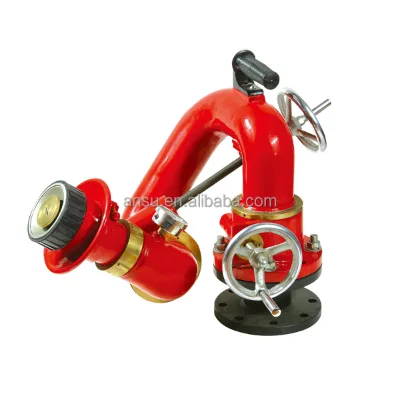


Superior 0.8 MPa Foldable Manual Fire Water Monitor for Safety Solutions
$550.00 - $725.00
MOQ: 1 Pieces


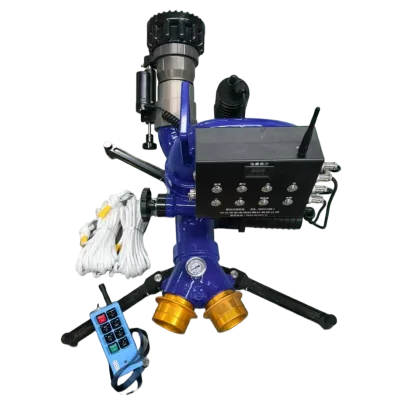

Sxfire Ground Portable Manual Operated Fire Water Monitor with Oscillation Function
$1500.00 - $1700.00
MOQ: 1 Pieces

Comprehensive Sourcing Guide
Strategic Sourcing Guide for Portable Foldable Fire Water Monitors
Understanding Technical Specifications and Performance Parameters
When sourcing a Portable Foldable Fire Water Monitor, the primary objective is to identify equipment that balances high-performance water delivery with the logistical advantages of portability and compact storage. The core technical differentiators for these devices revolve around flow rates, working pressures, and the geometric reach of the water jet. Based on available market data, buyers should expect a wide variance in specifications depending on the specific model series, such as the PS20 through PS80 range or the specialized PSY20-40 variants.
The flow rate is a critical metric that dictates the volume of water or foam mixture the monitor can discharge. Observed data indicates that units typically operate within a range of 20 to 80 liters per second. Specific models may offer selectable flow rates, such as 20, 30, 40, or 50 liters per second, allowing operators to adjust output based on the intensity of the fire. It is essential to verify the maximum flow capacity against the water supply source, as a monitor capable of 80 liters per second requires a significantly larger water main or pump capacity than a 20-liter unit.
Working pressure is another fundamental specification that influences the jet's reach and penetration. The operational pressure for these monitors generally falls between 0.8 and 1.4 MPa, with some high-performance variants rated up to 1.6 MPa. This pressure range is necessary to achieve the observed jetting ranges, which can extend from 45 meters to over 80 meters. For instance, specific models demonstrate a water maximum reach of 45 to 65 meters at 8 bar, while foam application may require slightly lower reach capabilities, typically between 40 and 60 meters. Buyers must ensure that the selected unit's pressure rating aligns with the hydraulic capabilities of their local fire suppression infrastructure.
The mechanical design of the monitor also dictates its versatility. The horizontal turning angle is a crucial feature for coverage, with standard units offering a full 360-degree rotation. Vertical movement is equally important for targeting elevated fires or suppressing ground-level blazes; observed specifications indicate an up-down turning angle ranging from -70 to +70 degrees, or in some configurations, a vertical elevation of +20 to +80 degrees. Additionally, the oscillation feature, which allows the water stream to sweep back and forth, is available in specific increments such as 20, 30, or 40 degrees, enhancing the cooling effect over a broader area.
Material Composition and Construction Standards
The durability and longevity of a Portable Foldable Fire Water Monitor are directly tied to the materials used in its construction. The market offers units fabricated from a variety of robust materials, including ductile iron, aluminum alloy, and stainless steel. Each material presents distinct advantages regarding weight, corrosion resistance, and cost. For example, aluminum alloy and brass components are often utilized to reduce the overall weight of the unit, facilitating easier transport and deployment by fire crews. Conversely, ductile iron and stainless steel offer superior structural integrity and resistance to harsh environmental conditions, making them suitable for heavy-duty industrial applications.
The body material selection also impacts the internal components and the overall weight of the device. Some specifications list a unit weight of approximately 42 kilograms, which suggests a balance between robust construction and portability. The choice of material must be verified against the intended operating environment. In coastal or chemically aggressive environments, stainless steel or high-grade aluminum alloys are preferable to prevent rapid degradation. Furthermore, the connection interfaces, such as flanges and threads, must be compatible with existing fire hydrant systems. Common connection diameters observed include 3 inches (80mm) and 4 inches (100mm), while inlet adaptors may support 2.5-inch BS, GOST, Storz, or Nh standards.
Compliance, Certification, and Regulatory Verification
In the realm of fire safety equipment, compliance with international and local standards is non-negotiable. Buyers must rigorously verify that the supplier provides evidence of certification for the specific models they intend to purchase. While specific certification bodies vary by region, the presence of certifications such as CCC (China Compulsory Certification) and ISO (International Organization for Standardization) is a strong indicator of quality assurance. These certifications suggest that the manufacturing process adheres to established safety and quality management protocols.
It is critical to distinguish between the product's design standards and its operational certifications. Some product lines reference specific model standards, such as PS20-PS80 or PL24-PL64, which define the performance benchmarks for that series. However, these model numbers do not automatically equate to regulatory approval for use in a specific jurisdiction. Buyers should request the actual certification documents and verify their validity with the issuing authority. Additionally, the manufacturing location, often cited as Quanzhou, Fujian, or Zhejiang, China, should be cross-referenced with the country of origin to ensure transparency in the supply chain.
When evaluating compliance, buyers should also consider the specific standards applicable to their region. For instance, European markets may require CE marking, while North American jurisdictions might look for UL or FM approvals. The provided data indicates that the product standard is often linked to the model number itself, but this is a manufacturer designation rather than a regulatory seal. Therefore, the procurement strategy must include a step where the buyer confirms that the specific unit model meets the local fire code requirements before finalizing the order.
Cost Drivers and Pricing Structure Analysis
The pricing of portable foldable fire water monitors is influenced by a complex interplay of factors, including material costs, manufacturing complexity, and the level of customization required. The observed price range in the market spans from $1 to $3,100, a wide variance that reflects the diversity of product configurations. Lower-priced units typically represent basic models with standard flow rates and simpler mechanical designs, while higher-priced units likely incorporate advanced features such as electric operating modes, specialized coatings, or custom-engineered components.
Material composition is a primary cost driver. Units constructed primarily from stainless steel or high-grade aluminum alloys will command a premium over those made from cast iron or standard brass. The complexity of the internal mechanism, particularly the ability to switch between jet, spray, and water curtain modes, also adds to the manufacturing cost. Furthermore, the inclusion of an electric operating mode versus a manual system introduces additional components such as motors and control circuits, which significantly impact the final price.
Customization is another significant factor affecting cost. The availability of customization options allows buyers to tailor the monitor to specific needs, such as unique thread sizes, specific paint colors, or integrated mounting brackets. However, these bespoke features often increase the unit price and may affect the minimum order quantity (MOQ). The observed MOQ range is between 1 and 10 units, suggesting that while some suppliers offer single-unit purchases, bulk orders may yield better pricing. Buyers should carefully evaluate the total cost of ownership, including shipping, packaging, and potential import duties, rather than focusing solely on the unit price.
Typical Applications and Operational Scenarios
Portable foldable fire water monitors are designed for a wide array of applications, ranging from industrial facilities to municipal fire services. Their versatility makes them suitable for scenarios where fixed monitors are impractical or where rapid deployment is essential. One of the primary use cases is in industrial settings, such as petrochemical plants, refineries, and storage terminals, where the risk of large-scale fires is high. In these environments, the high flow rates and long jetting ranges of the monitors are critical for suppressing fires that are difficult to reach with standard hoses.
Another key application is in municipal fire services, where the portability of the device allows firefighters to quickly deploy a high-capacity water stream at the scene of a fire. The ability to switch between different water forms, such as an intensive jet for penetration or a spray for cooling, provides tactical flexibility. The monitor's capability to handle foam mixtures is particularly valuable for fighting liquid fuel fires, where the foam blanket is necessary to smother the fire and prevent re-ignition.
The "foldable" aspect of the monitor is particularly advantageous in confined spaces or vehicles where storage space is limited. These units can be compacted for transport and expanded for operation, making them ideal for mobile fire units, aircraft hangars, and marine vessels. The wide horizontal and vertical turning angles ensure that the operator can cover a large area without needing to reposition the entire unit, which is crucial in dynamic fire scenarios. Additionally, the compatibility with various water sources, including fire hydrants and pump trucks, ensures that the monitor can be integrated into existing fire suppression systems seamlessly.
Supplier Evaluation and Quality Control Protocols
Selecting the right supplier is as important as selecting the right product. Buyers should prioritize suppliers who demonstrate transparency in their manufacturing processes and provide clear documentation regarding their quality control measures. The presence of OEM and ODM services indicates that the supplier is capable of adapting products to meet specific client requirements, which is a valuable asset for organizations with unique operational needs. However, buyers must verify the supplier's track record and ensure that they have the capacity to maintain consistent quality across different production batches.
Quality control should be a central component of the procurement process. Buyers should request detailed inspection reports and test results for the specific models they are considering. While specific test data may not be publicly available, the supplier should be willing to provide evidence of pressure testing, flow rate verification, and material analysis. The use of standard export packaging or polywood cases suggests a commitment to protecting the product during transit, which is essential for maintaining the integrity of the equipment.
When evaluating suppliers, buyers should also consider the lead time and the ability to meet delivery schedules. Although specific lead times are not provided in the general data, the MOQ range of 1 to 10 units suggests that suppliers may have varying production capacities. It is advisable to establish clear communication channels with the supplier to discuss production timelines and potential delays. Additionally, buyers should verify the supplier's after-sales support capabilities, including the availability of spare parts and technical assistance, to ensure long-term operational readiness.
Long-Term Procurement and Maintenance Considerations
The procurement of portable foldable fire water monitors should be viewed as a long-term investment rather than a one-time purchase. Buyers must consider the lifecycle costs, including maintenance, repairs, and the availability of replacement parts. The complexity of the mechanical components, such as the turning mechanisms and flow control valves, necessitates regular maintenance to ensure reliable performance. Suppliers that offer comprehensive service packages, including training and technical support, are preferable for minimizing downtime and extending the lifespan of the equipment.
The standardization of components is another critical factor for long-term procurement. Units that adhere to common standards, such as the PS20-PS80 or PL24-PL64 series, are more likely to have compatible parts and accessories available in the market. This standardization simplifies the procurement of spare parts and reduces the risk of obsolescence. Buyers should also consider the environmental impact of the materials used and the recyclability of the equipment, as sustainability is becoming an increasingly important criterion in procurement decisions.
Finally, buyers should establish a clear maintenance schedule and ensure that their fire safety teams are trained in the proper operation and care of the monitors. Regular inspections and testing are essential to identify potential issues before they become critical failures. By integrating the monitor into a comprehensive fire safety management system, organizations can maximize the value of their investment and ensure that the equipment is ready for immediate deployment when needed.
FAQs
What materials are used for the body of these monitors?
The body is constructed from ductile iron, aluminum alloy, or stainless steel. These materials ensure durability and corrosion resistance suitable for harsh fire suppression environments while balancing weight for portability.
How does the working pressure affect the jetting range?
Operating pressure between 0.8 and 1.4 MPa enables a jetting range above 48 to 80 meters. Higher pressure within this range directly increases the vertical reach and penetration power of the water stream.
Which flow rates are available for these fire monitors?
Available flow rates range from 20 to 80 liters per second, with some models offering selectable options like 20, 30, 40, or 50 liters per second. This variability allows operators to match water output to specific fire intensities.
Can these monitors operate in both manual and electric modes?
Yes, the operating mode is available in both manual and electric configurations. Electric options provide automated control for rapid response, while manual modes offer direct mechanical operation for reliability in various conditions.
What certifications do these products typically hold?
Products often carry CCC and ISO certifications to verify compliance with safety and quality standards. Buyers should request specific documentation to ensure the unit meets local regulatory requirements before purchase.
Where are these fire monitors typically manufactured?
Manufacturing origins include Quanzhou, Fujian, and Zhejiang, China. These locations are known for producing industrial fire equipment with standard export packaging to ensure safe transit to international destinations.