Source Portable Foldable Fire Monitor for Firefighting, Industrial, and Emergency Use
Compare 30 Portable Foldable Fire Monitor options from verified Chinese manufacturers. Buyers can evaluate flow rates, working pressures, and nozzle sizes to select the right unit for firefighting, industrial, or emergency applications.
Key considerations
Products List


Portable Fire Fighting Water Monitor High Efficiency Fire Water Monitor
$184.00 - $3100.00
MOQ: 1 Pieces


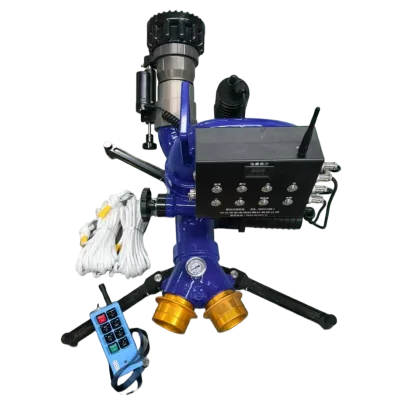


Superior 0.8 MPa Foldable Manual Fire Water Monitor for Safety Solutions
$550.00 - $725.00
MOQ: 1 Pieces

Comprehensive Sourcing Guide
Portable Foldable Fire Monitor Sourcing Guide
Procuring portable foldable fire monitors requires a disciplined approach to balancing mobility with high-pressure performance. These devices are critical for rapid deployment in scenarios where fixed monitors are impractical or where terrain restricts vehicle access. Buyers must navigate a market characterized by diverse material compositions, varying flow rates, and multiple control mechanisms. The following guide outlines the essential verification steps, technical parameters, and commercial considerations necessary to secure reliable equipment that meets operational demands.
The core keyword for this category often intersects with remote-controlled, manual, and portable fire monitors. Listings frequently highlight adjustable flow rates, specific inlet sizes, and robust construction materials such as stainless steel or aluminum alloy. Understanding the distinction between these variants is crucial for aligning procurement with specific fire suppression needs, whether for foam concentrate application, water cannon operations, or specialized media handling.
Product Scope and Observed Listing Signals
The observed market for portable fire monitors reveals a wide spectrum of configurations, ranging from simple spray guns to complex remote-controlled units. Listings indicate models such as the PSY8/20-40W and PSKD40ZB, which suggest variations in pressure ratings and operational modes. Some units are designed for intensive jet applications with a maximum reach of up to 65 meters, while others focus on precise fog angles of 120 degrees. Buyers should recognize that "portable" and "foldable" attributes often correlate with specific packing standards, such as wooden cases or crates, which impact logistics and storage requirements.
Material composition is a primary differentiator in this product scope. Stainless steel variants, such as those made from Ss340, offer durability for harsh environments, whereas aluminum alloy models provide lighter weight for easier manual handling. Inlet sizes are standardized around 2.5 inches, but coupling types vary significantly, including BS336, Storz, GOST, and NH connections. This variability necessitates careful verification of interface compatibility with existing fire truck or hydrant systems to ensure seamless integration during emergency operations.
Technical Specifications to Verify
Flow rate and working pressure are the most critical technical parameters to validate before purchase. Observed data shows flow rates ranging from 1200 to 2400 liters per minute, with some models offering adjustable settings to match specific suppression requirements. Working pressures vary from 8 Bar to 10 Bar for certain remote units, while others operate within a range of 0.5 to 1.2 MPa. Buyers must verify that the selected monitor can sustain the required pressure without leakage or structural failure, especially when handling aggressive media like AFFF or AR-AFFF foam concentrates.
Control mechanisms and rotation capabilities define the operational flexibility of the monitor. Models are available in both manual and remote control types, with power supplies specified as DC24V for automated units. Horizontal rotation often reaches 360 degrees, allowing for comprehensive coverage, while pitching rotation typically spans from -30 to 70 degrees. Additionally, the nozzle size and jet type, such as intensive jet or spray gun configurations, must be matched to the target fire class. Verification of these mechanical specifications ensures the equipment can be deployed effectively in dynamic emergency scenarios.
Compliance and Safety Documentation
Safety compliance is non-negotiable for fire suppression equipment, and buyers must request relevant certification documents from suppliers. While specific certification statuses vary by manufacturer, standards such as CCC may apply to certain models originating from specific regions like Shenzhen. It is essential to verify that the product meets local regulatory requirements for fire safety equipment, including pressure testing and material safety certifications. Documentation should confirm that the monitor has undergone rigorous testing to withstand its maximum working pressure and flow rate without compromising integrity.
Material safety and environmental compatibility are also key compliance aspects. The use of specific alloys, such as Ss340 stainless steel or aluminum, must be documented to ensure resistance to corrosion, particularly when handling chemical foams. Buyers should request material test reports to verify that the internal components are compatible with the intended media, preventing degradation over time. Additionally, packaging standards, whether box, carton, or wooden case, should be reviewed to ensure they protect the equipment during transit and maintain its operational readiness upon arrival.
Cost Drivers and Commercial Terms
Pricing in the portable fire monitor market is influenced by material quality, control complexity, and customization options. Observed price ranges span from $1 to over $5,000, reflecting the diversity from basic spray guns to advanced remote-controlled units. Customization availability allows buyers to tailor specifications such as coupling types or inlet sizes, which may affect the final cost. Understanding these cost drivers helps in budgeting accurately and avoiding unexpected expenses related to specialized configurations or premium materials.
Minimum Order Quantities (MOQ) and packaging terms significantly impact the total cost of ownership. MOQs are typically low, ranging from 1 to 10 units, making this category accessible for small-scale procurement or replacement needs. However, packaging choices, such as wooden cases for fragile remote units or crates for heavy-duty models, add to shipping costs. Buyers should negotiate clear terms regarding packaging standards and logistics to minimize hidden costs and ensure that the equipment arrives in optimal condition.
Supplier Qualification and Quality Control
Supplier qualification is paramount to ensuring the reliability of fire suppression equipment. Buyers should verify the supplier's origin, with common locations including Fujian, China, and Guangong, China. Proximity to manufacturing hubs can influence lead times and communication efficiency, but it is essential to assess the supplier's track record in producing certified fire monitors. Requesting references or case studies from previous clients can provide insights into the supplier's consistency and after-sales support capabilities.
Quality control processes must be transparent and rigorous. Buyers should inquire about the supplier's internal testing procedures, including pressure tests and flow rate validations. Verification of production standards, such as those indicated by specific model numbers like PSY or PLY, can help assess the supplier's adherence to industry norms. Additionally, inspecting the quality of packaging and labeling ensures that the products are handled correctly during shipping, reducing the risk of damage and ensuring immediate usability upon deployment.
Long-Term Procurement Checks
Long-term procurement success depends on establishing a robust supply chain for maintenance and spare parts. Buyers should confirm the availability of replacement components, such as nozzles, seals, and control modules, to extend the lifespan of the monitors. Suppliers that offer comprehensive technical support and training can significantly enhance the operational effectiveness of the equipment. Establishing a clear channel for technical assistance ensures that any issues can be resolved promptly, minimizing downtime during critical operations.
Regular performance audits and feedback loops are essential for continuous improvement. Buyers should monitor the performance of the monitors in real-world scenarios and provide feedback to the supplier regarding any discrepancies or improvements needed. This collaborative approach helps in refining future procurement decisions and ensures that the equipment continues to meet evolving safety standards. By maintaining a proactive relationship with the supplier, buyers can secure a reliable source of high-quality fire monitors that support their long-term safety objectives.
FAQs
What customization options are available for these monitors?
Customization is available for these fire monitors to meet specific operational needs. Buyers can request adjustments to coupling types, inlet sizes, and material compositions based on the PSY8/20-40W model specifications provided in the product details.
Which inlet sizes are supported by the portable fire monitors?
The monitors support multiple inlet sizes including 2.5 inch BS336, Storz, GOST, and Nh. These options ensure compatibility with various fire hose systems and allow for flexible integration into existing firefighting infrastructure across different regions.
How does the working pressure vary between different models?
Working pressure varies by model, with some units rated at 10 Bar and others at 8 Bar. Specific models like the PSY8/20-40W operate at 10 Bar, while the PSKD40ZB operates at 8 Bar, ensuring suitability for different fire suppression scenarios.
Can these monitors operate with foam concentrate and water?
Yes, these monitors can operate with foam concentrate, water, AFFF, and Ar-AFFF media. This versatility allows them to handle various fire types effectively, making them suitable for industrial and commercial applications requiring multi-media suppression capabilities.
What is the maximum reach of the remote control fire monitor?
The maximum reach of the remote control fire monitor is 65 meters. This capability ensures effective coverage for large-scale incidents, allowing operators to manage fires from a safe distance while maintaining precise control over the water or foam stream.
Which materials are used to construct these fire monitors?
Materials used include Ss340 Stainless Steel, Aluminum Alloy, and Copper depending on the specific model. These materials are selected for durability and resistance to corrosion, ensuring long-term reliability in harsh firefighting environments and varying weather conditions.
What are the standard packing methods for these products?
Standard packing methods include Box, Wooden Case, Carton, and Crate options. The specific packing type depends on the model, such as the PSY8/20-40W-B which uses a Wooden Case, ensuring safe transport and protection during international shipping.