Source Portable Folding Workbench for Home Office and Workshop
Explore 30 listings for the Portable Folding Workbench, featuring options with plastic handles and A3 steel frames. Buyers can compare models like WB001B and H403, noting dimensions, certifications, and customization availability for various professional and DIY needs.
Key considerations
Products List


Professional Portable Table Woodworker Foldable Workbench for The Workshop
$39.50 - $48.50
MOQ: 5 Pieces

China Factory Portable Bench Woodworking Folding Worktable for The Workshop
$39.50 - $48.50
MOQ: 5 Pieces


High Quality Multi Purpose Table Woodworker Foldable Workbench for The Workshop
$39.50 - $48.50
MOQ: 5 Pieces


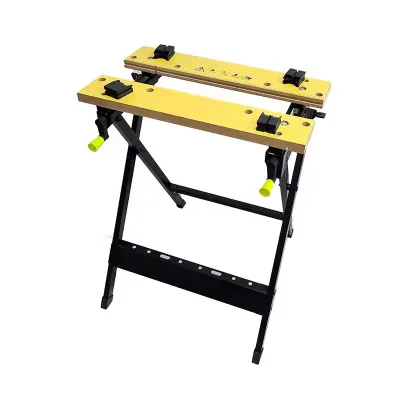


$60.00 - $110.00
MOQ: 50 Pieces


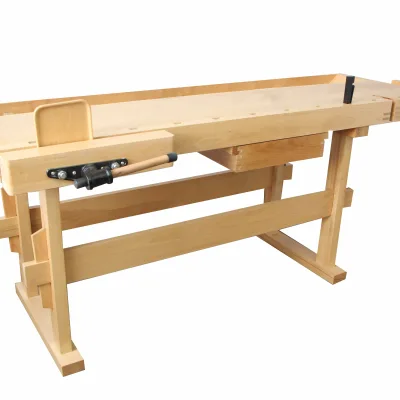


Comprehensive Sourcing Guide
Strategic Sourcing Guide for Portable Folding Workbenches
Understanding Technical Specifications and Structural Integrity
When sourcing a Portable Folding Workbench, the primary objective is to identify units that balance portability with the structural rigidity required for professional or DIY tasks. The market offers a diverse array of configurations, ranging from lightweight, foldable tables designed for home office use to heavy-duty units capable of supporting industrial-grade machinery. A critical observation in the current supply landscape involves the variation in folded dimensions and overall footprint. Buyers must scrutinize the "Folded" attribute, as this directly impacts storage efficiency and transport logistics. Some units are engineered with compact folded profiles, such as those measuring approximately 6058(77-107) CM, while others prioritize a larger working surface that may result in a bulkier folded state.
The structural skeleton of these workbenches is often defined by the square tube dimensions. Data indicates a prevalence of 20X20mm and 25X25mm square tube specifications. The choice between these dimensions is not merely aesthetic; it dictates the load-bearing capacity and resistance to lateral sway. A 25X25mm tube generally offers superior stability for heavier tasks, whereas 20X20mm variants may suffice for lighter assembly or electronics work. Furthermore, the material composition of the frame is a decisive factor. While some units utilize A3 Steel for robustness, others may combine materials, such as Oak and A3 Steel, to offer a blend of durability and aesthetic appeal. The thickness of the tabletop is another vital specification, with observed values around 2.3 cm, which influences the surface's ability to resist warping under load. Buyers should verify the specific thickness and material grade, as "DIY Level" and "Professional Level" designations suggest a significant divergence in expected performance and longevity.
Compliance, Certification, and Safety Standards
In the B2B procurement of workbenches, verifying compliance with international and regional safety standards is non-negotiable. The supply chain for these items is global, with origins ranging from Zhejiang and Taizhou in China to Zhengzhou, creating a need for rigorous certification checks. Buyers must confirm that the product carries recognized certifications such as CE, which indicates conformity with health, safety, and environmental protection standards for products sold within the European Economic Area. Additionally, the presence of ISO certification suggests that the manufacturer adheres to specific quality management systems, which can be a proxy for consistent production quality.
Beyond general certifications, specific standards often apply to the dimensions and design of the workbench. Observed listings reference standards such as GS and ANSI, alongside specific dimensional standards like 1200* or 856178.7cm. It is crucial for procurement teams to understand that these standards may refer to the product's design compliance or its dimensional consistency rather than a universal safety mandate. For instance, a product listing a "GS" standard implies a specific German safety certification, while "ANSI" references American National Standards Institute guidelines. The availability of a Machinery Test Report is another high-confidence indicator of quality assurance. This document provides empirical evidence of the product's performance under stress, offering buyers a data-driven basis for evaluation rather than relying solely on marketing claims. When sourcing, buyers should explicitly request these test reports to validate the manufacturer's claims regarding load limits and structural integrity.
Cost Drivers and Pricing Dynamics
The pricing structure for portable folding workbenches is influenced by a complex interplay of material costs, manufacturing complexity, and customization requirements. The observed price range in the market spans from $1 to $4,998 USD, a variance that reflects the vast difference between basic, lightweight DIY units and heavy-duty, custom-engineered industrial stations. Several key factors drive these costs. First, the material grade is a primary determinant; units labeled as "Professional Level" utilizing A3 Steel or composite materials like Oak and Steel command higher prices than those categorized as "DIY Level" with plastic handles or lighter gauge steel.
Second, the level of customization available significantly impacts the final cost. While many suppliers offer standard models, the "Customization: Available" attribute suggests that buyers can request modifications to dimensions, colors, or branding. These bespoke requests inevitably increase the unit price and may affect the Minimum Order Quantity (MOQ). The observed MOQ range of 1 to 1000 units indicates a flexible market where small businesses can procure single units, while large enterprises can leverage bulk purchasing power. However, buyers should be aware that lower MOQs often correlate with higher per-unit costs. Additionally, packaging requirements play a role; whether a unit is packed in a simple "1PC/Color Box" or a more robust "Carton Case" or "Carton" affects both the shipping cost and the final price. The weight of the product, ranging from 7kg to 30kg, also influences logistics expenses, which are often factored into the landed cost.
Typical Applications and Usage Scenarios
Portable folding workbenches serve a wide spectrum of applications, dictated by their specific design features and build quality. The "Multi-Purpose Portable Folding Work Table" designation highlights the versatility required in modern work environments. For home office and hobbyist users, the "Easy to Operate" feature is paramount. These users often require a clean, organized workspace that can be quickly deployed and stowed away. The "Clean" usage attribute suggests that certain models are designed for environments where hygiene and ease of cleaning are priorities, such as electronics assembly or light crafting.
In contrast, professional workshop environments demand higher durability and stability. Units with a "Professional Level" quality grade and "New" condition are essential for tasks involving heavy machinery or precise measurements. The "Application: Home Office Workshop" tag confirms the dual nature of these products, serving both domestic and semi-industrial needs. For industrial settings, the presence of specific features like a "38 Pin Thickness 2 mm" specification or a "Net Weight" of 25kg indicates a focus on precision and stability. The "Warranty: 1 Year" offered on many units provides a safety net for commercial buyers, ensuring that defects in materials or workmanship are addressed. Buyers must align the product's intended usage with its technical specifications; a table suitable for a home office may fail under the rigorous demands of a manufacturing floor, and vice versa.
Supplier Evaluation and Origin Verification
Evaluating suppliers for portable folding workbenches requires a deep dive into their geographical origins and production capabilities. The supply data indicates significant manufacturing hubs in Zhejiang, Taizhou, Jiangsu, and Zhengzhou, China. Each region may have its own specialization; for example, Zhejiang is known for a broad range of metalworking and furniture manufacturing, while Taizhou often focuses on specific industrial equipment. The "Place of Origin" and "Product Origin" fields are critical for logistics planning and understanding the regulatory environment of the manufacturer.
When assessing a supplier, buyers should look for transparency in their product models. The market features distinct model numbers such as WB001B, YH-WB014, YH-WB015, NH-W001, H403, and 1200. These identifiers help in tracking specific product lines and ensuring consistency in future orders. The availability of a "Brand Name" like "SL" can also be a factor, though many suppliers operate under OEM (Original Equipment Manufacturer) models. A key indicator of supplier reliability is the provision of a Machinery Test Report and the adherence to standards like CE and ISO. Buyers should verify that the supplier can consistently meet the "Condition: New" requirement and provide accurate documentation for all certifications. Furthermore, the "Core Components" being listed as "other" suggests that buyers need to investigate the specific quality of internal parts, as this generic term does not guarantee the use of high-grade components.
Quality Control and Long-Term Procurement Considerations
Implementing a robust quality control (QC) strategy is essential for mitigating risks in the procurement of portable folding workbenches. Given the variation in quality grades from "DIY" to "Professional," buyers must establish clear acceptance criteria before production begins. This includes verifying the "Square Tube Dimension" and "Thickness" against the agreed-upon specifications. The "Pin Specification" of 38 Pin Thickness 2 mm, for instance, should be measured to ensure it meets the design requirements for hinge stability. Regular inspections should focus on the "Folded" mechanism to ensure it operates smoothly without excessive wear or binding.
Long-term procurement considerations extend beyond the initial purchase to include maintenance, warranty claims, and supply chain continuity. The "Warranty: 1 Year" is a standard offering, but buyers should clarify the terms of coverage, particularly regarding structural failures or coating defects. The "Gross Weight" and "Net Weight" data are vital for planning storage and shipping logistics over the long term. Additionally, the "Product Packing" method, whether "1PCS/CTN" or "Carton Case," affects the product's protection during transit and storage. Buyers should consider the environmental impact and the recyclability of the materials used, such as A3 Steel and Oak. Finally, maintaining a relationship with a supplier who offers "Customization" capabilities allows for future adaptations of the workbench to changing operational needs, ensuring the procurement strategy remains agile and responsive to market demands.
Comparative Analysis of Key Product Attributes
To facilitate informed decision-making, the following table summarizes the key attributes observed in the current market for portable folding workbenches. This comparison highlights the diversity in specifications and helps buyers identify the most suitable options for their specific needs.
| Attribute Category | Observation A (DIY/Compact) | Observation B (Professional/Heavy) | Observation C (Industrial/Custom) |
|---|---|---|---|
| Quality Grade | DIY Level | Professional Level | Professional Level |
| Frame Material | Plastic Handle, A3 Steel | A3 Steel | Oak and A3 Steel |
| Square Tube | 20X20mm | 25X25mm | Variable (Verify) |
| Dimensions | 6058(77-107) CM | 1226816cm | 856178.7cm |
| Weight | 7 kg | 25 kg (Net) | 30 kg |
| Certification | CE, ISO | CE, ANSI | GS, Machinery Test Report |
| Packing | 1PC/Color Box | Carton Case | 1PCS/CTN |
| Model Example | WB001B | H403 | YH-WB014 |
This table underscores the necessity of detailed specification checks. While Observation A offers a lightweight, cost-effective solution for light tasks, Observation B and C provide the robustness required for demanding environments. The presence of certifications like GS and ANSI in Observation C further validates its suitability for regulated industries. Buyers must cross-reference these attributes with their specific operational requirements to avoid purchasing under-spec or over-spec equipment.
FAQs
What certifications are available for portable folding workbenches?
Certifications such as CE, ISO, and ANSI are available for these workbenches. Some models also include a Machinery Test Report to verify structural integrity and safety compliance for professional use.
Which square tube dimensions are commonly used in these frames?
Common square tube dimensions include 20x20mm and 25x25mm. The 25x25mm option generally offers superior stability for heavier tasks compared to the lighter 20x20mm variant.
How much does a Portable Folding Workbench typically weigh?
Weights vary significantly, ranging from 7kg for compact units to 30kg for heavy-duty models. Specific net weights like 25kg are observed for professional-grade steel constructions.
Can I find workbenches with customization options available?
Yes, customization is available for many Portable Folding Workbench models. Buyers can request modifications to dimensions, colors, or branding, though this may affect the minimum order quantity.
What materials are used for the frame and tabletop?
Frames often utilize A3 Steel, while some models combine Oak and A3 Steel for durability. Tabletop thickness is typically around 2.3 cm to resist warping under load.
Where are these workbenches typically manufactured?
Manufacturing origins include Zhejiang, Taizhou in Jiangsu, and Zhengzhou in China. These regions are known for metalworking and furniture production capabilities.