Source Portable Folding Tactical Table for Beach, Park, Hunting
Find and compare 30 listings for the Portable Folding Tactical Table suitable for beach, park, and hunting applications. Buyers can review specifications including materials like aluminum alloy and solid wood, along with customization options and packing details from suppliers in Zhejiang and China.
Key considerations
Products List


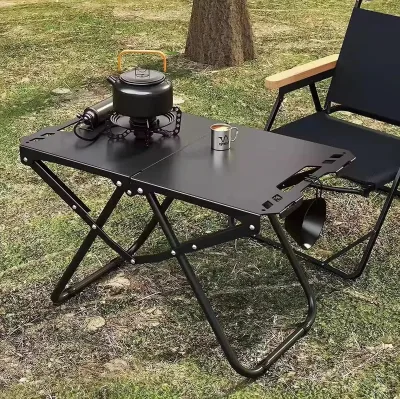

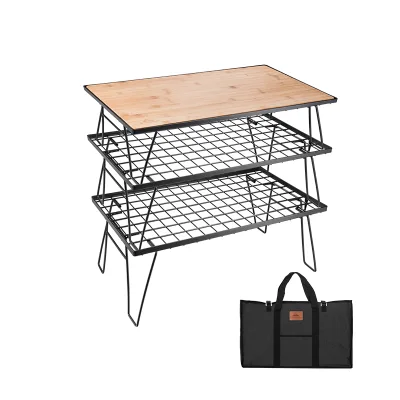


Kinggear Outdoor Camping Table Partable Folding Tactical Table with Storage Bag
$23.50 - $24.39
MOQ: 100 Pieces
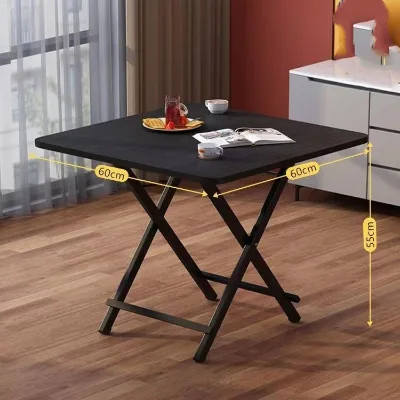


Folding Table and Chair Set for Field Camping Portable Folding Table Combat Table and Chair
$25.00 - $45.00
MOQ: 1000 Pieces

Field Outdoor Troops Conference Table Folding Table Training Table Iron Table
$50.00 - $60.00
MOQ: 500 Pieces


Comprehensive Sourcing Guide
Strategic Sourcing Guide for Portable Folding Tactical Tables
The global demand for portable folding tactical tables has surged, driven by the need for versatile, durable, and space-efficient furniture for military operations, outdoor expeditions, emergency response units, and commercial outdoor venues. For procurement professionals, navigating this market requires a disciplined approach that separates verified product attributes from marketing generalizations. This guide synthesizes available product data and industry standards to provide a framework for sourcing high-quality tactical tables. Buyers must focus on material integrity, structural stability, and logistical feasibility to ensure that the selected equipment meets rigorous operational requirements without compromising on budget or delivery timelines.
Technical Specifications and Material Integrity
The foundation of any reliable tactical table lies in its material composition and structural design. In the current market, the most prevalent materials observed are metal and aluminum alloy. Metal frames generally offer superior load-bearing capacity, making them suitable for heavy-duty applications where stability is paramount. Conversely, aluminum alloy options provide a significant weight advantage, which is critical for personnel who must carry the equipment over long distances or deploy it rapidly in dynamic environments.
A critical observation in the product landscape is the variation in dimensions and weight. While some units are specified with a weight of 1kg, others are designed with a single gross weight of 0.500 kg, indicating a wide spectrum of portability. Buyers must verify the specific weight-to-strength ratio for their intended use case. For instance, a table intended for a fixed command post may prioritize the 1kg variant for stability, whereas a reconnaissance unit would require the lighter 0.500 kg option.
The folding mechanism is another technical cornerstone. The market features both "Folded" and "Fixed" rotary configurations. A "Folded" state is essential for transport efficiency, reducing the footprint to single package sizes such as 15x15x10 cm. This compact dimension is vital for storage in vehicles or compact containers. Furthermore, the structural style varies significantly; some products are categorized as "Single" type with specific models like SY85 or SY 48, while others are designed for specific environments like beaches or mountains. The presence of "Alu Frame and Alu Top" suggests a unified material construction that minimizes thermal expansion issues and corrosion, a key consideration for coastal or high-humidity deployments.
Design Variations and Functional Adaptability
The design of a tactical table is not monolithic; it varies based on the specific operational environment and user requirements. The product data reveals distinct styles, ranging from "Chinese" and "Simple" to "Modern." While style may seem aesthetic, it often correlates with functional intent. A "Simple" design with a camouflage color scheme is likely optimized for blending into natural environments, reducing visual detection in field operations. In contrast, a "Modern" style with a black finish might be tailored for urban tactical scenarios or commercial use in parks and cafes.
Functionality extends beyond the table's surface. Attributes such as "Without Armrest" indicate a design focused on maximizing surface area for equipment placement, maps, or communication devices. The "Portable Foldable Desktop" designation highlights a dual-purpose utility, serving as both a temporary work surface and a transportable unit. Additionally, the "Kind" of product can range from a "Dining Table" to a "Hunting product," suggesting that the same mechanical principles are applied across different sectors.
Color options also play a strategic role. While "Black" is a standard tactical color, "Camouflage" and "As picture" options suggest customization capabilities. Buyers should note that some listings indicate "Color: 1,2," which may imply limited color choices or a specific batch variation. The ability to customize colors and dimensions is a significant advantage for organizations requiring branding or specific camouflage patterns to match their operational theater.
Compliance, Standards, and Certification Verification
In the realm of B2B procurement, compliance is often the most overlooked aspect until a contract dispute arises. The supplied data includes references to standards such as "365840" and "21cm x 21cm x 104cm(H)," which appear to be dimensional specifications rather than formal industry certifications. Buyers must exercise caution and not assume that a listed dimension equates to a safety or quality certification.
When evaluating suppliers, it is imperative to verify if the products meet international standards for durability and safety, such as ISO or ASTM standards for outdoor furniture and tactical equipment. The data mentions "prod_standard: customized," which indicates that many manufacturers offer bespoke sizing. However, a "customized" standard does not inherently guarantee quality; it merely reflects flexibility in production. Buyers should request specific test reports regarding load-bearing capacity, folding mechanism fatigue, and material corrosion resistance.
Furthermore, the origin of the product is a critical compliance factor. The data points to "Zhejiang" and "China" as primary origins. While these regions are hubs for manufacturing, buyers must ensure that the supplier adheres to local labor laws and international trade regulations. The presence of "OEM: Yes" confirms that manufacturers are willing to produce under a buyer's brand, but this requires a robust quality assurance agreement to prevent the release of substandard goods.
Cost Drivers and Pricing Dynamics
Understanding the cost structure of portable folding tactical tables is essential for budgeting and negotiation. The observed price range in the market spans from 2 to 60 USD, a significant variance that reflects differences in material quality, manufacturing complexity, and order volume. The lower end of the spectrum likely corresponds to basic aluminum alloy or metal frames with minimal finishing, while the higher end may include specialized coatings, reinforced joints, or custom branding.
Minimum Order Quantity (MOQ) is a primary driver of unit cost. The data shows an MOQ range from 2 to 1000 units, with one specific listing indicating an MOQ of 10,000. This wide range suggests that buyers can access small-batch testing or large-scale deployment options. However, the high MOQ of 10,000 units likely correlates with a significantly lower per-unit price, making it suitable for large government contracts or major retail distributors. For smaller organizations, the lower MOQ options allow for flexibility but may result in a higher unit cost.
Packaging also influences the final landed cost. Products are listed with "Carton Package," "Polybag," or "1PC Per Cartonbox" configurations. Bulk packaging reduces shipping costs per unit, whereas individual polybagging may be necessary for retail display or specific logistical requirements. Buyers should calculate the total cost of ownership, including packaging waste and storage efficiency, rather than focusing solely on the unit price.
Supplier Evaluation and Operational Capabilities
Selecting the right supplier requires a deep dive into their operational capabilities and track record. The data indicates that customization is "Available" and "Customized," suggesting that many suppliers offer flexible production lines. This is a positive indicator for buyers with unique requirements. However, the presence of "OEM: Yes" should be verified through direct communication to ensure the supplier has the capacity to handle branding and intellectual property rights.
Supplier location is another critical factor. With origins in "Zhejiang" and "China," buyers should consider the logistical implications of shipping from these regions. While these areas are known for efficient manufacturing, lead times can vary based on order volume and seasonal demand. Buyers should request detailed lead time estimates and production schedules before finalizing an order.
The condition of the product is listed as "New," which is standard for new procurement. However, buyers should verify the warranty terms and after-sales support. A supplier that offers a warranty on the folding mechanism and frame integrity demonstrates confidence in their product quality. Additionally, the "Usage" attributes, such as "Beach," "Park," "Restaurant," and "Cafe," indicate that some suppliers are diversifying their market beyond strict tactical applications. This diversification can be a positive sign of a robust supply chain capable of handling various market demands.
Quality Control and Long-Term Procurement Strategy
Implementing a rigorous quality control (QC) process is non-negotiable for tactical equipment. Given the wide range of observed specifications, buyers must establish clear acceptance criteria before production begins. Key QC checkpoints should include the inspection of welds on metal frames, the smooth operation of folding mechanisms, and the consistency of surface finishes. The "Single gross weight" of 0.500 kg and "Single package size" of 15x15x10 cm serve as baseline metrics that must be maintained across all units in a batch.
For long-term procurement, buyers should consider the scalability of their supplier relationship. A supplier that can accommodate orders ranging from 2 to 10,000 units offers the flexibility to scale operations as needs grow. Additionally, the ability to customize standards and colors allows for product evolution over time. Buyers should also evaluate the supplier's commitment to sustainability, as the use of aluminum alloy and metal suggests a potential for recyclability, which aligns with modern corporate social responsibility goals.
Comparative Analysis of Product Attributes
To facilitate decision-making, the following table summarizes the key attributes observed in the market for portable folding tactical tables. This comparison highlights the diversity in specifications and helps buyers identify the product that best fits their specific operational needs.
| Attribute Category | Observation A | Observation B | Observation C |
|---|---|---|---|
| Material | Metal | Aluminum Alloy | Solid Wood |
| Weight | 1kg | 0.500 kg | Variable |
| Folded State | Folded | Folded | Fixed |
| Style | Chinese / Simple | Modern | Tactical / Hunting |
| Color | Black | Camouflage | As picture / 1,2 |
| Usage | Beach, Park | Outdoor, Mountain | Dining, Restaurant |
| Packaging | Carton Package | Polybag | 1PC Per Cartonbox |
| Origin | Zhejiang, China | China | Zhejiang |
| MOQ Range | 2 - 1000 | 10,000 | Variable |
| Customization | Available | Customized | OEM Yes |
This table illustrates that while the core function remains consistent, the execution varies widely. Buyers must align these attributes with their specific requirements. For example, a beach patrol unit would prioritize the "Camouflage" color and "Aluminum Alloy" material for corrosion resistance, whereas a restaurant setup might prefer the "Modern" style and "Carton Package" for aesthetic and logistical reasons.
Conclusion
Sourcing portable folding tactical tables requires a balanced approach that weighs technical specifications against cost and logistical constraints. The market offers a diverse array of options, from lightweight 0.500 kg units to robust 1kg frames, with materials ranging from metal to aluminum alloy. Buyers must rigorously verify standards, certifications, and supplier capabilities to ensure that the selected equipment meets the demanding conditions of tactical and outdoor environments. By focusing on material integrity, functional adaptability, and a clear understanding of cost drivers, procurement professionals can secure high-quality solutions that enhance operational efficiency and longevity. The key to success lies in detailed due diligence, clear communication of requirements, and a commitment to quality control throughout the supply chain.
FAQs
What materials are used for portable folding tactical tables?
These tables are primarily constructed from metal or aluminum alloy to ensure durability. Some listings also indicate solid wood options, though metal frames offer superior load-bearing capacity for heavy-duty applications.
Can I customize the dimensions and color of these tables?
Yes, customization is available for both dimensions and colors. Buyers can request specific sizes like 36x58x40 or camouflage finishes, though standard options often include black or model-specific colors.
What is the typical weight range for these tactical tables?
The observed weight ranges from 0.500 kg to 1 kg per unit. Lighter models are ideal for reconnaissance, while heavier variants provide stability for fixed command posts or dining setups.
Which minimum order quantities are available for these products?
Minimum order quantities vary significantly from 2 units up to 10,000 units depending on the supplier. Lower MOQs allow for small-batch testing, while high-volume orders often secure better pricing.
How are these tables packaged for shipping and storage?
Packaging options include carton packages, polybags, or one piece per carton box. Compact folded sizes like 15x15x10 cm facilitate efficient storage in vehicles or compact containers during transport.
Where are these portable tables typically manufactured?
Most products originate from Zhejiang, China, which is a major manufacturing hub. Buyers should verify specific supplier locations to ensure compliance with trade regulations and logistical feasibility.