Source Portable Karaoke Bluetooth Speaker for Home, Stage, and DJ
Find 30 Portable Karaoke Bluetooth Speaker options with varying power, battery life, and connectivity features. Compare specifications from manufacturers in China to select the ideal unit for home theater, stage performances, or mobile entertainment.
Key considerations
Products List
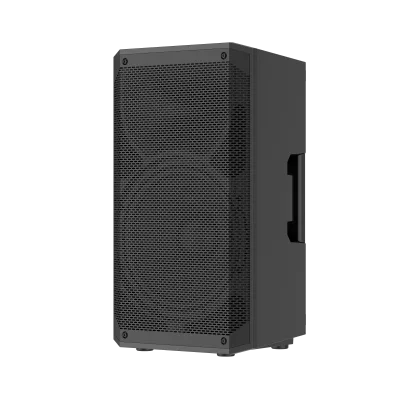


Portable Mini Partybox High Quality Karaoke Sound Mixer Super Bass Bluetooth Speaker
$4.25 - $4.55
MOQ: 1000 Pieces

Manufacturer Subwoofer 6.5 Inch HiFi Portable Wireless DJ Bass Party Karaoke Speaker
$10.00 - $10.30
MOQ: 1000 Pieces


Comprehensive Sourcing Guide
Strategic Sourcing Guide for Portable Karaoke Bluetooth Speakers
The global demand for portable karaoke Bluetooth speakers has surged, driven by the convergence of home entertainment, social gatherings, and the need for versatile audio solutions. For B2B procurement professionals, navigating this market requires a disciplined approach that distinguishes between marketing claims and verifiable product attributes. This guide synthesizes observed market data and technical specifications to provide a framework for sourcing high-quality units that meet specific operational needs. The focus remains on evidence-based evaluation, ensuring that procurement decisions are grounded in tangible product characteristics rather than unverified assertions.
Technical Architecture and Audio Performance
When evaluating portable karaoke systems, the internal architecture dictates the user experience. The observed market data reveals a diverse range of configurations, from single-channel units to complex two-way systems. A critical differentiator is the audio crossover design. Products utilizing a "Two-Way" crossover system typically separate audio frequencies, directing low frequencies to a dedicated subwoofer or woofer and high frequencies to a tweeter. This configuration is essential for delivering the rich, dynamic sound required for karaoke, where vocal clarity and bass response are paramount. In contrast, "Single Channel" units may offer a more compact form factor but often lack the frequency separation necessary for high-fidelity performance in larger spaces.
The woofer size is another primary indicator of power potential. Market observations list woofer sizes ranging from 6.5 inches to 10 inches. A "Double 6.5 Inch" configuration suggests a stereo or dual-driver setup designed to maximize output within a portable chassis, while a "10 Inch" woofer indicates a unit designed for higher volume and deeper bass, suitable for stage or DJ applications. Power ratings also vary significantly; observed RMS power figures include 30W units, which are sufficient for intimate gatherings but may struggle in open environments. Buyers must verify the actual power handling capacity against the intended usage environment.
Connectivity remains a cornerstone of the "Bluetooth" keyword. While most units support standard wireless pairing, the presence of a "Built-in Microphone" and "Two Hi-Fi Microphones" is a specific feature set that defines the karaoke functionality. Some units include a "Remote Control" for operation, while others rely on "Touch Control" or "Button" regulation modes. The inclusion of "Memory Card Support" and "USB Disk Support" ensures compatibility with legacy media, a crucial feature for users who may not have immediate access to digital streaming services. The "SNR" (Signal-to-Noise Ratio) is a vital technical metric; observed values range from below 70dB to the 81-90dB range. A higher SNR indicates a cleaner audio signal with less background hiss, a critical factor for professional or semi-professional applications.
Power Systems and Operational Versatility
Power management is a complex variable in portable speaker sourcing. The market presents a dichotomy between battery-powered and AC/DC adaptable units. Some products are explicitly defined by a "Lead Battery" or a "7.4V 3000mAh Lithium Battery." The choice between lead and lithium chemistry impacts weight, lifespan, and charging efficiency. Lithium batteries generally offer a higher energy density and longer cycle life, making them preferable for frequent use. However, the "AC&DC: Workable" attribute indicates that many units are designed to function as hybrid systems, allowing them to operate directly from mains power (AC 110V-240V) or via a DC adapter (12V). This versatility is essential for events where power outlets may be scarce or unreliable.
The charging infrastructure must also be scrutinized. Specifications indicate the inclusion of a "12V 4A Adapter" for charging, with power lines ranging from 1 to 2 meters. The "Chargeable" status confirms that the unit is not a disposable battery device but a rechargeable asset. Buyers should verify the charging time and the durability of the power connector, which is described as "Two Round Pin or Two Flat Pin Adapter." The compatibility of these connectors with regional power standards is a critical logistical check. Furthermore, the "Power Source" attribute lists "Battery" as a primary mode, yet the "Power Range" confirms dual capability. This duality allows for extended operation; the unit can run on battery power for mobility and switch to AC power for sustained, high-volume events without battery degradation.
Compliance, Certification, and Regulatory Standards
In the B2B sector, regulatory compliance is non-negotiable. The supply chain for portable electronics is heavily regulated to ensure safety and electromagnetic compatibility. Observed product attributes list a comprehensive suite of certifications, including "CE," "RoHS," "Saso," "FCC," "SAA," and "UL." Each of these certifications corresponds to specific regional requirements. The "CE" mark indicates conformity with health, safety, and environmental protection standards for products sold within the European Economic Area. "RoHS" restricts the use of specific hazardous materials in electrical and electronic equipment. "FCC" compliance is mandatory for devices sold in the United States, ensuring they do not cause harmful interference. "SAA" is the Australian standard, while "UL" represents safety standards often required in North America. "Saso" relates to Saudi Arabian standards.
It is imperative for buyers to request valid, current certification documents for each specific model number, such as "CV-2416" or "FG112-08." The presence of a certification on a product listing does not guarantee that every unit in a shipment is compliant. Procurement teams must verify that the specific batch being purchased carries the appropriate testing reports. Additionally, the "prod_standard" is noted as "brown box" or "245260560mm" in some contexts, which refers to packaging dimensions rather than product standards. Buyers must distinguish between packaging specifications and regulatory compliance standards. The "Certificate" attribute suggests a broad compliance scope, but verification is required to ensure the specific model meets the import regulations of the destination country.
Cost Drivers and Procurement Economics
The economics of sourcing portable karaoke speakers are influenced by several factors, including material composition, component quality, and order volume. The "cabinet material" is identified as "Plastic," which is a cost-effective choice for mass production but requires evaluation for durability and acoustic properties. The "Product Style" is described as "Karaoke PA Speaker with Three Colors," indicating that color customization may be a variable cost driver. The "Customization: Available" attribute suggests that buyers can request branding or specific color schemes, which often incurs additional tooling or setup fees.
Order volume plays a significant role in unit pricing. The observed "MOQ" (Minimum Order Quantity) ranges from 1 to 10,000 units, with specific listings noting a "Mini Order" of 200PCS. This wide range allows for flexibility but also highlights the importance of negotiating based on volume. For smaller orders, the unit cost will be higher due to fixed setup costs. Conversely, large-volume orders can leverage economies of scale. The "Selling Units" are listed as "Single item," which simplifies inventory management but requires careful calculation of total landed costs. Buyers should also consider the "prod_packing" details, such as "1ctns/Set" or "Brown Carton," as packaging costs can add up significantly in large shipments. The "Price" range observed is 1.01 to 100 USD, a broad spectrum that reflects the variance in quality, power, and feature sets.
Supplier Evaluation and Operational Logistics
Selecting a reliable supplier is as critical as selecting the product itself. The "prod_origin" is consistently listed as "Gz, China" or "China Guangzhou," a major manufacturing hub for consumer electronics. While this location offers access to a robust supply chain, it necessitates rigorous supplier vetting. Buyers should evaluate the supplier's ability to maintain consistent quality across different production runs. The "prod_model" variations, such as "FG112-08" and "FG206-17," suggest that suppliers may offer multiple SKUs with varying specifications. It is essential to confirm that the supplier can provide the exact model required, as component substitutions can affect performance.
Logistical considerations include lead times and shipping methods. While specific lead times are not provided in the data, the "prod_packing" and "prod_standard" details imply standard shipping practices. Buyers should inquire about the "Power Line" length and connector types to ensure compatibility with local power grids. The "Compatible Product" attribute is listed as "Universal," which is a marketing term that should be verified against actual device compatibility. For instance, while a speaker may be "Universal," the specific Bluetooth version or frequency range must match the user's devices. The "Usage" list includes "Home Theatre System," "Karaoke," "Computer," "Portable Player," "Mobile Phone," "Stage/DJ," "TV," and "Radio," indicating a versatile product line. However, buyers must ensure the specific unit selected is optimized for the primary intended use case.
Quality Control and Long-Term Procurement Strategy
Quality control (QC) is the final barrier between a procurement success and a supply chain failure. Given the "Two-Way" audio crossover and the complex power systems, QC must focus on both acoustic performance and electrical safety. Buyers should implement a pre-shipment inspection protocol that tests the "SNR" levels, ensuring they meet the claimed specifications (e.g., 81-90dB). The "Built-in Microphone" and "Two Hi-Fi Microphone" functionality must be tested for clarity and feedback resistance. Additionally, the "Battery" life and charging cycles should be verified to ensure the unit meets the expected operational lifespan.
Long-term procurement considerations involve the sustainability of the supply chain. The "Customization: Available" attribute offers an opportunity for brand differentiation, but it requires a stable supplier capable of maintaining consistent quality over time. Buyers should establish clear communication channels regarding the "prod_model" and "prod_packing" to avoid discrepancies. The "Certificate" list includes "CE, RoHS, Saso, FCC, SAA, UL," which suggests a commitment to global standards, but ongoing compliance monitoring is necessary. As regulations evolve, suppliers must be able to adapt their production processes to maintain certification validity.
| Feature Category | Observed Specification | Procurement Verification Point |
|---|---|---|
| Audio System | Two-Way Crossover, 6.5" or 10" Woofer | Verify frequency response and SNR (81-90dB vs <70dB) |
| Power Source | 7.4V Lithium or Lead Battery, AC/DC | Confirm adapter voltage (12V) and connector type |
| Connectivity | Bluetooth, USB, Memory Card | Test remote control functionality and microphone input |
| Certifications | CE, RoHS, FCC, SAA, UL, Saso | Request valid test reports for specific model numbers |
| MOQ & Pricing | 1-10,000 units, $1.01-$100 range | Negotiate based on volume tiers and customization needs |
| Origin | Guangzhou, China | Verify factory audit status and production capacity |
In conclusion, sourcing portable karaoke Bluetooth speakers requires a meticulous approach that balances technical specifications with regulatory compliance and economic efficiency. By focusing on verified attributes such as the "Two-Way" crossover, specific battery types, and comprehensive certification lists, buyers can mitigate risk and ensure the procurement of high-quality products. The wide range of observed specifications offers flexibility, but it also demands rigorous due diligence to match the right product to the specific needs of the target market.
FAQs
What certifications are available for these portable karaoke bluetooth speakers?
Available certifications include CE, RoHS, Saso, FCC, SAA, and UL for regulatory compliance. Buyers must verify specific documents for each model number like CV-2416 to ensure the batch meets destination country import regulations before purchase.
Which power sources do these units support for operation?
These units support both battery and AC/DC power sources for versatile operation. They feature a 7.4V 3000mAh Lithium Battery or workable AC 110V-240V and DC 12V inputs, allowing use in locations with or without reliable mains electricity.
How many microphones are included with the Karaoke PA Speaker?
The product includes two Hi-Fi microphones for enhanced karaoke performance. This dual-microphone setup supports duet singing and is standard for the portable wireless speaker configuration described in the product attributes.
Can I customize the color and branding of the speaker cabinet?
Customization is available for the product style and branding on the plastic cabinet. Buyers can request specific color schemes or logos, though this may involve additional setup fees and requires confirmation with the supplier for the exact model.
What is the minimum order quantity for these portable units?
The minimum order quantity ranges from 1 to 10,000 units depending on the supplier terms. Specific listings indicate a mini order of 200 pieces, while other configurations allow for single item purchases to test market viability.
Which audio crossover system is used in the two-way speaker?
The speaker utilizes a two-way audio crossover system to separate frequencies. This design directs low frequencies to the woofer and high frequencies to the tweeter, ensuring clearer vocals and deeper bass for stage or home theatre applications.