Source Portable LED Face Care Machine for Salon, Home, and Clinic
Compare 30 Portable LED Face Care Machine options featuring RF, E-Light, and LED technologies. These devices support skin rejuvenation, blackhead removal, and hydration for salon and home use, with CE and FDA certifications available; compare the available evidence and request quotations based on your requirements.
Key considerations
Products List




Comprehensive Sourcing Guide
Portable LED Face Care Machine Sourcing Guide
Procuring a Portable LED Face Care Machine requires distinguishing between devices designed for professional salon environments and those optimized for home use. The market offers distinct configurations, ranging from multi-functional units combining radio frequency and ion technology to specialized PDT machines focused on light therapy. Buyers must first identify whether their operational needs demand high-power clinical output or a compact, lightweight unit suitable for personal daily routines.
The observed product landscape reveals significant variation in voltage compatibility and physical dimensions, which directly impacts shipping logistics and electrical safety. While some units are engineered for global markets with 110V to 240V support, others may have specific regional requirements. Understanding these electrical and physical constraints early in the sourcing process prevents costly returns and ensures the equipment integrates seamlessly into the intended facility or household power infrastructure.
Product Scope and Observed Listing Signals
Buyers should scrutinize the listed application scope to ensure the device matches their intended usage environment. The available inventory includes machines explicitly marketed for salon settings, while other listings highlight dual suitability for both professional and home applications. This distinction is critical, as salon-grade equipment often features more robust handpieces and higher power outputs compared to consumer-grade models designed for lighter, intermittent use.
Observations of product attributes indicate a strong emphasis on portability, with many units described as portable machines or featuring compact packaging. The physical specifications vary widely, with some devices weighing as little as 350 grams while others approach 5.37 kilograms depending on the included accessories. Procurement teams must verify the net weight and packing dimensions against their logistical constraints to ensure the equipment can be easily transported or stored without requiring specialized handling.
Technical Specifications to Verify
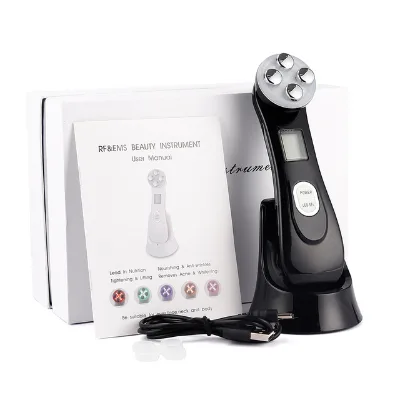
Technical verification must begin with the underlying therapy theory, as the market offers diverse options including E-Light, Radio Frequency, and standard LED Light Therapy. Buyers need to confirm that the specific model supports the desired treatment modalities, such as hydrogen oxygen hydrating, skin rejuvenation, or blackhead removal. The presence of multiple technologies in a single unit, such as RF combined with photon and vibration, requires careful evaluation of how these functions interact and whether they are necessary for the target treatment protocols.
Handpiece configuration and light color options are equally vital technical parameters that define the device's versatility. Listings indicate variations ranging from single ultrasonic scrubbers to complex setups including dermabrasion tools and seven-color LED arrays. Procurement specialists should request detailed diagrams of the handpiece attachments to ensure compatibility with the specific skin types and treatment areas, such as the face, that the machine is intended to address.
Compliance and Safety Documentation
Regulatory compliance is a non-negotiable aspect of sourcing medical-grade beauty equipment, with CE certification appearing frequently in the observed product data. Buyers must verify that the specific supplier provides valid CE documentation for the exact model number being purchased, as certifications are often model-specific rather than blanket approvals for a manufacturer. Additionally, some listings mention FDA certification, which may be required for certain markets or for claiming specific therapeutic efficacy in North American regions.
Safety standards extend beyond basic certifications to include electrical safety and material composition. The supply chain data references ABS materials for device construction, which implies a need to verify flame retardancy and durability standards. Procurement teams should also confirm voltage stability and frequency ratings, ensuring the device operates safely within the 50-60Hz range and handles the specified voltage inputs without risk of overheating or electrical failure during operation.
Cost Drivers and Commercial Terms
Pricing in this category exhibits a wide range, reflecting differences in technology complexity, build quality, and included accessories. The observed market data shows prices spanning from budget-friendly units to high-end multi-functional systems, driven largely by the integration of advanced technologies like RF and ion therapy. Buyers should analyze the cost per function to determine if a higher-priced unit offering multiple modalities provides better long-term value than purchasing separate single-function devices.
Commercial terms such as Minimum Order Quantity (MOQ) and customization availability significantly influence the total cost of ownership. The market indicates flexible MOQs ranging from single units to ten-piece batches, allowing for both trial orders and bulk procurement. Furthermore, the availability of OEM and ODM services suggests that buyers can negotiate branding and specific feature modifications, which may affect the unit price and lead time depending on the complexity of the requested changes.
Supplier Qualification and Quality Control
Supplier qualification should prioritize manufacturers with a proven track record in producing portable beauty equipment, particularly those located in established manufacturing hubs like Guangzhou and Guangdong. These regions host a dense ecosystem of suppliers with specialized expertise in electronics and cosmetic machinery, offering a competitive advantage in terms of supply chain efficiency and technical support. Buyers should verify the supplier's production capacity to ensure they can meet demand without compromising on quality control during peak periods.
Quality control protocols must be explicitly defined in the purchase agreement, focusing on the consistency of the final product's performance and durability. Given the variation in warranty periods observed, ranging from one to two years, buyers should negotiate warranty terms that cover critical components like handpieces and power supplies. Establishing clear acceptance criteria for packaging and gross weight ensures that the delivered goods match the specifications and arrive in pristine condition.
Long-Term Procurement Checks
Sustainable procurement requires establishing a framework for ongoing performance monitoring and after-sales support. Buyers should implement a system to track device failure rates and maintenance needs, ensuring that the warranty coverage remains effective throughout the product's lifecycle. Regular audits of the supplier's ability to provide replacement parts and technical assistance are essential to minimize downtime and maintain service quality for end-users.
Future-proofing the procurement strategy involves staying informed about evolving technology standards and regulatory changes in the beauty device sector. As the industry shifts toward more integrated and intelligent systems, buyers must remain flexible to adapt their inventory to new features like enhanced LED color therapies or improved cooling mechanisms. Maintaining a strong relationship with the supplier allows for early access to product updates and ensures the procurement portfolio remains competitive in a rapidly changing market.
FAQs
What technology does the Portable LED Face Care Machine use?
The device utilizes LED light therapy technology to deliver targeted treatments. It features seven distinct light colors designed for various skin needs. This approach supports functions such as skin rejuvenation and anti-wrinkle care. The system is engineered for effective performance in both salon and home environments, ensuring consistent results for users seeking non-invasive beauty solutions.
Can the Portable LED Face Care Machine be customized for branding?
Yes, customization is available for this equipment. Manufacturers offer OEM and ODM services to meet specific brand requirements. Buyers can request tailored designs or specifications to align with their market positioning. This flexibility allows businesses to create unique product offerings while leveraging the core functionality of the Portable LED Face Care Machine for their customers.
What certifications are required for the Portable LED Face Care Machine?
The product holds CE and FDA certifications, ensuring compliance with international safety standards. These credentials verify that the device meets rigorous quality and regulatory requirements for beauty equipment. Buyers can rely on these documented certifications when sourcing for markets with strict import regulations. The certifications provide assurance of product safety and efficacy for professional and home use applications.
What is the typical MOQ for ordering portable LED face care machines?
The observed minimum order quantity ranges from 1 to 10 units. This flexible MOQ structure accommodates both small-scale buyers and larger procurement needs. Suppliers are willing to accept lower initial orders to facilitate testing or small batch production. Buyers can negotiate specific quantities based on their inventory requirements and budget constraints for the Portable LED Face Care Machine.
Where are portable LED face care machines typically manufactured?
These devices are primarily manufactured in China, with specific origins in Guangzhou and Guangdong provinces. This region is known for its robust manufacturing infrastructure for beauty equipment. Buyers can source directly from these locations to benefit from established supply chains. The geographic concentration ensures access to experienced factories capable of producing high-quality portable LED face care machines.
What voltage options are supported by the Portable LED Face Care Machine?
The device supports dual voltage options of 110V and 220V at 50-60Hz. Some models also accommodate a broader range of 110~240V for global compatibility. This versatility allows the machine to be used in various regions without additional converters. Buyers can select the appropriate voltage specification to match the electrical standards of their target market or usage location.