Source Portable Mini Lithium Chainsaw for Garden, DIY, and Industrial Tasks
Explore 30 listings of the Portable Mini Lithium Chainsaw designed for garden maintenance, DIY projects, and industrial applications. Buyers can compare specifications like battery voltage, motor type, and guide bar sizes to find the right tool for their needs.
Key considerations
Products List
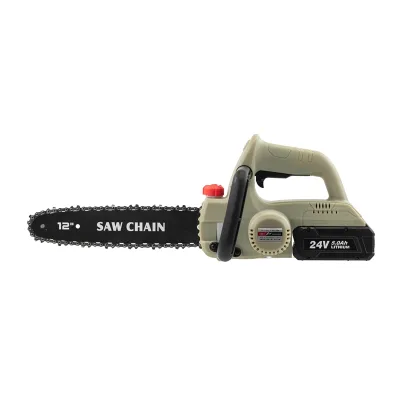


Mini Chainsaw 6 Inch Cordless 2023 Upgraded, Super Lightweight and Powerful
$14.00 - $15.00
MOQ: 500 Pieces


Dl High Quality Portable High Efficiency Pruning Lithium Battery Handsaw
$43.00 - $50.00
MOQ: 1 Pieces


Comprehensive Sourcing Guide
Strategic Sourcing Guide for Portable Mini Lithium Chainsaws
Understanding the Core Product Category and Technical Architecture
The Portable Mini Lithium Chainsaw represents a specialized segment within the power tool industry, designed to bridge the gap between heavy-duty industrial forestry equipment and lightweight garden maintenance tools. Based on observed market data, these units are fundamentally defined by their power source and mechanical architecture. The primary power source is consistently identified as a lithium battery, operating at a voltage of 24V. This voltage specification is critical for balancing portability with sufficient torque for cutting tasks, distinguishing these units from lower-voltage hobbyist tools or high-voltage industrial systems.
The mechanical heart of these devices is the brushless motor. This technology is preferred in modern sourcing because it eliminates carbon brushes, resulting in reduced maintenance, higher efficiency, and a longer operational lifespan compared to brushed alternatives. The motor drives a chain with a no-load speed of approximately 22m/s, a metric that indicates the velocity of the cutting chain when the tool is running without resistance. While specific guide bar sizes are often listed as "Please Consult Customer Service" in general catalogs, the physical dimensions of the product suggest a compact form factor suitable for miniaturized applications. The materials used in construction typically combine ABS plastic with metal components, ensuring a balance between weight reduction and structural durability required for cutting operations.
When evaluating the technical specifications, buyers must distinguish between the various model numbers observed in the market, such as CS019, CS246, LH-EC06, and FHCS-501A1-04. These identifiers often correspond to specific configurations of guide bar length, battery capacity, and housing design. For instance, some listings indicate a battery capacity of 5000, which likely refers to a specific milliamperage or energy rating, though the exact unit requires verification against the specific datasheet. The single gross weight of these units is observed to be around 4.000 kg, a figure that is crucial for logistics planning and user ergonomics during extended use.
Compliance, Certification, and Regulatory Standards
Navigating the regulatory landscape is a paramount concern for B2B buyers importing power tools. The market data indicates a strong presence of international safety and quality standards, with CE and ISO certifications appearing frequently in product specifications. Some listings also reference GS and EPA standards, suggesting that certain models may be compliant with German safety regulations and United States Environmental Protection Agency requirements, respectively. However, the presence of these standards in a general product listing does not guarantee that every unit in a specific shipment possesses them; verification is mandatory.
Buyers must treat certification claims as observations rather than absolute guarantees. The "Standard" attribute often lists CE, GS, ISO, and EPA together, but a specific model like LH-EC06 might only carry a CE mark, while another model might adhere to different regional requirements. For the European market, the CE mark is non-negotiable and indicates conformity with health, safety, and environmental protection standards. In the United States, compliance with EPA regulations regarding emissions is less relevant for electric tools but may still be cited in broader compliance documents. The GS mark, a German safety certification, implies a higher level of testing and is often a prerequisite for selling in the DACH region (Germany, Austria, Switzerland).
When conducting due diligence, procurement teams should request valid test reports from independent laboratories rather than relying solely on supplier-provided certificates. The absence of a specific certification in the initial product description should not be interpreted as a lack of compliance, but rather as a need for clarification. Buyers should explicitly ask suppliers to confirm which specific standards apply to the model number they intend to purchase. This is particularly important because the "Standard" attribute in the source data varies; some entries list "CE,ISO" while others list "CE,GS,ISO,EPA." This variance suggests that compliance is model-dependent, and a blanket assumption of full certification across an entire product line is a significant procurement risk.
Cost Drivers and Pricing Dynamics
The pricing structure for portable mini lithium chainsaws is influenced by a complex interplay of factors, including battery technology, motor efficiency, and packaging. The observed price range in the market spans from 1 to 75.62 USD, a wide disparity that reflects differences in product quality, brand positioning, and included accessories. The lower end of this spectrum likely represents basic models with smaller battery capacities or simpler packaging, while the upper end may include premium configurations with higher-grade materials, advanced brushless motors, or bundled accessories.
A significant cost driver is the battery itself. As a lithium battery, the cost is tied to the energy density, cell quality, and the stated capacity. Models with a higher capacity, such as those noted with a 5000 rating, will inherently cost more than those with lower capacities. Additionally, the motor type plays a role; brushless motors are more expensive to manufacture than brushed motors but offer superior performance and longevity, which justifies a higher price point. The packaging also contributes to the final cost. While some units come in simple cardboard boxes, others are shipped in color boxes or BMC (Blister Molded Case) packaging, which adds to the unit cost but enhances the product's retail presentation.
The Minimum Order Quantity (MOQ) is another critical factor affecting the total cost of acquisition. The observed MOQ range is 1 to 1000 units, with a specific high-confidence fact noting an MOQ of 10 pieces for certain configurations. For small businesses or startups, an MOQ of 10 pieces allows for a lower barrier to entry, enabling buyers to test the market with a small batch. However, larger orders may unlock volume discounts, though the specific discount structure is not standardized in the provided data. Buyers should negotiate based on the total landed cost, which includes the unit price, shipping, and any potential tariffs, rather than focusing solely on the listed price. The payment methods available, including T/T, L/C, Credit Card, and PayPal, offer flexibility but may also carry different transaction fees that impact the overall budget.
Typical Applications and Usage Scenarios
The versatility of the Portable Mini Lithium Chainsaw makes it suitable for a diverse range of applications, primarily categorized under garden work and DIY projects. The product attribute "Usage" explicitly lists "Garden Work Chainsaw Chain Saw," indicating its primary function is in landscaping, pruning, and small-scale timber processing. The "Grade" attribute further categorizes these tools as suitable for both "DIY" and "Industrial" use, suggesting a robust design capable of handling occasional heavy-duty tasks as well as regular professional maintenance.
For the DIY market, the compact size and lightweight nature (approximately 4.000 kg) are key selling points. Homeowners can use these tools for trimming branches, cutting firewood, or clearing brush without the fatigue associated with larger, gas-powered chainsaws. The electric power source eliminates the need for fuel mixing and reduces noise pollution, making these tools ideal for residential neighborhoods and urban environments where gas engines might be restricted. The 24V voltage provides sufficient power for cutting wood up to a certain diameter, though the exact cutting depth is often specified as 150mm in some models, which defines the maximum thickness of wood that can be cut in a single pass.
In an industrial or professional context, these tools serve as efficient alternatives for light-duty forestry, arboriculture, and municipal maintenance. The brushless motor ensures consistent performance over long periods, and the lack of an internal combustion engine means no emissions, which is beneficial for indoor or enclosed workspace applications. The "Engine Type" attribute in some listings mentions a "4-Stroke" engine, which appears to be a data inconsistency for a battery-powered tool; buyers must clarify if this refers to a specific hybrid model or if it is a labeling error, as the primary power source is confirmed as battery. The "Condition" is listed as "Brand New," ensuring that buyers receive fully functional units ready for immediate deployment.
Supplier Evaluation and Customization Capabilities
Selecting the right supplier is as critical as selecting the right product. The market data reveals that suppliers in this category often offer extensive customization options, including OEM (Original Equipment Manufacturer), ODM (Original Design Manufacturer), and OBM (Original Brand Manufacturer) support. This flexibility allows buyers to tailor the product to their specific brand identity or technical requirements. The "Custom" and "Customization" attributes confirm that support is available, meaning buyers can request changes to the product's appearance, packaging, or even specific technical specifications.
When evaluating potential suppliers, buyers should verify their location and production capabilities. The "Place of Origin" is consistently listed as Zhejiang, China, a region known for its manufacturing prowess in power tools. However, "Zhejiang" is a broad province, and buyers should seek specific factory details to ensure quality control. The "Sample" attribute indicates that samples are provided, which is a crucial step in the procurement process. Buyers should always request a physical sample before committing to a large order to verify the build quality, battery performance, and safety features firsthand.
The "Warranty" is a standard 1 year across the observed listings, which is a baseline expectation for this category. Buyers should clarify the terms of this warranty, including what is covered (e.g., motor, battery, chain) and the process for claims. Additionally, the "Single Package Size" of 45x25x20 cm and the "Single Gross Weight" of 4.000 kg are essential for calculating shipping costs and warehouse space requirements. Suppliers offering "Cardboard Box" or "Plastic Case" packing may have different cost structures and protection levels, which should be factored into the decision-making process.
Quality Control and Long-Term Procurement Considerations
Ensuring consistent quality in a global supply chain requires a robust quality control (QC) strategy. Given the variability in product models and specifications, buyers should implement a multi-stage QC process. This includes pre-production inspection to verify that the raw materials (ABS+Metal) and components (Brushless Motor, Lithium Battery) meet the agreed-upon standards. During production, random sampling should be conducted to check for assembly errors, such as loose chains or improper motor alignment. Pre-shipment inspection is critical to ensure that the final product matches the sample and that the packaging is secure to prevent damage during transit.
Long-term procurement considerations involve building a sustainable relationship with the supplier. The "Payment Method" options, including T/T and L/C, offer different levels of security. For large orders, an L/C (Letter of Credit) may provide better protection, while T/T (Telegraphic Transfer) is common for smaller, repeat orders. Buyers should also consider the "Lead Time," which is not explicitly stated in the data but is a critical factor for inventory management. Establishing clear communication channels and agreeing on a consistent production schedule can help mitigate delays.
Furthermore, buyers should plan for the lifecycle of the product. The "Warranty" of 1 year is a standard period, but the long-term availability of spare parts, such as chains, guide bars, and replacement batteries, is essential for customer satisfaction. The "Model Number" consistency is also important; ensuring that the supplier can maintain the same model number (e.g., CS019) over time prevents confusion in the supply chain. Finally, buyers should stay informed about evolving standards and regulations, particularly regarding battery safety and emissions, to ensure their products remain compliant in their target markets. By focusing on these strategic elements, buyers can secure a reliable supply of high-quality portable mini lithium chainsaws that meet their business needs.
FAQs
What power source does the Portable Mini Lithium Chainsaw use?
The tool uses a 24V lithium battery as its primary power source. This electric system eliminates the need for fuel mixing and reduces noise, making it suitable for indoor and residential garden work applications.
Which certifications are typically listed for these chainsaw models?
Common certifications include CE, ISO, GS, and EPA depending on the specific model. Buyers must verify which standards apply to their target market since compliance varies by product configuration and region.
Can I request customization for the Portable Mini Lithium Chainsaw?
Yes, suppliers support OEM, ODM, and OBM customization services for branding and design. You can request changes to packaging or specific technical features, but samples should be requested before large orders.
What is the minimum order quantity for these electric chainsaws?
The minimum order quantity is typically 10 pieces for standard configurations. Some suppliers may accept orders as low as one unit, while larger batches up to 1000 units are also common in the market.
How long is the warranty period for the portable mini chainsaw?
The standard warranty period is one year for brand new units. This coverage generally applies to the motor and battery, though specific terms should be confirmed with the supplier before purchase.
What is the no-load speed of the brushless motor in this tool?
The brushless motor operates at a no-load speed of 22 meters per second. This speed ensures efficient cutting performance while maintaining the compact size required for garden and DIY maintenance tasks.
Where are these portable mini lithium chainsaws manufactured?
The products originate from Zhejiang, China, a known hub for power tool manufacturing. Buyers should verify specific factory details to ensure quality control and reliable lead times for their orders.