Source Portable Pongee Folding Umbrella for events, travel, and daily use
Explore 30 listings for the Portable Pongee Folding Umbrella with options for manual or automatic opening and various frame materials. Buyers can compare customization features, delivery times, and pricing to find suitable suppliers for advertising or personal needs.
Key considerations
Products List


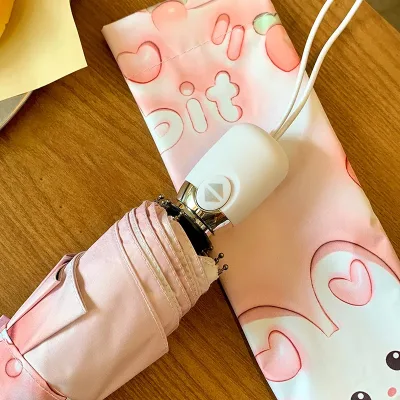


Luxury Deluxe Premium 21inch 3 Folding Compact Customized Logo Portable Umbrella
$3.80 - $4.50
MOQ: 500 Pieces


Comprehensive Sourcing Guide
Strategic Sourcing Guide for Portable Pongee Folding Umbrellas
The global market for portable umbrellas has evolved significantly, with the specific segment of folding umbrellas constructed from pongee fabric emerging as a dominant category for both promotional and personal utility. For B2B procurement professionals, sourcing these items requires a nuanced understanding of material properties, manufacturing capabilities, and the specific logistical constraints inherent to the industry. This guide synthesizes available product attributes and industry standards to provide a disciplined framework for evaluating suppliers and selecting the optimal product configuration for your business needs. The focus remains strictly on the technical and operational realities of sourcing portable pongee folding umbrellas, ensuring that decisions are grounded in verifiable data rather than marketing assertions.
Technical Specifications and Material Composition
The foundation of a high-quality Portable Pongee Folding Umbrella lies in the precise selection of materials and the structural integrity of the frame. Pongee fabric is widely recognized for its smooth texture and ability to hold vibrant prints, making it a preferred choice for advertising umbrellas where brand visibility is paramount. When evaluating product listings, buyers must verify that the fabric specification explicitly states "Pongee" rather than generic polyester or nylon, as the weave density and water-repellent treatment differ significantly. The frame material is equally critical; observed market data indicates a divergence between Iron, Fiberglass, and Steel frames. Iron frames offer a traditional, sturdy feel but may be prone to rust if not properly treated, whereas Fiberglass provides superior flexibility and wind resistance, a crucial factor for durability. Steel frames often represent a middle ground, offering strength with a lighter profile than iron.
The structural standard of the umbrella is often defined by the rib count and canopy size. A common specification observed in the market is the "21-inch, 8-rib" configuration, which balances portability with coverage. However, larger variants such as the "28-inch, 8-panel" models exist, typically categorized as golf or sun umbrellas rather than compact folding types. For a portable folding umbrella, the rib count is a primary indicator of wind resistance; fewer ribs may compromise structural stability in gusty conditions. The canopy material itself may be customized, allowing for specific color matching or functional coatings. Buyers should note that while some listings specify "Anti UV" properties, others explicitly state "Not Anti UV." This distinction is vital for applications requiring sun protection, as the presence of a UV coating or specific fabric treatment is not guaranteed across all pongee products.
| Attribute Category | Common Observation | Procurement Verification Point |
|---|---|---|
| Fabric | Pongee | Confirm weave density and water repellency treatment. |
| Frame Material | Iron, Fiberglass, Steel | Verify material grade and anti-corrosion treatment. |
| Canopy Size | 21-inch (Standard) | Confirm exact diameter and rib count (e.g., 8 ribs). |
| UV Protection | Variable (Anti UV / Not Anti UV) | Request specific UV protection factor (UPF) data if claimed. |
| Opening Mechanism | Semi-Auto, Manual | Determine if automatic opening is required for user experience. |
Operational Mechanics and Design Customization
The user experience of a portable umbrella is heavily influenced by its opening mechanism and design flexibility. The market presents a mix of "Manual Open," "Semi-Auto," and "Automatic" control systems. For promotional items where ease of use is a selling point, a semi-auto or automatic mechanism is often preferred, though these may incur higher manufacturing costs. Conversely, manual open and close mechanisms offer a robust, low-maintenance alternative that is less prone to mechanical failure. The handle design also plays a significant role; "Short Umbrella Handle" configurations are standard for compact folding umbrellas, ensuring the product fits easily into bags or pockets.
Customization is a defining feature of the advertising umbrella sector. Suppliers frequently offer OEM (Original Equipment Manufacturer) design services, allowing buyers to imprint logos or specific graphics onto the canopy. The printing style is a critical technical variable; "Rolling Printing" and "Heat Transfer Printing" are observed methods, each with distinct advantages regarding color fidelity and durability. Rolling printing is often suitable for large, continuous patterns, while heat transfer may offer sharper detail for complex logos. Buyers must ensure that the customization options align with their brand guidelines, particularly regarding color accuracy. The "Pure Color" attribute suggests that some products are available in solid hues without patterns, which may be preferable for a minimalist brand aesthetic. Additionally, the packing method, such as "Each with Paper Carton Packed" or "Canton Box," impacts the final presentation and protection during transit, influencing the unboxing experience for the end consumer.
Compliance, Certification, and Quality Standards
In the B2B procurement landscape, compliance and certification are non-negotiable elements that validate product safety and quality. While specific certification status varies by supplier, the industry standard often references "SGS" as a benchmark for quality assurance. Buyers should not assume that every listed product carries this certification but must explicitly request proof of compliance with relevant safety standards. The "SGS" standard mentioned in product data serves as a reference point for material testing and structural integrity checks. Furthermore, the origin of the product is a key compliance indicator; "Shangyu City, Zhejiang" and "China" are noted origins, regions known for established manufacturing clusters. However, buyers must verify that the specific factory adheres to international labor and environmental standards, as these are not automatically guaranteed by geographic location alone.
Quality control extends beyond the final product to the manufacturing process. The "Sail Finishing" process, such as "PU Coated," is essential for enhancing water resistance and durability. Without proper coating, pongee fabric may degrade quickly upon exposure to moisture. Buyers should also inquire about the "prod_standard" to ensure the umbrella meets specific dimensional and functional requirements. For instance, a standard of "21inch *8 ribs" implies a specific tolerance for size and rib strength. It is imperative to verify that the supplier can consistently reproduce these standards across large production runs. The absence of a specific brand name on some listings ("Brand Name: no") indicates a white-label opportunity, but it also places the burden of quality assurance entirely on the buyer's due diligence.
Cost Drivers and Economic Factors
Understanding the cost structure of portable pongee folding umbrellas is essential for budgeting and negotiation. The price range observed in the market spans from $1.40 to $40.00 USD, a variance driven by multiple factors including frame material, opening mechanism, and customization complexity. A basic manual open umbrella with an iron frame and simple printing will likely fall at the lower end of this spectrum. In contrast, a semi-auto or automatic model with a fiberglass frame, PU-coated sail, and complex heat transfer printing will command a premium price. The "Customized" canopy material and specific printing styles also add to the unit cost.
Minimum Order Quantity (MOQ) is another significant economic driver. The observed MOQ range is vast, spanning from 1 unit to 10,000 units. This flexibility allows buyers to test the market with small orders or commit to large-scale procurement for promotional campaigns. However, higher volumes typically result in a lower unit cost due to economies of scale in material purchasing and production line efficiency. Buyers should also consider the "Sample Time" of 7 days, which is a standard lead time for producing prototypes. This period is necessary for verifying design accuracy and material quality before committing to a full production run. The "Delivery Time" of 35 days is a critical logistical factor that must be factored into the overall supply chain timeline. This duration includes production, quality checks, and shipping preparation, and it can vary based on the chosen shipping method.
Supplier Evaluation and Operational Logistics
Selecting the right supplier requires a rigorous evaluation of their operational capabilities and logistical reliability. The "Small Orders: Accepted" attribute indicates that some suppliers are flexible enough to accommodate smaller procurement needs, which is beneficial for startups or businesses testing new product lines. However, the ability to handle large orders is equally important. Buyers should assess the supplier's capacity to meet the "35 Days" delivery timeline, especially during peak seasons when manufacturing bottlenecks may occur. The "Delivery Via" options, including DHL, FedEx, UPS, TNT, EMS, air, or sea freight, offer flexibility in balancing speed and cost. For time-sensitive promotional events, air freight may be necessary, while sea freight is more cost-effective for large inventory builds.
The "Sample Time" of 7 days is a standard metric for supplier responsiveness. A supplier that can consistently deliver samples within this window demonstrates an efficient production workflow. Buyers should use this sample period to conduct rigorous quality checks, verifying the "Anti UV" claims, the strength of the "Fiberglass" or "Iron" frame, and the durability of the "PU Coated" sail. The "Design: Can OEM" capability confirms that the supplier has the technical infrastructure to execute custom branding. However, buyers must ensure that the supplier has a robust quality control process in place to prevent defects from reaching the final shipment. The "prod_packing" specifications, such as "150X30X25cm/Piece," provide essential data for calculating shipping volume and costs, which directly impacts the total landed cost of the product.
Long-Term Procurement and Application Strategy
The strategic application of portable pongee folding umbrellas extends beyond immediate sales; it involves long-term brand building and customer retention. These umbrellas are versatile tools suitable for various applications, including corporate gifts, trade show giveaways, and retail promotions. The "Type: Advertising Umbrella" classification highlights their primary use in marketing, where the visibility of the brand is the primary value proposition. The "Feature: Anti UV, Parasol" attribute suggests that these products can also serve a functional role in personal protection, adding value to the end-user experience.
For long-term procurement, consistency in quality and design is paramount. Buyers should establish a relationship with a supplier who can maintain the "21-inch *8 ribs" standard and the specific "Pongee" fabric quality over multiple production cycles. The ability to customize the "Printing Style" and "Color" allows for seasonal updates or campaign-specific variations, keeping the brand relevant. The "Control: Manual" or "Automatic" options should be selected based on the target demographic; a high-end corporate gift may warrant an automatic mechanism, while a mass-market promotional item might rely on a manual system to keep costs down. Ultimately, the success of a procurement strategy for portable pongee folding umbrellas depends on balancing cost, quality, and customization to meet the specific needs of the target market while adhering to the verified technical and logistical constraints of the supply chain.
FAQs
What frame materials are available for portable pongee folding umbrellas?
Available frame materials include iron, fiberglass, and steel. Buyers should verify the specific material grade and anti-corrosion treatment, as iron offers sturdiness while fiberglass provides superior wind resistance.
Can I customize the design and printing style for these umbrellas?
Yes, customization is available with OEM design options. Suppliers offer rolling printing and heat transfer printing styles, allowing for pure color or multicolor designs to match specific brand guidelines.
How long does it take to receive samples and full orders?
Sample time is typically 7 days for prototype verification. Full delivery time is around 35 days, which includes production, quality checks, and preparation for shipping via air or sea freight.
Which opening mechanisms are supported for these folding umbrellas?
Supported mechanisms include manual open, semi-auto, and automatic control. Manual options offer robustness, while semi-auto and automatic systems provide enhanced user convenience for promotional or personal use.
What is the standard size and rib configuration for these products?
Common specifications include a 21-inch size with 8 ribs. Larger variants like 28-inch models with 8 panels exist, typically categorized as golf or sun umbrellas rather than compact folding types.
Are these umbrellas certified for anti-UV protection?
Anti-UV protection varies by product listing, with some items explicitly stating they are not anti-UV. Buyers must verify specific UV protection factors or coatings, as this feature is not guaranteed across all pongee products.
What are the minimum order quantities for purchasing these umbrellas?
Minimum order quantities range from 1 to 10,000 units depending on the supplier. Small orders are accepted for testing, while larger volumes typically result in lower unit costs due to economies of scale.