Source Portable Solar TWS Speaker with Handle for Home, Garden, and Stage
Explore 30 listings for a Portable Solar TWS Speaker with Handle, featuring Bluetooth 5.0 connectivity and USB disk support. Buyers can compare models like the RD-V78 and BDL series to find options with radio functions, waterproof designs, and rechargeable batteries suitable for various outdoor and indoor applications.
Key considerations
Products List


Portable Mini Soundbox Solar Panel Charging Wireless Bluetooth Speaker with Handle
$2.95 - $3.25
MOQ: 1000 Pieces

Waterproof Wireless Solar Bluetooth Speaker Stereo Sound Portable Tws Camping Speaker
$5.00 - $5.30
MOQ: 1000 Pieces

Multifunctional Bluetooth Speakers Portable Wireless Solar Panel Speaker with FM Radio
$5.51 - $5.81
MOQ: 1000 Pieces


Portable Wireless Solar Speaker with Bluetooth Sound for Outdoor Camping
$5.35 - $5.65
MOQ: 1000 Pieces
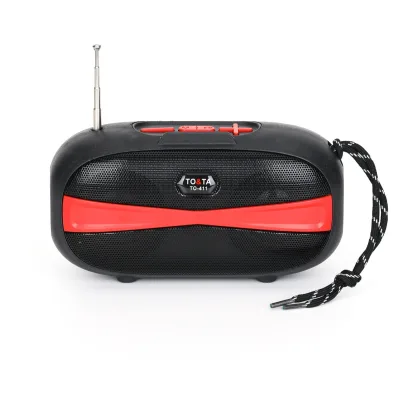

Comprehensive Sourcing Guide
Sourcing Guide for Portable Solar TWS Speakers with Handles
The global demand for portable audio solutions has surged, driven by the need for versatile entertainment options that function both indoors and outdoors. Among the most sought-after categories is the portable solar TWS (True Wireless Stereo) speaker with a handle. This specific configuration combines rugged portability, sustainable charging capabilities, and wireless connectivity to create a robust audio ecosystem. For B2B buyers, navigating this market requires a disciplined approach to verifying technical claims, understanding cost structures, and ensuring supplier reliability without relying on unverified marketing assertions. This guide provides a structured framework for sourcing these devices, grounded in observable product attributes and standard industry practices.
Technical Architecture and Connectivity Standards
When evaluating a portable solar TWS speaker with a handle, the first step is to dissect the technical architecture. The core functionality relies on the integration of multiple distinct technologies: wireless audio transmission, solar energy harvesting, and physical portability. Based on observed market data, the connectivity landscape for these units is dominated by Bluetooth 5.0 and Bluetooth 5.0 standards. These versions offer significant improvements in range and stability compared to older iterations, with effective wireless distances typically exceeding 10 meters in open environments. Buyers must verify that the specific units under consideration support the Multi-link feature, which allows for simultaneous connections to multiple devices, enhancing the user experience in social or commercial settings.
The "TWS" designation implies a specific stereo configuration. In this context, it often refers to the ability of two separate speaker units to pair wirelessly to create a left-right channel separation, or it may refer to the internal wireless capability of the unit itself. The observed specifications indicate that these devices often feature an Active amplification type, which is essential for driving the speaker drivers efficiently without external power sources. The sound channel configuration is frequently listed as 2-channel, providing a balanced audio output. The frequency response range is a critical metric for audio fidelity; observed data suggests a range of 120Hz to 20kHz, which covers the essential mid-to-high frequencies required for clear speech and music playback, though low-frequency extension may vary by model.
The physical design of these units often includes a handle, which is a practical necessity for the "portable" aspect of the keyword. This feature transforms the device from a stationary desktop unit into a mobile asset suitable for outdoor activities, construction sites, or travel. The material composition is predominantly plastic, chosen for its durability, weight reduction, and cost-effectiveness. The product dimensions observed in the market, such as 18067.590mm, indicate a compact form factor that fits easily into vehicle cup holders or backpacks. The weight, often around 375g, ensures that the handle provides leverage without making the unit cumbersome to carry.
Power Systems and Solar Integration
The inclusion of solar charging capability is a defining characteristic of this product category. For B2B buyers, understanding the solar integration is vital because it directly impacts the product's value proposition and operational longevity. The observed facts confirm that "Solar Charging: Yes" is a standard attribute for many models in this segment. However, the efficiency of this charging method depends heavily on the capacity of the internal battery and the surface area of the solar panel.
Battery capacity is a primary driver of performance. Data indicates that units in this category often feature a battery capacity of 1200 mAh. While this capacity supports a playback time of approximately 1 hour under typical conditions, the actual duration will fluctuate based on volume levels and environmental factors. The solar panel serves as a supplementary charging source, ideal for extending battery life during extended outdoor use where grid power is unavailable. Buyers should note that solar charging is generally a slow process compared to wired charging and should be viewed as an emergency or maintenance feature rather than a primary power source.
The rechargeable nature of these speakers is a non-negotiable feature for modern portable audio. The combination of a rechargeable battery and solar input creates a hybrid power system. It is crucial to verify the charging interface; while USB is a standard connectivity option, the specific charging protocol and the presence of a dedicated solar input port must be confirmed. The "Rechargeable" attribute observed in the product data confirms that the internal power storage is designed for repeated cycles, which is essential for commercial applications where the device may be used daily.
Functional Versatility and Application Scenarios
The versatility of the portable solar TWS speaker with a handle makes it suitable for a wide array of applications. The observed usage categories are extensive, ranging from Mobile Phone and Portable Player to Home Theatre System, Garden speaker, Computer, Stage/DJ, and Radio. This broad compatibility suggests that the device is designed to be a universal audio solution. The "Compatible Product: Universal" attribute reinforces this, indicating that the speaker can interface with a vast range of consumer electronics without the need for proprietary adapters.
The "Special Function" attributes further define the utility of these units. Features such as Radio, Memory Card Support, and USB Disk Support are standard, allowing users to play content from various sources without relying solely on Bluetooth streaming. The inclusion of a Remote Control in some models adds a layer of convenience, enabling users to manage playback from a distance. For commercial buyers, the "Stage/DJ" usage classification is particularly relevant, suggesting that these speakers can be deployed for small events, street performances, or mobile DJ setups where a handle is necessary for mobility.
The "Applicable Scenarios" data points to Desktop, Outdoor, and Mobile Portable environments. This triad of scenarios highlights the dual nature of the product: it is robust enough for outdoor use, featuring waterproof attributes in some models, yet compact enough for desktop or indoor use. The "Waterproof" feature, when present, is a significant differentiator, allowing the speaker to withstand rain or accidental splashes. This makes the device ideal for garden parties, beach outings, or industrial sites where dust and moisture are concerns. The "Touch Control" feature, observed in some specifications, offers a modern interface that complements the traditional button mode of operation, catering to users who prefer intuitive gesture-based controls.
Cost Drivers and Procurement Economics
Understanding the cost drivers for portable solar TWS speakers is essential for budgeting and margin analysis. The price range observed in the market spans from 2.95 to 40 USD, a wide variance that reflects differences in build quality, feature sets, and brand positioning. Several factors contribute to this pricing structure. First, the inclusion of solar charging technology adds a layer of complexity and cost compared to standard battery-operated speakers. The size and efficiency of the solar panel, as well as the capacity of the battery, are primary cost determinants.
Second, the connectivity features, such as Bluetooth 5.0 and TWS capabilities, influence the price. Higher-end models that support Multi-link connections and advanced audio processing will command a premium. The material composition also plays a role; while plastic is the standard, the quality of the plastic and the design of the handle can affect the unit price. The "Active" amplification type is a standard feature, but the power output, observed at 5W in some models, is a key differentiator. Higher wattage speakers generally cost more due to the larger drivers and more robust amplification circuits required.
The Minimum Order Quantity (MOQ) is another critical economic factor. The observed MOQ range is 1 to 3000 units, offering flexibility for both small startups and large enterprises. Buyers with lower volume requirements can access the market with an MOQ of 1, while larger buyers can negotiate better pricing tiers by ordering in bulk. The "Small Orders: Accepted" attribute indicates a supplier base that is adaptable to various order sizes. However, buyers should be aware that unit costs typically decrease as order volume increases, a standard principle in B2B manufacturing.
Supplier Evaluation and Compliance Verification
Selecting the right supplier is the most critical step in the procurement process. The market data indicates that suppliers are primarily located in China, with specific hubs in Shenzhen and Guangdong. These regions are known for their robust electronics manufacturing ecosystems. When evaluating potential suppliers, buyers should prioritize those that offer "OEM, ODM" capabilities, allowing for customization of the product to meet specific brand requirements. The "Customization: Available" attribute confirms that many manufacturers are willing to tailor the product's appearance, branding, and potentially its technical specifications.
Compliance and certification are paramount for international trade. While specific certification status should be verified on a case-by-case basis, the market often references CE and ROHS standards. Buyers must explicitly request proof of compliance for these standards before finalizing any order. The "prod_standard" attribute, which includes packaging dimensions and weight (e.g., 42.541.552CM 50PCS 25.8KG), provides insight into the supplier's logistical capabilities. A supplier that provides detailed packaging standards demonstrates a level of professionalism and experience in handling bulk shipments.
The "Brand Name" attribute varies, with some products listed under specific brands like "W.Rider" and others under generic "OEM, ODM" labels. For buyers seeking private label solutions, the OEM/ODM suppliers are the primary target. It is essential to verify the supplier's track record regarding the "Model Number" consistency. The data shows specific model numbers such as RD-V78, RD-RS005BT-5, and BDL series models. Buyers should ensure that the model numbers provided by the supplier match the specifications they are evaluating to avoid receiving mismatched or inferior products.
Quality Control and Long-Term Procurement Strategy
Implementing a robust quality control (QC) strategy is necessary to mitigate risks associated with sourcing electronic goods. Given the complex integration of solar panels, batteries, and wireless modules, the risk of component failure is non-zero. Buyers should establish clear acceptance criteria based on the observed specifications. For instance, verifying the "SNR" (Signal-to-Noise Ratio) of 81-90dB ensures that the audio output is clear and free from excessive background noise. The "Playback Time" of 1 hour should be tested under controlled conditions to ensure it meets the claimed duration.
The "Effective Distance" of 10m is another key performance indicator that should be validated during the sampling phase. Buyers should test the Bluetooth connection stability at this distance, as well as in the presence of obstacles, to ensure the "Wireless" claim holds true in real-world scenarios. The "Mode of Operation" via buttons or touch controls should be tested for responsiveness and durability. The "Product" dimensions and weight should be measured to confirm they align with the packaging standards provided by the supplier.
For long-term procurement, buyers should consider the "Lead Time" and "Production Capacity" of the supplier. While specific lead times are not provided in the data, the "Small Orders: Accepted" attribute suggests that suppliers may have flexible production lines. However, for large orders, buyers should negotiate clear timelines to ensure timely delivery. The "Origin" of the product, consistently listed as China, implies that buyers should be prepared for potential logistics challenges related to international shipping. Establishing a strong relationship with the supplier, potentially through a trial order, can help build trust and ensure consistent quality over time.
Summary of Key Specifications and Comparison
To facilitate a quick comparison of the observed product attributes, the following table summarizes the key technical and functional specifications found in the market data. This comparison highlights the diversity of options available to buyers and the specific features that define the portable solar TWS speaker with a handle category.
| Feature Category | Observed Attribute | Typical Value / Range | Notes |
|---|---|---|---|
| Connectivity | Bluetooth Version | 5.0 / 5 | Ensures stable range >10m |
| Power Source | Solar Charging | Yes | Supplementary charging only |
| Battery | Capacity | 1200 mAh | Supports ~1 hour playback |
| Audio Output | Output Power | 5W | Active amplification |
| Frequency Response | Range | 120Hz-20kHz | Standard audio fidelity |
| Special Functions | Radio, USB, Memory Card | Supported | Multi-source playback |
| Material | Speaker Material | Plastic | Durable, lightweight |
| Dimensions | Size | 18067.590mm | Compact, handle-equipped |
| Weight | Product Weight | 375g | Portable with handle |
| Water Resistance | Waterproof | Yes (in some models) | Suitable for outdoor use |
| Control Method | Operation Mode | Button / Touch | User preference dependent |
| Origin | Production Location | China (Shenzhen/Guangdong) | Major manufacturing hubs |
This table serves as a reference point for buyers to assess whether a specific supplier's offering aligns with their technical requirements. It underscores the importance of verifying each attribute individually, as the market data indicates that not all products will possess every feature listed. By adhering to a disciplined evaluation process, B2B buyers can successfully source high-quality portable solar TWS speakers with handles that meet their specific business needs.
FAQs
Can these speakers charge via solar power?
Yes, many models feature solar charging as a standard attribute. This capability allows for supplementary power during outdoor use, though it is typically slower than wired charging and depends on battery capacity and sunlight exposure.
What is the typical battery capacity for these units?
Observed specifications indicate a battery capacity of 1200 mAh for many units in this category. This capacity supports approximately one hour of playback time under typical conditions, varying with volume levels and usage scenarios.
Which Bluetooth version is commonly supported?
The devices commonly support Bluetooth 5.0 or Bluetooth 5 standards. These versions provide stable connectivity with an effective wireless range exceeding 10 meters in open environments, ensuring reliable audio transmission.
What is the minimum order quantity for small buyers?
Small orders are accepted with a minimum order quantity as low as one unit. This flexibility allows buyers to test products or fulfill small inventory needs without committing to large bulk purchases immediately.
How long is the effective wireless distance?
The effective wireless distance is typically more than 10 meters in open environments. This range supports stable Bluetooth connections for mobile phones and portable players without signal interruption during normal use.
Can buyers request product customization?
Yes, customization is available for many models in this product category. Buyers can often request OEM or ODM services to tailor branding and specifications, though specific details depend on the supplier's capabilities.
What is the typical price range for these speakers?
The observed price range spans from 2.95 to 40 USD per unit. This variance reflects differences in build quality, feature sets like solar charging, and brand positioning across different manufacturers and models.