Source Portable Travel Scale Carrying Bag for USB, Hardware, Car Repair
Find 30 verified options for a Portable Travel Scale Carrying Bag designed for USB tools, hardware tools, and car repair equipment. Compare features like waterproof nylon construction, medium soft hardness, and custom capacity ranging from 3-10 kg to 150 kg among suppliers offering T/T payment terms.
Key considerations
Products List


Belt Strap Travel Suitcase Weight Scale Portable Electronic Weighing Luggage
$2.26 - $2.50
MOQ: 1000 Pieces


Travel Scale Mini Digital Luggage Scale
$2.20 - $2.30
MOQ: 500 Pieces
Guangdong South China Sea Electronic Measuring Technology Co., Ltd.


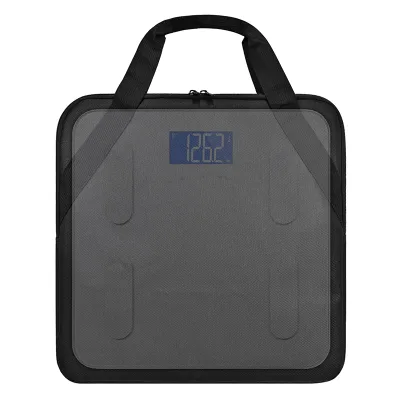
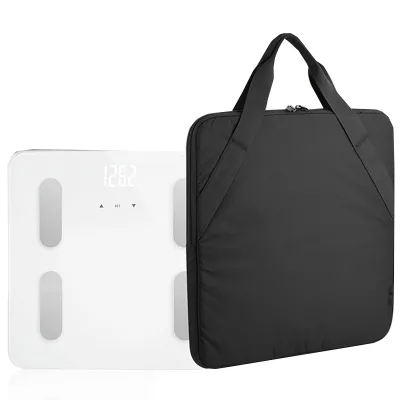


Portable Weigh Station Scale Model Digital Luggage Weighing Beam Scale
$150.00 - $250.00
MOQ: 5 Pieces


Comprehensive Sourcing Guide
Strategic Sourcing Guide for Portable Travel Scale Carrying Bags
Understanding Product Definitions and Core Specifications
When sourcing a Portable Travel Scale Carrying Bag, buyers must first distinguish between the primary storage vessel and the integrated weighing instrument. The market presents a complex array of products where the "bag" serves as a protective housing for tools or scales, while the "scale" itself may be a distinct unit with specific measurement capabilities. Based on current market observations, the core product category often encompasses a hybrid solution: a durable, custom-designed bag intended to house weighing devices, tools, or hardware, alongside the scales themselves.
The physical attributes of these units are critical for logistics and operational planning. The observed product specifications indicate a "Big Capacity" design, often categorized under "Medium Capacity" depending on the specific load requirements. The material composition is predominantly Nylon or Polyester, selected for their balance of durability and weight. For instance, specific product models are constructed from Nylon, while others utilize Polyester, both offering resistance to environmental wear. The structural hardness is typically rated as "Medium Soft," providing a flexible yet protective shell that can absorb shocks during transit.
Color options are generally standardized to Black for professional aesthetics, though OEM (Original Equipment Manufacturer) color customization is frequently available to align with corporate branding. The gross weight of these units typically ranges between 1 and 1.5 kg, making them suitable for portable applications where the carrier itself does not become a burden. The dimensions vary significantly by model; some standard configurations measure approximately 10.24 by 6.3 by 5.1 inches, while bulk packaging for wholesale units may reach dimensions of 45 by 39 by 31 cm or 54 by 27 by 18 cm, depending on the quantity packed per carton.
Technical Performance and Functional Capabilities
The functional requirements for a Portable Travel Scale Carrying Bag extend beyond simple storage. These units are engineered to support specific tool types, including USB tools, hardware tools, hand tools, electrical tools, and car repair tools. The design often incorporates features such as waterproof and shockproof capabilities, ensuring the integrity of the sensitive weighing instruments inside during rough handling or adverse weather conditions.
When the product includes an integrated weighing function, the technical specifications become more granular. The reading type is observed to be a "Scale Body Display," which may be mechanical or digital depending on the model. Some advanced units utilize a Capacitive sensor type with automatic measurement methods and data stabilization treatments classified as "Static Type." The working type is frequently a "Hanging Hook" mechanism, allowing for versatile weighing of suspended loads.
The capacity and accuracy of the integrated scales vary widely across the product range. Buyers should expect to encounter models with a capacity of 50 kg with a 10 g readability, while others may support up to 150 kg with a 2.5 kg readability. Accuracy ratings are generally noted as being greater than or equal to 1 kg for heavy-duty industrial applications. The bearing capacity of the bag structure itself is often rated between 3 and 10 kg, ensuring the bag can be carried comfortably while holding the scale and its accessories. The display type may be a "Mechanical Hand" for analog models or a digital interface for modern units, catering to different user preferences in industrial or field environments.
Compliance, Certification, and Quality Standards
In the B2B procurement of industrial and travel equipment, verifying compliance and certification is paramount. The supplied product data indicates that certain models carry CE and RoHS certifications, which are essential for market access in Europe and other regions requiring strict adherence to safety and environmental standards. These certifications confirm that the products meet specific health, safety, and environmental protection requirements.
However, buyers must exercise caution when interpreting standard claims. While some background knowledge suggests ISO 27001 relevance for data security, this standard is not explicitly confirmed in the provided product facts for physical carrying bags. Therefore, procurement teams should not assume ISO 27001 compliance without direct verification from the supplier. Instead, the focus should remain on the tangible certifications listed, such as CE and RoHS, and the specific product standards like the dimensional specifications (e.g., 10.246.35.1 inch) and weight standards (G.W/N.W: 12/11 kgs).
Quality assurance should also extend to the manufacturing process. The "Data Stabilization Treatment" being of a "Static Type" suggests a focus on minimizing electronic interference, which is crucial for accurate weighing. Buyers should request test reports or documentation that validates the waterproof and shockproof claims, as these are critical for the product's longevity in travel scenarios. The warranty period is typically observed as 1 Year, which serves as a baseline for supplier confidence in product durability. Any deviation from these stated standards requires immediate clarification and potential renegotiation of terms.
Cost Drivers and Commercial Terms
The pricing structure for portable travel scale carrying bags is influenced by several variables, including material quality, customization level, and order volume. The observed listed price range in the market spans from 1 to 400 USD, reflecting the diversity from basic utility bags to high-end, integrated scale systems. The Minimum Order Quantity (MOQ) varies significantly, ranging from 1 unit for sample orders to 2,500 units for bulk production runs. This wide range allows buyers to test the market with small orders before committing to large-scale procurement.
Payment terms are a critical component of the commercial agreement. The standard term observed is T/T (Telegraphic Transfer), which requires buyers to arrange bank transfers, often with a deposit required before production begins. The production lead time is substantial, typically ranging from 45 to 60 days after the receipt of the deposit. For sample orders, the lead time is shorter, estimated at about 7 to 10 days. These timelines must be factored into the overall supply chain planning to avoid delays in project execution.
Customization is a key cost driver. The availability of customization allows buyers to tailor the bag's appearance, branding, and internal layout to specific needs. However, this process often extends the production time and may increase the unit cost. The packaging details also impact logistics costs; for example, some models are packed as "One Bag in One Polybag," while bulk shipments may be packed at 100 pieces per carton with specific gross and net weights (e.g., 12/11 kgs or 14/13 kgs). Buyers should calculate the total landed cost, including shipping from the port of loading, which is typically Xiamen, China, to ensure the final price aligns with budget constraints.
Typical Applications and Usage Scenarios
The versatility of portable travel scale carrying bags makes them suitable for a wide array of industries. The primary usage categories include applications for USB tools, hardware tools, hand tools, electrical tools, and car repair tools. This broad applicability suggests that these bags are designed to be modular, accommodating various toolkits and instruments depending on the specific trade or profession.
In the context of travel and field work, the "Hand-Held" nature of the product is essential. The bag is designed to be carried by hand, with a bearing capacity that supports the weight of the tools and the scale itself. The "Room Temperature" operating environment indicates that these products are intended for standard indoor or outdoor use, rather than extreme industrial environments requiring specialized thermal protection.
The specific models, such as those identified by codes like DK21-TB08, HG, HA, HSE, and HC, likely correspond to different capacity tiers or feature sets. For instance, models with higher weight capacities (150 kg) are suitable for heavy industrial applications, while those with lower capacities (50 kg) are ideal for retail, logistics, or lighter field operations. The "Big Capacity" designation implies that these bags are designed to hold multiple tools or a large scale with accessories, making them indispensable for professionals who require a comprehensive toolkit in a single, portable unit.
Supplier Evaluation and Quality Control Protocols
Selecting the right supplier requires a rigorous evaluation process that goes beyond price comparison. Buyers should verify the supplier's ability to meet the specific production timelines, particularly the 45-60 day production window. It is crucial to confirm that the supplier can consistently deliver the "Medium Soft" hardness and "Waterproof/Shockproof" attributes observed in the product data.
Quality control protocols should be established early in the procurement process. Buyers must ensure that the "Customized" features, such as OEM colors and specific dimensions, are accurately replicated in the final product. The packaging standards, such as the 45X39X31cm/100PCS configuration, must be adhered to for efficient shipping and storage. Additionally, the "One Bag in One Polybag" internal packaging should be verified to prevent damage during transit.
Suppliers should be required to provide documentation for all certifications, including CE and RoHS, and to demonstrate their ability to maintain the 1-year warranty. The origin of the products, typically China, should be confirmed, and the port of loading (Xiamen) should be agreed upon to streamline logistics. Buyers should also assess the supplier's flexibility in handling different MOQs, from single-unit samples to large bulk orders, to ensure scalability as business needs evolve.
Long-Term Procurement and Supply Chain Considerations
Sourcing portable travel scale carrying bags is not merely a transactional activity but a strategic decision that impacts long-term operational efficiency. The availability of customization allows for brand alignment and product differentiation, which can be a competitive advantage in the market. However, buyers must plan for the variability in lead times and the potential for production delays, especially when dealing with custom orders.
The observed price range and MOQ flexibility provide opportunities for cost optimization through volume consolidation. By aggregating demand, buyers can negotiate better terms and reduce the per-unit cost. The standard payment terms of T/T and the deposit requirement necessitate careful financial planning to maintain cash flow.
Furthermore, the durability and warranty of the products are critical for long-term value. A 1-year warranty is a standard benchmark, but buyers should consider the total cost of ownership, including potential maintenance or replacement costs if the product fails to meet the "Waterproof" or "Shockproof" expectations. Regular quality audits and performance reviews of the supplier's output are recommended to ensure consistent adherence to the specified standards and to maintain a reliable supply chain. By focusing on these strategic elements, buyers can secure a robust supply of high-quality portable travel scale carrying bags that meet their operational and commercial objectives.
FAQs
What materials are used for portable travel scale carrying bags?
These bags are primarily constructed from Nylon or Polyester to ensure durability and lightweight portability. The material choice provides a medium soft hardness that absorbs shocks while protecting the internal weighing instruments during transit.
Can I customize the color and design of these bags?
Yes, customization is available for these bags, including OEM color options beyond the standard black finish. Buyers can request specific branding or internal layouts, though this may extend the production lead time to 45-60 days after deposit.
What is the typical lead time for production and samples?
Sample orders typically require about 7 to 10 days for preparation and delivery. Full production runs take approximately 45 to 60 days after receiving the deposit, so buyers must plan their inventory accordingly to avoid delays.
Which certifications do these products typically hold?
Many models come with CE and RoHS certifications to ensure compliance with safety and environmental standards. These certifications are essential for market access in regions like Europe, confirming the product meets specific health and safety requirements.
How much weight can these bags carry?
The bag structure itself has a bearing capacity rated between 3 and 10 kg for comfortable hand-carrying. Integrated scales within the bags may support capacities ranging from 50 kg up to 150 kg depending on the specific model selected.
What payment terms are standard for these orders?
The standard payment term observed is T/T, which usually requires a deposit before production begins. Buyers should arrange bank transfers and account for the 45 to 60 day production window when planning their cash flow.