Find Poultry House Silo for grain, livestock, and feed storage
Source 30 verified suppliers for Poultry House Silo units designed for grain, livestock, and feed storage. Compare capacities ranging from 1000 to 10000 tons, material options like zinc-coated steel, and features including moistureproof and ventilation systems to find the right solution.
Key considerations
Products List

Poultry Farm Storage Steel Grain Silo Feed Silo for Poultry Chicken Pig House Feed
$10000.00 - $100000.00
MOQ: 1 Pieces


Flat Bottom Grain Silo Poultry Feed Storage Silo Wheat Storage Silo
$10000.00 - $100000.00
MOQ: 1 Pieces

Steel Silos for Grain Storage Poultry Feed Silo Animal Feed Silo in Grain Silo
$10000.00 - $100000.00
MOQ: 1 Pieces

Factory Price Grain Steel Silo Poultry Feed Storage Silo Storage Silo
$10000.00 - $100000.00
MOQ: 1 Pieces

Galvanized Steel Silo Poultry Feed Farm Grain Storage Chicken Animal Feed Silo
$6999.00 - $10000.00
MOQ: 1 Sets

Hot Sale Poultry Farming Grain Silo for Chicken Feed Metal Galvanized Silos
$6999.00 - $10000.00
MOQ: 1 Sets

Poultry Farm Equipment Grain Silo Chicken Animal Feed Silo Small Silo
$6999.00 - $10000.00
MOQ: 1 Sets




Comprehensive Sourcing Guide
Strategic Sourcing Guide for Poultry House Silo Systems
Understanding the Technical Architecture of Grain Storage Silos
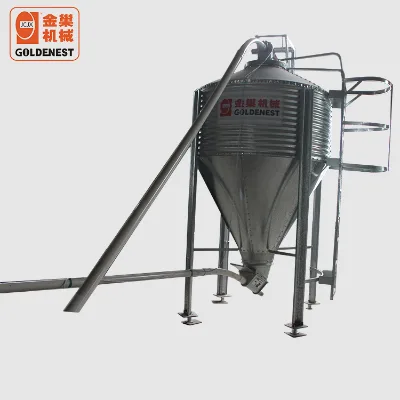
When sourcing a Poultry House Silo, buyers must first distinguish between the general category of agricultural storage and the specific engineering requirements for poultry feed management. The core product in this sector is the steel silo, designed primarily for the storage of solid materials, though some configurations support liquid usage. These units are fundamentally constructed from steel, a material choice that dictates the structural integrity and longevity of the facility. The observed market data indicates that these silos are available in various shapes, predominantly cylindrical, and are categorized under ambient temperature storage types.
The physical dimensions of these units vary significantly to accommodate different operational scales. Capacity ranges observed in the market span from 1000 tons up to 10,000 tons, with options for further customization. Specific diameter measurements have been noted in the range of 3,600 to 27,500 cubic units, while height specifications can reach up to 4.7 meters for certain models. The internal configuration often includes a hopper bottom design, which facilitates the gravity-assisted discharge of feed, a critical feature for poultry farming operations where consistent flow is necessary. The number of layers or sections within a system can range from 2 to 20, allowing for multi-tiered storage solutions that optimize vertical space in poultry housing facilities.
Construction conditions for these silos are generally categorized as either general or prefabricated. The prefabricated nature of many units suggests that they are manufactured off-site and assembled on the poultry farm location, which aligns with the "Site Installation" service often provided by suppliers. The structural design must be robust enough to withstand environmental stressors, leading to performance claims such as being moistureproof, airtight, and shockproof. Additionally, ventilation is a key attribute, with some models featuring air duct heating and ventilation equipment to maintain optimal feed quality. The anti-rust and anti-water features are highlighted as key selling points, often achieved through zinc coating levels that can vary, with specific observations of 275g/m², 350, 400, and 450g/m² coatings available.
Compliance, Certification, and Safety Standards
For buyers in the agricultural and poultry sectors, verifying compliance with international and local standards is a non-negotiable step in the procurement process. The supply chain for steel silos often originates from China, where manufacturers adhere to various standards that may be customized based on the specific capacity and design requirements of the order. While specific national standards are not universally fixed for every unit, the market offers products that can be customized to meet "Depend on the capacity" standard requirements.
Certification plays a pivotal role in validating the safety and quality of the silo system. The presence of CE certification is a documented fact within the current market offerings, indicating that the equipment meets the essential health, safety, and environmental protection requirements for products sold within the European Economic Area. Buyers should verify that the specific unit they are purchasing carries this certification, as it often serves as a baseline for quality assurance. Furthermore, the machinery test report is frequently provided, offering empirical data on the performance and safety of the mechanical components.
Safety features extend beyond the structural shell to include fireproofing capabilities. The observed performance attributes list "Fireproof" alongside moistureproof and pest control features, suggesting that the materials and design incorporate measures to mitigate fire risks, which is particularly relevant in poultry houses where dust and electrical equipment pose potential hazards. The warranty for core components is typically standardized at one year, providing a baseline guarantee for the buyer. However, the overall silo life is projected to be between 25 to 40 years, a figure that depends heavily on the quality of the zinc coating and the maintenance regimen adopted by the poultry farm.
Cost Drivers and Pricing Dynamics
The pricing structure for poultry house silos is influenced by a complex interplay of factors, including capacity, material thickness, coating specifications, and customization levels. The observed price range in the market is extensive, spanning from $360 to $1,111,111 USD. This wide variance reflects the difference between small-scale, modular units and large, industrial-grade storage complexes. Buyers should not view the lower end of this range as indicative of a standard large-scale silo; rather, it likely corresponds to smaller capacities or basic configurations.
Material costs are a primary driver, given that the primary construction material is steel. The thickness and grade of the steel, along with the zinc coating weight (ranging from 275g/m² to 450g/m²), directly impact the unit price. Higher coating weights offer superior corrosion resistance, which is essential for the humid environments often found in poultry houses, but they come at a premium. Customization is another significant cost factor. While the standard models offer capacities from 1000t to 10000t, any deviation from these standard sizes or the addition of specialized features like advanced ventilation systems or computerized control interfaces will increase the cost.
The Minimum Order Quantity (MOQ) is another variable that affects the total procurement cost. The observed MOQ range is between 1 and 20 units. For a single poultry farm, an MOQ of 1 may be sufficient, but larger agricultural conglomerates might negotiate bulk pricing by ordering multiple units. The packing method also influences logistics costs; while some units are shipped nude to save space, others are packed in steel frames or containers, which adds to the shipping expense. Buyers must factor in these logistical variables when calculating the total cost of ownership, as the initial purchase price is only one component of the investment.
Typical Applications and Operational Versatility
The primary application of these steel silos is grain storage, making them indispensable for poultry farming operations that require a steady supply of feed. The "Product Usage" is explicitly listed as grain storage, and the "Usage" attribute confirms suitability for solid materials. However, the versatility of these units extends beyond simple storage. Some models are designed for use in poultry farms specifically, integrating directly into the feeding infrastructure of the house. The ability to store both solid and liquid materials in certain configurations offers flexibility for farms that may process or store liquid feed supplements.
The "Key Selling Points" of these silos include ease of installation and ease of use, which are critical for farmers who may not have specialized engineering teams on staff. The prefabricated nature of the construction allows for rapid deployment, minimizing downtime in the poultry house. The airtight and moistureproof features ensure that the stored grain remains free from spoilage, a common issue in traditional storage methods. Pest control is another vital application feature, as silos provide a sealed environment that prevents rodents and insects from contaminating the feed.
In addition to storage, the silos often incorporate ventilation systems, such as air ducts, which help regulate the temperature and humidity within the grain mass. This is particularly important in poultry houses where temperature control is essential for both the birds and the feed quality. The computerized nature of some units suggests that modern silos can be integrated into automated feeding systems, allowing for precise control over feed distribution. The "Type" is listed as "Silo," but the specific application context often requires a "Grain Silo" or "Grain Storage Silo" designation to ensure the correct equipment is selected.
Supplier Evaluation and After-Sales Support
When evaluating potential suppliers for poultry house silos, buyers must look beyond the initial product specifications to assess the quality of after-sales support. The market data indicates that suppliers provide installation documents and online support as part of their service package. This is crucial for buyers who may be located far from the manufacturing site, as the "Site Installation" service often requires detailed guidance. The "After-Sales Service Provided" list includes these essential elements, ensuring that the buyer has access to technical assistance throughout the lifecycle of the silo.
The warranty period for core components is typically one year, which serves as a benchmark for supplier confidence. However, buyers should verify if extended warranties are available, especially given the projected silo life of 25 to 40 years. The "Condition" of the products is listed as "New," and the "Stock" availability is described as "Enough," suggesting that suppliers can generally meet immediate demand without long delays. However, lead times are not explicitly defined in the provided data, so buyers should inquire about specific delivery schedules based on their order size and customization requirements.
Supplier reliability can also be gauged by their ability to provide machinery test reports and adhere to customization standards. The "Standard" for production is often "Customized" or "Depend on the capacity," indicating that suppliers should be flexible in meeting specific client needs. Buyers should request evidence of past projects or references to verify the supplier's experience with similar poultry house installations. The "Key Selling Points" of anti-rust and anti-water features should be backed by tangible test results or certifications to ensure the supplier is not making unsubstantiated claims.
Long-Term Procurement and Maintenance Considerations
Procuring a Poultry House Silo is a long-term investment that requires careful consideration of maintenance and lifecycle management. The projected silo life of 25 to 40 years means that the initial choice of materials and coatings will have a profound impact on the total cost of ownership. The zinc coating levels, ranging from 275g/m² to 450g/m², are a critical factor in determining the longevity of the steel structure. Buyers should prioritize higher coating weights if the silo is to be used in a highly corrosive environment, such as a poultry house with high humidity or frequent cleaning cycles.
Maintenance strategies should include regular inspections of the ventilation systems, airtight seals, and the hopper bottom mechanism. The "Performance" attributes such as moistureproof, airtight, and pest control capabilities must be maintained over time to ensure the quality of the stored grain. The "Construction Conditions" being general or prefabricated implies that the structural integrity is robust, but regular checks are necessary to detect any signs of wear or corrosion. The "Warranty of Core Components" covers the first year, but buyers should plan for ongoing maintenance costs beyond this period.
Furthermore, the "Customization" aspect of the product allows for future adaptability. As a poultry farm expands or changes its feed requirements, the silo system may need to be modified. The ability to customize the capacity, diameter, and height ensures that the silo can grow with the business. Buyers should also consider the "Packing" method, as shipping in containers or steel frames may affect the ease of future expansion or relocation. By understanding these long-term considerations, buyers can make informed decisions that ensure the silo remains a reliable asset for decades.
Comparative Analysis of Silo Specifications
To assist buyers in making informed decisions, the following table summarizes the key technical specifications and attributes observed in the market for poultry house silos. This comparison highlights the variability in capacity, materials, and performance features that buyers should evaluate based on their specific operational needs.
| Specification Category | Observed Range / Options | Key Considerations for Buyers |
|---|---|---|
| Material | Steel | Verify steel grade and thickness for structural integrity. |
| Coating | 275g/m², 350, 400, 450 etc. | Higher coating weights offer better corrosion resistance. |
| Capacity | 1000t to 10000t (Customizable) | Match capacity to daily feed consumption and storage needs. |
| Dimensions | Height: 4.7m; Diameter: 3600-27500 Cu | Ensure site dimensions can accommodate the selected size. |
| Performance | Moistureproof, Ventilation, Airtight, Pest Control, Shockproof | Prioritize airtight and moistureproof features for feed quality. |
| Lifespan | 25-40 Years | Higher quality materials extend the operational life. |
| Certification | CE | Verify CE marking for compliance with safety standards. |
| Installation | Site Installation, Prefabricated | Confirm availability of installation documents and support. |
| Warranty | 1 Year (Core Components) | Check for extended warranty options for long-term protection. |
| Customization | Available | Assess flexibility for capacity, standard, and feature additions. |
This table serves as a reference point for buyers to compare different offerings and ensure that the selected silo system meets the rigorous demands of poultry house operations. By carefully analyzing these specifications, buyers can secure a reliable and efficient storage solution that supports their agricultural business for years to come.
FAQs
What is the expected lifespan of a Poultry House Silo?
The silo life is projected to be between 25 to 40 years depending on maintenance. This longevity relies heavily on the quality of the zinc coating, which ranges from 275g/m² to 450g/m², and the specific environmental conditions of the poultry farm.
Can these silos be customized for specific grain storage capacities?
Yes, customization is available for various storage capacities ranging from 1000 tons up to 10000 tons. Buyers can also request specific diameter and layer configurations to fit their operational scale, with standard models supporting capacities up to 2481 cubic meters.
Which certifications ensure the safety of the steel silo equipment?
CE certification is a documented fact for these units, ensuring compliance with European health and safety standards. Additionally, machinery test reports are frequently provided to validate the performance and structural integrity of the core components before shipment.
How are the silos constructed and delivered to the site?
The units are generally prefabricated and shipped in steel frames or containers, though some arrive nude. Installation services include site installation support with provided documents, allowing for rapid assembly at the poultry farm location without extensive on-site manufacturing.
What performance features protect the stored grain from damage?
The silos offer moistureproof, airtight, and pest control features to preserve grain quality. Additional protections include shockproof design and fireproof capabilities, while ventilation systems with air ducts help regulate temperature and humidity within the storage environment.
What is the minimum order quantity for purchasing a steel silo?
The minimum order quantity ranges from 1 to 20 units depending on the supplier and specific configuration. This flexibility allows individual farms to purchase single units while larger agricultural operations can negotiate bulk orders for multiple storage systems.