Source Preschool Kids Pretend Kitchen Set for Role Play, Education, and Recreation
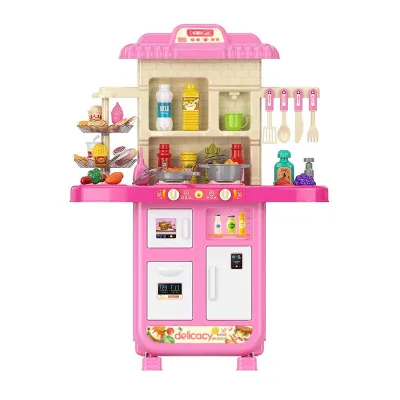
Compare 30 Preschool Kids Pretend Kitchen Set options featuring safe materials, customizable colors, and OEM services. Buyers can evaluate models like BCTJ267 and TK395 for educational play, static display, and role-playing activities suitable for children aged 3 and up.
Key considerations
Products List


Hot Selling Children Pretend Play Kids Wooden Kitchen Toy Sets for Toddler
$30.29 - $32.39
MOQ: 2 packs


Best Gift Cooking Toys Kids Pretend Play Kitchen Set Toy Kitchen (10450109)
$14.50 - $26.00
MOQ: 25 Sets



Comprehensive Sourcing Guide
Preschool Kids Pretend Kitchen Set Sourcing Guide
Sourcing preschool pretend kitchen sets requires a careful balance between developmental appropriateness and commercial viability. These toys serve as critical tools for early childhood education, fostering social skills, imaginative play, and fine motor coordination in children aged two to eight years. Buyers must navigate a market characterized by diverse material choices, ranging from durable plastics to natural woods, each offering distinct advantages in terms of cost, durability, and aesthetic appeal. The decision to source these items often hinges on understanding the specific age demographics, such as the 3+ or 2-4 year ranges, which dictate safety standards and design complexity.
The procurement landscape for these educational toys is highly competitive, with manufacturers frequently offering OEM and ODM services to customize products for specific brand identities. This customization extends to color schemes, packaging, and even functional elements like static display features or role-play components. Buyers need to establish clear requirements regarding target markets, whether focusing on unisex appeal or specific gendered marketing strategies, while ensuring that all product attributes align with international safety regulations. Understanding these foundational elements is the first step in building a reliable supply chain for preschool playsets.
Product Scope and Observed Listing Signals
The current market for preschool kitchen sets exhibits a wide variance in pricing and minimum order quantities, reflecting the diversity of manufacturing capabilities and product complexities. Observed listing signals indicate a price range from approximately $0.90 to $80.50 USD, suggesting that buyers can find options for both budget-conscious mass distribution and premium boutique retail channels. This broad spectrum is closely tied to the Minimum Order Quantity (MOQ), which ranges from as low as 10 pieces for sample or trial orders up to 1,200 pieces for bulk production runs. Understanding this correlation helps buyers align their inventory strategy with their sales volume expectations.
Product attributes reveal a strong emphasis on customization and specific design themes, with "Kitchen" being a dominant playing scene. Manufacturers frequently offer color options including white, blue, pink, and customizable colorful variants, allowing brands to tailor products to seasonal trends or regional preferences. The packaging also varies, with options ranging from simple brown boxes and paper cartons to more retail-ready color boxes. These logistical details are crucial for calculating landed costs and ensuring that the final product presentation meets the aesthetic standards of the target retail environment.
Technical Specifications to Verify
Technical verification begins with confirming the material composition, as this directly impacts durability, safety, and cost. Common materials observed in this category include ABS plastic and wood, each requiring different quality control protocols. ABS plastic offers high impact resistance and ease of cleaning, making it suitable for high-traffic play environments, while wood provides a natural aesthetic and tactile experience. Buyers must verify the specific plastic type or wood treatment to ensure it meets the intended use case, whether for educational institutions or home use, and confirm that the material is non-toxic and environmentally friendly.
Dimensional specifications and model numbers are critical for logistics planning and inventory management. Standard dimensions observed include models with sizes such as 292015 cm and larger sets measuring 965414.5 cm or 6525.548.5 cm. These variations affect shipping volume and storage requirements, so buyers should calculate cubic meter usage accurately. Additionally, verifying the quantity per carton, such as 2 sets per carton, is essential for optimizing container loading and reducing freight costs. Model identifiers like BCTJ267, TK395, and TP350 should be cross-referenced with physical samples to ensure consistency between the ordered specification and the delivered product.
Compliance and Safety Documentation
Safety compliance is non-negotiable for preschool toys, particularly those intended for children aged 3 and above. Buyers must ensure that all products meet rigorous testing standards such as EN71-1, 2, 3 and ASTM-F963, which cover mechanical properties, flammability, and chemical migration. These standards are designed to prevent choking hazards, sharp edges, and exposure to harmful substances, ensuring that the toys are safe for young children who may put them in their mouths. Verification of these certifications should be a primary step in supplier qualification, requiring valid test reports from accredited laboratories.
Certification documentation often includes ASTM and CE marks, indicating adherence to specific regional safety requirements. For markets in Europe, the CE mark is mandatory, while ASTM certification is critical for the United States. Buyers should request copies of these certificates and verify their validity with the issuing bodies. It is also important to confirm that the manufacturer has a robust quality management system in place to maintain compliance across production batches. Relying solely on supplier assertions without documented proof can lead to significant regulatory risks and potential product recalls.
Cost Drivers and Commercial Terms
Several factors influence the final cost of preschool kitchen sets, with material choice and customization being primary drivers. Custom features, such as specific color schemes or branded packaging, often incur additional setup fees and higher per-unit costs. The MOQ also plays a significant role in pricing, with lower quantities typically commanding higher unit prices due to fixed production overheads. Buyers should negotiate based on volume commitments, seeking tiered pricing structures that reward larger orders while maintaining flexibility for initial trial batches.
Commercial terms extend beyond unit price to include packaging and shipping logistics. The choice between brown boxes, paper cartons, and color boxes affects both protection during transit and retail appeal. Buyers should clarify who bears the responsibility for export packaging standards, especially for fragile components like wooden parts or plastic fittings. Additionally, understanding the supplier’s lead times and production capacity is vital for maintaining inventory levels. Clear communication regarding payment terms, such as deposits and balance payments, helps mitigate financial risk and ensures a smooth transaction process.
Supplier Qualification and Quality Control
Supplier qualification requires a thorough assessment of manufacturing capabilities and quality control processes. Buyers should verify the supplier’s origin, with many manufacturers located in regions like Zhejiang, China, known for their robust toy manufacturing infrastructure. It is essential to confirm that the supplier has experience in producing educational toys and has a track record of meeting international safety standards. Requesting references or case studies from previous clients can provide insight into the supplier’s reliability and consistency.
Quality control measures should be implemented at multiple stages of production, from raw material inspection to final pre-shipment checks. Buyers should define clear acceptance criteria for defects, such as surface imperfections, structural weaknesses, or color mismatches. Implementing third-party inspection services can provide an objective assessment of product quality before shipment. Establishing a clear protocol for handling non-conforming products, including return policies and corrective action plans, is crucial for maintaining brand reputation and customer satisfaction.
Long-Term Procurement Checks
Long-term success in sourcing preschool kitchen sets depends on continuous monitoring of supplier performance and market trends. Buyers should regularly review supplier metrics, including on-time delivery rates, defect rates, and responsiveness to issues. Building a strong relationship with suppliers through consistent communication and fair treatment can lead to better pricing and priority service during peak seasons. Additionally, staying informed about changes in safety regulations and consumer preferences ensures that the product line remains relevant and compliant.
Periodic audits of the supply chain can help identify potential risks and areas for improvement. This includes evaluating the sustainability of materials and packaging, as eco-friendly practices are increasingly important to consumers. Buyers should also consider diversifying their supplier base to mitigate risks associated with single-source dependencies. By maintaining a proactive approach to procurement, businesses can ensure a steady supply of high-quality, safe, and appealing pretend kitchen sets for preschool children.
FAQs
What materials are used for the kitchen set toys?
The kitchen set toys are primarily made from plastic, specifically ABS plastic, and some models use wood. These materials are selected to ensure durability and safety for children aged 3 and above. The products are designed to be safe and environmental friendly for educational play.
Which certifications do the toys meet for safety?
The toys meet recognized safety standards including En71-1,2,3 and ASTM-F963. Certifications such as ASTM, En71, and CE are available for these products. These standards ensure the toys are safe for children aged 3 to 8 years old during role play activities.
Can I customize the color and packaging of the set?
Yes, customization is available for colors like white, blue, pink, or colorful options. Packaging can be selected from brown boxes, paper cartons, or color boxes. OEM and ODM services are accepted to meet specific buyer requirements for the kitchen set products.
What is the minimum order quantity for these toys?
The minimum order quantity varies by product, ranging from 10 pieces to 500 pieces. Some listings indicate an MOQ of 500 PCS while others accept orders as low as 10 units. Buyers should check specific model requirements to confirm the exact quantity needed.
Where are these kitchen sets manufactured and shipped from?
These products originate from China, with specific manufacturing locations in Zhejiang. The items are shipped in cartons or brown boxes depending on the model. Buyers can expect the goods to be sourced directly from these Chinese factories for efficient delivery.
How are the toys packaged for shipping?
The toys are packaged in brown boxes, paper cartons, or color boxes depending on the specific model. Each carton typically contains 2 sets of the kitchen play items. The packaging is designed to protect the products during transit while maintaining their quality.
What age group is suitable for this pretend play set?
The kitchen sets are suitable for children aged 3 years and older, with some models targeting ages 2 to 4 years. They are designed as educational toys for girls and unisex play. The products support role play and static display functions for young children.