Source Press Cylinder Head Gasket for Car, Truck, and Engine Sealing
Find 30 Press Cylinder Head Gasket options for automotive and industrial applications. Compare OEM specifications, material types like cast iron and asbestus, and customization services from suppliers in China to meet your sealing needs; compare the available evidence and request quotations based on your requirements.
Key considerations
Products List


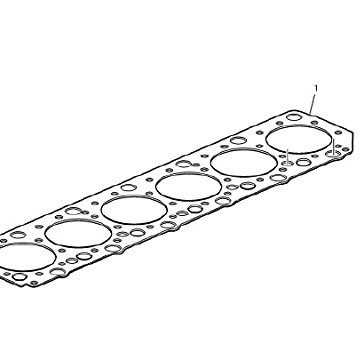
Factory Supply Auto Accessories Generator Engine Part Cylinder Head Gasket
$80.00 - $1000.00
MOQ: 10 Pieces




Comprehensive Sourcing Guide
Press Cylinder Head Gasket Sourcing Guide
Procuring press cylinder head gaskets requires distinguishing between generic sealing components and engine-specific assemblies designed for heavy-duty applications. The market offers a spectrum of options ranging from universal flat gaskets to custom-engineered seals for specific truck and car engines. Buyers must first identify whether their requirement involves a standard replacement part or a nonstandard component tailored to unique engine geometries, as this distinction dictates the entire sourcing strategy.
The observed product landscape includes specialized items like the OM 346 engine gasket and DAF truck components, alongside broader categories such as silicone rubber large seal rings. These listings indicate that suppliers often provide both OEM-standard parts and custom solutions with varying material compositions, including cast iron cylinder bodies and asbestos liners. Understanding this diversity is essential before initiating contact, as the correct fit depends on precise model numbers and application contexts rather than general descriptions alone.
Product Scope and Observed Listing Signals
Buyers should scrutinize listing signals to confirm the specific engine compatibility and physical dimensions of the gasket. The available data highlights specific model identifiers like 346.016.01.20 and 3945803, which correspond to distinct engine configurations such as the OM 346. It is critical to verify that the listed product matches the exact cylinder head gasket standard required for the vehicle, as generic listings may not accommodate the specific integral connecting types or cooling methods found in heavy machinery.
Observations also reveal a wide range of customization capabilities, including compression and injection molding processes that allow for tailored sealing solutions. Suppliers frequently offer products with dimensions up to 1800x800 mm and hardness ratings between 10-80 Shore A, catering to diverse industrial needs. However, buyers must ensure that the specific application, whether for a car or truck, aligns with the listed material properties, such as the use of complete cylinder heads or specific sealing strip styles, to avoid functional failures in high-pressure environments.
Technical Specifications to Verify
Technical verification begins with confirming the molding process and surface treatment, which directly influence the gasket's sealing integrity and durability. The market offers options ranging from matte and polished finishes to textured or painted surfaces, each suited for different operational conditions. Buyers must specify whether compression molding or injection molding is required for their specific production volume and design complexity, as these processes affect the final dimensional stability and material density of the seal.
Dimensional accuracy and material composition are equally critical, particularly for components involving cylinder liners and heads. Specifications such as the 130mm size for certain gaskets and the use of cast iron or asbestos materials must be validated against the engine's thermal expansion requirements. Additionally, the arrangement pattern, such as the L Style, and the cooling method, typically water-cooled, must be matched precisely to ensure the gasket can withstand the thermal and mechanical stresses inherent in press cylinder head applications without compromising engine performance.
Compliance and Safety Documentation
Compliance verification is paramount when sourcing gaskets that may contain materials like asbestos or require specific chemical safety data. The observed listings mention certifications such as IATF16949, ISO, Reach, RoHS, and MSDS, which indicate adherence to international quality and environmental standards. Buyers should request current documentation to confirm that the supplier maintains these certifications, ensuring that the materials used do not violate safety regulations in the destination market and that the product meets the necessary environmental compliance thresholds.
Safety documentation also extends to the warranty and testing protocols associated with the gasket. Some listings indicate a 12-month warranty, which serves as a baseline for supplier confidence in product longevity. However, buyers must verify that the warranty covers specific failure modes related to the gasket's function, such as hole sealing or flat gasket integrity under pressure. Ensuring that the supplier provides comprehensive safety data sheets and test results is essential for mitigating liability and guaranteeing that the component meets the rigorous safety standards required for automotive and industrial engine applications.
Cost Drivers and Commercial Terms
Cost structures for press cylinder head gaskets are heavily influenced by the level of customization and the complexity of the molding process. Custom silicone rubber seals and nonstandard components typically command higher prices due to the specialized tooling and engineering design required. Buyers should anticipate that OEM-specific parts, such as those for the OM 346 engine, may involve higher unit costs compared to universal standard gaskets, reflecting the precision engineering and limited production runs associated with these specialized items.
Commercial terms, including minimum order quantities and lead times, vary significantly based on the supplier's capacity and the product's origin. Observed data suggests lead times ranging from 10 to 20 days for production, with sample times of 3 to 7 days, which impacts inventory planning and project timelines. Buyers must negotiate clear terms regarding packaging, such as pallets or wooden cartons, and clarify whether the price includes customs duties and shipping from origins like Jinan or Zhejiang, as these logistical factors can substantially affect the total landed cost of the procurement.
Supplier Qualification and Quality Control
Supplier qualification should focus on their manufacturing capabilities and their ability to maintain consistent quality across production batches. The presence of certifications like IATF16949 and ISO suggests a commitment to quality management systems, but buyers must verify that these certifications are current and applicable to the specific gasket production lines. It is advisable to audit the supplier's facility to ensure they possess the necessary equipment for compression and injection molding, as well as the quality control protocols required to maintain the specified hardness and dimensional tolerances.
Quality control processes must also address the specific material properties and surface treatments of the gasket. Buyers should request evidence of in-process testing to confirm that the silicone rubber or other materials meet the required Shore A hardness and that surface treatments like polishing or painting are applied consistently. Additionally, verifying the supplier's ability to handle custom packaging and logo requirements ensures that the final product meets both functional and branding standards, reducing the risk of receiving non-compliant or substandard components that could lead to engine failures.
Long-Term Procurement Checks
Long-term procurement success depends on establishing a reliable supply chain that can adapt to changing engine models and production volumes. Buyers should prioritize suppliers who offer flexible OEM and ODM services, including 3D design support and custom logo packaging, to ensure they can scale operations as needs evolve. Maintaining a relationship with a supplier capable of producing both standard and nonstandard gaskets provides the agility required to address unexpected maintenance needs or new product launches without disrupting the supply chain.
Regular performance reviews and quality audits are essential to maintain the integrity of the gasket supply over time. Buyers should track key performance indicators such as defect rates, lead time adherence, and warranty claim frequencies to assess supplier reliability. By continuously monitoring these metrics and maintaining open communication regarding technical specifications and compliance requirements, organizations can ensure a steady flow of high-quality press cylinder head gaskets that meet the rigorous demands of automotive and industrial applications.
FAQs
What materials are used for press cylinder head gaskets?
Materials include cast iron for the cylinder body and asbestus for the liner. The gasket itself is often a flat seal designed for hole sealing. Some products use silicone rubber for large seal rings. These materials ensure durability and effective sealing under high pressure and temperature conditions in automotive applications.
Can I customize the Press Cylinder Head Gasket specifications?
Yes, customization is available for OEM and ODM requirements. You can request specific models like 1468555 or NWSR. Custom logo and packaging services are also offered. The manufacturer supports 3D design drawing and can produce nonstandard sizes. This flexibility allows for tailored solutions to fit unique engine configurations and sealing needs.
What certifications do the gasket suppliers hold?
Suppliers typically hold IATF16949, ISO, Reach, RoHS, MSDS, and LFGB certifications. These credentials ensure quality and safety standards are met. Some products also mention ISO TSWarranty for 12 months. These certifications verify that the manufacturing processes and materials comply with international regulatory requirements for automotive and industrial components.
What is the lead time for bulk orders?
The standard lead time is 10-20 days for production. Sample preparation takes 3-7 days. These timelines apply to most custom and standard orders. Buyers should account for shipping duration after production. Early communication with the supplier can help manage expectations and ensure timely delivery for urgent project requirements.
What is the MOQ for press cylinder head gaskets?
The MOQ ranges from 1 to 1000 units. This low minimum allows for small trial orders. Bulk pricing may apply for larger quantities. The flexible MOQ supports both prototype testing and mass production needs. Buyers can start with a single unit to verify quality before committing to larger volumes.
How are the gaskets packed for shipping?
Packing options include pallets, wooden cartons, and bulk packaging. Some items are packed in neutral or customized boxes. Individual gaskets may be placed in plastic bags with back boards. Catons and other protective materials are used to prevent damage. Secure packaging ensures the gaskets arrive in perfect condition for installation.