Source Press Brake for Steel Sheet, Plate, and Stainless Plate
Find 30 Press Brake machines suitable for stainless steel, carbon steel, and aluminum sheet processing. Buyers can compare semi-automatic and automatic models with hydraulic power and CNC options to match specific bending needs.
Key considerations
Products List


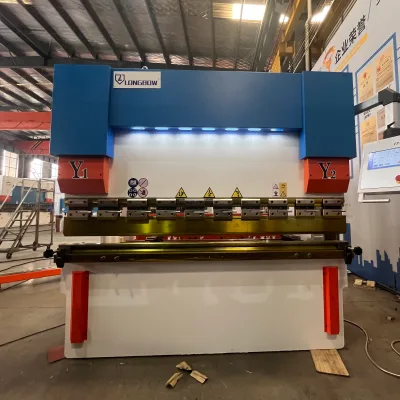
Press Brake Hydraulic Press Brake Hydraulicpress Brake with High Quality
$8000.00 - $21974.00
MOQ: 1 Sets


$5000.00 - $22000.00
MOQ: 1 Pieces


Independent Control System Follow up Front Support Device Press Brake
$12400.00 - $13600.00
MOQ: 1 Pieces




Comprehensive Sourcing Guide
Strategic Sourcing Guide for Industrial Press Brake Acquisition
Navigating the global market for Press Brake machinery requires a disciplined approach that balances technical precision with rigorous supplier verification. For procurement professionals, the core keyword "Press Brake" encompasses a diverse range of equipment, from semi-automatic torsion bar units to high-precision CNC hydraulic systems. The following guide synthesizes observed market data and technical attributes to establish a framework for evaluating potential assets. Buyers must treat product attributes as observations rather than universal claims, ensuring that every selection is validated against specific operational needs and verified supplier documentation.
Technical Architecture and Operational Capabilities
The fundamental distinction in Press Brake sourcing lies in the automation level and the specific mechanical architecture employed. Market observations indicate a split between semi-automatic and fully automatic configurations. Semi-automatic units often rely on manual feeding or simpler control loops, whereas automatic models integrate advanced motion control for continuous operation. The mechanical type is equally critical; some units are identified as torsion bar machines, which offer specific rigidity characteristics, while others are classified as CNC press brakes, utilizing computer numerical control for complex bending sequences.
Power systems vary significantly across the inventory. Hydraulic power is a dominant standard, providing the necessary force for metal sheet rolling, cutting, and bending. Voltage requirements are typically standardized for industrial environments, with common specifications including 380V, 400V, and 415V. Buyers must verify that the electrical infrastructure at their facility matches these requirements to prevent operational failure.
Specific dimensional and performance metrics are essential for matching machinery to production lines. Observed specifications include a throat depth of 340mm, a stroke of 170mm, and a maximum open height of 440mm. Working speeds can reach 120mm/s, with backing speeds up to 160 mm/s in certain configurations. The distance between key components may vary, with some models featuring a 2000mm spacing. These figures are not universal; they represent specific model configurations such as the "1.5*1500" or "YT-B" designations. Procurement teams must request detailed datasheets to confirm that these dimensions align with the thickness and length of the materials to be processed.
Material Compatibility and Application Scope
The versatility of a Press Brake is defined by its material compatibility. The observed market data suggests that these machines are suitable for processing stainless steel, carbon steel, and aluminum. This multi-material capability is crucial for facilities that handle diverse fabrication tasks. Specific applications include steel sheet plate bending and stainless plate bending, indicating that the tooling and pressure systems are designed to handle the varying yield strengths of these metals.
The raw material input is often stainless steel, requiring the machine to maintain high precision to avoid surface deformation. The function of the machine is broadly categorized as metal press breaking, yet the specific usage extends to metal sheet rolling and cutting. For buyers in the building material shops or manufacturing plant sectors, the ability to handle these varied applications is a primary value driver. However, the "Forging Method" listed as "Free Forging" suggests that some units may be involved in broader metal forming processes beyond simple bending, requiring careful verification of the intended workflow.
Compliance, Certification, and Regulatory Standards
In the realm of industrial machinery, compliance is not merely a formality but a prerequisite for safe operation and market access. The observed product attributes frequently cite CE certification and ISO 9001 standards. These certifications indicate adherence to European safety directives and international quality management systems, respectively. However, buyers must exercise caution; the presence of these marks in product descriptions should be treated as an observation of the specific listing rather than a guarantee for every unit in a category.
The condition of the machinery is another critical compliance factor. Most observed listings specify a "New" condition, which implies adherence to current manufacturing standards and safety protocols. Some entries also mention a waterproof rating of IPX-8, suggesting suitability for environments with high moisture exposure, while others list IPX-0, indicating no protection against water. This variance highlights the necessity of verifying the environmental rating against the specific shop floor conditions. A machine rated IPX-0 would be unsuitable for a wet environment, regardless of its other capabilities.
Cost Drivers and Pricing Dynamics
The pricing landscape for press brakes is highly variable, with observed ranges spanning from $1 to $88,000 USD. This wide disparity is driven by several factors, including the level of automation, the complexity of the control system, and the physical dimensions of the machine. A basic semi-automatic unit will naturally command a lower price point compared to a fully automated CNC hydraulic Press Brake with advanced servo controls.
The minimum order quantity (MOQ) observed in the market is consistently 1, offering flexibility for buyers who do not require bulk purchasing. However, the final cost is influenced by customization options. The availability of customization suggests that buyers can tailor the machine to specific needs, which may incur additional costs. Packaging methods, ranging from plastic to wooden boxes or wooden packages, also contribute to the overall logistics cost and must be factored into the total cost of ownership. Buyers should request a detailed breakdown of costs, including the base machine price, customization fees, and packaging requirements, to ensure accurate budgeting.
Supplier Evaluation and Origin Verification
When evaluating suppliers, the origin of the product is a key data point. The majority of observed listings indicate a production origin of China. While this provides access to a vast manufacturing base, it necessitates rigorous due diligence regarding the supplier's reputation and logistical capabilities. The standard designation "YT" and model names like "YT-B" or "Hydraulic Press Brake" serve as identifiers but do not inherently guarantee quality without third-party verification.
Supplier evaluation should extend beyond the product listing to include the provider's service capabilities. Attributes such as "Extra Services: Machining" and "Flexible Manufacturing" suggest that some suppliers offer value-added services beyond the sale of the hardware. Buyers should verify if these services are included in the procurement contract or billed separately. Additionally, the warranty period is a significant indicator of supplier confidence. Observed warranties range from 1-year to 2-year terms. A longer warranty period may indicate higher manufacturing quality or a more robust support network, but the specific terms and conditions must be reviewed to understand what is covered.
Quality Control and Long-Term Procurement Strategy
Quality control in Press Brake procurement involves more than just inspecting the machine upon delivery. It requires a proactive strategy that includes verifying the "Key Selling Points" such as high precision and flexible manufacturing capabilities. The "Condition: New" status should be confirmed through factory audits or third-party inspection reports to ensure the machine has not been refurbished or mislabeled.
Long-term procurement considerations include the availability of spare parts and the durability of the machine's components. The motor specifications, such as the 7.5kw rating observed in some models, are critical for energy efficiency and maintenance planning. Buyers should also consider the "Product Name" and "Keyword" associations, such as "CNC Press Brake Machine" or "Hydraulic Press Break," to ensure the terminology matches the technical requirements of their engineering team.
To mitigate risks, buyers should establish a clear acceptance criteria based on the observed specifications. For instance, if a specific working speed or stroke length is required, this must be explicitly stated in the purchase order. The "Color: Customer Choose" attribute indicates a level of customization, but it should not distract from the primary functional requirements. Ultimately, the goal is to acquire a machine that integrates seamlessly into the existing production line, offering the flexibility to handle stainless steel, carbon steel, and aluminum with the precision required for modern manufacturing.
Comparative Analysis of Machine Attributes
To facilitate decision-making, the following table summarizes the key attributes observed in the market, highlighting the variance that buyers must navigate.
| Attribute Category | Observed Variations | Procurement Verification Requirement |
|---|---|---|
| Automation Level | Semi-Automatic, Automatic | Confirm control system complexity and integration needs. |
| Machine Type | Torsion Bar, CNC Press Brake, Hydraulic Press Brake | Verify mechanical design against material thickness and bend radius. |
| Certification | CE, ISO 9001 | Request valid certificates and check scope of coverage. |
| Waterproof Rating | IPX-0, IPX-8 | Match rating to shop floor environmental conditions. |
| Warranty Period | 1-year, 2-year | Review terms for coverage of parts, labor, and travel. |
| Power Source | Hydraulic (380V/400V/415V) | Ensure facility electrical capacity matches voltage specs. |
| Material Suitability | Stainless Steel, Carbon Steel, Aluminum | Confirm tooling compatibility for specific alloys. |
| Origin | China | Verify supplier logistics and after-sales support network. |
This structured approach ensures that procurement decisions are grounded in verified data rather than marketing assertions. By systematically addressing technical specifications, compliance, cost drivers, and supplier reliability, buyers can secure Press Brake machinery that delivers long-term value and operational efficiency. The diversity of the market offers significant opportunities, but it demands a rigorous, evidence-based selection process to navigate the complexities of industrial machinery acquisition successfully.
FAQs
What certifications do Press Brake machines typically have?
Many Press Brake machines are certified with CE and ISO 9001 standards. These certifications indicate adherence to safety directives and quality management systems, though specific units must be verified individually.
Which materials are suitable for these Press Brake machines?
These machines are suitable for processing stainless steel, carbon steel, and aluminum. The specific tooling and pressure systems are designed to handle the varying yield strengths of these metals effectively.
How does the automation level affect Press Brake selection?
Automation levels range from semi-automatic to fully automatic configurations. Buyers must verify if the control system matches their production needs, as automatic models integrate advanced motion control for continuous operation.
What is the typical warranty period for new press brakes?
Warranty periods for new press brakes typically range from one to two years. A longer warranty may indicate higher manufacturing quality, but specific terms regarding parts and labor must be reviewed.
Can Press Brake machines be customized for specific needs?
Customization is available for many Press Brake models to meet specific operational requirements. Buyers should confirm if customization incurs additional costs and verify the impact on lead times and pricing.
What voltage requirements do industrial press brakes usually have?
Industrial press brakes typically require voltages of 380V, 400V, or 415V. Buyers must ensure their facility electrical infrastructure matches these specifications to prevent operational failure or equipment damage.
Where are most Press Brake machines manufactured?
The majority of observed Press Brake listings indicate a production origin of China. This provides access to a vast manufacturing base but necessitates rigorous due diligence regarding supplier reputation and logistics.