Find Thermal Printhead for Heidelberg Komori Man Roland
Source 30 thermal printheads compatible with Heidelberg, Komori, and Man Roland printers. Buyers can compare models like A6+ and GH for Bizerba, check certifications including CE and ISO, and review specifications such as 203dpi resolution and delivery times within 7-15 working days.
Key considerations
Products List


100xi4 Thermal Printhead Original Print Head 203dpi Printheads for Zebra
$236.00 - $277.00
MOQ: 20 Pieces


9550 Printhead 107mm Original Printhead Thermal Transfer Printhead for Videojet
$1189.00 - $1395.00
MOQ: 2 Pieces


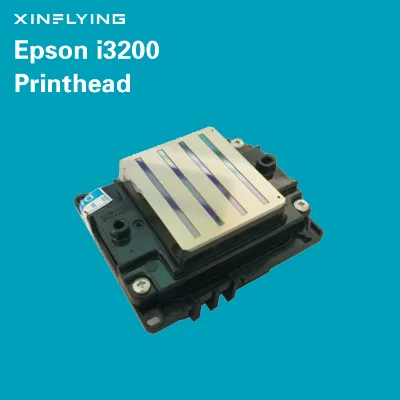
High Speed I3200 A1 Printhead Print Head for Textile and Garment Printing Applications
$899.00 - $1185.00
MOQ: 1 Pieces


New I3200 Water Based Printhead for Printing Machine Parts Sublimation Head
$1085.00 - $1395.00
MOQ: 1 Pieces







Comprehensive Sourcing Guide
Strategic Sourcing Guide for Industrial Printheads
Procuring thermal printheads requires a disciplined approach that balances technical compatibility with rigorous supplier verification. The market for these components is fragmented, ranging from generic replacements to specialized units designed for specific industrial printing architectures. Buyers must navigate a landscape where product attributes vary significantly between listings, often mixing specifications for different printer brands and models. This guide outlines the essential steps for sourcing printheads, focusing on the observable data points and verification protocols necessary to ensure operational continuity and cost efficiency.
Technical Specifications and Model Compatibility
The primary challenge in sourcing printheads lies in matching the exact technical specifications of the component to the host printing equipment. The product data indicates a wide array of model numbers, including A6+, GH Printhead for Bizerba, 100xi4, 368mt, Kd2004-Cg51, 9550, and HS-178. These identifiers are not interchangeable; a Printhead designed for a Zebra printer, for instance, will not function in a Man Roland or Heidelberg offset press without specific adaptation. Buyers must verify the "Product Name" and "Model Number" against the original equipment manufacturer (OEM) documentation before placing an order.
Resolution is another critical technical parameter. Observed data lists a resolution ratio of 203dpi, which is a common standard for thermal transfer applications. However, this figure is not universal across all listings. Some products are described simply as "Type 2: Barcode Printhead" or "Print Head" without explicit resolution metrics. When evaluating a supplier, the buyer must request the specific DPI (dots per inch) and the physical dimensions of the print area. The "prod_standard" field in the data shows varying weights, such as 0.145kg, 0.5KG, and 145g, which may indicate different internal densities or packaging standards rather than the Printhead weight itself. It is essential to distinguish between the component's mass and the shipping weight to avoid confusion in logistics planning.
Furthermore, the physical shape and material composition are vital for mechanical fit. Listings describe the shape as "Square" and the material as "Silicone," likely referring to the roller or sealing components associated with the Printhead assembly. The physical dimensions of the packaging, such as 20LX8WX3H cm, provide a baseline for storage but do not define the component's footprint. Buyers should insist on a detailed technical drawing or a photo of the actual component to verify pin configurations, connector types, and mounting holes.
Compliance and Certification Verification
In the industrial sector, compliance is not merely a formality but a prerequisite for safety and regulatory adherence. The available data highlights several certifications, including CE, ISO, and ISORoHS. While these are frequently listed, the consistency of their presence varies. Some entries list "CE,ISO,ISORoHS" together, while others show only "ISO,ISORoHS." This inconsistency suggests that certification status is not guaranteed for every unit in a batch or across all suppliers.
Buyers must treat these certifications as claims that require independent verification rather than inherent truths. The presence of "ISO 9001" or "ISO9001" in background notes indicates a quality management system, but it does not certify the specific product unit. The "RoHS" (Restriction of Hazardous Substances) compliance is particularly important for electronic components to ensure they do not contain restricted lead or other hazardous materials. When sourcing, the procurement team should request valid, up-to-date certification documents from the supplier. These documents should be traceable to the specific batch or model number being purchased.
Additionally, the "prod_standard" field sometimes lists values like "0.145kg" or "107mm," which do not represent recognized international standards. This reinforces the need to distinguish between proprietary product standards and globally recognized compliance marks. Buyers should verify if the supplier adheres to specific industry standards for thermal printheads, such as those defined by the Thermal Transfer Association, rather than relying solely on the generic "ISO" or "CE" labels found in product descriptions.
Cost Drivers and Pricing Structures
The pricing for printheads is highly variable, with observed ranges spanning from 5 USD to 1769 USD. This massive disparity is driven by several factors, including the complexity of the Printhead, the printer brand it serves, and the condition of the unit. A basic barcode Printhead for a general-purpose label printer may fall at the lower end of the spectrum, while a specialized unit for a high-speed industrial press like a Man Roland or Heidelberg could command a premium price.
The condition of the product is a significant cost driver. Listings explicitly distinguish between "New," "Original," and "New Original." "Original" units, which are genuine OEM parts, typically carry a higher price point due to guaranteed compatibility and longevity. "New" units may be refurbished or third-party replacements, which offer cost savings but may carry a higher risk of performance variance. The "Quality" attribute in the data claims "Excellent 100% Tested," but this is a subjective claim. Buyers should understand that the price difference often reflects the level of testing and the source of the component.
Another factor influencing cost is the Minimum Order Quantity (MOQ). The observed MOQ range is 1 to 2000 units. While some suppliers offer an MOQ of 1 PCS, allowing for small-scale testing or emergency replacements, others may require bulk purchases to unlock lower unit prices. The "Payment" terms, including D/P, T/T, and Paypal, also impact the effective cost, as different payment methods carry varying transaction fees and risk premiums for the seller. Buyers should negotiate based on their volume requirements and payment flexibility to optimize the total cost of ownership.
Typical Applications and Industry Use Cases
Printheads are integral to a diverse range of printing applications, from industrial offset printing to direct thermal labeling. The data indicates specific usage scenarios, such as "For Heidelberg Printer," "For Komori Printer," and "For Man Roland Printer." These references point to high-volume, high-speed offset printing environments where precision and durability are paramount. In these contexts, the Printhead must withstand continuous operation and maintain consistent ink transfer over long runs.
Conversely, other listings specify usage for "Zebra Printer" and "Tsc Printhead," which are commonly associated with industrial barcode labeling and logistics. These applications require high resolution and fast response times to ensure accurate tracking and inventory management. The "Resolution Ratio" of 203dpi is particularly relevant for these barcode applications, ensuring that small text and complex barcodes are rendered clearly.
The "Customization: Available" attribute suggests that suppliers can tailor printheads to specific needs, which is valuable for unique industrial setups. Buyers in the packaging, logistics, or manufacturing sectors should evaluate whether their specific workflow requires a standard off-the-shelf unit or a customized solution. The versatility of the product, indicated by the wide range of models and applications, allows for broad deployment across different industries, but it also necessitates careful selection to match the specific operational demands.
Supplier Evaluation and Reliability Metrics
Evaluating a supplier for Printhead procurement requires a focus on reliability, transparency, and service capabilities. The "Delivery Time" is a critical metric, with observed ranges of "Within 7-15 Working Days" and "Within 7~10 Working Days After Payment Received." These timelines can vary based on stock availability and the specific model requested. Buyers should clarify the exact lead time for their specific order to avoid production delays.
The "After Warranty Service" options, such as "3 Months" or "Online Support," provide insight into the supplier's confidence in their product. A longer warranty period often indicates a higher quality assurance process. The "QC: Strictly Tested Before Shipping" claim is a positive indicator, but it should be backed by a formal quality control report. Buyers should inquire about the specific testing protocols used, such as burn-in tests or resolution checks, to ensure the Printhead meets performance expectations.
Geographic origin is another factor to consider. The data lists "China" and "Zhejiangchina" as places of origin. While these regions are major manufacturing hubs, buyers should verify the specific factory location and the supplier's relationship with the manufacturing plant. The "Packing" methods, ranging from "Carton" to "Anti Static Bag+Bubble Bag+Foam Box+Carton Box," also reflect the supplier's attention to detail in protecting the delicate components during transit. A robust packing strategy is essential to prevent damage, especially for high-value units.
Quality Control and Long-Term Procurement Strategy
Ensuring consistent quality in Printhead procurement requires a proactive approach to quality control and long-term relationship management. The "Feature" attribute highlights "100% New, Accurate and Clear," but these claims must be validated through sample testing. Buyers should request a sample unit before committing to a large order to verify the resolution, print quality, and mechanical fit. The "Condition" of the product, whether "New" or "Original," should be explicitly confirmed in the purchase agreement to avoid receiving refurbished units at a premium price.
Long-term procurement strategies should focus on building relationships with suppliers who offer consistent quality and reliable support. The "Customization" availability suggests that suppliers can adapt to changing needs, which is valuable for businesses with evolving printing requirements. Buyers should also consider the total cost of ownership, including the cost of replacements, maintenance, and downtime. A Printhead that is slightly more expensive upfront but offers a longer lifespan and better performance can result in significant savings over time.
Finally, buyers should maintain a clear record of all procurement activities, including model numbers, certifications, and test results. This documentation is essential for troubleshooting and for ensuring compliance with internal and external quality standards. By adhering to a disciplined sourcing process and leveraging the available data points, buyers can secure high-quality printheads that meet their operational needs while minimizing risk and cost.
FAQs
What certifications are available for thermal printheads?
Available certifications include CE, ISO, and ISORoHS. These marks indicate compliance with safety and environmental standards, though buyers should verify specific documentation for each batch to ensure validity.
Which printer models are compatible with these printheads?
Compatible models include Heidelberg, Komori, Man Roland, Zebra, and Tsc printers. Buyers must match the specific model number, such as A6+ or 100xi4, to the original equipment manufacturer documentation before ordering.
Can I customize the packaging for bulk orders?
Customization is available for various packaging needs. Options range from neutral packing to anti-static bags with foam boxes, ensuring high guaranteed protection during transit for sensitive electronic components.
How long is the delivery time after payment?
Delivery typically occurs within 7 to 15 working days after payment is received. Specific timelines may vary between 7 to 10 days depending on stock availability and the specific model requested.
What is the minimum order quantity for these units?
The minimum order quantity starts at 1 piece for many listings. However, some suppliers may require up to 2000 units, so buyers should confirm the specific MOQ before placing an order.
What warranty service is provided for new printheads?
Warranty services include 3 months coverage or online support depending on the supplier. Buyers should confirm the specific warranty terms and testing protocols to ensure product reliability and longevity.