Source Printing Anti Set-Off Spray Powder for Offset, Web, and Sheet-Fed Presses
Find and compare 30 printing anti set-off spray powder options from Chinese manufacturers. Evaluate models like AV300 and SP500 for offset sheet-fed and web printing applications to prevent ink blocking and ensure proper drying.
Key considerations
Products List


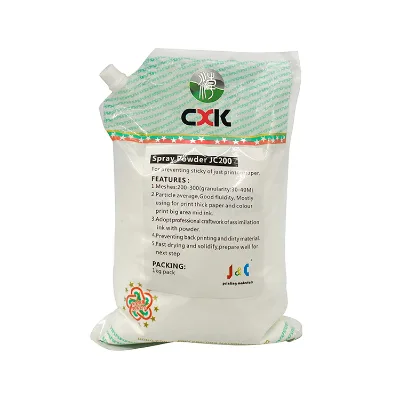
Comprehensive Sourcing Guide
Printing Anti Set-Off Spray Powder Sourcing Guide
Procuring printing anti set-off spray powder requires a precise understanding of the chemical and physical properties that prevent freshly printed sheets from sticking together during high-speed offset operations. The primary function of this material is to dry offset ink on paper while creating a microscopic barrier that stops ink set-off, a critical issue in sheet-fed and web printing applications. Buyers must recognize that while the core function remains consistent, the specific formulation varies significantly based on the intended particle size and the type of ink being used, necessitating a careful review of technical data sheets before placing orders.
The market offers a diverse range of product models and standards, from specific numerical grades like #500 and #800 to specialized formulations such as MP300 and AV series variants. These products are often derived from natural ingredients like corn flour and starch, which align with environmental features and oleophilic or lipophilic characteristics required for different printing substrates. Sourcing decisions should be driven by the specific application needs, such as preventing blocking in high-volume runs, rather than generic assumptions about performance, ensuring that the selected powder matches the exact requirements of the printing press and the ink chemistry involved.
Product Scope and Observed Listing Signals
When evaluating product listings, buyers should look for specific indicators of customization and packaging flexibility, as these are key differentiators in the current market. Available customization options allow for tailored solutions, while packaging formats vary widely from 1kg bags to larger 20kg cartons, with some suppliers offering 20 bags per carton or palletized delivery. The observed listing signals include a wide range of particle sizes, such as 10/10-25/25-35/30-50um or specific micron measurements like 20μ/23μ/25μ, which directly impact the powder's ability to penetrate ink layers without affecting print clarity.
The product scope extends to various model numbers and standards, including SP300, SP500, SP800, and UP500/Up800 types, each designed for specific operational contexts. Listings often highlight features like environmental compliance and the use of starch-based ingredients, which are crucial for sustainability goals in modern printing facilities. Buyers must verify that the listed application matches their specific needs, whether it is for offset sheet-fed printing, web printing, or general ink drying, as the wrong specification can lead to production delays or quality defects in the final printed output.
Technical Specifications to Verify
Verifying particle size distribution is the most critical technical step, as the size of the powder particles determines how effectively they prevent ink set-off without interfering with the printing process. Specifications such as 10/10-25/25-35/30-50um or fixed sizes like 20μ/23μ/25μ must be matched to the specific ink viscosity and drying time of the press. Buyers should request detailed particle size analysis reports to ensure the powder will not clog nozzles or create a hazy finish on the printed surface, as these physical properties are non-negotiable for high-quality offset printing.
In addition to particle size, the chemical composition and functional attributes like lipophilic or hydrophilic properties must be confirmed to ensure compatibility with the specific ink and substrate being used. The product standard, which may range from 200 to 1000 or include specific codes like AV 300/500/800/1000, indicates the intended performance level and application method. Buyers should also check the product model, such as CHEMMAC or Pure SP, to understand the specific formulation, and verify that the material, often corn flour or starch, meets the environmental and safety requirements of their facility.
Compliance and Safety Documentation
Safety documentation is paramount when sourcing chemical products like anti set-off spray powder, as the material is applied directly in the printing environment where operator exposure is a concern. While specific certification statuses like ISO 13485 are not universally applicable to this category, buyers must ensure that suppliers provide Material Safety Data Sheets (MSDS) that detail the handling, storage, and disposal of the product. The ingredient list, which typically includes starch or corn flour, should be clearly documented to confirm that the product is free from harmful additives and aligns with the environmental features claimed by the manufacturer.
Regulatory compliance extends to the origin of the product, with many listings indicating origins in China, including specific regions like Changsha, Hunan, Guangdong, and Shanghai. Buyers should verify that the supplier adheres to local and international safety standards relevant to the destination market, ensuring that the product meets all import and handling regulations. The environmental feature of the product, often highlighted in listings, should be backed by verifiable data regarding the biodegradability or non-toxic nature of the starch-based ingredients, which is increasingly important for facilities aiming to reduce their environmental footprint.
Cost Drivers and Commercial Terms
The cost of printing anti set-off spray powder is influenced by several factors, including the complexity of the particle size distribution, the level of customization required, and the packaging format selected. Listings show a wide price range, and buyers should be aware that specialized models like MP300 or AV series variants may carry different cost structures compared to standard grades. The packaging, whether it is 1kg/bag, 20kg/carton, or palletized, also impacts the final cost, as larger bulk quantities often offer economies of scale but require more storage space and handling equipment.
Commercial terms such as Minimum Order Quantity (MOQ) and lead times are critical variables that can affect procurement planning, with observed MOQs ranging from 1 to 20,000 units. Buyers must negotiate these terms carefully, as high MOQs may be necessary for custom formulations or specific model numbers, while lower MOQs might be available for standard stock items. The origin of the product, whether from Changsha, Hunan, or other regions in China, can also influence shipping costs and lead times, making it essential to factor in logistics when calculating the total cost of ownership for the spray powder.
Supplier Qualification and Quality Control
Supplier qualification should focus on the ability to consistently deliver products that meet the specified technical standards, such as the 200, 300, 500, 800, or 1000 grades observed in the market. Buyers must verify that the supplier has a robust quality control process in place to ensure that the particle size, color, and ingredient composition remain consistent across batches. The presence of specific product models like SP300/SP500/SP800 or UP500/Up800 suggests a range of capabilities, and suppliers should be able to demonstrate their capacity to produce these variations with high precision and reliability.
Quality control also involves verifying the packaging integrity, as the product is often supplied in 1kg bags or 20kg cartons that must remain sealed to prevent moisture absorption and clumping. Buyers should request samples to test the product's performance in their specific printing environment, ensuring that it effectively prevents blocking and ink set-off without causing other issues. The supplier's location, whether in Guangdong, Shanghai, or Hunan, should be considered in the context of their logistical capabilities and their ability to support the buyer with timely deliveries and responsive customer service.
Long-Term Procurement Checks
Establishing a long-term procurement strategy requires regular audits of the supplier's ability to maintain product consistency and meet evolving market demands. Buyers should implement a schedule for periodic testing of the spray powder to ensure that the particle size and chemical properties have not drifted from the original specifications, which could lead to production issues over time. The customization options available, such as specific packing formats or model variations, should be reviewed annually to ensure they still align with the buyer's operational needs and production volumes.
Sustainability and environmental compliance should be a continuous focus, as the industry moves towards more eco-friendly solutions. Buyers should monitor the supplier's progress in maintaining the environmental features of the product, such as the use of starch-based ingredients, and ensure that any changes in formulation do not compromise safety or performance. By maintaining a close relationship with the supplier and conducting regular reviews of the product's performance and compliance, buyers can secure a reliable supply chain that supports their long-term printing operations and quality standards.
FAQs
What is the primary function of printing anti set-off spray powder?
The primary function is to prevent freshly printed sheets from sticking to each other. It is specifically designed to dry offset ink on paper and prevent blocking and ink set-off during the printing process.
Which models are available for this printing spray powder product?
Available models include #500, #800, #1000, MP300, UP500, SP500, SP800, and AV300/500/800/1000. These models correspond to different standards such as 200, 300, 500, 800, and 1000 for various printing applications.
Can the product packaging be customized for bulk orders?
Yes, the product packaging is customizable with options like 1kg per bag and 20 bags per carton. Some variants also offer 20kg per carton box or pallet packaging to suit different logistical needs.
What are the key features of this anti-set-off spray powder?
Key features include being environmental, oleophilic, and having lipophilic or hydrophilic properties. The product is made from corn flour and starch, appearing as a white powder suitable for offset sheet-fed and web printing.
Where is this printing spray powder manufactured and sourced from?
The product originates from China, with specific locations including Changsha, Hunan, and Guangdong. Some sources are also located in Shanghai, ensuring diverse supply chains for international buyers.
What particle sizes are available for this spray powder?
Particle sizes range from 10/10 to 25/25, 35/30, and 50 micrometers. Specific models like UP500 offer sizes of 20, 23, and 25 micrometers to ensure optimal performance in different printing scenarios.