Source Programmable Stepper Motor Controller for Automation
Find and compare 30 Programmable Stepper Motor Controller options from China. Evaluate models like CM40L-40 and STD3522M for automatic control, protection, and measurement tasks in industrial applications, ensuring reliable performance for your specific automation needs; compare the available evidence and request quotations based on your requirements.
Updated
Key considerations
Products List




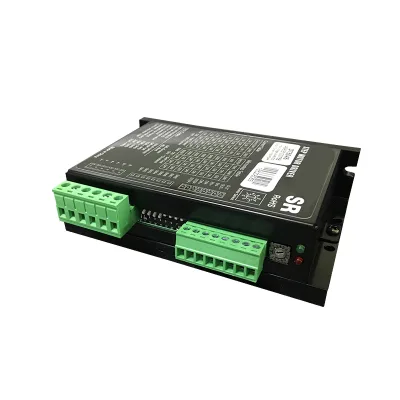
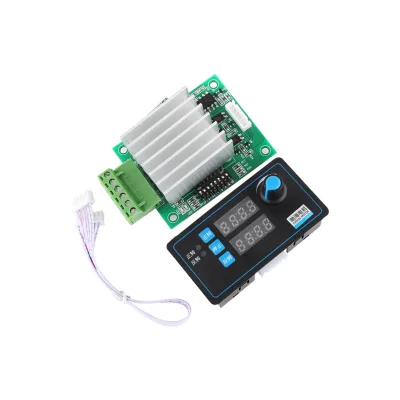


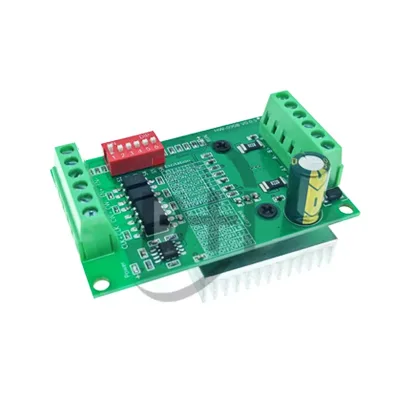
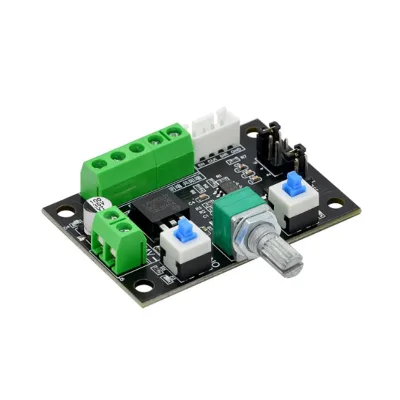
Comprehensive Sourcing Guide
Programmable Stepper Motor Controller Sourcing Guide
Procuring programmable stepper motor controllers requires a disciplined approach to aligning technical capabilities with specific automation tasks. Buyers must first distinguish between basic drivers and advanced controllers that offer automatic control, protection, and measurement functions. The market offers units ranging from simple 2-phase stepper drivers to complex systems capable of continuous signal processing and high-resolution step generation. Understanding these distinctions is critical for selecting hardware that matches the mechanical load and control precision required by the end application.
Verification of core specifications ensures the selected unit integrates seamlessly into existing industrial infrastructure. Key attributes to evaluate include voltage ranges, output current limits, and response frequencies, which directly impact system stability and performance. For instance, some observed models support AC110V-230V inputs with output currents between 1.2A and 7.0A, while others operate on lower DC voltages like 24V or 48V. Buyers should cross-reference these electrical parameters with their power supply capabilities and motor requirements to prevent incompatibility issues during installation and operation.
Product Scope and Observed Listing Signals
The current market landscape for programmable stepper motor controllers reveals a diverse array of product configurations and operational states. Listings indicate the presence of both new and used units, suggesting a secondary market for refurbished components that may offer cost savings for non-critical applications. Products are often described with specific model numbers such as CM40L-40, ZD-2HE2270MH, and STD3522M, each implying distinct feature sets and compatibility profiles. Buyers should carefully review these identifiers to ensure the hardware meets the precise mathematical model and structural requirements of their automation systems.
Customization availability varies significantly across suppliers, with some offering tailored solutions while others provide standardized, non-customized items. The observed product attributes highlight features like automatic control, photoelectric isolation for signal input/output, and mass resolution capabilities up to 40,000 steps per revolution. These specifications suggest that the scope includes high-precision positioning tasks where signal continuity and rapid response frequencies, such as 500kpps, are essential. Procurement teams must assess whether off-the-shelf models suffice or if custom engineering is necessary to meet unique operational demands.
Technical Specifications to Verify
Electrical compatibility is the primary technical hurdle in sourcing stepper motor controllers, requiring strict adherence to voltage and current ratings. Buyers must verify that the controller’s input voltage range, whether AC110V-230V or DC24V-60V, matches their facility’s power distribution network. Additionally, the output current capacity, observed in ranges from 2A to 7.0A, must be sufficient to drive the connected stepper motor without overheating or stalling. Mismatches in these electrical parameters can lead to immediate hardware failure or degraded performance, making precise verification a non-negotiable step in the selection process.
Performance metrics such as response frequency, resolution, and signal handling capabilities determine the controller’s suitability for dynamic applications. High-frequency response, potentially up to 500kpps, is vital for applications requiring rapid acceleration and deceleration cycles. Furthermore, features like automatic reduction of steps after halting for over 100ms indicate sophisticated internal logic that can enhance system reliability. Buyers should also confirm the driver type, such as 2-phase stepper drivers, and ensure that the controller supports the specific signal types, like continuous signals, required by their motion control algorithms.
Compliance and Safety Documentation
Certification status is a critical factor in ensuring that purchased controllers meet international safety and electromagnetic compatibility standards. The presence of CE certification on some observed products indicates adherence to European health, safety, and environmental protection standards, which is often a prerequisite for deployment in regulated markets. Buyers should request valid certification documents from suppliers to verify that the specific model batch has undergone rigorous testing for electrical safety and emissions. Relying on products without proper certification can expose organizations to regulatory penalties and operational risks in industrial environments.
Beyond formal certifications, documentation regarding material composition and structural integrity provides additional assurance of product quality. Stainless steel construction in some components suggests durability and resistance to corrosion, which is beneficial in harsh industrial settings. Buyers should also inquire about the quality guarantee period, with observed terms offering a 1-year warranty, to understand the supplier’s confidence in their product’s longevity. Clear documentation of these compliance and safety aspects helps mitigate liability and ensures that the procurement aligns with corporate sustainability and safety policies.
Cost Drivers and Commercial Terms
Pricing in the Programmable Stepper Motor Controller market exhibits a wide variance, influenced by factors such as customization, condition, and technical complexity. Observed price ranges span from low-cost basic units to premium models with advanced features, reflecting the diverse value propositions available to buyers. The minimum order quantity (MOQ) typically ranges from 1 to 10 units, offering flexibility for small-scale prototyping or larger production runs. Buyers should analyze the total cost of ownership, including potential savings from bulk discounts or the higher initial cost of customized solutions that reduce long-term integration expenses.
Commercial terms such as supply ability and packaging standards also impact the overall procurement strategy. Suppliers with high supply abilities, such as 50,000 cases per month, can support large-scale deployments with consistent lead times. Packaging details, including polyfoam and cardboard carton protection, are essential for preventing damage during transit, especially for sensitive electronic components. Buyers should negotiate clear terms regarding shipping, insurance, and return policies to protect their investment and ensure that the delivered goods arrive in pristine condition, ready for immediate installation.
Supplier Qualification and Quality Control
Evaluating supplier reliability is paramount when sourcing programmable stepper motor controllers, particularly given the mix of new and used products in the market. Buyers should prioritize suppliers with verifiable origins in established manufacturing hubs like Beijing or Shanghai, China, where industrial automation components are commonly produced. Requesting detailed product descriptions, including brand names and specific model numbers, helps in assessing the supplier’s transparency and expertise. A supplier’s ability to provide comprehensive technical documentation and responsive customer support is a strong indicator of their long-term viability as a procurement partner.
Quality control processes should be rigorously assessed to ensure that delivered units meet specified performance criteria. Buyers should inquire about testing procedures, such as functional checks for signal isolation and current output stability, before shipment. For customized orders, verifying the supplier’s engineering capabilities and past project success stories can provide confidence in the final product’s performance. Establishing a clear quality assurance protocol, including acceptance criteria and rejection procedures, helps maintain high standards and minimizes the risk of receiving defective or non-compliant hardware.
Long-Term Procurement Checks
Sustainability and lifecycle management are increasingly important considerations in the procurement of industrial automation components. Buyers should assess the availability of spare parts and technical support for the selected controllers to ensure long-term operational continuity. Products with a 1-year quality guarantee offer a baseline for reliability, but buyers should also consider the supplier’s policy for extended warranties or maintenance contracts. Proactive planning for component replacement and upgrades can prevent unexpected downtime and reduce the total cost of ownership over the equipment’s lifespan.
Continuous monitoring of market trends and technological advancements is essential for staying competitive in automation. As stepper motor technology evolves, newer models may offer improved efficiency, higher resolution, or enhanced connectivity features. Buyers should maintain a flexible procurement strategy that allows for the integration of newer technologies as they become available. Regularly reviewing supplier performance and product feedback can help identify opportunities for optimization and ensure that the procurement process remains aligned with evolving business needs and technological capabilities.
FAQs
What certification does the Programmable Stepper Motor Controller have?
The Programmable Stepper Motor Controller carries CE certification as a standard attribute. This ensures compliance with essential safety and performance requirements for the product. Buyers should verify specific model details to confirm this certification applies to their selected unit before placing an order.
Can the Programmable Stepper Motor Controller be customized for specific needs?
Customization is available for the Programmable Stepper Motor Controller to meet unique requirements. Some models offer customized options while others are non-customized. Buyers must check the specific product listing to determine if the desired customization level is supported for their application needs.
Which material is used to construct the Programmable Stepper Motor Controller?
Stainless steel is the primary material used to construct the Programmable Stepper Motor Controller. This material choice ensures durability and resistance to corrosion in various industrial environments. The robust construction supports long-term reliability for continuous operation in demanding automation tasks.
How does the Programmable Stepper Motor Controller handle signal input?
The Programmable Stepper Motor Controller utilizes photoelectric isolation for signal input and output. This design protects internal components from electrical noise and potential damage. It ensures stable communication between the controller and connected devices during high-frequency operation up to 500kpps.
What is the voltage range for the Programmable Stepper Motor Controller?
The Programmable Stepper Motor Controller operates within an AC voltage range of 110V to 230V. Some specific models may support 48V or 60V DC inputs. Users must match the power supply to the rated voltage specifications of the selected unit to ensure safe and efficient operation.
What is the quality guarantee period for the Programmable Stepper Motor Controller?
A one-year quality guarantee is provided for the Programmable Stepper Motor Controller. This warranty covers defects in materials and workmanship under normal usage conditions. Buyers should retain proof of purchase to validate their claim if any issues arise within the specified guarantee period.
Which driver type is integrated into the Programmable Stepper Motor Controller?
The Programmable Stepper Motor Controller integrates a 2-phase stepper driver type. This configuration allows for precise control of stepper motor movements. The driver supports output currents ranging from 1.2A to 7.0A depending on the specific model selected by the buyer.