Source Quick Dry Woven Surfing Shorts for beach, travel, and sports
Find 30 listings for Quick Dry Woven Surfing Shorts with features like breathable fabric and anti-wrinkle properties. Buyers can compare customization options, MOQs ranging from 10 to 1000 pieces, and lead times from 7 to 90 days across various models and materials.
Key considerations
Products List


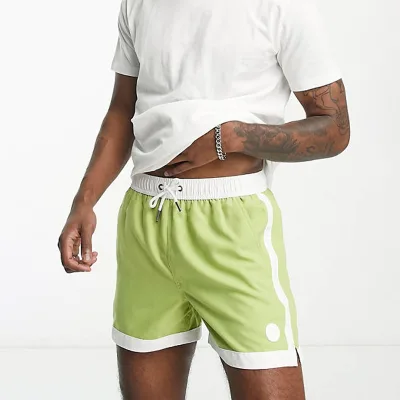
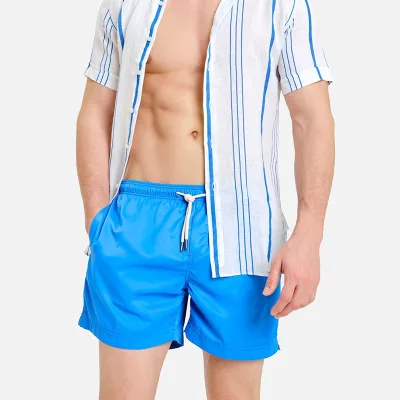


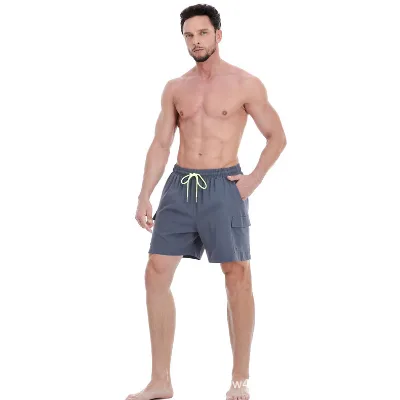
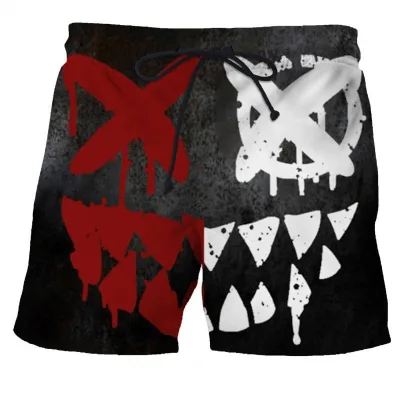


Comprehensive Sourcing Guide
Strategic Sourcing Guide for Quick Dry Woven Surfing Shorts
The global market for Quick Dry Woven Surfing Shorts has evolved into a sophisticated segment where performance engineering meets aesthetic versatility. For B2B procurement professionals, sourcing these garments requires a nuanced understanding of material science, supply chain logistics, and quality assurance protocols. The core keyword "Quick Dry Woven Surfing Shorts" implies a specific set of functional requirements: rapid moisture evaporation, durability against saltwater and UV exposure, and a woven construction that offers structural integrity superior to knits. This guide synthesizes available market data and technical observations to provide a disciplined framework for evaluating potential suppliers and products.
Technical Specifications and Material Composition
The foundation of any high-performance surfing short lies in its material composition and weave structure. Based on observed product attributes in the current market, the primary materials utilized for this category are Polyester and Nylon. Polyester is frequently cited for its durability and resistance to shrinking, while Nylon offers superior softness and a higher degree of elasticity, which is critical for the dynamic movements required in surfing. The "woven" designation indicates a tight interlacing of threads that prevents the fabric from stretching excessively, maintaining the garment's shape even when saturated with water.
A critical technical differentiator is the "Quick Dry" feature. This is not merely a marketing term but a measurable property of the fabric's hydrophobic nature and weave density. Products in this sector often list "Quick Dry" alongside other performance attributes such as "Breathable," "Anti-wrinkle," and "Sustainable." The presence of "Anti-UV" protection is another vital specification for beachwear, ensuring that the fabric blocks harmful solar radiation. Buyers must verify that the fabric weight and thread count align with the intended use; for instance, a "Normal" thickness specification suggests a balance between durability and comfort, suitable for both active surfing and casual leisure wear.
The construction details further define the product's utility. Observed specifications include "Side pockets," which are essential for securing small items during water activities. The "Drawstring belt" waist design is a standard feature, providing an adjustable fit that accommodates varying body types and ensures the shorts stay in place during vigorous movement. Additionally, the "Straight" trouser leg style is prevalent, offering a classic silhouette that transitions well from the beach to casual urban environments. The "Loose" fit model is particularly noted, as it allows for greater freedom of movement and faster drying times compared to tighter fits.
Design Variations and Customization Capabilities
The aesthetic landscape of Quick Dry Woven Surfing Shorts is diverse, catering to a wide range of consumer preferences. Market observations reveal a spectrum of patterns, ranging from "Pure Colour" and "Solid" designs to complex "Patterned" and "Logo" prints. This variety allows brands to differentiate their offerings through visual identity. The "Patterned" category often includes vibrant, ocean-inspired motifs, while "Solid" options provide a minimalist, versatile look suitable for layering or team uniforms.
Customization is a pivotal aspect of the sourcing process for B2B buyers. The majority of suppliers in this sector offer extensive customization options, including "Customized" logos and "Accept Custom" branding services. This flexibility is often supported by "OEM & ODM" (Original Equipment Manufacturer and Original Design Manufacturer) service models. Buyers can leverage these services to create unique designs, select specific color palettes, and incorporate proprietary branding elements. The "Sample Time" for these customizations typically ranges from 7 to 10 days, allowing for a relatively agile response to market trends. However, the "Lead Time" for full production orders is significantly longer, often spanning 70 to 90 days, which necessitates advanced planning and inventory management.
Compliance, Standards, and Packaging Protocols
Ensuring that sourced products meet international standards and safety requirements is a non-negotiable step in the procurement workflow. While specific certification bodies are not universally mandated for all regions, buyers must verify that the products adhere to relevant textile safety standards. The "prod_standard" field in product listings often contains dimensional or weight specifications, such as "204040cm" or "50405cm," which refer to packaging dimensions rather than product compliance. Similarly, weight standards like "0.2kg" indicate the unit weight, which is crucial for calculating shipping costs and logistics efficiency.
Packaging plays a significant role in protecting the product during transit and presenting it attractively to the end consumer. Common packaging methods observed include "Box" packaging for premium retail presentation and "Polybag" or "1 Piece/1 Plastic Bag" for cost-effective bulk shipping. The choice of packaging often depends on the order volume and the specific requirements of the retail channel. For instance, a "Box" might be reserved for high-end boutique orders, while "Polybag" is standard for large-scale distribution. Buyers should also consider the sustainability of packaging materials, aligning with the "Sustainable" features often highlighted in the fabric itself.
Cost Drivers and Economic Considerations
The pricing of Quick Dry Woven Surfing Shorts is influenced by a complex interplay of factors, including material costs, customization complexity, order volume, and logistics. The observed price range in the market spans from $0.50 to $16.50 USD, reflecting the vast diversity in product quality, brand positioning, and feature sets. Lower-priced items typically utilize standard materials and minimal customization, while higher-priced items may incorporate advanced fabric technologies, intricate patterns, or premium packaging.
The Minimum Order Quantity (MOQ) is another critical economic factor. Market data indicates an MOQ range of 10 to 1000 pieces. A lower MOQ of 10 pieces might be suitable for testing new designs or small boutique orders, whereas an MOQ of 1000 pieces is typical for established brands seeking economies of scale. The "MOQ: 1000 PCS" specification is a common threshold for suppliers offering full customization services. Buyers must balance the desire for lower unit costs against the risk of overstocking. Understanding the relationship between volume and price is essential for negotiating favorable terms and maintaining healthy profit margins.
Supplier Evaluation and Geographic Origins
Selecting the right supplier requires a thorough evaluation of their capabilities, location, and track record. The primary production hubs for these garments are located in China, with specific cities like Fuzhou emerging as key manufacturing centers. Fuzhou is known for its established textile industry and expertise in producing high-quality synthetic fabrics. When evaluating suppliers, buyers should verify the "prod_origin" to ensure transparency and assess the logistical implications of shipping from that region.
Supplier capabilities extend beyond manufacturing to include service models like "OEM & ODM." A supplier offering these services demonstrates the ability to adapt to specific client needs, from design development to final production. Buyers should assess the supplier's capacity to handle the "Lead Time" of 70-90 days, ensuring they have the infrastructure to meet deadlines without compromising quality. Additionally, the availability of "Sample Time" within 7-10 days is a strong indicator of a responsive and agile supply chain. It is crucial to avoid suppliers who cannot provide clear documentation regarding their production processes or who make unverifiable claims about their capabilities.
Quality Control and Long-Term Procurement Strategy
Implementing a robust quality control (QC) strategy is essential to mitigate risks associated with mass production. Given the functional nature of surfing shorts, QC should focus on verifying the "Quick Dry" performance, the integrity of the "Drawstring belt," and the durability of the "Side pockets." Buyers should request pre-shipment inspections to ensure that the "Pattern," "Logo," and "Fabric" match the approved samples. The "Feature" list, which includes "Anti-wrinkle" and "Breathable," should be validated through independent testing or supplier-provided test reports.
For long-term procurement, building a strategic partnership with suppliers is more beneficial than transactional relationships. This involves maintaining open communication regarding market trends, material innovations, and production schedules. Buyers should consider the "Age Group" and "Gender" specifications of the products, ensuring that the supplier can produce items suitable for "Children," "Unisex," or specific adult demographics. The "Season" attribute, particularly "Summer," highlights the cyclical nature of demand, requiring buyers to plan production cycles well in advance to capture peak market periods.
Comparative Analysis of Product Attributes
To facilitate decision-making, the following table summarizes key attributes observed in the market for Quick Dry Woven Surfing Shorts. This comparison helps buyers identify products that align with their specific operational and strategic goals.
| Attribute Category | Observed Specifications | Strategic Implication |
|---|---|---|
| Material | Polyester, Nylon | Determines durability, softness, and drying speed. |
| Fabric Features | Quick Dry, Breathable, Anti-UV, Anti-wrinkle | Critical for performance and consumer satisfaction. |
| Design | Patterned, Solid, Pure Colour, Logo | Affects brand identity and market appeal. |
| Fit & Style | Loose, Straight Leg, Drawstring Belt | Influences comfort and suitability for surfing. |
| Packaging | Box, Polybag, 1 Piece/Plastic Bag | Impacts shipping costs and retail presentation. |
| Customization | OEM/ODM, Custom Logo, Accept Custom | Enables brand differentiation and product uniqueness. |
| Production | Lead Time 70-90 Days, Sample 7-10 Days | Requires advanced planning and inventory management. |
| MOQ | 10 to 1000 PCS | Dictates order volume and financial risk. |
| Origin | China, Fuzhou | Influences logistics, tariffs, and supply chain reliability. |
Conclusion
Sourcing Quick Dry Woven Surfing Shorts is a multifaceted process that demands a deep understanding of technical specifications, market dynamics, and supply chain logistics. By focusing on material quality, customization capabilities, and rigorous quality control, buyers can secure products that meet the high standards of the modern consumer. The observed data highlights a market rich in variety, from the functional "Quick Dry" properties of Polyester and Nylon to the aesthetic flexibility of "Patterned" and "Solid" designs. Successful procurement relies on strategic planning, clear communication with suppliers, and a commitment to verifying all claims against tangible evidence. As the market continues to evolve, staying informed about the latest standards and production capabilities will remain essential for maintaining a competitive edge in the global apparel industry.
FAQs
What materials are used for Quick Dry Woven Surfing Shorts?
These shorts are primarily made from Polyester or Nylon. Polyester offers durability and shrink resistance, while Nylon provides superior softness and elasticity for dynamic movements required in surfing.
Can I customize the logo on these surfing shorts?
Yes, customization is available with options for customized logos and accept custom branding. Suppliers typically offer OEM and ODM services to create unique designs for your brand identity.
What is the typical lead time for production orders?
The standard lead time for full production orders spans 70 to 90 days. This duration requires advanced planning and inventory management to ensure timely delivery of your bulk orders.
How much is the minimum order quantity for these shorts?
The minimum order quantity ranges from 10 to 1000 pieces depending on the supplier. An MOQ of 1000 pieces is common for full customization services, while lower volumes suit testing new designs.
Which features ensure the shorts are suitable for beach activities?
Key features include quick dry, breathable, anti-wrinkle, and anti-UV properties. These attributes ensure rapid moisture evaporation and protection against harmful solar radiation during water activities.
Where are these products typically manufactured?
The primary production hubs are located in China, with specific cities like Fuzhou emerging as key manufacturing centers. Buyers should verify the origin to assess logistical implications and supply chain reliability.
What packaging options are available for bulk shipping?
Common packaging methods include box packaging for premium retail and polybag or plastic bag for cost-effective bulk shipping. The choice depends on order volume and specific retail channel requirements.