Source Real Leather Double Bed for Bedroom Hotel School
Find 30 listings for Real Leather Double Bed options including modern and simple styles with varying materials like metal and wood. Compare specifications, prices, and customization features from verified suppliers for bedroom, school, or hotel projects.
Key considerations
Products List


Home Furniture Beds Bedroom Double Bed King Size Bed with Genuine Leather
$100.00 - $800.00
MOQ: 5 Pieces


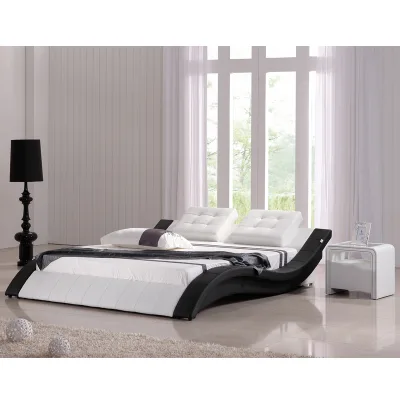
European Style Leather Comfortable Bed with High Backrest for Bedroom
$190.00 - $280.00
MOQ: 50 Pieces


Comprehensive Sourcing Guide
Strategic Sourcing Guide for Real Leather Double Beds
Understanding Product Definitions and Core Specifications
When initiating a procurement strategy for a Real Leather Double Bed, the first step is to rigorously define the product parameters based on the specific attributes observed in the market. The core keyword "Real Leather Double Bed" implies a specific material composition and size classification that must be verified against supplier listings. In the current supply landscape, materials for this category range from genuine leather to PU (polyurethane) leather, a distinction that significantly impacts cost, durability, and aesthetic appeal. Buyers must confirm whether the supplier provides "Genuine Leather" or "Leather" as a general category, as the latter can sometimes encompass synthetic blends.
The size specification is equally critical. Market data indicates that "Double" is a standard classification, often paired with specific dimensional standards such as 1500x2000mm or similar metric variations. However, some listings suggest "Customized" sizes, meaning the standard dimensions may not apply universally. The frame structure is another key variable; observed products include "Flat Bed" styles with "Square" or "Round" shapes, and some units are designed as "Knock Down" (KD) for efficient shipping. The structural integrity is often supported by a "Metal" frame or a combination of wood and metal, with a stated loading capacity that can exceed 150kg or 200kg depending on the model.
Buyers should also note the presence or absence of additional features. Some units are listed as "Without Wardrobe" and "Without Bookcase," focusing purely on the bed frame and headboard. The headboard itself may feature "Modern" or "Simple" styling, often upholstered in leather or fabric. The color palette is diverse, ranging from standard greys, blacks, and whites to silver, blue, and green options. A critical technical observation is the adjustability of the bed; while some models are "Unadjustable," others offer "Height Adjustable" features, which requires careful verification of the mechanical components.
Compliance and Certification Verification
Ensuring that a Real Leather Double Bed meets international safety and quality standards is a non-negotiable aspect of B2B procurement. The supply chain for bedroom furniture is heavily regulated regarding hazardous substances and structural safety. Buyers must explicitly request documentation for specific certifications rather than relying on general marketing claims.
One of the most prominent standards observed in this sector is EN747, which relates to the safety of bunk beds and related furniture. While this standard is often associated with bunk beds, its presence in a supplier's portfolio indicates a commitment to structural safety testing. Additionally, compliance with standards for hazardous substances testing, such as EN standards, is essential to ensure the leather and finishing materials do not contain harmful chemicals. The term "Quality Powder Coating" is frequently mentioned in product descriptions, suggesting a specific finishing process for metal components that must be verified for thickness and adhesion.
Certification status should be treated as a verification point rather than a guaranteed attribute of every listing. For instance, while some products may list "ISO" certification, the specific standard (e.g., ISO 9001 for quality management) must be confirmed. Buyers should also inquire about the "Standard for Hazardous Substances Test" to ensure the leather treatment and adhesives used in the bed frame comply with regional regulations, particularly in the European Union and North America. The "En747" certificate mentioned in the data serves as a high-confidence reference point for structural integrity, but it should be cross-referenced with the specific model number, such as SOB-1057 or ES-SOB2041, to ensure the certification applies to the exact unit being purchased.
Cost Drivers and Pricing Dynamics
The pricing structure for real leather double beds is influenced by a complex interplay of material costs, manufacturing complexity, and logistical factors. The observed price range in the market spans from $35 to $1,500 USD, a variance that reflects the difference between basic metal frames with synthetic upholstery and high-end genuine leather beds with custom woodwork. The primary cost driver is the material grade; "Genuine Leather" commands a significantly higher price point than "PU" or generic "Leather" alternatives.
Minimum Order Quantity (MOQ) is another critical factor affecting the unit cost. The market data shows an MOQ range of 1 to 50 units. Suppliers offering an MOQ of 1 are typically targeting sample orders or small boutique retailers, often at a premium per-unit price. Conversely, suppliers requiring an MOQ of 50 may offer more competitive pricing, reflecting economies of scale in production and shipping. The "Customized" nature of many beds also introduces variable costs. Custom dimensions, specific color requests (e.g., Blue, Green, Silver), and tailored headboard designs can increase the base price and extend the production timeline.
Logistics play a substantial role in the final landed cost. The "Knock Down Packing" method, which utilizes plastic bags or cartons, is designed to minimize volume and reduce shipping expenses. However, the "Loading Capacity" of the shipping container, which can exceed 150kg or 200kg, must be optimized to maximize the number of units per shipment. Buyers should also consider the "Delivery Time," which typically ranges from 25 to 30 days, and the "Sample Time," which is often 5-7 days. These lead times impact cash flow and inventory planning, adding an indirect cost to the procurement process.
Typical Applications and Market Segmentation
Real leather double beds serve a diverse range of applications, from residential bedrooms to commercial hospitality environments. The product attributes indicate suitability for "Bedroom, School, Hotel etc." This broad applicability suggests that the design must balance aesthetic appeal with durability and ease of maintenance. In a hotel setting, the bed must withstand frequent use and cleaning, making the "Washable" or "Non-washable" nature of the upholstery a critical consideration. Most observed listings indicate "Non-washable" surfaces, which implies that the leather requires specific care protocols to maintain its appearance over time.
The "Style" of the bed is another determinant of its application. "Modern" and "Simple" styles are versatile and fit well in contemporary hotel rooms, corporate housing, and modern residential interiors. The "Square" or "Round" shape of the bed frame can influence the room layout and furniture arrangement. For schools or dormitories, the "Height Adjustable" feature might be less relevant, but the "Loading Capacity" and structural robustness become paramount. The "Adult" suitability is a standard classification, ensuring the bed meets the weight and size requirements of the primary user demographic.
Supplier Evaluation and Operational Capabilities
Evaluating a supplier for real leather double beds requires a deep dive into their operational capabilities and track record. The "prod_origin" is listed as China, which is a major manufacturing hub for furniture, but buyers must verify the specific factory location and production capacity. The "Customization" availability is a key differentiator; suppliers offering "Customized" sizes and colors provide greater flexibility for buyers with specific design requirements. However, this customization must be balanced against the "Sample Time" and "Delivery Time" to ensure it aligns with project deadlines.
The "Condition" of the product is consistently listed as "New," which is standard for B2B transactions, but buyers should verify the condition of the packaging and the "Packing" method. "Plastic Bags or Carton" and "Knock Down Packing" are common, but the quality of these materials affects the risk of damage during transit. The "Warranty" period, observed as 5 years in some listings, is a strong indicator of supplier confidence in product quality. Buyers should scrutinize the terms of this warranty, including coverage for structural defects versus wear and tear on the leather upholstery.
Supplier reliability is also gauged by their ability to meet "Standard" specifications. The "prod_standard" of 1500x2000mm or similar dimensions must be adhered to strictly. Deviations in size can lead to compatibility issues with existing bedding and room layouts. The "Shape" of the bed, whether "Square" or "Round," must be consistent across the order to maintain visual uniformity in large deployments.
Quality Control and Long-Term Procurement Strategy
Implementing a robust quality control (QC) strategy is essential for mitigating risks associated with sourcing real leather double beds. Given the variability in leather quality and the complexity of the assembly, buyers should establish clear acceptance criteria before production begins. This includes verifying the "Material" composition to ensure it matches the "Genuine Leather" claim. Visual inspections should focus on the "Painting" quality, specifically the "Quality Powder Coating" on metal frames, to check for consistency and durability.
Long-term procurement considerations involve building a relationship with suppliers who can provide consistent quality over time. The "5 Years" warranty suggests a long-term commitment, but buyers should ensure that the supplier has the capacity to honor this warranty in the event of future claims. The "Used for" applications, such as hotels and schools, imply a need for high turnover and durability. Therefore, the "Folded" or "Unfolded" state of the bed during shipping and storage must be managed carefully to prevent structural deformation.
Buyers should also consider the environmental and ethical implications of sourcing leather. While not explicitly detailed in the product attributes, the "Standard for Hazardous Substances Test" implies a focus on safety, which often correlates with broader sustainability practices. Regular audits of the supplier's production process can help ensure that the "Customization" and "Style" requirements are met without compromising on quality or safety standards.
Comparative Analysis of Product Attributes
To facilitate decision-making, the following table summarizes the key attributes observed in the market for real leather double beds. This comparison highlights the variability in specifications and helps buyers identify the most suitable options for their specific needs.
| Attribute Category | Observed Variations | Key Verification Points |
|---|---|---|
| Material | Genuine Leather, Leather, PU, Metal | Confirm "Genuine Leather" vs. synthetic blends; verify metal frame grade. |
| Size & Standard | Double, Single, Customized, 1500x2000mm | Match "Double" size to room dimensions; verify custom tolerance levels. |
| Style & Shape | Modern, Simple, Square, Round | Ensure style matches interior design; check shape compatibility with layout. |
| Adjustability | Adjustable, Unadjustable | Verify mechanical components for height adjustment if required. |
| Packing | Knock Down, Plastic Bags, Carton | Assess packaging integrity for long-distance shipping; check KD instructions. |
| Certification | EN747, ISO, Hazardous Substances Test | Request valid certificates; verify scope covers the specific model. |
| Warranty | 5 Years | Clarify coverage terms, exclusions, and claim process. |
| Lead Time | Sample: 5-7 Days, Delivery: 25-30 Days | Plan inventory accordingly; account for potential delays. |
| Loading Capacity | >150kgs, >200kgs | Ensure capacity meets intended use cases (e.g., heavy-duty commercial use). |
This comparative analysis underscores the importance of detailed specification checks. The diversity in attributes means that a "one-size-fits-all" approach is ineffective. Buyers must align their specific requirements with the supplier's capabilities, ensuring that the final product meets both functional and aesthetic expectations. By adhering to these rigorous evaluation criteria, procurement teams can secure high-quality real leather double beds that deliver value and durability in the long term.
FAQs
What materials are used for real leather double beds?
Materials include Genuine Leather, PU, and Metal frames. Some listings specify Leather or Metal, while others offer Genuine Leather options. Buyers must verify the specific material grade to distinguish between synthetic blends and authentic leather products.
Which certifications ensure safety for these beds?
Certifications like EN747 and ISO are available for structural safety and quality management. EN747 relates to safety standards, while ISO ensures quality processes. Buyers should request documentation to confirm these apply to the specific model being purchased.
How long is the delivery time for orders?
Delivery typically takes 25 to 30 days from order confirmation. Sample orders may require 5 to 7 days for preparation. These lead times impact inventory planning and should be factored into project schedules before finalizing procurement agreements.
Can the bed size be customized to specific dimensions?
Yes, sizes are often customized, including Double and Single options. Standard dimensions like 1500x2000mm exist, but buyers can request specific measurements. Customization allows for tailored headboard designs and colors to match interior requirements.
What is the minimum order quantity for these beds?
The minimum order quantity ranges from 1 to 50 units depending on the supplier. Lower MOQs often target sample orders or small retailers, while higher MOQs reflect economies of scale. Buyers should negotiate based on their specific volume needs.
How is the bed packed for shipping?
Beds are packed in Knock Down configurations using plastic bags or cartons. This method minimizes volume to reduce shipping expenses. The packing quality affects the risk of damage during transit, so inspection upon arrival is recommended.