Source Recyclable Drawstring Mesh Produce Bag for shopping, vegetables, and gifts
Find 30 options for the Recyclable Drawstring Mesh Produce Bag suitable for shopping, vegetables, and promotional gifts. Buyers can compare specifications, materials like cotton and canvas, and customization features such as logos and sizes.
Key considerations
Products List
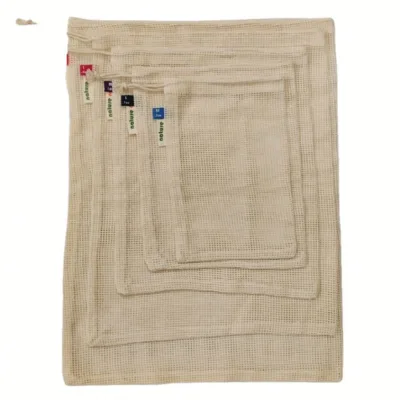
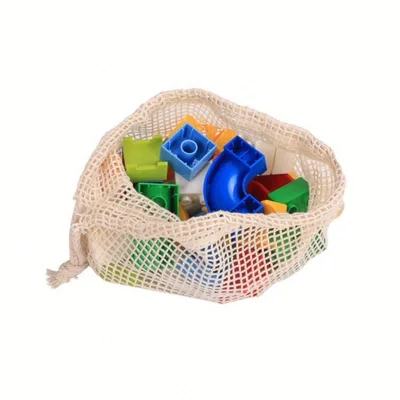
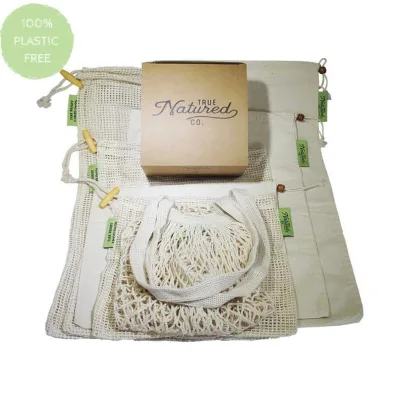
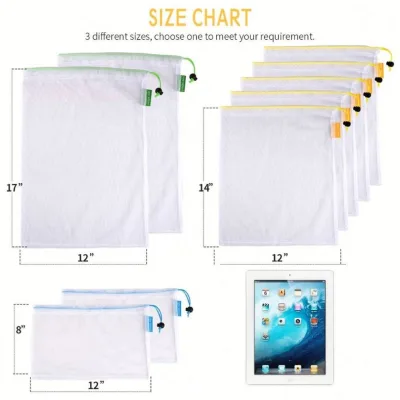
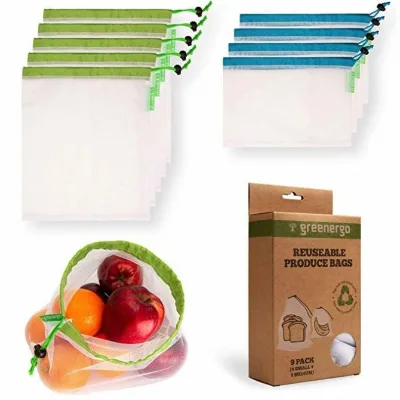


Original Eco Friendly Washable and Reusable Produce Drawstring Mesh Bag
$0.03 - $0.20
MOQ: 10000 Pieces


Ecological Friendly and Recyclable Feature Vegetables Mesh Bags with Drawstring
$0.03 - $0.20
MOQ: 10000 Pieces


Factory Direct Pricing Plastic Net Mesh Produce Bag for Fruits Veggies
$0.03 - $0.20
MOQ: 10000 Pieces

Polyester Mesh Recycled Produce Bag Fruit and Vegetable Drawstring Bag
$0.19 - $0.20
MOQ: 10000 Pieces

Drawstring Mesh String Shopping Washable Net Produce Reusable Mesh Recycled RPET Bags
$0.19 - $0.20
MOQ: 10000 Pieces

Drawstring Mesh Bag Fresh Fruit Mesh Produce Bags Promotional Gift Net Bags
$0.19 - $0.20
MOQ: 10000 Pieces


Eco-Friendly Circular Vegetable Mesh Drawstring Net Bags for Fresh Produce
$0.04 - $0.10
MOQ: 100000 Pieces

Comprehensive Sourcing Guide
Strategic Sourcing Guide for Recyclable Drawstring Mesh Produce Bags
Understanding Product Specifications and Material Composition
When sourcing recyclable drawstring mesh produce bags, buyers must first establish a clear understanding of the technical specifications that define the product's utility and durability. The core material composition is a critical differentiator in this category. Market observations indicate that these bags are frequently manufactured from cotton or canvas, materials selected for their breathability and natural texture. The cotton variant is often described as having an undyed nature color or a natural white finish, which aligns with eco-friendly branding requirements. Conversely, canvas options may present a beige or white color palette, offering a slightly more robust structure for heavier produce loads.
The physical dimensions of the bags vary significantly based on the intended application. Specifications observed in the market range from compact sizes suitable for small fruits to larger configurations measuring approximately 45 by 23 centimeters. Some listings indicate a single package size of 12 by 30 by 4 centimeters when compressed, while others suggest a gross weight of 5.000 kg for bulk shipments, implying variations in packaging density. The design is typically characterized by a horizontal square shape, adhering to a European style that appeals to modern retail aesthetics. The closure mechanism is universally identified as a drawstring rope, providing a secure seal that prevents produce from spilling while allowing for easy access.
Feature sets often highlight attributes such as being washable, foldable, and soft to the touch. These characteristics are essential for the bag's lifecycle, ensuring it can be reused multiple times without degradation. The hardness is generally noted as soft, which is preferable for handling delicate items like berries or leafy greens. While some specifications mention a "single gross weight" of 0.400 kg for individual units, this likely refers to the weight of a specific sample or small batch, whereas bulk industrial use requires careful calculation of total shipment weight. Buyers should verify the exact size and weight parameters against their specific logistics needs, as the market offers a spectrum from small-medium-large sizing to fully customized dimensions.
Compliance, Certification, and Environmental Claims
Environmental compliance is a primary driver for purchasing recyclable mesh produce bags. Buyers must rigorously verify the certification status of potential suppliers to ensure that marketing claims of "eco-friendly" and "recyclable" are substantiated. The supply chain data indicates that products often carry ISO9001:2000 certification, which validates the manufacturer's quality management systems. Additionally, references to S-G-S (SGS) testing appear frequently, suggesting that third-party verification is a standard practice for these goods.
A critical distinction must be made between observed certifications and unverified background standards. While some market background information mentions GOTS (Global Organic Textile Standard) and OEKO-TEX, these should not be assumed as present in every listing without direct confirmation from the supplier. The provided facts explicitly state that products pass tests by EU standards and SGS, confirming a baseline of safety and environmental compliance. However, the specific claim of "Eco-friendly: Yes" is supported by these test results, but the exact nature of the organic certification requires active verification.
Buyers should request current test reports to confirm that the cotton or canvas material meets the specific regulatory requirements of their target market. The "Recycled" attribute is listed as a positive feature, yet the percentage of recycled content is not specified in the general data. Therefore, procurement teams must ask suppliers for the exact composition ratio of recycled versus virgin fibers. Similarly, the "Eco-friendly" designation is linked to passing EU tests, but buyers should clarify which specific EU directives are being referenced, such as REACH or specific textile regulations. Relying on the presence of ISO9001:2000 and SGS reports provides a strong foundation for quality assurance, but specific organic or chemical-free certifications like GOTS must be validated on a per-supplier basis rather than assumed from general market trends.
Cost Drivers and Minimum Order Quantity Analysis
The financial landscape of sourcing these bags is influenced by several variable factors, with the most significant being the Minimum Order Quantity (MOQ) and the complexity of customization. The observed MOQ range in the market is broad, spanning from 50 units to as high as 100,000 units. This wide variance suggests that suppliers cater to both small businesses seeking trial runs and large enterprises requiring bulk inventory. Specific listings indicate MOQs of 1,000 or 2,000 pieces, which serves as a common baseline for standard orders.
Price points observed in the market range from $0.03 to $4.10 USD per unit. This substantial range is not indicative of a single product tier but rather reflects differences in material quality, size, and customization levels. The lower end of the price spectrum likely corresponds to standard, non-customized cotton mesh bags in basic sizes. The higher end may reflect canvas materials, larger dimensions, or complex branding requirements. Buyers must understand that the unit price is highly sensitive to the "Custom Order" acceptance status. Suppliers that accept custom logos, specific sizes, and unique packaging will inevitably command higher prices due to the setup costs and reduced production efficiency.
Additional cost drivers include the printing method and surface handling. Options such as heat transfer or silk printing for logos add to the unit cost, as does the application of varnishing for surface protection. The packaging method also impacts the final landed cost; while some suppliers offer standard export cartons, others provide custom packing solutions like 500 or 1,000 pieces per bale. Buyers should factor in the "sample time," which ranges from 2 to 7 days, as this affects the overall lead time and the speed at which the supply chain can be activated. It is crucial to request a detailed breakdown of costs that separates the base material cost from customization fees, ensuring that the budget aligns with the desired specifications.
Typical Applications and Industrial Use Cases
The versatility of recyclable drawstring mesh produce bags makes them suitable for a diverse array of industrial and commercial applications. The primary usage category identified is for shopping, specifically for produce such as vegetables and fruits. The breathable nature of the cotton and canvas mesh allows for proper air circulation, which is critical for maintaining the freshness of perishable goods. This makes the bags an ideal alternative to single-use plastic bags in grocery stores, farmers' markets, and organic food retailers.
Beyond fresh produce, the bags are frequently utilized for promotional and advertising purposes. The ability to accept customized logos and the availability of various colors (natural, white, beige) make them effective branding tools. Companies often distribute these bags as gifts or promotional items to enhance their corporate image as environmentally responsible entities. The "Industrial Use" specification explicitly lists "Shopping," but the "Usage" field also includes "gift" and "advertising," indicating a dual function as both a utility item and a marketing asset.
The design features, such as the drawstring closure and foldable nature, enhance their utility in various retail environments. They can be easily stored when not in use, reducing clutter in retail spaces. The "European Style" design appeals to a demographic that values aesthetics alongside functionality. Furthermore, the bags are suitable for packaging in a way that aligns with sustainable packaging trends, allowing retailers to offer a premium unboxing experience for online shoppers. Whether used for heavy industrial shopping or delicate promotional gifting, the product's adaptability is a key selling point. Buyers should evaluate their specific use case—whether it is high-volume grocery distribution or low-volume corporate gifting—to determine the optimal material and size configuration.
Supplier Evaluation and Operational Capabilities
Evaluating suppliers for this product category requires a focus on their operational flexibility and geographic location. The supply base is predominantly located in China, with specific origins noted in Jiangsu and Wenzhou. These regions are known for their textile manufacturing capabilities, but buyers should verify the specific factory location to assess logistics efficiency and potential shipping costs. The "Place of Origin" is a critical data point for calculating import duties and lead times.
A key differentiator among suppliers is their willingness to accept custom orders. The data confirms that "Custom Order" and "OEM" services are available, meaning suppliers can tailor the product to specific brand requirements. However, the extent of this customization varies. Some suppliers offer standard sizes (Small-Medium-Large), while others provide fully customized dimensions. Buyers must assess the supplier's capacity to handle "Customized Logo" requests, including the printing methods they employ, such as heat transfer or silk printing. The ability to provide samples within 2 to 7 days is another indicator of a responsive and agile supplier.
When evaluating suppliers, buyers should also consider their packaging capabilities. The market shows options for "Standard Export Carton" as well as bulk baling (500 or 1000 pieces per bale). The choice of packaging affects storage efficiency and shipping costs. Additionally, the "Selling Units" are listed as single items, which suggests that suppliers are flexible in their order quantities, though the MOQ constraints still apply. Buyers should prioritize suppliers who demonstrate transparency in their certification processes and who can provide clear documentation regarding their material sourcing and production standards.
Quality Control and Long-Term Procurement Strategy
Implementing a robust quality control (QC) strategy is essential for ensuring the longevity and performance of recyclable mesh produce bags. Given the "washable" and "foldable" features, the structural integrity of the drawstring and the seam strength are paramount. Buyers should verify that the "Hardness" remains consistent and that the material does not degrade after repeated washing cycles. The "Surface Handling" of varnishing should be inspected to ensure it does not compromise the breathability of the mesh or the eco-friendly nature of the product.
Long-term procurement considerations involve building a relationship with suppliers who can maintain consistent quality over time. The "Customization" aspect means that any changes in design or material must be strictly controlled to avoid deviations from the approved sample. Buyers should establish clear acceptance criteria based on the observed specifications, such as the single package size and gross weight. Regular audits of the supplier's production line can help ensure that the ISO9001:2000 standards are being maintained and that the SGS test results remain valid.
Furthermore, the "Eco-friendly" and "Recycled" attributes require ongoing verification. As regulations regarding sustainable materials evolve, suppliers must be able to adapt their sourcing strategies to meet new standards. Buyers should include clauses in their contracts that mandate the re-verification of certifications and material composition for each production batch. By focusing on these quality control measures and maintaining a strategic partnership with suppliers, buyers can ensure a reliable supply of high-quality, recyclable mesh produce bags that meet both functional and environmental expectations.
Comparative Analysis of Product Attributes
To facilitate decision-making, the following table summarizes the key attributes observed in the market for recyclable drawstring mesh produce bags. This comparison highlights the variations in material, size, and customization options that buyers must navigate.
| Attribute | Observation A | Observation B | Observation C |
|---|---|---|---|
| Material | Cotton | Canvas | Cotton |
| Color | Undyed Nature / Natural | White / Natural White | Beige |
| Size | Small-Medium-Large | 45*23 cm / Custom | Customized Size |
| Closure | Drawstring rope | Drawstring | Drawstring |
| MOQ | 1000 pcs | 2000 pcs | 50-100,000 range |
| Certification | ISO9001:2000 / SGS | ISO9001:2000 / SGS | ISO9001:2000 / SGS |
| Printing | Logo on side label | Heat Transfer / Silk | Customized Logo |
| Origin | Jiangsu, China | Wenzhou, China | Jiangsu, China |
| Eco-Status | Yes (Pass EU/S-G-S) | Yes | Yes |
| Packing | Custom | Standard Export Carton | 500/1000 PCS/Bale |
This table illustrates that while the core functionality remains consistent, the specific execution of material, size, and packaging varies by supplier. Buyers should use this framework to compare potential vendors and select the option that best aligns with their specific operational requirements and brand values.
FAQs
What certifications do these bags typically have?
Products typically carry ISO9001:2000 and SGS certification to validate quality management systems. Some listings also indicate passing EU tests for eco-friendly compliance, though specific organic standards like GOTS require direct verification from the supplier.
Can I order custom sizes and logos for these bags?
Yes, suppliers accept custom orders including customized logos and specific dimensions like 45 by 23 centimeters. Printing methods such as heat transfer or silk printing are available, allowing for branding on side labels or the bag surface.
What is the minimum order quantity for these bags?
The minimum order quantity ranges from 50 to 100,000 units depending on the supplier and customization level. Specific listings often set a baseline MOQ of 1,000 or 2,000 pieces for standard production runs.
How long does it take to receive a sample?
Sample times generally range from 2 to 7 days depending on the supplier's current workload and location. This short turnaround allows buyers to verify material quality and print methods before committing to a larger bulk order.
Are these bags made from recycled materials?
Yes, the product attributes list the bags as recycled and eco-friendly, having passed specific EU and SGS tests. However, the exact percentage of recycled content versus virgin fibers is not specified and should be confirmed with the manufacturer.
Where are these bags manufactured?
The primary places of origin are Jiangsu and Wenzhou in China, known for their textile manufacturing capabilities. Buyers should verify the specific factory location to accurately calculate shipping costs and import duties for their region.
What materials are used to make these bags?
These bags are commonly manufactured from cotton or canvas, offering breathability and a natural texture. Cotton variants often feature an undyed nature color, while canvas options may come in beige or white with a slightly more robust structure.