Source Recyclable Drawstring Trash Bags for Garbage, Food, and Household Use
Compare 30 listings of Recyclable Drawstring Trash Bags made from PE materials with customizable sizes. Buyers can evaluate features like biodegradability and certifications such as SGS and TUV for applications in garbage, food, and household sectors.
Key considerations
Products List


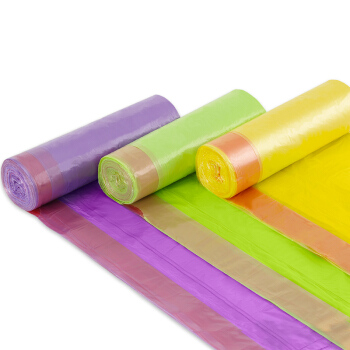

Biodegradable Clear Plastic Trash Bags Custom-Sized Plastic Drawstring Trash Bag
$1350.00 - $1600.00
MOQ: 3 Tons


Wholesale Black Drawstring Garbage Bags Biodegradable Disposable Drawstring Garbage Bags
$1350.00 - $1600.00
MOQ: 3 Tons

Environmental PE Drawstring Garbage Bag Convenient Drawstring Handles Trash Bags
$0.02 - $0.50
MOQ: 100000 Pieces


Comprehensive Sourcing Guide
Strategic Sourcing Guide for Recyclable Drawstring Trash Bags
Understanding Technical Specifications and Material Composition
When sourcing Recyclable Drawstring Trash Bags, the primary technical differentiator lies in the raw material composition and the specific manufacturing process employed. Based on available market data, the dominant material for these products is Polyethylene (PE), specifically utilizing High-Density Polyethylene (HDPE) and Low-Density Polyethylene (LDPE). These materials are often sourced as "Low Pressure Polyethylene Plastic Bag" raw materials, which directly influence the tensile strength and puncture resistance of the final product. The manufacturing process is explicitly categorized as "Plastic Packaging Bags," indicating a specialized extrusion and sealing workflow designed to create durable, leak-resistant containers.
A critical technical feature observed in this category is the sealing mechanism. The "Drawstring" attribute is a defining characteristic, allowing for secure closure without the need for knots or external ties. This feature is particularly valuable for applications involving heavy waste or liquids, as it minimizes spillage during transport. The bags are available in various shapes, predominantly "Plastic Bags" and "Drawstring Bags," with specific models ranging from general-purpose sizes to customized dimensions. For instance, standard specifications may include sizes like 42*25CM, while other variants offer fully customized sizing to meet unique operational needs.
The physical properties of these bags extend to their thickness and capacity. Buyers should verify thickness specifications, as the market offers "Customized" thickness options to balance durability with material cost. Capacity ranges are also significant, with observed specifications spanning from 2L to 3L for smaller household units, though larger industrial variants exist. The product model numbers, such as 0009-0001, SLM-102419, and 0009-0007, serve as internal identifiers for specific configurations, but the physical attributes remain the primary focus for procurement decisions. Additionally, the "Bag Variety" is often described generically as "Your Bag" or "Packing Bag," suggesting a high degree of flexibility in design and function.
Compliance, Certification, and Environmental Standards
In the realm of sustainable packaging, compliance and certification are not merely administrative hurdles but essential indicators of product quality and environmental responsibility. The core keyword "recyclable" implies a specific lifecycle expectation, which must be validated through third-party testing. The market data indicates that suppliers often provide certifications such as SGS and TUV, which are critical for verifying material safety and performance claims. Furthermore, specific test reports like "TUV Testreports" and quality management system certifications such as "ISO9001" are observed as standard documentation for reputable manufacturers.
The environmental profile of these bags is further defined by their labeled features, which include "Biodegradable" and "Recyclable" attributes. While the material is PE, which is inherently recyclable, the "Biodegradable" claim requires careful verification. Buyers must ensure that the biodegradability claim aligns with recognized international standards and is supported by the provided test reports. The HS Code for these products is consistently listed as 39232100, which corresponds to sacks and bags of plastics, aiding in customs clearance and regulatory classification.
It is imperative for buyers to distinguish between general "Certifications" and specific "Certificate" documents. While some listings mention "SGS, TUV, etc.," others specify "TUV Testreports; ISO9001." This distinction suggests that while many suppliers may hold general certifications, the specific test reports for biodegradability or material composition should be requested explicitly. The "Product Logistics Attributes" are noted as "General Goods," which simplifies shipping but does not exempt the product from hazardous material regulations if the contents are specialized.
Cost Drivers and Pricing Dynamics
The pricing structure for Recyclable Drawstring Trash Bags is influenced by a complex interplay of material costs, customization levels, and order volume. The observed price range in the market spans from $0.01 to $3000 USD, a vast disparity that reflects the difference between single-unit samples and bulk industrial orders. The Minimum Order Quantity (MOQ) is a significant cost driver, with observed ranges extending from 1 unit up to 100,000 units. Notably, specific listings indicate an MOQ of "2 Tons," which suggests that for certain high-volume or custom configurations, the pricing model shifts from per-unit to per-weight metrics.
Material costs are the primary variable in the unit price. The use of HDPE and LDPE, while cost-effective, fluctuates with global oil prices and supply chain dynamics. Customization is a major cost factor; the "Customization" and "Customized" attributes indicate that bespoke sizes, colors, and logos will incur higher unit costs compared to standard stock items. The "Sample" policy also impacts initial procurement costs, with some suppliers offering free samples for stock items, while custom samples may require a fee.
Lead times also play a role in the total cost of ownership. The observed lead time ranges from 15 to 40 days, depending on the complexity of the order and the supplier's production schedule. Longer lead times for customized orders allow for better material planning but may require earlier commitment from the buyer. The "OEM/ODM" availability further influences pricing, as original equipment manufacturing and design services add value but also increase the overall cost. Buyers should anticipate that the lowest price points are associated with standard, non-customized products with high MOQs, while the upper end of the price spectrum reflects specialized, low-volume, or highly customized solutions.
Typical Applications and Usage Scenarios
The versatility of Recyclable Drawstring Trash Bags is evident in their wide range of applications. The "Usage" attributes list diverse sectors including Garbage, Household, Food, Home Appliance, Cement, Apparel, Electronic, and Grocery. This breadth indicates that the product is not limited to residential waste but is equally suited for industrial and commercial environments. In the household sector, the drawstring feature provides convenience for daily waste disposal, while in the food and grocery sectors, the bags offer a hygienic solution for transporting perishables or dry goods.
Industrial applications are particularly notable. The inclusion of "Cement" and "Electronic" in the usage list suggests that these bags are robust enough to handle heavy, abrasive, or sensitive materials. For the cement industry, the bags likely serve as temporary containment for dust or small aggregates, requiring high tensile strength. In the electronics sector, the bags may be used for packaging components, where static control or cleanliness is paramount, although specific anti-static properties would need to be verified against the product specifications.
The "Application" attributes further refine these use cases, highlighting Apparel, Chemical, Household, and Promotion. The "Chemical" application implies that the bags must be resistant to certain substances, necessitating a check on the chemical compatibility of the PE material. The "Promotion" use case suggests that these bags can be branded with custom logos, making them effective marketing tools for corporate events or retail promotions. The "Color" attribute, listed as "Multicolor," supports this promotional application, allowing for brand alignment.
Supplier Evaluation and Sourcing Strategy
Evaluating suppliers for Recyclable Drawstring Trash Bags requires a focus on their production capabilities, customization flexibility, and logistical reliability. The "prod_origin" is consistently listed as "China," with specific mentions of "Henan" as a production hub. This geographic concentration suggests a mature supply chain with established infrastructure for plastic packaging. However, buyers should verify the specific factory location to assess logistics costs and potential risks associated with regional disruptions.
The "OEM/ODM" capability is a key indicator of a supplier's flexibility. Suppliers offering these services can adapt their production lines to create unique bag designs, which is essential for businesses seeking differentiated products. The "Logo" attribute, which states "Can Be Customized," confirms that branding is a standard service, but the quality of the printing and the durability of the logo under various conditions should be assessed.
Logistical attributes such as "prod_packing" (Carton, Standard Export Carton, Box) and "Packaging" (on Roll or Flat Packed in Carton) are critical for storage and shipping efficiency. Suppliers offering "Flat Packed" options may reduce shipping volume, while "Roll" packaging might be preferred for specific dispensing mechanisms. The "Sample" policy, particularly the offer of free samples for stock items, is a valuable tool for quality assessment before committing to a large order. Buyers should utilize this opportunity to test the drawstring mechanism, material thickness, and sealing integrity.
Quality Control and Long-Term Procurement Considerations
Maintaining consistent quality in the procurement of Recyclable Drawstring Trash Bags requires a robust quality control framework. The "Feature" attributes, including "Biodegradable" and "Recyclable," must be validated through regular testing. Buyers should request batch-specific test reports to ensure that the biodegradability claims remain consistent across production runs. The "Thickness" being "Customized" means that quality control must focus on maintaining the specified thickness tolerance to prevent leaks or tears.
Long-term procurement considerations involve building a sustainable supply chain. The "Lead Time" of 15-40 days indicates that inventory management is crucial to avoid stockouts. Buyers should consider safety stock levels based on the variability of lead times. The "MOQ" of 2 Tons for certain products suggests that bulk purchasing is necessary to achieve cost efficiency, which requires accurate demand forecasting.
The "Standard" specifications, such as "4225CM/Customized" or "65cm70cm," highlight the importance of standardization in inventory management. While customization offers flexibility, maintaining a core set of standard sizes can streamline operations. The "H.S. Code" of 39232100 remains constant, simplifying international trade compliance, but buyers should stay updated on any changes to environmental regulations that might affect the import or export of plastic products.
Comparative Analysis of Product Variants
To facilitate informed decision-making, the following table compares key attributes of observed product variants based on the supplied data. This comparison highlights the diversity in specifications, certifications, and packaging options available in the market.
| Attribute | Variant A (Standard) | Variant B (Customized) | Variant C (Industrial) |
|---|---|---|---|
| Material | PE (HDPE/LDPE) | PE (Low Pressure) | PE (HDPE/LDPE) |
| Sealing | Drawstring | Drawstring | Drawstring |
| Standard Size | 42*25CM | Customized Size | 65cm*70cm |
| Capacity | 2L-3L | Customized | Not Specified |
| Certifications | SGS, TUV | TUV Testreports, ISO9001 | SGS, TUV |
| Packing | Carton | Standard Export Carton | Carton/Customized |
| MOQ | 1 Unit | 2 Tons | 100,000 Units |
| Lead Time | 15-40 Days | 15-40 Days | 15-40 Days |
| Sample Policy | Free (Stock) | Free (Stock) | Free (Stock) |
| Origin | China | China | Henan |
This table illustrates that while the core material and sealing mechanism remain consistent, the flexibility in size, capacity, and packaging varies significantly. Buyers should align their selection with their specific operational requirements, balancing the need for customization against the constraints of MOQ and lead time. The presence of "Multicolor" options and "Customized" logos further enhances the versatility of these products for various market segments.
Final Procurement Recommendations
In conclusion, sourcing Recyclable Drawstring Trash Bags requires a meticulous approach that balances technical specifications, compliance requirements, and cost considerations. The market offers a wide array of options, from standard household bags to specialized industrial solutions, all underpinned by the common attributes of PE material and drawstring sealing. Buyers must prioritize verification of environmental claims through third-party certifications and ensure that the supplier's customization capabilities align with their brand and operational needs. By leveraging the observed data on lead times, MOQs, and packaging options, procurement teams can develop a resilient supply chain that meets both current demands and future sustainability goals. The continuous evaluation of supplier performance and product quality will be essential to maintaining the integrity of the procurement process in this dynamic market.
FAQs
What materials are used for Recyclable Drawstring Trash Bags?
These bags are primarily made from Polyethylene (PE), specifically High-Density Polyethylene (HDPE) and Low-Density Polyethylene (LDPE). The raw materials are often sourced as Low Pressure Polyethylene Plastic Bag, ensuring durability and flexibility for various waste applications.
Can I get custom sizes and logos for these bags?
Yes, customization is available for both size and branding. Buyers can request specific dimensions like 42*25CM or fully customized sizes, and logos can be printed on the bags to support promotional activities or corporate branding needs.
What certifications do these plastic bags typically hold?
Reputable suppliers often provide certifications such as SGS and TUV to verify material safety. Specific test reports like TUV Testreports and quality management certifications like ISO9001 are also standard documentation required for verifying compliance and product quality.
How long does it take to receive an order?
The lead time for these products ranges from 15 to 40 days depending on order complexity. Customized orders or those requiring specific OEM/ODM services may take longer within this window compared to standard stock items.
What is the minimum order quantity for these bags?
The minimum order quantity varies significantly, ranging from 1 unit up to 100,000 units. Some high-volume or custom configurations may require a minimum order of 2 tons, shifting the pricing model from per-unit to per-weight metrics.
Where are these bags manufactured and shipped from?
The products originate from China, with specific production hubs noted in regions like Henan. The goods are classified as General Goods with an HS Code of 39232100, facilitating standard international shipping and customs clearance procedures.
Are these bags suitable for food and chemical storage?
Yes, the bags are designed for diverse applications including Food, Chemical, and Household uses. Their material properties allow them to handle various contents, though specific chemical compatibility should be verified against the provided test reports for safety.