Source Reflective Tactical Dog Harness for Walking Training Outdoor
Compare 30 Reflective Tactical Dog Harness options featuring adjustable designs and breathable mesh linings. Buyers can evaluate Oxford and Nylon materials, waterproof ratings, and customization services from verified Chinese manufacturers.
Key considerations
Products List


Tactical No Pull Adjustable Outdoor Walking Training Heavy Duty Dog Harness
$1.85 - $2.07
MOQ: 500 Pieces


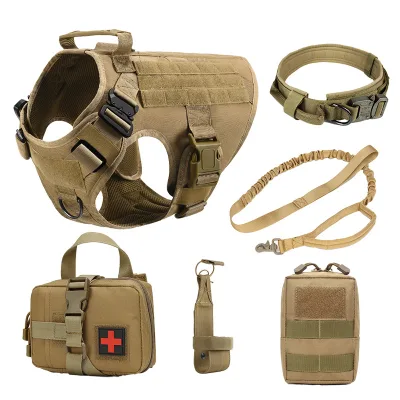


Comprehensive Sourcing Guide
Strategic Sourcing Guide for Reflective Tactical Dog Harnesses
Understanding Product Specifications and Material Composition
When sourcing reflective tactical dog harnesses, the primary objective is to identify products that balance durability with high-visibility safety features. The core of any tactical harness lies in its material composition, which dictates its lifespan and suitability for specific environments. Based on available market data, the dominant materials observed in this category include Nylon and Oxford Cloth. Nylon is frequently cited for its high tensile strength and resistance to abrasion, making it a preferred choice for heavy-duty applications where the dog may encounter rough terrain or rigorous training exercises. Conversely, Oxford cloth, often referred to as Oxford fabric, offers a robust alternative that is generally water-resistant and easy to clean, though its specific weave density can vary significantly between manufacturers.
The structural integrity of the harness is further enhanced by the lining material. A breathable mesh lining is a critical specification for tactical gear, as it prevents overheating during extended use in warm climates or during high-intensity activities. This feature ensures that the dog remains comfortable while the outer shell provides protection. The product models identified in current listings, such as RTDH-002, DH-001, and DH-01, indicate a variety of design iterations. Buyers must verify the specific model number against their requirements, as different models may utilize different combinations of these materials. For instance, some listings specify a "Main Material" of Oxford Cloth, while others simply list Nylon, suggesting that the specific tactical application—whether for walking, training, or service work—should dictate the material selection.
Furthermore, the standard dimensions and packaging specifications provide insight into the product's intended scale and logistics. Standard sizes often range from Small to Extra Large (S, M, L, XL), with adjustable lengths typically falling between 18 and 30 centimeters. However, the market also supports fully customized sizing, which is essential for service dogs or breeds with unique body shapes. The packaging standards vary from individual OPP bags to export cartons, with specific carton dimensions like 303040cm or 604550cm observed in various listings. These dimensions are vital for calculating shipping costs and warehouse storage requirements. The origin of these products is predominantly China, with specific manufacturing hubs noted in regions like Jiangsu, which can influence lead times and shipping logistics.
Compliance, Certification, and Safety Standards
In the realm of tactical dog gear, compliance and certification are not merely administrative hurdles but are fundamental indicators of product safety and manufacturing quality. While many standard pet harnesses may not require rigorous certification, tactical harnesses intended for service, police, or specialized training often demand higher standards. The supply chain data reveals that certain manufacturers hold certifications such as FDA, ISO, BRC, ISO9001, BSCI, and Sedex. These certifications serve as third-party validations of the manufacturing process, ensuring that the materials used are safe for animal contact and that the production environment adheres to ethical and quality standards.
Buyers must exercise caution when interpreting these certifications. The presence of an ISO9001 certification, for example, indicates that the manufacturer has a quality management system in place, but it does not guarantee that every specific batch of harnesses meets a specific performance threshold without further testing. Similarly, BSCI and Sedex certifications relate to social compliance and ethical labor practices, which are increasingly important for B2B buyers concerned with corporate social responsibility. The FDA certification suggests that the materials used in the harness are safe for incidental contact, which is crucial for products that may be chewed or licked by the animal.
It is essential to distinguish between "Certification" and "Certificate" in product listings. Some entries list "FDA, ISO, BRC" under certification, while others list "ISO9001&BSCI&Sedex" under certificate. Buyers should verify the validity of these documents directly with the supplier rather than relying solely on the product page. The absence of a specific certification in a listing does not necessarily mean the product is non-compliant, but it does mean the buyer must conduct their own due diligence to ensure the materials meet the necessary safety standards for their intended use. For tactical applications involving law enforcement or military service, additional verification of flame resistance or chemical resistance may be required, which should be confirmed through direct communication with the supplier.
Cost Drivers and Pricing Dynamics
The pricing of reflective tactical dog harnesses is influenced by a complex interplay of factors, including material costs, customization requirements, order volume, and packaging specifications. The observed price range in the market spans from $0.59 to $24.00 USD, a wide variance that reflects the diversity of product quality and complexity. The lower end of this spectrum typically corresponds to basic models with standard sizing, minimal customization, and simple packaging such as OPP bags. These products are often designed for general walking or light training purposes and may utilize standard Nylon or Oxford materials without advanced features.
Conversely, the higher price points are driven by several key cost drivers. Customization is a significant factor; products offering customized logos, colors, and packaging command a premium. The ability to produce a "Customized Logo" or "Customized Packaging" requires additional setup costs and often involves a higher minimum order quantity (MOQ). The observed MOQ range of 2 to 5000 units further illustrates this dynamic. Small orders, often accepted as low as 2 units, may carry a higher per-unit cost due to the inefficiency of small-batch production. In contrast, bulk orders approaching the 5000-unit limit benefit from economies of scale, resulting in a lower unit price.
Material selection also plays a pivotal role in cost determination. Harnesses made from high-grade Oxford Cloth or specialized Nylon with reinforced stitching and high-quality reflective tape will naturally cost more than those made from standard materials. Additionally, the inclusion of advanced features such as breathable mesh linings, specific adjustable length mechanisms, and durable hardware (buckles and D-rings) adds to the manufacturing cost. The "Single Gross Weight" of 0.115 Kg for some models provides a baseline for shipping cost calculations, but heavier, more robust tactical harnesses will incur higher freight charges. Buyers must balance their budget constraints with the functional requirements of the harness, ensuring that cost savings do not compromise the safety and durability needed for tactical operations.
Typical Applications and Functional Requirements
Reflective tactical dog harnesses are designed for a wide array of applications, ranging from everyday pet walking to specialized service and law enforcement duties. The functional requirements vary significantly depending on the intended use case. For general pet owners, the primary functions are walking, training, and outdoor control. These harnesses often feature adjustable straps to ensure a secure fit and reflective elements to enhance visibility during low-light conditions. The "All Season" attribute indicates that these products are designed to be comfortable in various weather conditions, making them suitable for year-round use.
In more specialized contexts, such as service dog work or tactical operations, the requirements become more stringent. Service dog harnesses must be durable, easy to clean, and capable of withstanding constant wear and tear. Tactical harnesses, on the other hand, may need to accommodate additional equipment such as pouches, radios, or medical kits. The product listings highlight types such as "Dog walking harness," "Service dog harness," "Tactical harness," and "Vest harness," each catering to specific needs. The "Feature" attribute, which includes "Adjustable" and "Reflective," is critical for all these applications, ensuring that the harness can be fitted to different dog sizes and that the animal remains visible to handlers and the public.
The "Pet Type" is consistently listed as "Dog," confirming that these products are not suitable for other animals. The "Condition" is universally "New," indicating that the market is focused on fresh, unused inventory. Buyers should consider the specific environment in which the harness will be used. For example, a harness used in a wet environment may require a waterproof rating, although the data shows a mix of "Waterproof" and "Non-Waterproof" options. Selecting the right product involves matching the harness's features to the specific demands of the task, whether it is a simple walk in the park or a high-stakes tactical operation.
Supplier Evaluation and Quality Control Protocols
Evaluating suppliers for reflective tactical dog harnesses requires a rigorous approach to ensure that the products meet the buyer's quality standards. The "Serve" attribute, which includes "OEM/ODM," indicates that many suppliers are capable of producing custom designs and private label products. This flexibility is a significant advantage for buyers looking to brand their own products. However, the ability to offer OEM/ODM services does not automatically guarantee quality. Buyers must assess the supplier's production capacity, quality control processes, and track record.
Quality control should be a central component of the procurement strategy. The "Sample Time" of 7 days suggests that suppliers can provide samples relatively quickly, allowing buyers to evaluate the product before committing to a large order. This is a crucial step in verifying the quality of materials, the effectiveness of the reflective elements, and the overall construction of the harness. Buyers should request samples of different models to compare the quality of the Nylon, Oxford Cloth, and mesh linings. Additionally, the "Customization" and "Custom" attributes highlight the importance of verifying that the supplier can accurately replicate the buyer's specifications, including logo placement and color matching.
The "Small Orders: Accepted" attribute is beneficial for buyers who want to test the market with a small batch before scaling up. However, buyers should be aware that small orders may have different quality control standards compared to large production runs. It is advisable to establish clear quality control protocols with the supplier, including inspection criteria for stitching, hardware strength, and material consistency. The "Certification" and "Certificate" attributes mentioned earlier can serve as a starting point for supplier evaluation, but direct communication and on-site audits (if feasible) are often necessary to fully assess the supplier's capabilities.
Long-Term Procurement and Logistics Considerations
Long-term procurement of reflective tactical dog harnesses involves more than just selecting a product; it requires a strategic approach to logistics, inventory management, and supplier relationships. The "prod_packing" specifications, ranging from "OPP" to "Carton" and "One Poly Bag and Put Into Export Cartons," highlight the importance of understanding the packaging requirements for shipping and storage. Proper packaging is essential to prevent damage during transit and to ensure that the products arrive in good condition. The "Carton Size" and "Standard" dimensions provided in the data, such as 303040cm or 604550cm, are critical for planning warehouse space and calculating shipping costs.
Lead times and production capacity are also key considerations for long-term planning. While the "Sample Time" is listed as 7 days, the actual production lead time for large orders can vary significantly. Buyers should establish clear timelines with their suppliers and build in buffer time for potential delays. The "prod_origin" being China, specifically Jiangsu, suggests that shipping times may be influenced by port availability and customs regulations. Buyers should factor in these logistics when planning their inventory levels to avoid stockouts.
Finally, the "Customized" and "Customized Logo" options offer opportunities for brand differentiation. However, maintaining consistency in branding and product quality over time requires a strong relationship with the supplier. Buyers should aim to establish a long-term partnership with a supplier who can consistently deliver high-quality products that meet their evolving needs. This involves regular communication, feedback loops, and a shared commitment to quality and innovation. By focusing on these long-term considerations, buyers can ensure a stable and reliable supply chain for their reflective tactical dog harnesses.
FAQs
What materials are used for reflective tactical dog harnesses?
Reflective tactical dog harnesses are primarily constructed from Nylon or Oxford Cloth. These materials offer high tensile strength and abrasion resistance, with some models featuring a breathable mesh lining for comfort during extended use.
Which certifications are available for these tactical harnesses?
Available certifications include FDA, ISO, BRC, ISO9001, BSCI, and Sedex. These documents validate manufacturing quality and material safety, though buyers should verify specific batch compliance directly with the supplier before purchase.
How does the MOQ range affect pricing for these items?
The minimum order quantity ranges from 2 to 5000 units, influencing the unit price significantly. Small orders often carry higher per-unit costs, while bulk orders near the 5000-unit limit benefit from economies of scale.
Can buyers request customized logos and packaging for these harnesses?
Yes, customization is available for logos, colors, and packaging. This service requires specific setup and often involves higher minimum order quantities, with options ranging from simple OPP bags to custom export cartons.
What is the typical lead time for sample requests?
The sample time is typically 7 days for most models. This allows buyers to evaluate material quality and construction before committing to larger production runs, though lead times may vary based on customization requirements.
Which product models are available for different dog sizes?
Available models include RTDH-002, DH-001, DH-01, SS-0010, and XY-4545. These models support sizes from Small to Extra Large, with some options offering fully customized sizing for service dogs or unique breeds.