Source Removable Stainless Steel HV Switchgear for Grids, Factories, Mines
Compare 30 listings of Removable Stainless Steel HV Switchgear featuring GCS, MNS, and KYN28 models. Buyers can evaluate voltage levels, protection grades, and delivery times from suppliers in China.
Key considerations
Products List


Withdrawable Distribution Switchgear Electrical Cabinet Low Voltage Panel Switchgear
$1000.00 - $5000.00
MOQ: 1 Pieces


Low-Voltage Cabinet LV Switchgear Low Voltage Switchgear Gck Withdrawable Switchgear
$500.00 - $2000.00
MOQ: 1 Pieces


High-Performance Low Voltage Withdrawable Switchgear for Reliable Power Distribution
$1000.00 - $10000.00
MOQ: 1 Pieces

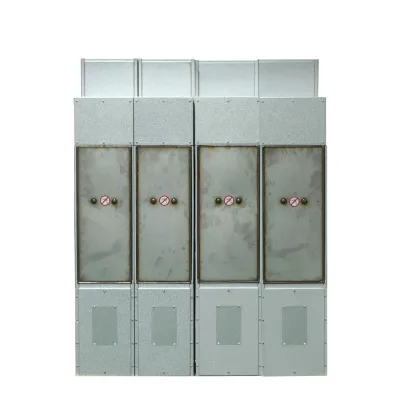


High Voltage Switchgear: Safety Compliant and Low Maintenance Solution
$1500.00 - $3000.00
MOQ: 1 Sets


Comprehensive Sourcing Guide
Strategic Sourcing Guide for Removable Stainless Steel HV Switchgear
Procuring high-voltage (HV) switchgear with removable structures and stainless steel enclosures requires a rigorous understanding of the intersection between material durability, electrical safety, and modular flexibility. The term "removable" in this context typically refers to the ability to withdraw circuit breakers or functional units from the live busbar system without de-energizing the entire switchgear assembly, a critical feature for maintenance continuity. When combined with stainless steel construction, the equipment offers superior resistance to corrosion, making it ideal for harsh environments such as coastal areas, chemical plants, or outdoor installations where humidity and salt spray are prevalent. This guide synthesizes available product attributes and industry standards to provide a framework for evaluating potential suppliers and specifications without relying on unverified claims.
Technical Architecture and Material Specifications
The foundational element of any switchgear procurement is the verification of the physical and electrical architecture. In the context of Removable Stainless Steel HV Switchgear, the shell material is a primary differentiator. While standard carbon steel is common for indoor applications, stainless steel provides a distinct advantage in longevity and hygiene. The supplied data indicates that stainless steel is a verified material option for these units, often paired with specific protection grades. Buyers must verify that the stainless steel grade (e.g., 304 or 316) matches the environmental demands of the installation site.
The structural design is equally critical. The "removable" attribute implies a specific internal configuration, often described as a cabinet structure with withdrawable units. This design allows for the safe isolation of components. The data highlights a range of structural types, including "Withdrawable" and "Cabinet" configurations. For high-voltage applications, the rated voltage is a non-negotiable specification. The observed market data includes rated voltages ranging from 3.6 kV to 12 kV, and specific models are noted for 12 kV and 24 kV operation. Buyers must ensure the selected unit matches the system voltage, as the insulation distance and arc quenching capabilities are directly tied to these voltage levels.
Furthermore, the current carrying capacity must align with the load requirements. The available specifications list current ratings spanning from 630 A to 1250 A. This range covers a broad spectrum of industrial needs, but the specific amperage must be confirmed for the intended circuit. The phase configuration is consistently noted as "Three," which is standard for industrial power distribution. The protection level of the enclosure is another vital technical parameter. While some units offer IP67 ratings, which provide total dust tightness and protection against temporary immersion, others may be rated IP4X or IP40. The selection between these grades depends on whether the switchgear is installed indoors in a controlled environment or outdoors in an exposed location.
Compliance, Certification, and International Standards
Navigating the compliance landscape is essential for ensuring that the switchgear meets legal and safety requirements in the target market. The procurement process must verify that the manufacturer holds valid certifications. The observed data lists several certification types, including ISOCCC, VDE, and generic ISO standards. It is crucial to distinguish between the specific scope of these certifications. For instance, ISOCCC is a specific certification often related to electrical safety and quality management, while VDE is a German standard that is highly respected globally for electrical equipment.
In addition to manufacturer certifications, the equipment itself must adhere to international technical standards. The supplied facts reference IEC (International Electrotechnical Commission) and GB (Guobiao, the Chinese national standard) as applicable standards. Specifically, the industry context often relies on IEC 62271 for high-voltage switchgear, though buyers should verify that the specific model conforms to the latest revision of these standards. The data also mentions CE marking, which is a mandatory conformity mark for products sold within the European Economic Area.
When evaluating a supplier, buyers should request a compliance matrix that maps the product features to specific clauses in IEC 62271 or local equivalents. The presence of a "customized" standard in the data suggests that some manufacturers offer flexibility to meet unique regional requirements. However, this customization must not compromise the core safety standards. The rated insulation voltage, observed in the data as 660 V for certain low-voltage components, must be clearly distinguished from the high-voltage operating voltage of the main busbar to avoid confusion during the design phase.
Cost Drivers and Pricing Dynamics
Understanding the cost structure of Removable Stainless Steel HV Switchgear is vital for budgeting and total cost of ownership analysis. The observed price range in the market spans from $5 to $10,000 USD. This wide variance is likely due to differences in voltage ratings, current capacities, and the extent of customization. A unit rated for 12 kV with a 1250 A current capacity and a full stainless steel enclosure will naturally command a higher price than a lower-rated, carbon steel unit.
The material cost of stainless steel is a significant driver. Unlike painted carbon steel, stainless steel requires more expensive raw materials and specialized fabrication techniques, such as laser cutting and welding, to maintain the integrity of the corrosion-resistant surface. This directly impacts the unit price. Additionally, the "removable" mechanism involves complex mechanical linkages, guide rails, and locking mechanisms, which add to the manufacturing cost.
Other cost factors include the protection grade. An IP67 rated enclosure requires more rigorous sealing and gasketing than an IP40 unit, increasing material and assembly costs. The packaging method also influences logistics costs. The data mentions "Standard Export Package," "Wooden Case," and "Pre-Packaging." For international shipping, a robust wooden case is often necessary to prevent damage, which adds to the overall landed cost. Buyers should also consider the "Factory-Direct Sales" advantage noted in the data, which can reduce intermediary markups, but this benefit must be weighed against the potential for higher minimum order quantities (MOQ).
Typical Applications and Operational Environments
The specific combination of removable functionality and stainless steel construction makes this switchgear suitable for demanding industrial environments. The high-voltage rating (3.6 kV to 24 kV) places these units in the medium-to-high voltage distribution category, typically used in substations, large industrial plants, and utility infrastructure.
The removable feature is particularly advantageous in facilities that require high availability, such as data centers, hospitals, or continuous process industries like petrochemicals. The ability to withdraw a faulty breaker for repair without shutting down the entire busbar minimizes downtime. Stainless steel is the material of choice for environments with high corrosion potential. Coastal power plants, offshore platforms, and chemical processing facilities often require stainless steel to prevent rust and structural degradation caused by salt spray or corrosive gases.
The data also notes a "Rated Frequency" of 50 Hz, which is standard in most of the world, including Europe, Asia, and Africa. However, buyers operating in regions with 60 Hz systems must verify if the manufacturer can supply units compatible with 60 Hz, as magnetic characteristics and cooling requirements may differ. The "Three Phase" configuration confirms suitability for standard industrial power distribution networks. The "Installation" type is listed as both "Fixed" and "Removable," indicating that the switchgear can be mounted in a fixed position while the internal components remain withdrawable.
Supplier Evaluation and Verification Protocols
Selecting the right supplier requires a due diligence process that goes beyond the initial product listing. Buyers should verify the supplier's origin and manufacturing capabilities. The data indicates that products originate from Shaanxi, China, and generally from China. While this provides a geographic baseline, buyers must assess the specific factory's capacity to handle stainless steel fabrication and high-voltage assembly.
Key evaluation criteria include the supplier's ability to provide detailed technical drawings, factory audit reports, and references from previous projects. The "OEM" (Original Equipment Manufacturer) availability noted in the data suggests that suppliers can produce units under the buyer's brand, but this requires strict quality control to ensure the OEM unit meets the same standards as the branded product. The "Customization" attribute is another positive indicator, suggesting the supplier has the engineering flexibility to adapt the switchgear to specific site requirements.
Buyers should also scrutinize the "Delivery Time." The observed lead time is 15 days, which is relatively short for custom high-voltage equipment. However, this figure should be treated as a baseline. Complex customizations or large orders may extend this timeline. It is advisable to include penalty clauses in the contract for delays beyond the agreed-upon delivery window. The "Warranty" period of 2 years is a standard offering, but buyers should clarify what is covered, including labor, parts, and on-site support.
Quality Control and Long-Term Procurement Considerations
Ensuring the long-term reliability of the switchgear requires a robust quality control (QC) strategy. The "Protection Grade" and "Protection Level" are critical QC checkpoints. Buyers should verify that the IP rating claims are supported by independent test reports. For instance, an IP67 claim should be backed by water immersion testing results. Similarly, the "Enclosure IP4X" rating must be verified to ensure it meets the ingress protection requirements for the specific environment.
The "Current" specification, noted as both AC and DC in the data, requires careful attention. High-voltage switchgear is predominantly AC, but the presence of DC ratings suggests the supplier may offer hybrid solutions or specific DC applications. Buyers must confirm the exact current type for their application to avoid compatibility issues. The "Rated Woking Voltage" (likely a typo for Working Voltage) of 380V/660V in the data refers to auxiliary or control circuits, which must be isolated from the main high-voltage busbar.
Long-term procurement considerations include the availability of spare parts and the supplier's after-sales support. The "Factory-Direct Sales" model can be beneficial for parts availability, but buyers should ensure the supplier has a global or regional logistics network to deliver spare parts quickly. The "Standard Export Package" and "Export Standard Wooden Case" indicate that the supplier understands international shipping requirements, which is crucial for maintaining the integrity of the equipment during transit.
Comparative Analysis of Switchgear Configurations
To aid in decision-making, the following table summarizes the key variations observed in the product data, helping buyers distinguish between different configurations and their implications.
| Feature Category | Configuration A (Standard) | Configuration B (High Durability) | Configuration C (Custom/Industrial) |
|---|---|---|---|
| Shell Material | Steel Plate | Stainless Steel | Stainless Steel (Custom Grade) |
| Structure | Fixed / Withdrawable | Withdrawable | Cabinet / Withdrawable |
| Voltage Level | Low Voltage (380V) | Medium Voltage (12kV/24kV) | High Voltage (3.6kV - 24kV) |
| Protection Grade | IP40 / IP4X | IP67 | IP67 / Custom |
| Certification | ISOCCC | ISOCCC, VDE | ISO, CE, Custom |
| Packing | Standard Export | Wooden Case | Export Standard Wooden Case |
| Lead Time | 15 Days | 15 Days | Variable (Custom) |
| Warranty | 2 Years | 2 Years | 2 Years (Negotiable) |
This comparison highlights that while the core functionality remains consistent, the choice of material and protection grade significantly alters the application scope and cost. Configuration B and C, with stainless steel and IP67 ratings, are best suited for harsh environments, whereas Configuration A may suffice for controlled indoor industrial settings.
Final Procurement Recommendations
In conclusion, sourcing Removable Stainless Steel HV Switchgear requires a balanced approach that prioritizes technical specifications, material integrity, and supplier reliability. Buyers must rigorously verify the voltage and current ratings against their system requirements, ensuring that the "removable" feature is implemented correctly to facilitate maintenance without compromising safety. The stainless steel construction offers a premium solution for corrosion-prone environments, but it comes with a higher cost that must be justified by the operational benefits of reduced downtime and extended equipment life.
Compliance with international standards like IEC and certifications such as VDE and ISOCCC is non-negotiable for safety and market access. The observed lead times and warranty periods provide a baseline for planning, but buyers should negotiate terms that account for potential customization delays. By focusing on these evidence-based criteria and avoiding unverified claims, procurement teams can secure high-quality switchgear that ensures operational continuity and safety in demanding industrial applications. The final selection should be driven by a detailed technical review and a thorough supplier audit, ensuring that the chosen solution aligns with both immediate project needs and long-term strategic goals.
FAQs
What certifications are available for Removable Stainless Steel HV Switchgear?
Available certifications include ISOCCC, VDE, and compliance with IEC, GB, and CE standards. Some units also carry ISOCurrent certifications for AC and DC applications. Buyers should verify specific certification scopes for their target market requirements.
Which voltage levels are supported by these switchgear units?
Units support low voltage ratings like 380V and 660V, as well as medium voltage options ranging from 3.6 kV to 24 kV. Specific models are rated for 12 kV and 24 kV operation, ensuring compatibility with various industrial distribution systems.
How long is the typical delivery time for these products?
The standard delivery time is 15 days for most configurations. This lead time applies to standard orders, though complex customizations or large quantities may require additional processing time beyond the baseline schedule.
Can the switchgear be customized for specific project needs?
Yes, customization is available for specifications, standards, and packaging requirements. Suppliers offer OEM services and can adapt the product to meet unique regional or operational demands while maintaining core safety standards.
What protection levels are offered for the enclosure?
Enclosure protection levels range from IP4X and IP40 to IP67. IP67 provides total dust tightness and protection against temporary immersion, making it suitable for harsh outdoor environments or areas with high corrosion potential.
Where are these switchgear units manufactured?
Products originate from Shaanxi, China, and other locations within China. The manufacturing base supports factory-direct sales, which can help reduce costs while maintaining quality control over the production process.