Source Renault F8Q 610 Camshaft for Renault Kangoo, Express, and R19
Find 30 listings for the Renault F8Q 610 Camshaft compatible with Renault Kangoo, Express, and R19 models. Buyers can compare specifications, prices, and MOQs from verified suppliers in China to find the right replacement part.
Key considerations
Products List
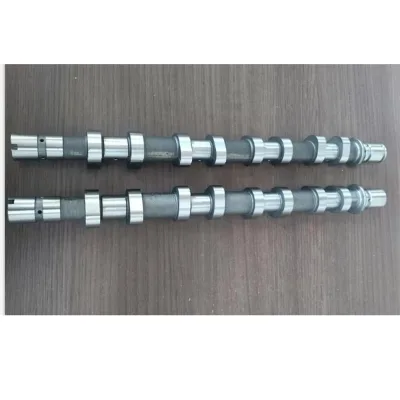
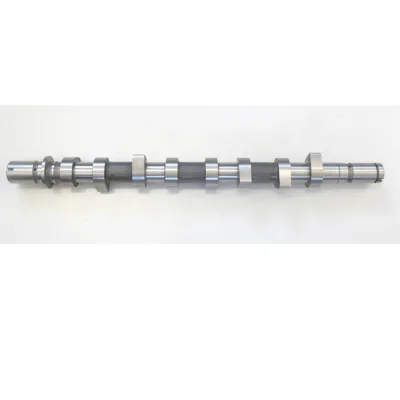
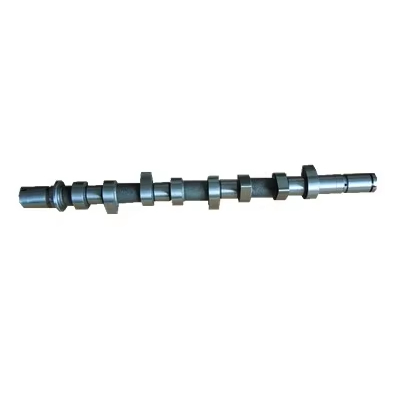
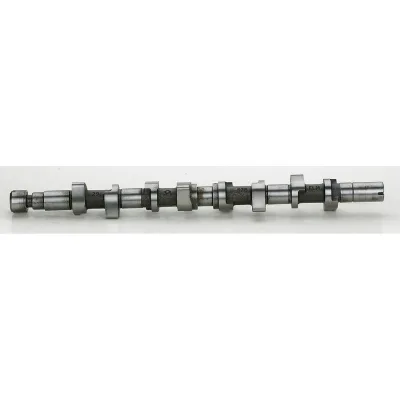
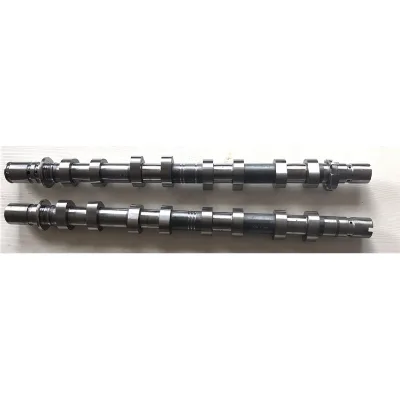
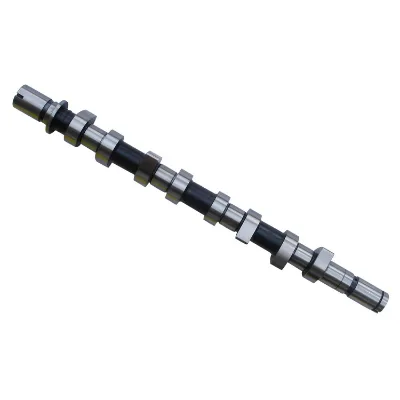
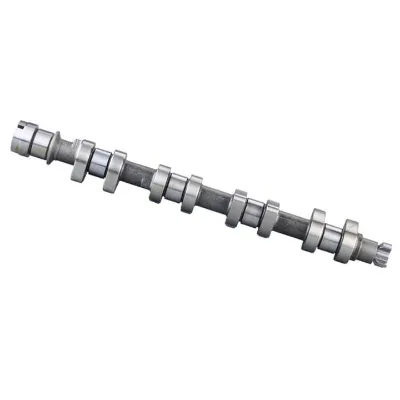
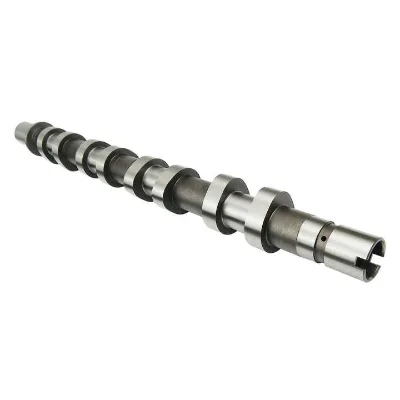
8200089894 Camshaft for Renault Clio 2 1.5 Dci K9K K9K.700 K9K.704 K9K.702
$20.00 - $30.00
MOQ: 100 Minimum






Comprehensive Sourcing Guide
Strategic Sourcing Guide for Renault F8Q 610 Camshaft Procurement
Technical Specifications and Component Identification
When sourcing the Renault F8Q 610 Camshaft, buyers must first establish a precise technical baseline to ensure compatibility with the target vehicle platform. The F8Q engine designation is a critical identifier, often associated with the Renault Kangoo, Renault Express, and the R19 1.9D models. In the current market, specific model numbers such as 7700108609, 7700108610, and 8200089894 are frequently cited as direct replacements or compatible units for these applications. Additionally, the part number 7700866418 and the OEM reference 7700106678 serve as vital verification points for procurement teams.
The physical construction of these camshafts typically involves a steel material composition, which is essential for withstanding the high mechanical stresses of the F8Q engine cycle. The design is engineered for a water-cooled system, reflecting the thermal management requirements of the 1.9-liter diesel configuration. While some listings describe the cylinder cap material as a bare cylinder head and the cylinder liner as a composite plate, the core camshaft itself remains a steel fastener component. The arrangement pattern for the engine is noted as V-style in certain broader contexts, though the F8Q is a standard inline configuration; buyers should verify the specific cylinder count, which is typically four, and valve count, often eight for this engine family.
It is crucial to distinguish between the camshaft and the broader engine block components. While some product data references the cylinder body material as cast iron and the cylinder cap material as bare, the camshaft is a distinct rotating element. The "original" size specification is a common attribute for these parts, indicating that the dimensions match the factory specifications without modification. Buyers should prioritize listings that explicitly state the purpose as "for replace/repair" and confirm the condition as "New" to avoid reconditioned or used parts that may not meet original equipment standards.
Compliance, Certification, and Quality Standards
In the B2B automotive aftermarket, compliance with international standards is a non-negotiable prerequisite for procurement. The supplied data indicates that reputable suppliers for the Renault F8Q camshaft often adhere to standards such as SGS and ISO. Specifically, the ISO/TS16949:2002 standard is mentioned in the context of automotive component manufacturing, which is a rigorous quality management system tailored for the automotive industry. This standard ensures that the manufacturing process maintains consistent quality control, traceability, and defect prevention.
Buyers must verify that the supplier holds valid certifications rather than relying on general claims. The presence of an SGS certification suggests that third-party testing has been conducted on the material properties and dimensional accuracy of the camshaft. However, buyers should not assume that every listed product automatically satisfies these standards without requesting current certification documentation. The standard EN 590 and EN 228, while relevant to diesel fuel quality, are not directly applicable to the mechanical properties of a camshaft but serve as a reminder that the entire powertrain ecosystem must meet regulatory requirements.
The "Quality: Medium" attribute observed in some listings requires careful interpretation. In a professional procurement context, "Medium" quality is often insufficient for critical engine components like camshafts, which require high precision and durability. Buyers should seek suppliers who can demonstrate a quality level equivalent to Original Equipment Manufacturer (OEM) standards, supported by the ISO/TS16949 certification. The warranty period is another critical compliance metric; a standard offering of 12 months or 1 Year is common, but this warranty should be backed by clear terms regarding failure modes and replacement protocols.
Cost Drivers and Pricing Variables
The pricing landscape for the Renault F8Q 610 Camshaft is influenced by several dynamic factors, with the observed market range falling between 1 and 130 USD. This wide variance indicates that price is not solely a function of the part itself but is heavily dependent on the supplier's location, the volume of the order, and the specific packaging requirements. The "Medium" quality classification often correlates with the lower end of this price spectrum, whereas OEM-equivalent parts with full ISO/TS16949 certification and SGS testing typically command prices closer to the upper limit.
Volume is a primary cost driver. The Minimum Order Quantity (MOQ) ranges from 1 to 100 units, suggesting that small-scale buyers can access the market with minimal financial commitment, while bulk purchasers can negotiate better unit economics. The "Mini Order: 1PCS" attribute confirms that single-unit procurement is feasible, which is useful for testing supplier reliability before committing to larger orders. However, the "Sample: Charge" attribute indicates that buyers should expect to pay for initial samples, which is a standard industry practice to cover material and logistics costs.
Packaging also impacts the final cost. Listings show variations such as "Plastic Poly Bag Inside and Outer Standard Carton," "Box, 1 PCS/CTN," or "Pallet" shipping. Bulk palletized shipments often reduce per-unit logistics costs but require higher upfront capital and storage capacity. The "Customization: Available" attribute suggests that buyers requiring specific packaging or minor modifications may incur additional costs. Furthermore, the origin of the product, primarily Chongqing, China, influences pricing due to local manufacturing costs and export logistics. Buyers should factor in the "Delivery Time: Within 30 Days Upon Receiving Payment" when calculating total landed costs, as extended lead times can impact inventory turnover and operational continuity.
Typical Applications and Vehicle Compatibility
The Renault F8Q 610 Camshaft is designed for a specific set of applications, primarily within the Renault and Nissan Diesel ecosystems. The core compatibility list includes the Renault Kangoo, Renault Express, and the R19 1.9D. These vehicles typically utilize the F8Q engine, which is a 1.9-liter diesel unit. The application data also references the Nissan Diesel 2.8L RD28, RD28T, and RD28Ti engines, indicating that while the F8Q is the primary focus, the supply chain often overlaps with related diesel engine families.
The "Application: Car, Truck" attribute highlights the versatility of these components. While the F8Q is most commonly associated with light commercial vehicles like the Kangoo and Express, the robust nature of the camshaft allows it to be used in various truck applications where similar engine architectures are employed. The "Car: Gasoline Engine" attribute in the data presents a potential point of confusion, as the F8Q is historically a diesel engine. Buyers must exercise caution here and verify that the specific listing matches the diesel F8Q architecture rather than a gasoline variant, as the valve timing and material requirements differ significantly.
The engine type "Rd28" and the specific model number "F8Q" are key identifiers for buyers. When sourcing, it is essential to cross-reference the vehicle's year, model, and engine code to ensure the camshaft fits the specific cylinder head and timing gear setup. The "Valve: 8" and "Clinder: 4" specifications confirm the engine configuration, which is standard for the 1.9-liter F8Q. Buyers should also note that the "Arrangement Pattern: V Style" mentioned in the data may refer to broader engine families but should be verified against the specific F8Q inline configuration to avoid ordering incompatible parts.
Supplier Evaluation and Operational Due Diligence
Evaluating suppliers for the Renault F8Q camshaft requires a rigorous due diligence process that goes beyond simple price comparison. The primary manufacturing origin for these parts is Chongqing, China, with some listings noting "Made in China" as the place of origin. Buyers should verify the specific manufacturing facility's capability to produce steel camshafts that meet the required tolerances. The "Manufacture: Funch" attribute appears in some data, but buyers should treat this as a potential brand or factory identifier that requires verification rather than a guaranteed standard.
Key evaluation criteria include the supplier's ability to provide proof of the "ISO/TS16949:2002" and "SGS" certifications. Buyers should request copies of these certificates and verify their validity dates. The "Warranty: 1 Year" and "Warranty: 12 Months" attributes are standard, but the terms of the warranty must be clearly defined, including coverage for material defects and workmanship. The "Condition: New" attribute is essential, and buyers should explicitly request that the supplier confirms the parts are not reconditioned or refurbished.
Logistics and communication are also critical factors. The "Express Company: DHL/TNT/FedEx" options indicate that suppliers generally offer reliable international shipping, but buyers should confirm the specific carrier and tracking capabilities. The "Delivery Time: Within 30 Days Upon Receiving Payment" is a standard lead time, but buyers should negotiate this based on order volume and urgency. The "Customization: Available" attribute suggests flexibility, but buyers should assess the supplier's capacity to handle custom requests without compromising quality or delivery schedules.
Quality Control and Long-Term Procurement Strategy
Implementing a robust quality control (QC) strategy is vital for long-term procurement success. The "Quality: Medium" attribute observed in some listings serves as a warning that not all products in the market meet high-performance standards. Buyers should establish a QC protocol that includes incoming inspection of the camshaft material, dimensional checks against the "original" size specification, and verification of the steel composition. The "Material: Steel" and "Cylinder Body Material: Cast Iron" distinctions must be maintained during inspection to ensure the correct components are received.
For long-term procurement, buyers should consider the "Sample: Charge" policy as a low-risk method to validate supplier quality before scaling orders. Testing a sample batch against the "ISO/TS16949:2002" standards can reveal potential issues with material hardness, surface finish, or dimensional accuracy. The "prod_packing" variations, such as "Plastic Poly Bag Inside and Outer Standard Carton," should be evaluated for their ability to protect the camshaft during transit, especially given the precision nature of the component.
Sustainability and supply chain resilience are also important considerations. The "Place of Origin: Chongqing, China" concentration suggests that buyers should diversify their supplier base to mitigate risks associated with regional disruptions. The "Customization: Available" feature can be leveraged to develop long-term partnerships where suppliers adapt to specific buyer needs, such as specialized packaging or branding. Ultimately, the goal is to secure a steady supply of high-quality F8Q camshafts that meet the rigorous demands of the Renault and Nissan Diesel vehicle fleets, ensuring minimal downtime and maximum operational efficiency.
Summary of Key Procurement Parameters
To facilitate quick decision-making, the following table summarizes the critical parameters for sourcing the Renault F8Q 610 Camshaft based on the available data.
| Parameter | Observed Value / Requirement | Verification Action |
|---|---|---|
| Model Numbers | 7700108609, 7700108610, 8200089894, 7700866418 | Cross-reference with vehicle VIN and engine code. |
| Material | Steel | Request material test reports (MTR). |
| Certifications | SGS, ISO/TS16949:2002 | Verify current certificate validity. |
| Warranty | 1 Year / 12 Months | Review warranty terms for coverage scope. |
| MOQ | 1 - 100 Units | Negotiate based on order volume. |
| Lead Time | Within 30 Days | Confirm exact timeline upon payment. |
| Origin | Chongqing, China | Verify factory location and audit reports. |
| Condition | New | Inspect packaging and physical condition. |
| Packaging | Poly Bag, Carton, or Pallet | Ensure protection during transit. |
By adhering to these guidelines and maintaining a disciplined approach to verification, buyers can effectively navigate the market for the Renault F8Q 610 Camshaft, ensuring they acquire components that meet the highest standards of quality and performance.
FAQs
Which model numbers fit the Renault F8Q 610 Camshaft?
Compatible model numbers include 7700108609, 7700108610, and 8200089894. These specific identifiers ensure the part matches the Renault Kangoo, Express, and R19 1.9D engine requirements without modification.
What material is used for the Renault F8Q camshaft?
The camshaft is constructed from steel to withstand high mechanical stresses. This material composition is essential for durability in the 1.9-liter diesel engine configuration found in the target vehicles.
Can I find suppliers with ISO/TS16949 certification?
Yes, suppliers often adhere to ISO/TS16949:2002 standards for automotive quality management. This certification ensures consistent manufacturing processes and traceability, which is critical for reliable engine component procurement.
What is the typical delivery time for this part?
Delivery typically occurs within 30 days upon receiving payment. Buyers should account for this lead time when planning inventory replenishment or urgent repair schedules for their vehicle fleets.
How much is the minimum order quantity for samples?
The minimum order quantity can be as low as one piece for single-unit procurement. While samples are available, buyers should expect to pay a charge to cover initial material and logistics costs.
Where are these camshafts manufactured?
These parts originate from Chongqing, China, with some listings simply stating Made in China. Buyers should verify the specific factory location to ensure quality control standards are met during production.