Source Reusable Matte Embossed Dinnerware Set for Hotels, Restaurants, Homes
Explore 25 listings for a Reusable Matte Embossed Dinnerware Set featuring ceramic, stoneware, and glass options. Buyers can compare specifications like piece counts, sizes, and certifications to find suitable options for daily use or commercial settings.
Key considerations
Products List


Comprehensive Sourcing Guide
Strategic Sourcing Guide for Reusable Matte Embossed Dinnerware Sets
Understanding Product Definitions and Material Variability
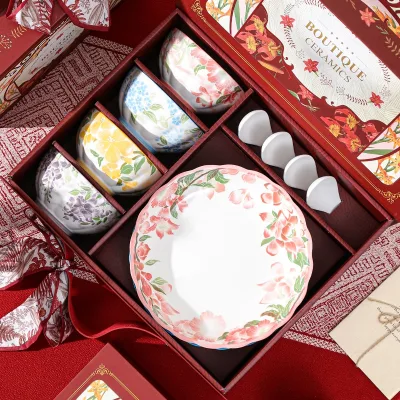
When initiating a procurement strategy for a Reusable Matte Embossed Dinnerware Set, the first critical step is defining the precise material composition and aesthetic specifications. The term "matte embossed" suggests a specific surface finish where the texture is raised (embossed) and the visual appearance is non-reflective (matte). However, market data indicates that while some listings explicitly describe "Ceramic Color Embossed Dinnerware Sets" with an embossed style, other available inventory in similar categories includes glass, stoneware, and stainless steel options.
Buyers must verify that the specific product they are sourcing matches the "matte" and "embossed" descriptors. For instance, while ceramic and porcelain are standard materials for embossed dinnerware, some suppliers may list "Stoneware" or "Glass" under similar model numbers. A specific model, TM-Ds032702, is identified as a ceramic and porcelain set featuring an embossed style with multicolor options. Conversely, other listings in the same category may feature glass materials or stainless steel with a high mirror polish, which contradicts the matte requirement. Therefore, the initial specification sheet must explicitly mandate "Ceramic," "Porcelain," or "Stoneware" with a confirmed matte finish to avoid receiving high-gloss or metallic alternatives. The "Pieces" count is another variable; observed ranges span from 6-10 pieces up to 11-20 pieces per set, requiring the buyer to define the exact service count (e.g., 12-piece vs. 20-piece) before engaging suppliers.
Technical Specifications and Dimensional Standards
Technical due diligence requires a granular review of dimensions, weight, and functional attributes. For a standard dinnerware set, the dimensions of individual components are critical for storage and logistics. Data from specific listings indicates a "Dinner Plate" size of 10.75 inches, a "Side Plate" of 8.25 inches, and a "Soup Plate" of 8 inches. Mugs in these sets are typically 10oz. These dimensions serve as a baseline for the "Ceramic Color Embossed Dinnerware Set" but may vary for other models like the "Glass Dinnerware Sets-021o-038A" or stainless steel alternatives.
The "Style" attribute is often listed as "Embossed" or "Simple," and the "Color" can range from "Multicolor" to "Colored." A key technical distinction is the presence of handles on cups; some listings specify "Cup Accessories: with Handle," while others may not. Furthermore, the "Usage" is generally categorized as "Daily Use," "Hotel," "Restaurant," or "Home." Buyers must confirm that the matte finish is durable enough for commercial dishwasher cycles if the intended use is hospitality, as some "Eco-Friendly" or "Colored" finishes may be more suitable for residential use. The "Packing Way" is also a technical specification; observed methods include "1set/Color Box, 2sets/Carton" or "Each Packed in a Polybag." These packaging details directly impact the cost of shipping and the risk of damage during transit, particularly for fragile ceramic items.
Compliance, Certification, and Regulatory Requirements
In the global B2B market, compliance is non-negotiable. For ceramic and porcelain dinnerware, the primary concern is food safety and chemical migration. The supplied data highlights several certifications that buyers should verify on the supplier's documentation. These include CE/EU, FDA, LFGB, SGS, CIQ, and EEC. The presence of these certifications suggests the product meets specific regional safety standards, but the buyer must ensure the certification applies to the specific model being ordered. For example, a listing may state "Standard: SGS" or "Standard: accpet customized," but the actual test report must be requested for the specific batch.
Additionally, social compliance is increasingly important for international buyers. Some suppliers in the dataset list "BSCI: Yes," indicating adherence to business social compliance initiatives. This is a positive indicator for ethical sourcing but should be verified against the specific factory audit reports. The "prod_standard" field often lists "customized" or specific standards like "SGS." Buyers should not assume that a general "SGS" mention covers all chemical leaching tests for lead and cadmium, which are critical for ceramic glazes. The "Delivery Time" is noted as "30-45 Day After Received Deposit," which is a standard lead time for custom ceramic production but must be factored into the supply chain timeline.
Cost Drivers and Minimum Order Quantity Analysis
Understanding the cost structure of embossed dinnerware sets is essential for budgeting. The observed price range in the market is broad, spanning from $0.20 to $13.50 USD per unit. This variance is driven by material quality, the complexity of the embossing process, and the number of pieces in the set. A 12-piece ceramic set will naturally cost more than a 6-piece glass set. The "MOQ" (Minimum Order Quantity) is another significant cost driver. Data shows MOQs ranging from 10 sets to 5000 sets, with specific listings citing 1020 sets or 10000 pieces.
For a buyer seeking a "Reusable Matte Embossed Dinnerware Set," the MOQ of 1020 sets for a specific ceramic model is a critical threshold. Smaller buyers may face challenges meeting this volume, potentially requiring them to consolidate orders or negotiate with suppliers offering lower MOQs, such as those listed at 10 sets. However, lower MOQs often come with a higher unit price. The "Mqq" (likely a typo for MOQ) of 10000 pieces for glass sets indicates that high-volume buyers are targeted for certain materials. Buyers must calculate the total landed cost, including the unit price, packaging, and shipping, to determine the true cost per set. The "Packing Way" also influences cost; "1set/Gift Box" packaging is more expensive than bulk packing but adds value for retail presentation.
Supplier Evaluation and Operational Capabilities
Evaluating a supplier for dinnerware sets requires looking beyond the product listing to their operational capabilities. The "prod_origin" is listed as "Shandong, China" or generally "China." Shandong is a known hub for ceramic production, but buyers should verify the specific factory location to assess logistics and potential trade barriers. The "Customization" attribute is marked as "Available" or "Customized," indicating that suppliers can modify colors, patterns, or packaging. However, the "Standard" field sometimes lists "accpet customized," which suggests flexibility but requires clear communication of specifications.
Suppliers should be evaluated on their ability to handle the "Eco-Friendly" claims if this is a priority. While some listings explicitly state "Feature: Eco-Friendly," this should be backed by specific material sourcing policies or production methods. The "Delivery Time" of 30-45 days is a standard expectation for custom orders, but buyers should confirm if this includes the time for sample approval and mass production. A supplier that offers "High Mirror Polish" for stainless steel may not be the best fit for a matte ceramic set, so verifying the supplier's core competency in the specific material is vital. The "Pieces" count and "Style" consistency across the batch are also indicators of quality control; a supplier that can consistently produce "Embossed" styles with "Multicolor" options is preferable to one with inconsistent output.
Quality Control and Long-Term Procurement Strategy
Implementing a robust quality control (QC) plan is essential for durable dinnerware. The "Disposable" attribute is listed as "Non-Disposable," confirming the product's intended longevity. However, the "Polish" attribute varies, with some items having a "High Mirror Polish" and others a matte finish. For matte embossed sets, the QC focus should be on the uniformity of the embossing depth and the consistency of the matte glaze. Buyers should request pre-shipment inspection reports that specifically check for chips, cracks, and glaze defects, which are common in ceramic production.
Long-term procurement considerations involve building a relationship with a supplier who can maintain consistency over multiple orders. The "Standard" field often notes "customized," which implies that the buyer can set their own quality benchmarks. However, relying solely on "customized" standards without a defined reference sample can lead to disputes. Buyers should establish a "Golden Sample" that defines the exact matte texture, embossing pattern, and color. Additionally, the "Packing Way" should be standardized to ensure that the "1set/Color Box" or "2sets/Carton" configuration protects the goods during shipping. For high-volume orders, negotiating a lower MOQ or a tiered pricing structure based on volume can improve margins. Finally, verifying the "BSCI" status and other social compliance certifications ensures that the supply chain is ethical, which is increasingly a requirement for major retailers and brands.
Comparative Analysis of Product Attributes
To assist in decision-making, the following table summarizes key attributes observed in the market for dinnerware sets, highlighting the differences between ceramic, glass, and steel options.
| Attribute | Ceramic/Porcelain Set (e.g., TM-Ds032702) | Glass Set (e.g., 021o-038A) | Stainless Steel Set |
|---|---|---|---|
| Material | Ceramic & Porcelain, Stoneware | Glass | Stainless Steel |
| Style | Embossed, Simple | Simple | High Mirror Polish |
| Finish | Matte, Multicolor | Clear/Colored | Polished |
| Pieces | 11-20 PCS | 6-10 PCS | ≤5 PCS |
| MOQ | 1020 Sets | 10000 PCS | 1000 PCS |
| Certification | CE/EU, FDA, LFGB, SGS | Customized | Customized |
| Packing | 1set/Color Box, 2sets/Carton | Each Packed in Polybag | Box |
| Origin | Shandong, China | China | China |
This comparison underscores that while all options are "reusable," the material and finish dictate the application. The ceramic set is the only one explicitly matching the "matte embossed" description with a high piece count suitable for full dining services. The glass and steel options serve different aesthetic and functional niches, often with different MOQs and packaging requirements. Buyers must align their specific product requirements with the correct material category to ensure the final product meets the "reusable matte embossed" criteria.
FAQs
What certifications are required for ceramic dinnerware sets?
Ceramic dinnerware sets typically require CE/EU, FDA, LFGB, and SGS certifications to ensure food safety. Some listings also include CIQ and EEC standards. Buyers must verify that these certifications apply to the specific batch ordered rather than assuming general compliance covers all chemical leaching tests.
How many pieces are included in a standard ceramic set?
Standard ceramic sets often contain between 11 and 20 pieces, including dinner plates, side plates, soup plates, and mugs. Specific dimensions like 10.75-inch dinner plates and 10oz mugs are common. Buyers should define the exact service count before engaging suppliers to avoid receiving mismatched sets.
Can I customize the color and packaging for this dinnerware?
Customization is available for color, patterns, and packaging configurations like gift boxes or cartons. Suppliers accept customized standards and can modify the multicolor options. However, clear communication of specifications is required to ensure the matte finish and embossed style remain consistent across the batch.
What is the typical minimum order quantity for ceramic sets?
The minimum order quantity for ceramic sets can range from 10 sets to 5000 sets depending on the supplier. Specific listings cite thresholds like 1020 sets for ceramic models and 10000 pieces for glass options. Lower MOQs often result in higher unit prices, so volume calculations are essential for budgeting.
How long does it take to receive a custom order?
Delivery time is typically 30 to 45 days after receiving the deposit for custom ceramic production. This timeline includes sample approval and mass production phases. Buyers should factor this lead time into their supply chain planning to ensure timely availability for retail or hospitality needs.
Which materials are suitable for matte embossed dinnerware?
Ceramic, porcelain, and stoneware are the primary materials suitable for matte embossed dinnerware sets. Glass and stainless steel options exist but often feature different finishes like high mirror polish. Buyers must explicitly mandate ceramic or stoneware with a confirmed matte finish to avoid receiving high-gloss or metallic alternatives.