Source Reusable PET Soda Jar for tea, food, and chemical packaging
Compare 30 listings for Reusable PET Soda Jar options featuring airtight seals and customizable designs. Buyers can evaluate materials, printing methods, and capacity ranges from 1 oz to 18 oz across various industrial uses.
Key considerations
Products List

Recycled Reusable Pet Plastic Soda Can 3.5g Edibles Dry Herbs Storage Jar
$0.15 - $0.35
MOQ: 5000 Pieces


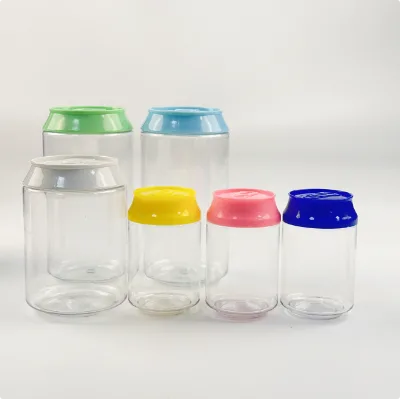
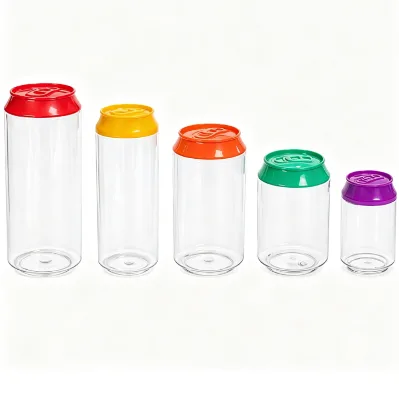


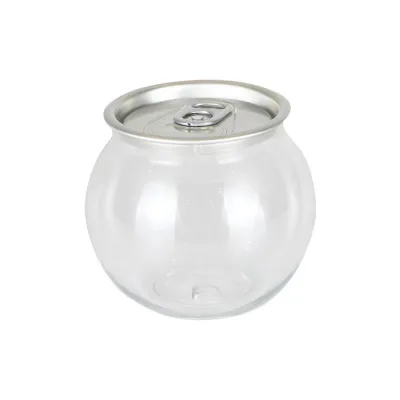
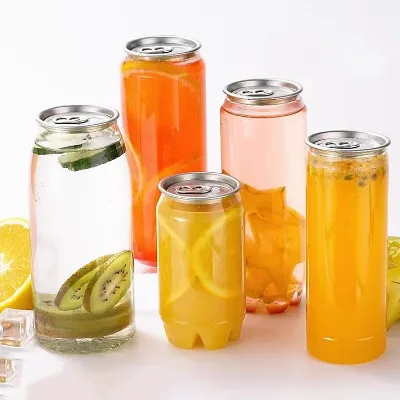


$0.12 - $0.25
MOQ: 5000 Pieces


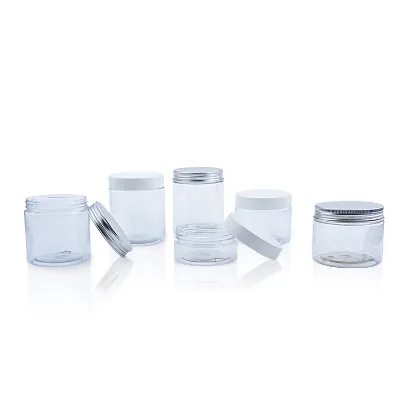

Comprehensive Sourcing Guide
Strategic Sourcing Guide for Reusable PET Soda Jars
Understanding Product Specifications and Material Composition
When sourcing reusable PET soda jars, the primary focus must be on the material integrity and the specific design attributes that define the product's utility. Based on available market data, these containers are predominantly constructed from PET (Polyethylene Terephthalate) plastic, often combined with PP (Polypropylene) pumps for dispensing applications. The material profile is critical for ensuring the jar can withstand the pressure of carbonated beverages while maintaining structural rigidity. The observed product range includes models such as PSJ-27, PSJ-14, PSJ-30, PSJ-18, and PSJ-19, indicating a variety of form factors available for different volume requirements.
The physical specifications of these jars vary significantly to accommodate different usage scenarios. Volume capacities observed in the market range from 1 oz to 18 oz, with specific models offering precise measurements like 2oz (56.70g), 3oz (85.05g), and 4oz (113.40g). The wall thickness is a key technical parameter, with some specifications noting a thickness of 1 mm, which is essential for durability and resistance to cracking during repeated use. The shape is consistently described as round, optimizing the internal volume and stacking efficiency. Furthermore, the closure mechanisms are vital for the "soda jar" classification; the observed data highlights a Screw Cap closure type, often paired with advanced features like "Smell Proof" and "Child Resistant" caps to ensure safety and freshness.
The following table outlines the observed technical variations in the current market supply:
| Attribute | Observed Specifications |
|---|---|
| Primary Material | PET Bottle + PP Pump / PET ABS Plastic |
| Volume Range | 1 oz to 18 oz (Specific: 2oz, 3oz, 4oz) |
| Wall Thickness | 1 mm |
| Closure Type | Screw Cap (Child Resistant options available) |
| Shape | Round |
| Color Options | Blue, Green, Red, Yellow, Transparent, Multicolor |
| Surface Finish | Silk Screen Printing, Heat Transfer Printing |
Buyers must verify that the specific model selected matches the intended liquid viscosity and carbonation level. While the general category is "Plastic," the distinction between standard PET and PET ABS Plastic can influence chemical resistance and clarity. The "Small Package Tank" designation suggests these units are designed for compact storage and transport, often utilizing Master Carton packing methods for bulk shipping.
Compliance, Certification, and Regulatory Verification
Navigating the regulatory landscape is a non-negotiable aspect of sourcing food-grade and beverage packaging. The supply chain for reusable PET soda jars typically involves products that must meet international safety standards. The observed data indicates that suppliers often hold certifications such as ISO, CE, and CIQ. These certifications serve as indicators of a manufacturer's commitment to quality management systems, electromagnetic compatibility (where applicable), and customs inspection compliance, respectively.
However, buyers must exercise caution and verify the current validity of these certifications for the specific batch of goods. The presence of a certification label does not automatically guarantee that every unit in a shipment meets the standard; it reflects the manufacturer's general compliance status. For food and beverage applications, the material must be food-safe. The observed "Eco-Friendly" attribute suggests a market trend toward sustainable materials, but this claim requires verification against local regulations regarding recyclability and chemical leaching.
In addition to the high-confidence certifications, background knowledge suggests that REACH compliance is a relevant standard for products entering the European market. While not explicitly confirmed in the high-confidence product facts, buyers should proactively request REACH documentation to ensure the absence of restricted substances. The "Child Resistant Cap" feature also implies compliance with specific safety standards regarding packaging for hazardous or sensitive contents, which often requires independent testing.
Buyers should request the following documentation before finalizing a purchase order:
- Valid ISO 9001 certificates for quality management.
- CE marks with supporting technical files for relevant directives.
- CIQ inspection reports for export compliance.
- Food contact safety declarations (e.g., FDA compliance for US markets, though not explicitly listed, it is implied by the "Food" usage).
- Material Safety Data Sheets (MSDS) for the specific PET and PP materials used.
Cost Drivers and Pricing Structure Analysis
The pricing structure for reusable PET soda jars is influenced by a complex interplay of material costs, customization levels, and order volume. The observed price range in the market spans from $0.05 to $3.00 USD per unit. This wide variance is not arbitrary; it is driven by several key factors that procurement professionals must analyze to avoid budget overruns.
The most significant cost driver is the level of customization. The market data confirms that "Customization" and "OEM/ODM" services are widely accepted and highly welcomed. Products with custom branding, specific color schemes (e.g., Blue, Green, Red), and unique printing methods will command a higher price point than standard transparent or multicolor stock items. The printing methods observed include Screen Printing, Labelling, Hot Stamping, and Heat Transfer Printing. Each of these processes adds a layer of cost; for instance, multi-color screen printing or hot stamping requires additional setup time and tooling compared to simple labelling.
Order volume is the second critical factor. The Minimum Order Quantity (MOQ) varies significantly, ranging from 1 unit to 100,000 units, with a specific observed MOQ of 500 pieces for certain models. Buyers purchasing at the lower end of the MOQ spectrum will face a higher unit cost due to the fixed costs of setup and production line allocation. Conversely, larger orders benefit from economies of scale, pushing the unit price toward the lower end of the $0.05-$3.00 range.
Other cost considerations include the complexity of the closure mechanism. A standard screw cap is less expensive than a specialized "Smell Proof Child Resistant Cap." Additionally, the origin of the product, identified as Anhui, China, influences logistics costs. While the manufacturing cost may be competitive, the final landed cost must account for shipping, insurance, and import duties. The single package size of 5x2x2 cm and a gross weight of 0.001 kg suggest that these items are lightweight, which is favorable for air freight, but the volume of Master Cartons required for large orders will impact sea freight consolidation.
Typical Applications and Functional Design
The versatility of reusable PET soda jars makes them suitable for a diverse array of industrial and consumer applications. The observed usage categories explicitly include Tea, Food, Aerosol, Chemical, Candy, Herbs, and Dry Flowers. This broad applicability stems from the functional design of the jars, which are engineered to be "Multifunction" and "Airproof." The airtight nature of the container is crucial for preserving the freshness of carbonated beverages, preventing the oxidation of tea, or maintaining the potency of herbs and chemicals.
For the food and beverage industry, the "Eco-Friendly" and "Reusable" attributes are particularly valuable. The ability to clean and refill these jars supports sustainability initiatives, reducing single-use plastic waste. The specific mention of "Candy Cookie, Dry Flower, Candy Gummie Edible Food" highlights their utility in the confectionery and herbal supplement sectors. In these applications, the "Smell Proof" feature is a significant selling point, preventing the escape of volatile aromatic compounds and protecting the contents from external odors.
The industrial use cases extend beyond consumer goods. The "Chemical" and "Aerosol" usage categories indicate that these jars can handle a range of viscosities and pressures. The "CR" (Child Resistant) sealing type is a critical safety feature for chemical products or pharmaceuticals that must be kept away from children. The "Small Package Tank" designation suggests that these units are also suitable for laboratory or small-scale industrial storage where space is at a premium.
Buyers should match the jar's specific attributes to their product requirements. For example, a tea brand might prioritize the "Eco-Friendly" aspect and transparent color to showcase the product, while a chemical supplier might prioritize the "Child Resistant" cap and chemical resistance of the PET ABS plastic. The "Round" shape is generally optimal for these applications as it allows for efficient stacking and maximizes the surface area for branding.
Supplier Evaluation and Sourcing Strategy
Evaluating suppliers for reusable PET soda jars requires a rigorous approach that goes beyond price comparison. The market data indicates that suppliers are located in Anhui, China, and offer a wide range of models from PSJ-14 to PSJ-30. A robust sourcing strategy involves assessing the supplier's capability to deliver consistent quality and adhere to the specified customization requirements.
First, verify the supplier's production capacity and lead times. While specific lead times are not provided in the data, the wide range of MOQs (1 to 100,000 units) suggests that suppliers cater to both small startups and large enterprises. Buyers should inquire about the supplier's ability to scale production up or down based on demand fluctuations. The "OEM/ODM" acceptance indicates that the supplier is likely equipped with design and engineering teams to handle custom requests, but buyers must confirm the turnaround time for sample development and tooling.
Second, assess the supplier's quality control processes. The presence of ISO and CE certifications is a positive indicator, but buyers should request details on their internal QC protocols. This includes how they handle material inspection, in-process checks during molding and printing, and final product testing. The "Surface Handling" methods like Silk Screen Printing and Heat Transfer Printing require precise calibration to ensure consistent color and adhesion. Ask for samples of previous work to evaluate print quality and color accuracy.
Third, consider the supplier's responsiveness to compliance requirements. Given the diverse applications (Food, Chemical, Tea), the supplier must be able to provide necessary documentation for different regulatory environments. A supplier that proactively offers REACH compliance data or food-grade certifications demonstrates a higher level of professionalism and risk management.
Finally, evaluate the logistics and packaging capabilities. The observed "Master Carton" packing method is standard for bulk shipping, but buyers should confirm the durability of the packaging to prevent damage during transit. The "Single package size" and "Single gross weight" data points are useful for calculating shipping costs, but buyers should also ask about the supplier's experience with international shipping and their ability to handle customs documentation.
Quality Control and Long-Term Procurement Considerations
Implementing a robust quality control (QC) regime is essential for ensuring that the reusable PET soda jars meet performance expectations over the long term. The QC process should begin at the material stage, verifying that the PET and PP materials meet the specified thickness and chemical resistance standards. Visual inspection is critical for checking for defects such as scratches, uneven coloring, or misaligned caps. The "Multicolor" and "Transparent" options require particular attention to ensure that the color consistency is uniform across the batch.
Functional testing should be a mandatory part of the QC protocol. This includes testing the "Airtight" and "Smell Proof" capabilities of the caps. Buyers should request evidence of pressure testing to ensure the jars can withstand the internal pressure of carbonated beverages without leaking or deforming. The "Child Resistant" mechanism should be tested to ensure it meets safety standards and is not too difficult for adults to operate.
For long-term procurement, buyers should establish a partnership with suppliers that offers stability and continuous improvement. The "Customized" nature of the product means that specifications may evolve over time. A supplier that is flexible and responsive to design changes can help buyers adapt to market trends, such as new sustainability requirements or changes in packaging regulations.
Additionally, buyers should consider the lifecycle of the product. The "Eco-Friendly" attribute suggests a focus on sustainability, but buyers should verify the recyclability of the specific PET grade used. Long-term contracts should include clauses for quality assurance, ensuring that any deviations in material or manufacturing processes are addressed immediately. Regular audits of the supplier's facility can help maintain high standards and prevent quality drift over time.
In conclusion, sourcing reusable PET soda jars requires a balanced approach that considers technical specifications, regulatory compliance, cost drivers, and supplier capabilities. By leveraging the observed data and maintaining a disciplined verification process, buyers can secure a supply chain that delivers high-quality, compliant, and cost-effective packaging solutions for their specific needs.
FAQs
What materials are used for reusable pet soda jars?
These jars are primarily constructed from PET plastic, often combined with PP pumps for dispensing. Some models utilize PET ABS plastic to ensure structural rigidity and chemical resistance for various contents like tea, food, or chemicals.
Which certifications do these plastic containers typically hold?
Suppliers commonly provide products with ISO, CE, and CIQ certifications to ensure quality management and export compliance. Buyers should verify these documents for specific batches to confirm safety standards for food and beverage applications.
Can I order custom designs for these small package tanks?
Yes, customization is widely available and OEM or ODM services are highly welcomed by manufacturers. Buyers can request specific colors like blue or green, along with printing methods such as screen printing or hot stamping for branding.
What is the minimum order quantity for these plastic bottles?
The minimum order quantity varies significantly, ranging from 1 unit to 100,000 units depending on the supplier. A specific observed MOQ is 500 pieces for certain models, while smaller orders may incur higher unit costs.
How are these jars sealed to ensure freshness?
The jars typically feature a screw cap closure type, with options for child-resistant and smell-proof designs. This sealing mechanism ensures the contents remain airproof and protects sensitive items like herbs or chemicals from external odors.
Where are these reusable soda jars manufactured?
The products originate from China, with specific manufacturing locations identified in Anhui. This region is a known hub for plastic packaging production, offering competitive pricing and established logistics for international shipping.
What volume capacities are available for these containers?
The standard volume range spans from 1 oz to 18 oz, with specific models offering 2oz, 3oz, and 4oz capacities. These sizes accommodate diverse needs, from small candy containers to larger beverage storage solutions.