Source Reusable Pottery Ceramic Mug for Daily Use, Gift, and Wedding
Compare 30 listings for Reusable Pottery Ceramic Mug options featuring custom designs, heat resistance, and eco-friendly materials. Buyers can evaluate MOQs ranging from 3 to 10,000 units with varied capacities and packing styles suitable for promotion or daily use.
Key considerations
Products List


Creative Coffee Cup Milk Cup Ceramic Water Cups Color Contrast Ceramic Mug
$3.50 - $4.00
MOQ: 100 Pieces


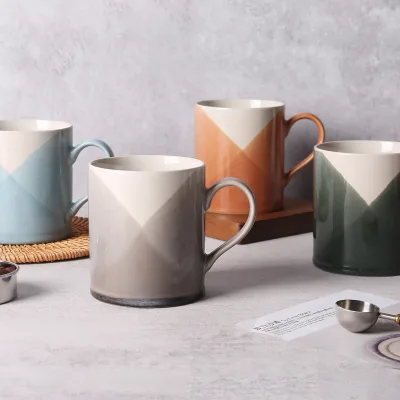
Whosale Customize Color Ceramic Coffee Cup With Handle Porcelain Dinner Mug
$0.82 - $0.93
MOQ: 1000 pieces


Comprehensive Sourcing Guide
Strategic Sourcing Guide for Reusable Pottery Ceramic Mugs
The global market for reusable pottery ceramic mugs presents a robust opportunity for B2B buyers seeking durable, aesthetically versatile, and customizable tableware solutions. As a core product category, these items serve diverse functions ranging from daily office use to specialized promotional campaigns and wedding favors. The procurement process for ceramic mugs requires a disciplined approach to verify material integrity, production capabilities, and logistical feasibility. This guide synthesizes available product attributes and industry standards to provide a framework for evaluating potential suppliers and managing the sourcing lifecycle effectively.
Technical Specifications and Material Composition
Understanding the technical specifications of ceramic mugs is the foundational step in any sourcing strategy. The primary material identified in the current market data is porcelain, a high-quality ceramic known for its durability, non-porous nature, and refined finish. Buyers must distinguish between general ceramic and porcelain, as the latter often commands a premium due to its translucency and strength. The structural design of these mugs is typically single-layer, which impacts thermal conductivity and weight. While some products feature complex designs, the fundamental architecture remains a vessel with a handle, classified under the "Cup Accessories" attribute as having a handle for ergonomic handling.
Capacity is a critical variable that dictates the product's suitability for different use cases. Market observations indicate standard capacities ranging from 10 oz to 14 oz, with options available for custom sizing. The 10 oz standard is frequently cited as a baseline for coffee and tea service, while larger volumes cater to specific beverage preferences. The thermal performance of the material is another key technical factor. Products are engineered to withstand high temperatures, ensuring safety during the filling of hot liquids. Additionally, specific product lines offer heat preservation functions, which are essential for maintaining beverage temperature over extended periods. Buyers should verify that the thermal resistance claims align with the specific ceramic formulation used by the supplier.
Design Customization and Aesthetic Capabilities
One of the most significant advantages of sourcing ceramic mugs is the extensive scope for customization. The market data confirms that customization is widely available, encompassing logos, colors, shapes, and designs. Suppliers typically accept customized logos, allowing brands to imprint their identity directly onto the product. This feature is particularly valuable for corporate gifting and promotional campaigns. The design flexibility extends to the visual appearance, with options for multicolor palettes, unicolor finishes, and specific patterns. Techniques such as hand-painting are utilized to create unique, artistic pieces, while printed designs often feature fruit motifs or other graphic elements.
The customization process also involves structural and dimensional adjustments. Buyers can request customized shapes and sizes, moving beyond the standard cylindrical form. Packaging is equally customizable, with options ranging from standard export cartons to individual polybags and custom boxes. For instance, specific configurations like 36 pieces per carton are defined by precise dimensions (442736cm), which is crucial for logistics planning. The ability to support custom colors and designs allows buyers to align the product with specific brand guidelines or event themes. However, it is important to note that while customization is supported, the availability of stock may be zero for bespoke orders, implying a made-to-order production model that requires careful lead time management.
Compliance, Safety, and Production Standards
Compliance and safety are non-negotiable aspects of sourcing food-contact ceramics. While specific certification documents are not universally listed in the general product attributes, buyers must verify that the manufacturing process adheres to international safety standards for ceramics. A notable observation in the product data is the explicit mention of "Without Ethylene Oxide Sterilization." This indicates that the production or packaging process avoids this specific chemical treatment, which is a positive attribute for buyers concerned about chemical residues. However, this does not replace the need for comprehensive food safety testing.
Buyers should request documentation regarding the glaze composition to ensure it is free from heavy metals like lead and cadmium, which are common concerns in ceramic production. The "Eco-Friendly" attribute listed for certain product lines suggests a focus on sustainable manufacturing practices, but this claim should be substantiated with third-party verification or specific material certifications. Furthermore, the "Health Care" function mentioned in some product descriptions implies a design intent for wellness, though this should be interpreted as a marketing attribute rather than a medical claim. Verification of the "10oz" standard and other size specifications ensures that the product meets the intended regulatory definitions for the target market.
Cost Drivers and MOQ Considerations
The cost structure of ceramic mugs is influenced by several variables, including material quality, customization complexity, and order volume. The observed minimum order quantity (MOQ) ranges significantly, from as low as 3 units to as high as 10,000 units, depending on the supplier and the specific product configuration. Standard models may have lower entry thresholds, such as an MOQ of 100 units, while highly customized designs or bulk promotional runs might require an MOQ of 500 units or more. The price range observed in the market spans from $0.19 to $50, reflecting the vast difference between basic unbranded units and premium, hand-painted, or custom-shaped items.
Logistics costs are a major component of the total landed cost. The packaging specifications, such as the 36 pieces per carton configuration with defined dimensions, directly impact shipping efficiency. Buyers must calculate the volume and weight of the cartons to optimize container utilization. Additionally, the "No Stock" status for many customized items means that production lead times will be a primary cost driver. Extended lead times can increase inventory carrying costs and delay time-to-market. Buyers should negotiate pricing tiers that reflect volume commitments, as the wide MOQ range suggests that economies of scale are achievable. Understanding the relationship between the "Customized" attribute and the associated price point is essential for budgeting.
Supplier Evaluation and Quality Assurance
Evaluating suppliers requires a rigorous assessment of their production capabilities and quality control systems. The origin of the products is identified as China, a major hub for ceramic manufacturing. Buyers should verify the supplier's facility capabilities regarding the "Hand-painted" technique and the ability to execute "Customized Designs." The presence of specific product models, such as "Ceramic-001" or "Home Office Decoraion-053P," suggests a catalog of established designs, but the ability to deviate from these models is critical for unique branding.
Quality control should focus on the structural integrity of the "Single-layer Ceramic Cup" and the durability of the "Withstand High Temperatures" feature. Inspections should include checks for glaze consistency, handle attachment strength, and dimensional accuracy against the specified standards. The "Standard Export Carton" requirement implies that the supplier must have experience in packaging goods for international shipping to prevent breakage during transit. Buyers should request pre-shipment samples to verify the "Multicolor" or "Unicolor" finishes and ensure that the "Printed" designs are crisp and aligned. Given the "No Stock" reality for many custom orders, the supplier's ability to manage the production timeline and communicate delays is a vital performance metric.
Typical Applications and Market Segmentation
The versatility of reusable pottery ceramic mugs allows them to serve a wide array of applications. The "Daily Use" attribute confirms their suitability for everyday consumption in homes and offices. Beyond personal use, these mugs are heavily utilized in the "Gift" and "Promotion" sectors. The "Wedding" and "Birthday" usage tags indicate their popularity as personalized favors for special events. The "Creative" and "Simple" style options cater to different aesthetic preferences, allowing buyers to target diverse consumer demographics.
In the corporate sector, the "Customized Logo Acceptable" feature makes these mugs ideal for employee appreciation, client gifts, and trade show giveaways. The "Health Care" and "Heat Preservation" functions align with wellness trends, making them attractive for health-focused brands or spas. The "Home Office Decoration" model numbers suggest a dual function as both a utility item and a decorative piece. Understanding these segmentation nuances helps buyers tailor their product selection to specific market needs. Whether the goal is mass-market distribution or niche gifting, the ability to customize the "Shape" and "Design" ensures that the product can be adapted to fit the intended application perfectly.
Long-Term Procurement and Supply Chain Resilience
Sourcing ceramic mugs involves considerations that extend beyond the initial transaction. The "No Stock" status for many items indicates a reliance on continuous production cycles. Buyers should establish long-term relationships with suppliers who can guarantee consistent quality and timely delivery. The "Customized" nature of the products means that any changes in design or material specifications must be meticulously documented to avoid production errors in future orders.
Supply chain resilience is also a factor. The reliance on a single origin, China, requires buyers to have contingency plans for potential disruptions. Diversifying suppliers or maintaining a buffer stock of standard SKUs can mitigate risks associated with lead time fluctuations. The "Standard Export Carton" and specific packaging dimensions should be standardized across orders to streamline logistics and reduce handling errors. Finally, buyers should monitor the "Eco-Friendly" trends in the market, as sustainability is becoming a key differentiator. Ensuring that the supplier's practices align with evolving environmental standards will future-proof the procurement strategy and appeal to increasingly conscious consumers.
FAQs
What materials are used for reusable pottery ceramic mugs?
The primary material identified is porcelain, a high-quality ceramic known for durability and a refined finish. Some products are described generally as ceramic, but the specific technical data highlights porcelain as the core composition for single-layer cups.
Can buyers customize the shape and logo on these mugs?
Yes, customization is widely available for logos, shapes, and designs. Suppliers accept customized logos and allow buyers to request specific shapes, colors, and designs, though stock availability for bespoke orders is typically zero.
What is the standard capacity range for these ceramic mugs?
Standard capacities observed range from 10 oz to 14 oz, with options for custom sizing. The 10 oz standard is frequently cited as a baseline, while larger volumes cater to specific beverage preferences and usage needs.
How do these mugs perform with high temperatures?
The mugs are engineered to withstand high temperatures, ensuring safety during the filling of hot liquids. Specific product lines also offer heat preservation functions to maintain beverage temperature over extended periods.
What are the typical minimum order quantities for these items?
Minimum order quantities range significantly from 3 units to 10,000 units depending on the supplier and configuration. Standard models may have lower thresholds like 100 units, while highly customized designs often require 500 units or more.
Are these mugs suitable for promotional and gift purposes?
Yes, the mugs are explicitly designed for daily use, gifts, promotions, weddings, and birthdays. Their customizable nature makes them ideal for corporate gifting and promotional campaigns where branding is essential.
How are the mugs typically packed for export?
Packing options include standard export cartons, individual polybags, and custom boxes. Specific configurations like 36 pieces per carton are defined by precise dimensions to optimize logistics and shipping efficiency.