Source RFID Card Cylindrical Turnstile for Access Control, Stadiums, and Office Buildings
Compare 30 RFID Card Cylindrical Turnstile models from Chinese manufacturers. Buyers can evaluate passage width, open speed, and traffic speed for access control systems in stadiums, office buildings, and public facilities.
Key considerations
Products List

Automatic Cylindrical Luxury Turnstile for Office Building RFID Pedestrian Speed Gate
$650.00 - $990.00
MOQ: 1 Pieces


Dual Direction Access Control Electromagnetic Card Reader Sliding Turnstile
$1900.00 - $2500.00
MOQ: 1 Pieces


RFID Tripod Turnstile IC Card Qr Code Turnstile Gate for Access Control
$217.00 - $309.00
MOQ: 1 Pieces

Automatic Full Height Turnstile with Card Reader Face Recognition Finger-Print
$2788.00 - $3480.00
MOQ: 1 Pieces
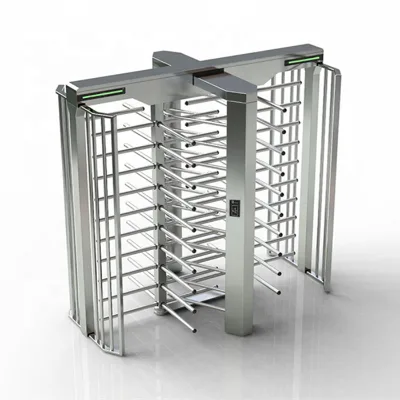

RFID+Fingerprint Dual Passage Full Height Rotation Turnstile (FHT2322D)
$3860.00 - $3900.00
MOQ: 1 Pieces


RFID and Biometric Fingerprint Single Full Height Turnstile (FHT2422)
$2360.00 - $2400.00
MOQ: 1 Pieces
Comprehensive Sourcing Guide
Strategic Sourcing Guide for RFID Card Cylindrical Turnstiles
Understanding the Technical Landscape of Cylindrical Turnstiles
When sourcing RFID card cylindrical turnstiles, buyers must first distinguish between the specific mechanical architectures available in the current market. The term "cylindrical turnstile" often serves as a broad descriptor, yet the actual product data reveals distinct operational categories, including swing gates, three-roller gates, and full-height barriers. The observed product attributes indicate a primary focus on high-traffic access control solutions where speed and durability are paramount. For instance, specific models such as the LD-B508 and LD-T302 demonstrate that the market offers both single and double movement configurations. The LD-B508 is characterized as a swing gate with a bi-directional flow, capable of handling a traffic speed of 40 persons per minute with an open speed of 0.3 seconds. In contrast, the LD-T302 represents a three-roller gate design, also supporting bi-directional traffic but with a slightly faster open speed of 0.2 seconds.
The physical dimensions and construction materials are critical variables that define the suitability of a turnstile for a specific installation site. The standard material for these units is frequently cited as SUS 304 stainless steel, which provides essential corrosion resistance and structural integrity for both indoor and outdoor environments. The housing dimensions vary significantly based on the model; for example, the LD-T302 has a defined size of 1200x280x960mm with a box thickness of 1.26mm, while other models like the DW-BZ170 and DW-SGZ112 support customization with larger dimensions such as 2600x1400x2200mm. The passage width is another critical specification, with observed ranges spanning from 600mm to 1100mm, allowing buyers to select units that accommodate the expected pedestrian volume and wheelchair accessibility requirements.
Operational Mechanics and Sensor Integration
The reliability of an RFID Card Cylindrical Turnstile depends heavily on its sensing methods and communication interfaces. The product data highlights a diverse range of sensing technologies, from slot readers to electric sensors and infrared detection systems. The LD-S707 model, for instance, utilizes an RFID card reader as its primary opening method and features an infrared sensor system comprising 6-8 pairs. This multi-pair infrared configuration is designed to prevent tailgating and ensure that the gate only opens when a single person is detected in the passage zone. The communication interface is another vital component, with options including TCP/IP and RS485 (noted as RSControl Mode). These interfaces allow the turnstile to integrate seamlessly into larger building management systems or standalone access control networks.
The drive unit composition is equally important for maintaining consistent performance over time. The observed data points to a high-performance electromagnet combined with a hydraulic transmission system as the driving force for certain models. This combination ensures smooth opening and closing cycles while providing the necessary torque to handle heavy usage. The gate opening and closing times are typically optimized for efficiency, with some models achieving a cycle time of 1-2 seconds. The working voltage is standardized at AC220±10%V at 50±10%Hz, which is the standard power supply in many regions, though buyers should verify local voltage compatibility. The open signal is often provided as a dry contact signal, offering flexibility for integration with various third-party controllers.
Compliance, Certification, and Material Standards
In the realm of B2B procurement, verifying compliance and material standards is a non-negotiable step. The supplied facts explicitly identify SUS 304 stainless steel as the standard material for several models, ensuring a baseline level of durability and resistance to environmental degradation. However, buyers must remain vigilant regarding the specific grade and thickness of the steel used, as these factors directly impact the lifespan of the unit. The observed box thickness of 1.26mm for the LD-T302 serves as a reference point, but customization options may alter these specifications. It is essential to confirm that the stainless steel grade meets the requirements for the intended environment, particularly for outdoor installations where exposure to rain, humidity, or salt air is a concern.
Regarding certifications, the provided data mentions ISO9001 as a background standard but notes it as low-confidence for concrete claims. This distinction is crucial for procurement teams. While ISO9001 indicates a commitment to quality management systems, it should not be assumed as a guaranteed attribute of every listed product without direct verification from the supplier. Buyers should request specific test reports and compliance certificates relevant to the electrical and mechanical safety of the turnstile. The normal service life is cited as more than 5 million times for some models, with failure-free operation exceeding 8 million times for others. These figures represent high-performance benchmarks, but they are based on specific testing conditions. Procurement teams should verify that these figures are derived from independent testing laboratories and apply to the specific configuration being purchased.
Cost Drivers and Pricing Structures
The pricing of RFID card cylindrical turnstiles is influenced by a complex interplay of factors, including material costs, customization levels, and technological complexity. The observed price range in the market spans from 12 USD to 4789 USD, a vast disparity that reflects the difference between basic models and highly customized, high-specification units. The lower end of the spectrum likely corresponds to standard configurations with minimal customization, while the upper end includes units with advanced features such as face recognition, extensive customization of dimensions, and premium material finishes.
The minimum order quantity (MOQ) is another significant cost driver, with observed ranges between 1 and 12 units. This flexibility allows buyers to purchase single units for pilot projects or small-scale installations, while larger orders may benefit from volume discounts. The packing method, whether carton, plywood case, or wooden box, also impacts the final cost, particularly for international shipping. Customization is a major factor in price escalation; models like the DW-BZ170 and DW-SGZ112 explicitly support customization, which can alter dimensions, materials, and functional features. Buyers should clearly define their requirements early in the sourcing process to avoid unexpected cost overruns associated with custom engineering.
Typical Applications and Traffic Management Needs
The versatility of RFID card cylindrical turnstiles makes them suitable for a wide array of applications, from corporate offices and residential complexes to transportation hubs and event venues. The specific application is often dictated by the traffic speed and direction of flow required. For high-traffic environments such as subway stations or large office buildings, models like the LD-B508 and LD-T302 are ideal due to their ability to handle 40 persons per minute. The bi-directional and dual-direction capabilities allow for flexible traffic management, accommodating both entry and exit flows efficiently.
The access direction is a critical consideration for security and flow management. Some models support one-way traffic, which is useful for controlled entry points, while others offer two-way traffic for general access. The opening mode is another key differentiator; while many units rely on RFID card readers, some advanced models integrate face recognition technology. This integration enhances security by adding a biometric layer to the access control process. The choice of application also influences the required passage width; a 600mm aisle width may suffice for pedestrian-only traffic, while wider passages up to 1100mm are necessary for areas requiring wheelchair accessibility or the movement of carts and equipment.
Supplier Evaluation and Quality Assurance Protocols
Evaluating suppliers for RFID card cylindrical turnstiles requires a rigorous approach to quality assurance and due diligence. The origin of the products is consistently listed as China, with specific mentions of Shenzhen as a manufacturing hub. While this provides a clear geographical context, buyers should not rely solely on location as a proxy for quality. Instead, they must verify the supplier's manufacturing capabilities, quality control processes, and after-sales support. The warranty period is a key indicator of supplier confidence; an 18-month warranty is observed in the data, which serves as a baseline for buyer expectations.
Quality control should extend beyond the warranty period to include pre-shipment inspections. Buyers should request detailed specifications for the drive unit, sensor arrays, and control boards to ensure they meet the stated performance metrics. The failure-free operation claims of 5 to 8 million cycles should be backed by test data from recognized laboratories. Additionally, the customization process should be managed with clear documentation to ensure that the final product matches the agreed-upon specifications. The packing method, whether carton or plywood case, should be verified to ensure that the units are protected during transit, especially for international shipments.
Long-Term Procurement and Maintenance Considerations
Sourcing RFID card cylindrical turnstiles is not merely a one-time transaction but the beginning of a long-term operational relationship. The maintenance requirements of these units are significant, particularly in high-traffic environments. The hydraulic transmission and electromagnet systems require regular inspection and lubrication to maintain optimal performance. The open speed and gate closing times may degrade over time if maintenance is neglected, leading to increased wear and potential safety hazards. Buyers should establish a maintenance schedule that includes routine checks of the infrared sensors, RFID readers, and mechanical components.
The availability of spare parts is another critical factor for long-term procurement. Given the variety of models and the potential for customization, ensuring a steady supply of compatible parts is essential. The standardization of components, such as the AC220V power supply and common communication interfaces, can simplify the maintenance process. However, buyers should verify the compatibility of replacement parts with their specific model before making a purchase. The support customization feature offered by some models adds flexibility but also complexity to the supply chain. Buyers should work closely with suppliers to establish a clear protocol for ordering and installing replacement parts, ensuring minimal downtime for the access control system.
Conclusion
The procurement of RFID card cylindrical turnstiles requires a balanced approach that considers technical specifications, compliance standards, cost drivers, and long-term maintenance needs. By leveraging the observed data on models like the LD-B508, LD-T302, and DW-BZ170, buyers can make informed decisions that align with their specific operational requirements. The wide range of options, from standard swing gates to customized three-roller gates, offers the flexibility needed to address diverse access control challenges. However, the success of any procurement initiative depends on rigorous supplier evaluation, clear communication of specifications, and a commitment to ongoing quality assurance. By adhering to these principles, buyers can secure reliable, high-performance turnstile solutions that enhance security and efficiency in their facilities.
FAQs
What is the typical opening speed for these turnstiles?
The opening speed typically ranges from 0.2 to 0.3 seconds depending on the model. Some units like the LD-T302 open in 0.2 seconds, while swing gates like the LD-B508 operate at 0.3 seconds to ensure smooth traffic flow.
Which materials are used for the turnstile housing?
Most units are constructed from SUS 304 stainless steel for durability and corrosion resistance. Specific models may feature a box thickness of 1.26mm, ensuring structural integrity for both indoor and outdoor access control applications.
Can these gates support bi-directional traffic flow?
Yes, many models support bi-directional or dual-direction traffic flow to accommodate entry and exit simultaneously. Specific configurations like the LD-B508 and LD-T302 are designed to handle two-way movement efficiently.
What is the maximum traffic speed capacity?
The observed traffic speed capacity is up to 40 persons per minute for high-traffic models. This throughput is achieved through optimized movement mechanisms and rapid opening cycles suitable for busy access control points.
How many infrared sensor pairs are typically installed?
Advanced models often include between 6 to 8 pairs of infrared sensors to prevent tailgating. This multi-pair configuration ensures accurate detection of individuals passing through the gate passage zone.
What is the standard working voltage for operation?
The standard working voltage is AC220±10%V at 50±10%Hz for most units. This power specification ensures compatibility with standard electrical systems in many regions while maintaining stable operation.
Is customization available for dimensions and features?
Customization is available for dimensions, materials, and functional features like opening modes. Buyers can request specific aisle widths or support for face recognition integration depending on the supplier's capabilities.