Source RFID Blocking Brown Leather Wallet for Business Card, Passport, Credit Card
Compare 30 verified options for an RFID Blocking Brown Leather Wallet designed for business card, passport, and credit card storage. Buyers can evaluate customization, materials like leather and PU, and lead times from Guangzhou and Sichuan suppliers.
Key considerations
Products List


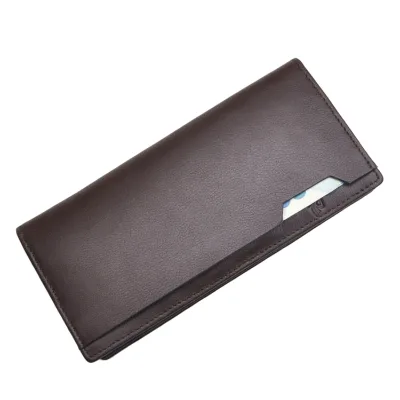


RFID Blocking Bifold Mens Card Holder Genuine Leather Card Wallet for Men
$7.85 - $8.59
MOQ: 200 Pieces


Custom Logo Real Leather Money Clip Wallet Brown Credit Cards Holder Wallet
$3.89 - $5.78
MOQ: 500 Pieces


Comprehensive Sourcing Guide
Strategic Sourcing Guide for RFID Blocking Brown Leather Wallets
The global market for secure personal accessories has seen a significant shift toward integrated security features, with RFID blocking technology becoming a standard expectation for business professionals and travelers. When sourcing a RFID Blocking Brown Leather Wallet, buyers must navigate a complex landscape of material authenticity, technical shielding efficacy, and supply chain reliability. This guide provides a disciplined framework for evaluating potential suppliers and products, ensuring that procurement decisions are grounded in verifiable facts rather than marketing assertions. The following sections detail the technical requirements, compliance standards, cost structures, and quality assurance protocols necessary for a successful B2B procurement cycle.
Technical Specifications and Material Integrity
The core of a high-quality RFID wallet lies in the synergy between its protective shielding and its exterior material. While the search term specifies "leather," the supply data indicates a diverse material ecosystem where Leather, Aluminum, and PU are all prevalent. A buyer must distinguish between genuine leather, which offers a premium aesthetic and natural durability, and PU (polyurethane), which provides a consistent texture and often lower cost but may lack the longevity of natural hides. The observed market includes products with Medium Soft hardness and others with Partial Hard structures, suggesting that the internal lining and card slot tension vary significantly by manufacturer.
Crucially, the "RFID blocking" claim requires verification of the internal shielding mechanism. In many modern designs, this is achieved through a layer of Aluminum or a specialized conductive fabric integrated between the leather exterior and the card slots. The shielding must be continuous to prevent signal leakage. Buyers should request technical diagrams showing the placement of the conductive layer. Furthermore, the Waterproof attribute observed in some listings is a critical differentiator; however, waterproofing leather often involves chemical treatments that may alter the material's breathability and feel. When evaluating a brown leather wallet, the buyer must confirm whether the waterproofing is a surface coating or an inherent material property, as this impacts long-term maintenance.
The physical dimensions are equally important. Standard business card and passport sizes vary, but the data points to specific standard sizes such as 88*60mm and 142*100mm, alongside fully Customized options. A wallet intended for business use must accommodate standard credit cards, checkbooks, and passports without causing the closure mechanism to fail. The Double Folding style is a common configuration that maximizes storage while maintaining a compact profile. Buyers should verify that the Stitching Bag element, a noted fashion feature, is reinforced, as the stress points on a folding wallet are prone to failure if the stitching is not of high tensile strength.
Compliance, Certification, and Security Standards
In the B2B sector, compliance is not merely a formality but a prerequisite for market entry. The supply data explicitly lists a robust set of certifications including CE, RoHS, FCC, ISO9001, and BSCI. These certifications serve as third-party validations of the product's safety, environmental impact, and manufacturing ethics.
- CE and RoHS: These are essential for selling in the European market. RoHS specifically restricts the use of hazardous substances, ensuring that the dyes, glues, and metal components used in the wallet do not contain lead, mercury, or other toxins.
- FCC: While typically associated with electronic devices, the presence of FCC certification in the data suggests that the RFID blocking technology itself may be treated as a radio frequency device, requiring compliance with electromagnetic interference standards.
- ISO9001: This indicates that the supplier operates a certified quality management system, which is vital for ensuring consistent production output and traceability.
- BSCI: This certification addresses social compliance, ensuring that the labor conditions in the manufacturing facility (often located in Guangzhou or Sichuan, China) meet international ethical standards.
Buyers must treat these certifications as dynamic requirements. A supplier may hold a valid ISO9001 certificate for one factory line but not for another. Therefore, the procurement team should request the specific certificate numbers and verify their validity dates directly with the issuing bodies. The presence of these certifications does not automatically guarantee that every batch of Brown or Grey wallets meets the standard; it only validates the supplier's system. The buyer must insist on batch-specific test reports, particularly for the RFID shielding efficacy, to ensure the product performs as advertised in real-world scenarios.
Cost Drivers and Pricing Dynamics
Understanding the cost structure of RFID wallets is essential for negotiating favorable terms. The observed price range in the market spans from 0.3 to 20 USD, a variance that reflects differences in material quality, customization complexity, and order volume. The primary cost drivers include the type of leather used, the density of the RFID shielding material, and the intricacy of the Silkscreen Logo or Gold/Silver Foil application.
The MOQ (Minimum Order Quantity) is another significant factor influencing unit cost. The data indicates a range of 50 to 600 units, with some suppliers offering Small Order Is Acceptable terms. However, the standard MOQ for custom branding often sits around 100 units. Orders below this threshold may incur a premium per unit or a setup fee. The Sample Charge is also a critical cost component, with observed rates of 25 USD for small goods and 50 USD for bags. These fees are typically refundable upon placing a bulk order, but they represent an initial cash outlay that buyers must budget for.
Lead times also impact the total cost of ownership. The Production Lead Time is listed as 30-45 Business Days after confirmation, with a Sample Lead Time of 5-7 Business Days. Rushing production or expediting shipping via Express (5-7 days) versus Sea (25-30 days) will significantly alter the final landed cost. Buyers should factor in the Delivery Date variability, especially for seasonal collections like Spring/Autumn or All seasons, to avoid stockouts or excess inventory costs.
Typical Applications and Design Versatility
The versatility of RFID wallets makes them suitable for a wide array of applications. The data highlights specific uses such as Business Card, Passport, Credit Card, and Check Book storage. This suggests that the product is designed for professionals who require secure, organized storage for multiple document types. The Unisex gender classification and Trend style elements indicate that these wallets are marketed to a broad demographic, from corporate executives to fashion-conscious travelers.
The Special Treat of "Pitch New Ideas/Trendy/Styles for Inspiration" suggests that suppliers are actively innovating in design. With 100PCS Monthly New Arrivals, the market is dynamic, and buyers looking for unique products can leverage this flow of new designs. The Dark brown and Grey color options provide neutral palettes that appeal to corporate clients, while the Customized logo options allow for corporate gifting and brand promotion. The Double Folding design is particularly effective for business applications, offering a slim profile that fits easily into suit pockets or briefcases while protecting sensitive data.
Supplier Evaluation and Operational Capabilities
Selecting the right supplier requires a deep dive into their operational capabilities. The data points to suppliers located in Guangzhou and Sichuan, China, both of which are major manufacturing hubs. Guangzhou is known for its leather goods industry, while Sichuan may offer competitive labor costs. The Warehouse Inventory of 4000 M² suggests a supplier with significant storage capacity, which is crucial for handling large orders and maintaining buffer stock.
Key evaluation criteria include the Quality Control process. The data mentions Pre-Production and During Production Check, which is a robust approach. Buyers should verify the specific checkpoints in this process, such as material inspection, stitching tension testing, and RFID shielding verification. The Service attribute of "24/7 Fast Reply/Excellent Communication" is a strong indicator of a supplier's responsiveness, which is vital for resolving issues during the production cycle.
Additionally, the OEM & ODM Service availability is a critical differentiator. Suppliers offering these services can adapt existing designs or create entirely new products based on the buyer's specifications. The Customized logo options, including Silkscreen, Gold/Silver Foil, and potentially other methods, require a supplier with advanced printing capabilities. Buyers should request samples of previous work to assess the quality of these customizations before committing to a large order.
Quality Control Protocols and Long-Term Procurement
Ensuring consistent quality is the cornerstone of long-term procurement success. The Quality Control protocol should extend beyond the factory floor to include pre-shipment inspections. Buyers should mandate a third-party inspection for the first few orders to validate the supplier's internal QC claims. The inspection should focus on the integrity of the RFID blocking layer, the durability of the Stitching, and the accuracy of the Color match, particularly for Dark brown shades which can vary between batches.
Long-term procurement considerations involve the supplier's ability to scale and maintain consistency. The Production Lead Time of 30-45 Business Days is standard, but buyers should negotiate flexibility for repeat orders. The Packing standards, such as 1 Piece Put Into a Polybag and 15-20PCS Per Carton, are designed to protect the product during transit. However, for high-value orders, buyers may request reinforced packaging or custom Tissue Paper wrapping to enhance the unboxing experience.
The Extra Service of "Build Your Own Website" suggests that some suppliers offer digital integration services, which can be valuable for e-commerce brands. This service allows buyers to create a dedicated storefront for their branded products, streamlining the sales process. Finally, the Delivery Methods by Express, Air, and Sea offer flexibility in managing inventory. Buyers should develop a logistics strategy that balances cost and speed, utilizing Sea shipping for bulk replenishment and Express for urgent restocking or sample delivery.
Conclusion
Sourcing an RFID Blocking Brown Leather Wallet requires a meticulous approach that balances technical specifications, compliance requirements, and supplier capabilities. By focusing on verified certifications like CE, RoHS, and ISO9001, and by rigorously testing the RFID shielding and material durability, buyers can mitigate the risks associated with this category. The wide range of Customized options and Trend designs offers significant opportunities for differentiation in the market. However, success depends on a disciplined evaluation of the supplier's Quality Control processes and their ability to meet MOQ and Lead Time expectations. With a clear understanding of these factors, procurement teams can build a resilient supply chain that delivers high-quality, secure, and stylish wallets to their customers.
FAQs
What certifications do RFID blocking brown leather wallets typically have?
Products often carry CE, RoHS, FCC, ISO9001, and BSCI certifications. These validate safety, environmental compliance, and ethical manufacturing standards for global markets.
How long does production take for custom orders?
Production lead time is 30-45 business days after confirmation. Samples require 5-7 business days, with delivery options including express, air, or sea shipping.
Can I get a customized logo on the wallet?
Yes, customized logos are available via silkscreen, gold foil, or silver foil methods. Suppliers accept OEM and ODM services to meet specific branding needs.
What is the minimum order quantity for these wallets?
The MOQ ranges from 50 to 600 units, with some suppliers accepting small orders starting at 100 units. Customization often requires meeting a baseline quantity.
Which materials are used for RFID blocking wallets?
Materials include genuine leather, PU, and aluminum shielding layers. The hardness varies from medium soft to partial hard depending on the specific design and manufacturer.
Where are these wallets manufactured?
Manufacturing origins include Guangzhou and Sichuan, China. These locations are major hubs for leather goods and offer significant warehouse inventory capacity for bulk orders.
How are the wallets packed for shipment?
Items are wrapped in tissue paper and poly bags, then packed 15-20 pieces per carton. Bulk bundles may contain 100 pieces with 2000 pieces per master carton.