Source RGB TV LED Light Strip for Home Decorations, Holiday, and Events
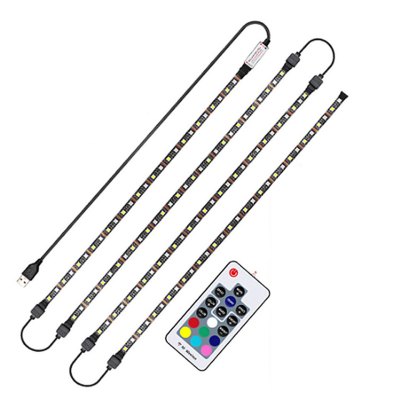
Compare 30 RGB TV LED Light Strip options from verified suppliers with varying certifications like CE and RoHS. Buyers can evaluate specifications such as brightness, voltage, and lifespan to find suitable solutions for home decorations and holiday displays.
Key considerations
Products List


The New LED Strip Light 5050 RGB 400mA LED Strip TV Backlight Flexible LED Strips
$0.80 - $6.00
MOQ: 500 Meters

Hot Sale 760-840lm/M Flexible Light Strip White LED Light Strip with TV Backlight
$0.80 - $6.00
MOQ: 500 Meters


Same Screen TV Ambient Light Smart Screen Color Selection Decoration LED Lights
$9.99 - $10.99
MOQ: 50 Pieces

Comprehensive Sourcing Guide
Strategic Sourcing Guide for RGB TV LED Light Strips
Understanding Technical Specifications and Performance Metrics
When sourcing RGB TV LED light strips, buyers must first establish a clear understanding of the technical parameters that define product performance. The core functionality of these strips relies on the precise integration of light-emitting diodes (LEDs) and their control mechanisms. Based on observed market data, the LED packaging type is predominantly "Chip," which refers to the internal semiconductor structure rather than a pre-assembled package. This distinction is critical for understanding heat dissipation and light uniformity. The specific models identified in the current market, such as the B2835 0.83mm Bracket Series and the TP08417, utilize different form factors, with the latter often associated with a standard PCB width of 8mm or customizable dimensions.
The spectral output of these strips is defined by specific wavelength ranges for the primary colors. For red light, the wavelength typically falls between 620-625nm, while green spans 520-525nm. Blue light is observed in the range of 452.5-457.5nm. These wavelengths are essential for achieving the "Full Color" capability required for ambient lighting applications. The brightness levels are equally critical, with red LEDs often rated between 700-1000mcd, green LEDs between 1700-2100mcd, and blue LEDs between 300-550mcd, all measured under a test condition of If=20mA. Buyers should verify that the supplier provides test data matching these specific conditions, as variations in current can significantly alter perceived brightness.
Power consumption and voltage requirements are fundamental to system compatibility. The observed data indicates a standard operating voltage of 12V, with power consumption for certain configurations staying below 6W. The LED light source is frequently identified as 5050 RGB SMD, a common surface-mount device format. However, other models may utilize SMD3535 chips. The quantity of LEDs per meter is another variable; some strips are configured with 60 LEDs per meter, while others may vary. The physical length of the strips is often standardized at 5 meters per unit, though customization is available for lengths such as 3m, 10m, 15m, or 20m. The PCB width is another specification that requires verification, with common widths being 8mm or 10mm, or fully customizable based on the specific bracket series used.
Compliance and Certification Verification
In the global B2B market, compliance is not merely a regulatory formality but a prerequisite for market access and liability protection. The RGB TV LED light strips observed in the current supply chain demonstrate a wide array of certifications, reflecting the diverse export destinations of the products. Common certifications include CE, RoHS, and EMC, which are standard for European markets. However, specific product lines may carry additional certifications such as LVD, CCC, FCC, VDE, SAA, GS, and FDA. The presence of these certifications indicates that the product has undergone testing for electromagnetic compatibility, low voltage safety, and material restrictions.
Buyers must exercise caution when interpreting certification claims. While some product listings explicitly state "CE, RoHS, EMC, LVD, CCC, FCC, VDE, SAA, GS, FDA," others may only list "CE" or "CE, RoHS, EMC, LVD, CCC." It is the responsibility of the procurement team to verify that the specific batch of goods being ordered carries the necessary certifications for the destination country. For instance, the SAA certification is mandatory for the Australian market, while the FCC is required for the United States. The absence of a specific certification on a product page does not necessarily mean the product is non-compliant, but it does mean the buyer must request the specific test reports and certificates before finalizing the order.
The material composition also plays a role in compliance. The use of PPA (Polyphthalamide) brackets is noted in several product specifications, which is a high-performance thermoplastic known for its flame retardancy and durability. This material choice often supports compliance with fire safety standards. Furthermore, the "Changeable" emitting color attribute suggests that the control electronics must meet specific EMC standards to prevent interference with other household devices. Buyers should ensure that the supplier provides a Declaration of Conformity (DoC) that matches the exact model number and batch being purchased, as certifications are often tied to specific production runs and design revisions.
Cost Drivers and Pricing Structures
The pricing of RGB TV LED light strips is influenced by a complex interplay of technical specifications, certification requirements, and order volume. The observed price range in the market spans from $0.20 to $19.90 USD, a significant variance that reflects differences in product quality, LED chip grade, and included accessories. The lower end of this spectrum typically corresponds to basic models with standard LED quantities and minimal packaging, while the higher end often includes premium features such as higher brightness, advanced control systems, or specialized certifications.
Order Volume is a primary driver of cost. The Minimum Order Quantity (MOQ) observed ranges from 5 to 1000 units. Suppliers offering lower MOQs, such as 5 units, may charge a premium per unit due to the administrative and logistical overhead of handling small batches. Conversely, orders approaching the 1000-unit threshold often benefit from economies of scale, resulting in a lower unit price. Buyers must balance their inventory needs with their budget constraints, recognizing that smaller orders may be necessary for market testing but will carry a higher cost per unit.
Additional cost factors include the customization options available. The "Customization: Available" and "OEM/ODM: Yes" attributes indicate that buyers can request specific lengths, PCB widths, or packaging configurations. These customizations often incur setup fees or higher unit costs, particularly if they require changes to the production line or the use of non-standard materials. The packaging type also affects the final price; options range from "Carton" and "Box/Cartons" to "Blister Shell Packaging." The latter, while offering better protection and retail presentation, adds to the overall cost. Furthermore, the weight of the shipment, with Gross Weight (G.W.) observed at 11.1kgs and Net Weight (N.W.) at 9.6kgs for standard cartons, influences shipping costs, which are a significant component of the total landed cost for international buyers.
Typical Applications and Compatibility
The primary application for RGB TV LED light strips is home decoration and holiday lighting, as explicitly noted in the product attributes. These strips are designed to provide ambient backlighting behind televisions, monitors, or entertainment centers, enhancing the viewing experience by reducing eye strain and adding a layer of visual depth. The "Universal Compatibility" attribute suggests that these products are designed to fit a wide range of TV sizes and mounting configurations. The ability to change colors allows users to match the lighting to the content being viewed or to the mood of the room, making them a versatile addition to modern home entertainment setups.
Beyond home use, the "Holiday" designation implies suitability for seasonal decorations. The "Changeable" emitting color feature enables dynamic lighting effects that can be synchronized with music or specific events. The technical specifications, such as the working temperature range of -25 to 65 degrees Celsius, ensure that the strips can operate reliably in various indoor environments, including unheated garages or rooms with fluctuating temperatures. The "3~5 Years" lifetime and "50000h" life rating indicate that these products are built for long-term use, making them a cost-effective solution for permanent installations.
The compatibility with different power sources is another key application factor. With a standard voltage of 12V, these strips can be powered by standard AC adapters or integrated into existing 12V DC systems. The "LED Strip Light: RGB" attribute confirms their ability to produce a full spectrum of colors, which is essential for creating dynamic lighting scenes. The "OEM/ODM Acceptable" status suggests that these products can be branded or modified to meet the specific needs of retailers or corporate clients, further expanding their application scope to include commercial signage, retail displays, and event lighting.
Supplier Evaluation and Selection Criteria
Selecting the right supplier for RGB TV LED light strips requires a rigorous evaluation process that goes beyond price comparison. Buyers should prioritize suppliers who demonstrate transparency in their product specifications and certification status. The presence of detailed technical data, such as the specific wavelength ranges, brightness levels, and voltage requirements, is a strong indicator of a professional supplier. Suppliers who can provide clear documentation regarding the "PPA Bracket" material and the "SMD3535" or "5050" LED chip types are more likely to deliver consistent quality.
The supplier's ability to handle customization is another critical factor. Given the "Customization: Available" and "OEM/ODM: Yes" attributes, buyers should assess the supplier's flexibility in modifying product dimensions, lengths, and packaging. The "Standard: 2.8×3.5mm" and "Standard: TP08417" references suggest that suppliers may have established standards that can be adapted. A capable supplier will work with the buyer to optimize these standards for specific requirements without compromising quality.
Geographic origin is also a consideration. The observed data indicates that products originate from China, with specific mentions of Ningbo as a production hub. While this is a common manufacturing center, buyers should verify the specific factory location and audit the supplier's production capabilities. The "Product Origin: China" attribute is a general statement, and buyers should seek more granular information about the manufacturing facility to ensure it meets their quality and ethical standards. Additionally, the supplier's track record in handling certifications such as "CE, RoHS, EMC, LVD, CCC, FCC, VDE, SAA, GS, FDA" should be verified through independent testing reports.
Quality Control and Long-Term Procurement Considerations
Ensuring the quality of RGB TV LED light strips is essential for maintaining customer satisfaction and minimizing returns. The "Warranty: 3 Years" and "Warrantly: 2years" attributes indicate that suppliers are willing to stand behind their products, but buyers must understand the terms of these warranties. A robust quality control process should include testing for brightness consistency, color accuracy, and durability under the specified operating conditions. The "Test Conditions: If=20mA" specification should be used as a benchmark for acceptance testing.
Long-term procurement considerations involve assessing the supplier's ability to maintain consistent quality over time. The "Life: 50000h" and "Lifetime: 3~5 Years" claims require validation through accelerated life testing. Buyers should request sample batches for independent testing to verify these claims before committing to large orders. The "Packing Size: 56.5X36.5X23.5cm" and "prod_packing: Carton" details highlight the importance of proper packaging to prevent damage during transit. A supplier with a strong track record in packaging will ensure that the products arrive in perfect condition, reducing the risk of damage-related returns.
Finally, buyers should consider the supply chain resilience of their suppliers. The "Customized: OEM/ODM Acceptable" attribute suggests that the supplier has the capacity to adapt to changing market demands. However, buyers should also evaluate the supplier's lead times and inventory management practices. While specific lead times are not provided in the data, the ability to meet MOQs ranging from 5 to 1000 units indicates a flexible production schedule. By focusing on suppliers with strong quality control systems, transparent certification practices, and a commitment to long-term partnership, buyers can secure a reliable supply of high-quality RGB TV LED light strips for their business needs.
Comparative Analysis of Product Attributes
To facilitate informed decision-making, the following table summarizes the key technical and compliance attributes observed in the current market for RGB TV LED light strips. This comparison highlights the variability in specifications and helps buyers identify the features that align with their specific requirements.
| Attribute Category | Specific Parameter | Observed Value/Range | Notes for Verification |
|---|---|---|---|
| LED Specifications | Packaging Type | Chip | Verify internal structure |
| Chip Type | SMD3535, 5050 | Check model compatibility | |
| Quantity | 60PCS/M | Confirm per meter count | |
| Wavelength (R/G/B) | 620-625 / 520-525 / 452.5-457.5 nm | Critical for color accuracy | |
| Brightness (R/G/B) | 700-1000 / 1700-2100 / 300-550 mcd | Measured at If=20mA | |
| Electrical | Voltage | 12V | Standard operating voltage |
| Power | <6W | Verify total consumption | |
| Life | 50000h / 3-5 Years | Check warranty terms | |
| Physical | PCB Width | 8mm, 10mm, Custom | Verify fit for TV bezel |
| Length | 3m, 5m, 10m, 15m, 20m | Standard vs. Custom | |
| Material | PPA Bracket | Check flame retardancy | |
| Compliance | Certifications | CE, RoHS, FCC, etc. | Verify destination country needs |
| Logistics | Packing | Carton, Box, Blister | Check protection level |
| Origin | China (Ningbo) | Verify factory location |
This table serves as a reference point for buyers to compare different product listings and ensure that the selected RGB TV LED light strips meet all necessary technical and regulatory requirements. By systematically evaluating these attributes, buyers can make data-driven decisions that align with their procurement goals and quality standards.
FAQs
What certifications do rgb tv led light strips typically have?
Common certifications include CE, RoHS, EMC, LVD, CCC, FCC, VDE, SAA, GS, and FDA. Buyers must verify that the specific batch carries the necessary certifications for their destination country before finalizing orders.
How long is the typical lifespan of these LED strips?
The product life is rated at 50,000 hours, with a general lifetime of 3 to 5 years. This duration ensures reliability for permanent installations in home decoration and holiday lighting applications.
Which voltage and power consumption levels are standard?
The standard operating voltage is 12V, with power consumption often staying below 6W for specific configurations. This allows compatibility with standard AC adapters and existing 12V DC systems.
Can I customize the length and packaging of the strips?
Yes, customization is available for lengths such as 3m, 5m, 10m, 15m, or 20m, along with PCB widths. Packaging options include cartons, boxes, or blister shell packaging depending on the order requirements.
What are the specific brightness levels for red, green, and blue LEDs?
Brightness ranges are 700-1000mcd for red, 1700-2100mcd for green, and 300-550mcd for blue under 20mA test conditions. These values ensure full color capability for ambient lighting effects.
What is the minimum order quantity for purchasing these strips?
The observed minimum order quantity ranges from 5 to 1000 units depending on the supplier and customization needs. Lower MOQs may carry a higher unit price due to administrative overhead.
Where are these products typically manufactured and shipped from?
Products originate from China, with specific production hubs mentioned in Ningbo. Shipping details include standard carton packing with a gross weight of 11.1kg and net weight of 9.6kg.