Source RGB Lighting Gaming Mouse Pad for Gaming, Office, and Streaming
Compare 30 RGB Lighting Gaming Mouse Pad options featuring USB connections, adjustable wrist support, and custom designs. Buyers can evaluate thermal transfer printing, eco-friendly materials, and various sizes for gaming, office, and streaming applications.
Key considerations
Products List


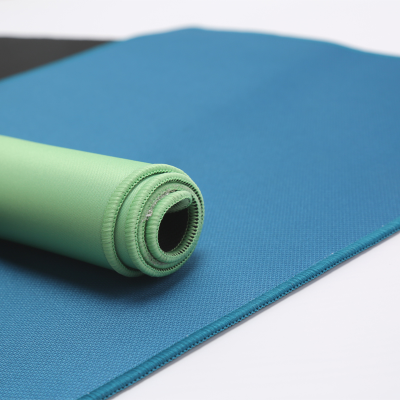
Customized Computer Print Design Colorful LED Light Gaming RGB Mouse Pad
$2.50 - $4.80
MOQ: 100 Pieces




Comprehensive Sourcing Guide
Strategic Sourcing Guide for RGB Lighting Gaming Mouse Pads
The global demand for high-performance computer peripherals has driven a significant shift toward specialized gaming accessories, with RGB lighting gaming mouse pads emerging as a critical component for immersive setups. For B2B procurement professionals, sourcing these items requires a nuanced understanding of technical integration, material science, and regulatory compliance. Unlike standard desk mats, RGB variants introduce complex electrical components that must be harmonized with the base material and surface texture to ensure durability and safety. This guide synthesizes available product data and industry standards to provide a structured approach for evaluating suppliers and defining specifications for bulk procurement.
Technical Specifications and Functional Integration
The core differentiator of an RGB Lighting Gaming Mouse Pad lies in the seamless integration of illumination with the functional surface. Based on observed product attributes, the interface for these devices is predominantly USB Connection, delivering power via a DC 5V / 2A output. This power requirement is standard for low-voltage LED arrays but necessitates robust cable management and connector durability in the final design. The lighting itself is characterized as Peripheral Light, often utilizing RGB LED technology to provide customizable color schemes that sync with other gaming peripherals.
The physical construction varies significantly between models. Some units are defined as Type: RGB Mouse Pad, while others are categorized as Wireless Charging Mouse Pad, indicating a convergence of functionality where the pad serves as a charging surface for compatible devices. The base material is consistently identified as Non-slip Rubber Base, ensuring the pad remains stationary during intense gaming sessions. The surface texture is typically Smooth, which is essential for optical mouse sensors to track accurately without friction interference.
Dimensions and thickness are critical variables in the specification phase. Observed standards include specific dimensions such as 800x300x4mm for larger gaming models, while other variations list standard sizes like 401010cm or 4299cm, which may refer to packaging or specific regional sizing conventions. Thickness ranges from 1.5mm to 6mm, with custom options available. Buyers must verify the exact thickness of the rubber base, as thicker bases (approaching 6mm) offer superior wrist support and stability, whereas thinner profiles (1.5mm) are more portable but may lack the same level of damping. The shape is generally Custom Shape, allowing for ergonomic designs that extend beyond standard rectangles, though standard rectangular forms remain common for mass production.
Material Composition and Surface Engineering
The material composition of the mouse pad directly impacts its longevity and performance. The primary material is Rubber, specifically a Non-slip Rubber Base, which provides the necessary friction to prevent sliding on desk surfaces. The surface layer, where the mouse glides, is described as having a Smooth texture. This smoothness is crucial for minimizing drag and ensuring precise cursor control. However, the surface must also be Scratch Proof, a feature explicitly noted in product attributes, to maintain performance over time despite the abrasive nature of mouse feet.
Printing capabilities are a significant factor in customization. The observed production methods include Thermal Transfer Printing, Sublimation, Screen Printing, and Heat Transfer. Thermal Transfer Printing is highlighted as a specific attribute, suggesting a high level of detail and color fidelity for logos or designs. The ability to support Custom Design and Custom Shape allows buyers to create branded merchandise or unique ergonomic layouts. Additionally, the product is noted as 100% Eco-Friendly Non-Toxic, a claim that requires rigorous verification through supplier documentation to ensure compliance with environmental regulations in target markets.
Color options are diverse, with observed listings including Red, Green, Gray, Blue, and Black. The choice of color can influence the aesthetic integration of the mouse pad within a gaming setup, particularly when coordinating with RGB lighting effects. The lighting itself may be Non-Heated or Heated, though the "Non-Heated" attribute is more standard for passive RGB pads, while "Heated" options may refer to specialized comfort features in larger desk mats.
Compliance, Certification, and Safety Standards
In the B2B sector, compliance is not merely a formality but a prerequisite for market access. The observed product data lists a comprehensive array of certifications, including SGS, Sedex, CE, ISO, FCC, Rech, GS, UL, CSA, RoHS, Weee, and Sig. These certifications cover various aspects of safety, environmental impact, and electromagnetic compatibility.
- Safety and Electrical Standards: Certifications like UL, CSA, and CE are essential for electrical products, ensuring that the USB connection and internal wiring meet international safety standards to prevent fire hazards or electrical shock.
- Environmental Compliance: RoHS (Restriction of Hazardous Substances) and Weee (Waste Electrical and Electronic Equipment) are critical for markets in the European Union and other regions with strict environmental laws. They ensure that the product does not contain lead, mercury, or other hazardous materials and that end-of-life disposal is managed correctly.
- Quality and Management: SGS and Sedex indicate third-party verification of quality management systems and ethical supply chain practices. ISO certification suggests adherence to international standards for quality management.
Buyers must request valid, up-to-date certificates for each batch or production run. Relying on a generic claim of "CE Certified" without specific test reports is insufficient. The specific model numbers, such as JZL-01, JZL-101, JZL-183, and A-01, should be cross-referenced with the certification documents to ensure the specific configuration being sourced is covered. The absence of a specific certification for a particular model variant can be a red flag during the supplier evaluation process.
Cost Drivers and Pricing Dynamics
The pricing of RGB gaming mouse pads is influenced by several distinct factors. The observed price range in the market is 0.31 to 9 USD, a wide spectrum that reflects differences in size, material quality, and feature complexity. The lower end of the range likely corresponds to standard, non-illuminated or basic illuminated pads with minimal packaging, while the higher end includes premium models with advanced RGB synchronization, wireless charging capabilities, and custom shapes.
Material costs are a primary driver. The use of high-grade Non-slip Rubber and the integration of LED arrays increase the bill of materials. The complexity of the printing process also affects cost; Thermal Transfer Printing and Sublimation offer superior durability and color vibrancy compared to standard screen printing but may incur higher setup costs. Customization is a significant cost variable. While the product attributes indicate that Customization, Custom Design, and Customized Packaging are available, these services typically require higher Minimum Order Quantities (MOQ) and longer lead times.
The observed MOQ range is 1 to 1000 units. This flexibility allows buyers to test the market with small batches or commit to large-scale production runs. However, the unit price often decreases as the order volume increases, a standard economic principle in manufacturing. Buyers should negotiate based on the total value of the order, considering the trade-off between unit price and the flexibility of lower MOQs. The packaging type, whether OPP Bag, Paper Box, or Carton, also impacts the final cost, as custom packaging solutions generally carry a premium over standard bulk packaging.
Supplier Evaluation and Quality Control Protocols
Selecting the right supplier requires a multi-faceted evaluation strategy. The product origin is listed as China, a major hub for electronics manufacturing, but this does not guarantee uniform quality. Buyers should prioritize suppliers who demonstrate transparency in their production processes and provide clear documentation for all certifications.
Quality control should begin with the verification of the Base Material. The Non-slip Rubber Base must be tested for adhesion and durability to ensure it does not delaminate from the surface layer over time. The Surface Texture must be consistent, with no rough spots that could damage mouse sensors. The Scratch Proof attribute should be validated through abrasion testing to ensure the surface maintains its smoothness after extended use.
For RGB models, electrical safety is paramount. The USB Connection and internal wiring must be tested for short circuits and voltage stability. The Peripheral Light should be checked for uniformity in illumination and color accuracy. The Sample Time of 3-5 Days is a critical metric for evaluating supplier responsiveness. A supplier that can deliver a functional sample within this timeframe demonstrates an efficient production workflow.
Buyers should also evaluate the supplier's capacity for Customization. The ability to support Custom Shape and Custom Design indicates a flexible manufacturing line. However, buyers must verify that the supplier has the technical expertise to execute these customizations without compromising the structural integrity of the pad. The Gross Weight of 269g for specific models provides a benchmark for checking consistency in production; significant deviations in weight may indicate material inconsistencies or quality control issues.
Typical Applications and Market Segmentation
The applications for RGB lighting gaming mouse pads extend beyond simple desk accessories. The primary market segment is the Gaming industry, where these pads are used to enhance the visual experience of the setup. The attribute "Applications: Game" confirms this primary use case. The integration of RGB lighting allows for synchronization with other gaming peripherals, creating a cohesive aesthetic that is highly valued by the gaming community.
Beyond gaming, these products have applications in Computer Accessories and Electronic Products. The versatility of the design allows them to be used in office environments where a touch of personalization is desired. The Wireless Charging capability, noted in some models, expands the application to include mobile device charging, making the mouse pad a multifunctional desk accessory.
The market is also segmented by size and shape. Large sizes are suitable for users who require ample space for both mouse movement and keyboard placement, while Medium sizes cater to users with smaller desk real estate. The Custom Shape attribute allows for niche applications, such as ergonomic designs that fit specific desk layouts or promotional items with unique branding.
Long-Term Procurement Considerations
Sourcing RGB gaming mouse pads is not a one-time transaction but a long-term partnership that requires careful planning. The Sample Time of 3-5 Days is a baseline for initial prototyping, but full production lead times will vary based on order volume and customization requirements. Buyers should establish clear communication channels with suppliers to manage expectations regarding production schedules.
Packaging is a critical long-term consideration. The observed options include OPP Bag, Paper Box, and Carton. For retail distribution, Paper Box or custom packaging is often preferred for its aesthetic appeal and protection. For bulk industrial use, Carton packaging may be more cost-effective. The ability to support Customized Packaging is a valuable asset for brands looking to differentiate their products.
Sustainability is an increasingly important factor in long-term procurement. The claim of 100% Eco-Friendly Non-Toxic materials should be backed by verifiable data. Buyers should inquire about the recyclability of the rubber base and the disposal methods for the electronic components. Adherence to standards like RoHS and Weee ensures that the product aligns with global sustainability goals.
Finally, the warranty and after-sales support provided by the supplier are crucial. Given the electronic nature of RGB pads, there is a risk of component failure over time. Buyers should negotiate clear terms regarding defect rates and replacement policies. The ability to source replacement parts or repair services can extend the lifecycle of the product and protect the buyer's investment.
In conclusion, sourcing RGB lighting gaming mouse pads requires a balance of technical precision, regulatory compliance, and strategic supplier management. By focusing on the specific attributes outlined in this guide, buyers can navigate the complexities of the market and secure high-quality products that meet the demands of the gaming and electronics industries. The wide range of options available, from standard models to fully customized solutions, offers significant opportunities for differentiation and growth in the B2B sector.
FAQs
What certifications are required for RGB gaming mouse pads?
Required certifications include SGS, CE, ISO, FCC, RoHS, and UL to ensure safety and compliance. These documents verify electrical safety and environmental standards for the USB connection and LED components before market entry.
How long does it take to receive a sample?
Sample time is typically 3-5 days for standard requests. This allows buyers to verify material quality, surface texture, and RGB lighting functionality before committing to a bulk order.
Which customization options are available for design and shape?
Custom design and custom shape options are available for most models. Buyers can request specific dimensions like 800x300x4mm or unique layouts to match their branding or ergonomic needs.
Can the product be sourced with eco-friendly materials?
Yes, the product is described as 100% eco-friendly and non-toxic. This claim requires verification through supplier documentation to ensure compliance with environmental regulations in target markets.
What is the typical price range for bulk orders?
The observed price range is 0.31 to 9 USD depending on size and features. Lower prices apply to basic models while higher costs reflect advanced RGB synchronization and wireless charging capabilities.
Which interface type is standard for these devices?
The standard interface is a USB connection delivering DC 5V / 2A power. This ensures compatibility with most computers and provides stable power for the peripheral RGB LED lights.
What materials are used for the base and surface?
The base material is non-slip rubber, and the surface texture is smooth. This combination prevents sliding during gaming while ensuring accurate optical mouse sensor tracking without friction interference.