Source Rhinestone Nail Art Jewelry for Garments, Shoes, Bags
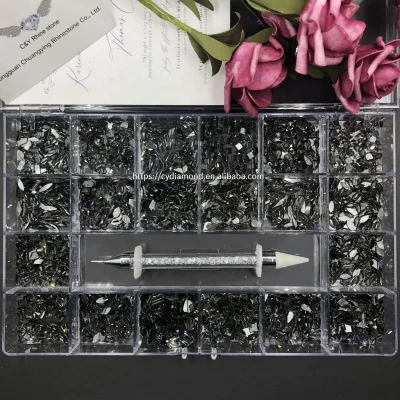
Find 30 listings for Rhinestone Nail Art Jewelry featuring glass flatback stones with 16 or 2088 cuts. Buyers can compare sizes from Ss3 to Ss40, neon colors, and non-hotfix options for use on garments, shoes, and bags.
Key considerations
Products List


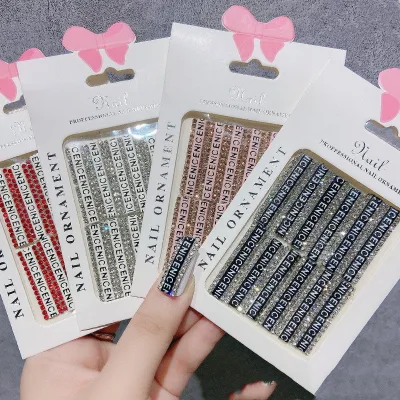
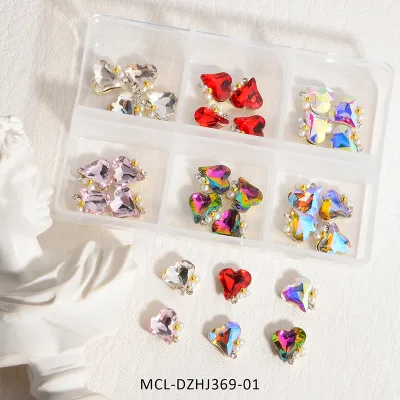
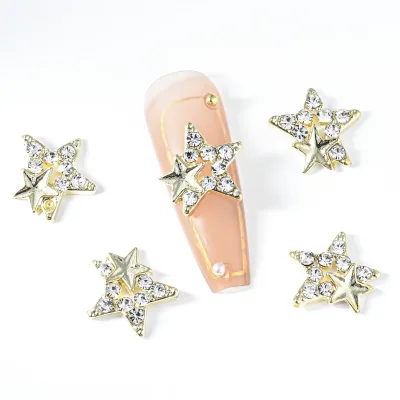
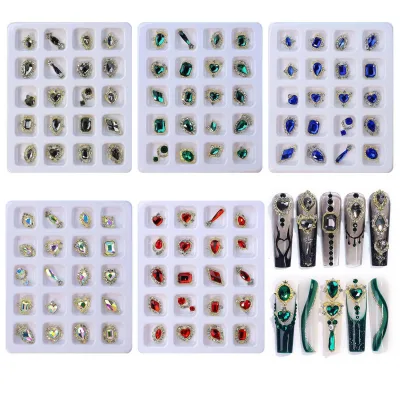
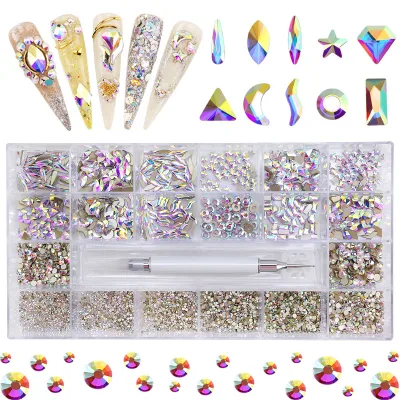
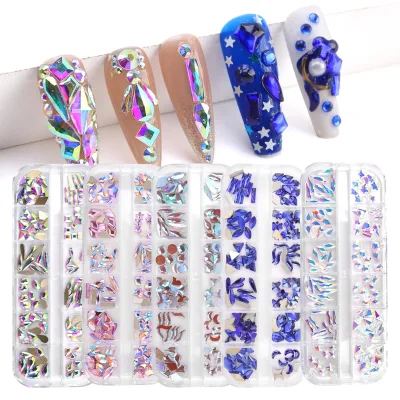
3D Nail Art Decorations Acrylic Diamond Different Shapes Nail Rhinestones
$0.80 - $1.20
MOQ: 100 Pieces






Comprehensive Sourcing Guide
Strategic Sourcing Guide for Rhinestone Nail Art Jewelry
The global market for decorative accessories has seen a surge in demand for high-fidelity embellishments, particularly within the beauty and fashion sectors. Rhinestone Nail Art Jewelry represents a specialized niche where precision, optical clarity, and adhesion reliability are paramount. For procurement professionals, sourcing these items requires a granular understanding of material science, manufacturing tolerances, and supply chain logistics. This guide synthesizes available market data to provide a structured approach to acquiring high-quality loose rhinestones and flatback crystals designed specifically for nail art applications. The focus remains on evidence-based criteria, ensuring that buyers can make informed decisions without relying on unverified marketing claims.
Technical Specifications and Material Composition
The foundation of any successful procurement strategy for nail art rhinestones lies in the precise definition of technical specifications. The core material for high-end decorative stones is glass, which offers superior refractive index and durability compared to acrylic or plastic alternatives. In the current market, glass rhinestones are frequently categorized by their cut and facet structure, which directly influences their visual impact under various lighting conditions.
Buyers must distinguish between different cut technologies. One prevalent specification observed in the market is the "16 cuts" configuration, often described as having eight large and eight small facets. This specific geometry is engineered to maximize light refraction, creating a "super shine" effect that is highly desirable for nail art. Another variation involves a "2088 cuts" specification, which suggests an even more complex faceting pattern intended to enhance sparkle. The distinction between these cuts is critical, as the complexity of the cut impacts both the manufacturing cost and the final aesthetic result.
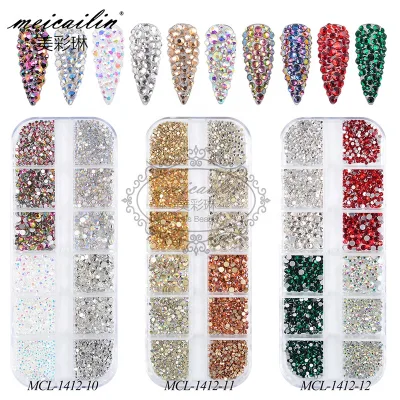
Size is another non-negotiable specification. The industry utilizes a standardized sizing system denoted by "Ss" followed by a number, representing the stone's diameter in millimeters. Available sizes in the market range widely, from Ss4 up to Ss40, with common intermediate sizes including Ss6, Ss10, Ss16, Ss20, and Ss30. For nail art specifically, smaller sizes such as Ss3 to Ss10 are often preferred for intricate detailing, while larger stones may be used for accent pieces. The shape is predominantly round, and the style is typically flatback, which is essential for the application method used in nail art. Unlike hotfix stones that have a heat-activated adhesive backing, these are non-hotfix stones, requiring the application of external glue.
Compliance, Certification, and Safety Standards
When sourcing products for personal care and beauty applications, compliance with international safety standards is a primary concern. The supply chain for glass rhinestones often originates from manufacturing hubs in China, specifically regions like Guangdong. In this context, verifying that the supplier adheres to specific environmental and safety regulations is mandatory.
Buyers should look for explicit certification marks on product documentation. The market data indicates that compliant products often carry CE and ROHS certifications. The CE mark signifies conformity with health, safety, and environmental protection standards for products sold within the European Economic Area. The ROHS directive restricts the use of specific hazardous materials in electrical and electronic equipment, but in the context of decorative accessories, it serves as a proxy for the absence of lead, cadmium, and other heavy metals that could leach from the glass or the metallic backing.
For nail art specifically, the safety of the materials is paramount since they are applied directly to the human body. While the glass itself is generally inert, the metallic foil backing (often gold foiled) and any dyes used in the coloring process must be non-toxic. Procurement teams must request test reports or certificates of analysis that explicitly confirm the absence of restricted substances. It is not sufficient to rely on general claims; the documentation must be specific to the batch or model number being purchased. Additionally, the packaging materials should be evaluated for safety, ensuring that the OPP bags or envelopes used do not contain harmful plasticizers that could transfer to the product or the user.
Cost Drivers and Pricing Dynamics
Understanding the cost structure of Rhinestone Nail Art Jewelry is essential for budgeting and negotiation. The observed price range in the market is extensive, spanning from $0.06 to $23.80 per unit or batch, depending on the volume and specifications. This wide variance is driven by several key factors.
The primary cost driver is the complexity of the cut. Stones with a "2088 cuts" or "16 facets with star cut" configuration require more precise machinery and longer processing times than standard 16-cut stones. Consequently, the unit price for high-cut stones will be significantly higher. The size of the stone also influences cost; larger stones (e.g., Ss30, Ss40) generally command a higher price per piece than smaller sizes due to the higher volume of raw glass material required.
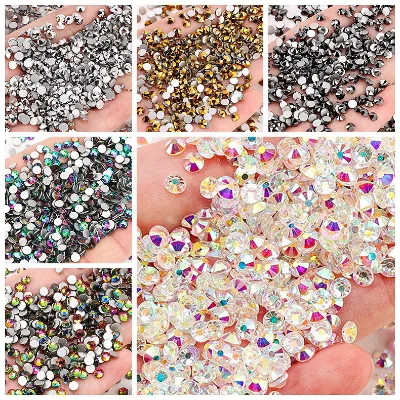
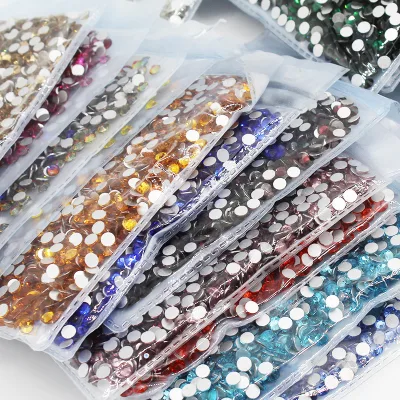
The material quality and the presence of special features, such as neon colors or UV-reactive properties, add to the cost. The market features specific color palettes including Fuchsia, Sapphire, Orange, Jonquil, Peridot, and Red. Products claiming to be "super shiny in ultraviolet light" involve specialized coatings or glass formulations that increase production costs. Furthermore, the packaging method plays a role; bulk packaging in large polybags may reduce the per-unit cost compared to small packet packs intended for retail display.
Minimum Order Quantity (MOQ) is another critical financial factor. While some suppliers may offer low MOQs as low as 1 unit for sampling, standard commercial orders often require a minimum of 10 bags. This threshold affects the total capital outlay and inventory holding costs. Buyers must balance the need for variety against the MOQ constraints to optimize cash flow.
Typical Applications and Usage Scenarios
Rhinestone Nail Art Jewelry is versatile, extending beyond simple nail decoration to various fashion and accessory applications. The primary use case is, as the name suggests, nail art. The flatback design allows for easy gluing onto the nail surface, creating durable and intricate designs that withstand daily wear. The non-hotfix nature of these stones means they can be applied with standard nail glues, offering flexibility in design placement.
Beyond the beauty industry, these stones are widely used in garment decoration, shoe embellishment, and bag accessories. The "glass nail rhinestones" and "flat back rhinestone" categories are frequently listed with usage tags including garments, shoes, bags, and phone decoration. This versatility makes them a valuable inventory item for manufacturers of fashion accessories. The ability to customize the product, including color and size, allows suppliers to cater to specific design trends in the fashion sector.
The application method is consistent across these uses: by glue. This distinguishes them from hotfix stones, which require a heat press. For buyers sourcing for multiple product lines, understanding this distinction is vital. If a buyer's production line relies on heat application, these non-hotfix stones would be incompatible. However, for hand-applied nail art or cold-glue applications on bags and garments, they are the ideal choice.
Supplier Evaluation and Sourcing Criteria
Evaluating potential suppliers requires a rigorous assessment of their capabilities and reliability. The supply chain for these products is often centralized in specific manufacturing regions, with Guangdong, China, being a prominent origin point. When evaluating a supplier, buyers should verify their production capacity and technological capabilities.
Key indicators of a reliable supplier include the availability of free samples. The market data suggests that many suppliers offer free samples for neon rhinestones, allowing buyers to test the quality, color accuracy, and cut precision before committing to a large order. This is a critical step in the vetting process. Additionally, the supplier's response time and delivery capabilities should be assessed. A typical delivery time of around 3 to 5 days upon quantity indicates a responsive supply chain, but this should be confirmed for specific order volumes.
Payment terms are another area of scrutiny. Standard methods include T/T (Telegraphic Transfer), Western Union, PayPal, and Money Gram. While these are common, buyers should ensure that the payment terms align with their risk management policies. For larger orders, a letter of credit or escrow service might be preferable to direct bank transfers.
The supplier's ability to provide consistent quality is paramount. Buyers should inquire about the "Quality" assurance processes, such as the "16 Facets with Star Cut" or "2088 Cuts" consistency. A supplier that can guarantee the facet count and the uniformity of the gold foil backing is more likely to deliver a product that meets design specifications. The supply capability, often noted as "Kingswick Rhinestone Appliques" or similar branding, should be verified to ensure the supplier has the capacity to meet demand without compromising quality.
Quality Control and Long-Term Procurement Considerations
Implementing a robust quality control (QC) protocol is essential for maintaining product integrity. For glass rhinestones, QC should focus on several key areas: facet clarity, color consistency, and adhesion surface quality. The "2088 cuts" or "16 facets" must be sharp and free of burrs, which could damage the nail or fabric. The gold foil backing must be evenly applied without peeling or discoloration.
Buyers should establish a sampling protocol where a random selection of stones from each batch is tested for UV shine and color accuracy against the provided color charts (Fuchsia, Sapphire, etc.). The "Super Shine in Ultraviolet Light" feature, if claimed, must be verified under controlled lighting conditions. Any deviation in the cut or color could render the stones unsuitable for high-end nail art applications.
Long-term procurement considerations involve building a sustainable relationship with the supplier. This includes negotiating favorable terms for repeat orders, ensuring consistent lead times, and maintaining open communication regarding inventory levels. The "Delivery Time" of 3 to 5 days is a benchmark, but buyers should confirm if this holds true during peak seasons. Furthermore, the packaging integrity must be maintained; stones packed in "Envelop Bag/OPP Bags" or "Small Packet Pack" must be sealed to prevent loss or contamination.
In conclusion, sourcing Rhinestone Nail Art Jewelry requires a meticulous approach that balances technical specifications, compliance requirements, and cost efficiency. By focusing on glass material, precise cut counts, and verified certifications like CE and ROHS, buyers can secure high-quality products that meet the demands of the beauty and fashion industries. The wide range of sizes and colors available offers significant flexibility, but the success of the procurement effort depends on rigorous supplier evaluation and quality control measures.
FAQs
What material are the Rhinestone Nail Art Jewelry stones made of?
The stones are made of glass, which offers superior optical clarity and durability compared to plastic alternatives. This material ensures high refractive index and resistance to scratching, making it ideal for long-lasting nail art designs and decorative applications.
How are these flatback rhinestones applied to nails or garments?
These non-hotfix stones must be applied using external glue rather than heat activation. The flatback design allows for secure adhesion to nails, shoes, bags, and garments when standard adhesive is used, providing flexibility for intricate hand-applied designs.
Which certifications do the glass rhinestones meet for safety compliance?
The products meet CE and ROHS standards to ensure safety and environmental compliance. These certifications verify the absence of hazardous materials like lead and cadmium, making the stones safe for direct application on the human body and for general decorative use.
Can buyers request free samples for neon rhinestone colors?
Yes, free samples are offered for neon rhinestone colors to verify quality before bulk ordering. This allows buyers to test specific hues like Fuchsia, Sapphire, and Red, ensuring the UV shine and color accuracy meet their design requirements before committing to a larger purchase.
What is the minimum order quantity for purchasing these rhinestones?
The standard minimum order quantity is 10 bags for commercial transactions. While some suppliers may accept lower quantities for sampling, bulk orders typically require this threshold to optimize production and shipping logistics for the specified glass flatback stones.
How many facets do the high-quality cut rhinestones feature?
The stones feature either 16 facets with a star cut or 2088 cuts for enhanced sparkle. This complex faceting geometry maximizes light refraction, creating a super shine effect that is particularly visible under ultraviolet light and enhances the visual appeal of nail art.
What is the typical delivery time for orders placed with suppliers?
The typical delivery time is around 3 to 5 days upon confirmation of quantity. This rapid turnaround supports quick inventory replenishment for businesses needing immediate access to glass rhinestones for nail art, garment decoration, or other fashion accessory applications.