Source Right Door Lock Actuator for cars, trucks, and industrial machinery
Find 30 listings for the Right Door Lock Actuator from verified Chinese suppliers. Buyers can compare mechanical and electronic models, voltage ratings, and theft-proof performance levels to select the correct part for vehicle repair or automation equipment.
Key considerations
Products List


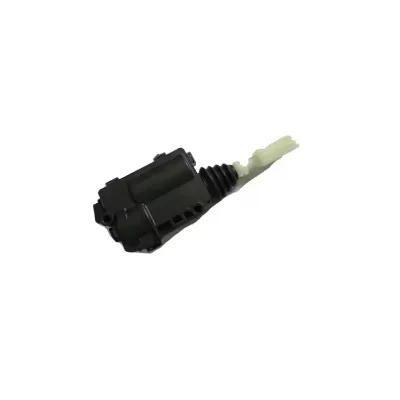


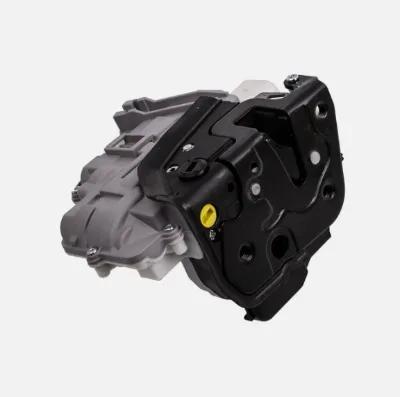


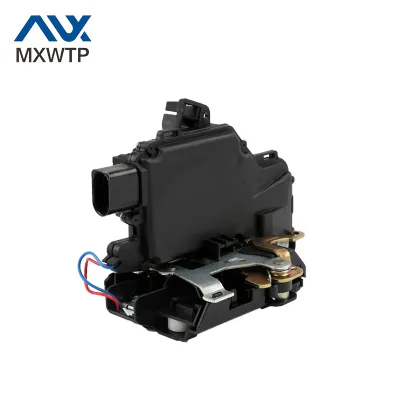

Comprehensive Sourcing Guide
Strategic Sourcing Guide for Right Door Lock Actuators
Navigating the global market for right door lock actuators requires a disciplined approach that balances technical precision with supply chain reliability. The term "Right Door Lock Actuator" typically refers to a specific electromechanical component designed to facilitate the locking and unlocking mechanisms of vehicle doors, often operating on the right-hand side of the vehicle structure. For procurement professionals, the challenge lies in distinguishing between generic replacement parts and high-performance units that meet specific OEM standards. The available data indicates a diverse landscape of products ranging from mechanical solutions to electronic anti-theft systems, each with distinct operational parameters. This guide synthesizes observed market attributes to provide a framework for evaluating potential suppliers and selecting the correct component for industrial or automotive applications.
Technical Specifications and Operational Parameters
The first critical step in sourcing is defining the exact technical requirements of the actuator. The market data reveals a significant variance in product attributes, suggesting that "Right Door Lock Actuator" is a broad category encompassing multiple sub-types. Buyers must verify whether the application requires a mechanical lock core or an electronic system. Observed specifications include "Mechanical" lock types alongside "Electronic Anti-theft Alarm Lock" variants. The ignition lock type is noted as "T Type" in some listings, while the steering wheel lock type is described as a "Top Hook Lock," indicating that compatibility extends beyond simple door latching to broader vehicle security systems.
Electrical characteristics are equally vital. The data points to a standard operating voltage of 12V with a current rating of 10A for specific models, which aligns with common automotive electrical systems. However, other entries list an operating voltage range of 2.0V to 36.0V, suggesting the availability of actuators suitable for a wider array of machinery, including industrial automation or smaller electronic devices. The power source is identified as a "DC Motor," and the starting mode is described as "Auto-induction Voltage-reduced Starting." For applications requiring high-speed operation, such as moving machinery or audio equipment, buyers should look for units with "High Speed" operating characteristics. Conversely, constant speed models are available for more stable, repetitive tasks.
Physical dimensions and mounting configurations also vary. While some products adhere to "OEM standard" sizes, others are custom-built. The casing protection is typically a "Closed Type," ensuring durability against environmental factors. Buyers must confirm the number of poles, with "Single-Phase" stators being a documented configuration. The shape of the actuator can range from standard cylindrical forms to "Flat" profiles, which may be necessary for integration into tight door cavities. Understanding these specific parameters is essential to avoid purchasing a unit that is electrically incompatible or physically too large for the intended installation.
Compliance, Certification, and Safety Standards
In the automotive and industrial sectors, compliance is non-negotiable. The sourcing guide must prioritize suppliers who can demonstrate adherence to recognized safety and quality standards. The observed product data lists "CCC" (China Compulsory Certification) and "ISO" certifications as available attributes. These certifications are critical indicators that the manufacturer has undergone rigorous testing for electrical safety and quality management systems. However, the presence of these certifications in a product listing does not guarantee that every unit in a batch meets the same standard; verification is required.
The theft-proof performance of the lock core is another compliance-related metric. Listings distinguish between "A Class" and "B Class" performance levels. A Class generally denotes a higher level of resistance against picking and forced entry, which is crucial for high-security applications. Buyers should explicitly request documentation proving the specific class rating of the actuator they intend to purchase. Furthermore, the product purpose is often stated as "for replace/repair," implying that the component must meet the original equipment manufacturer's (OEM) specifications to ensure vehicle safety and functionality.
Environmental compliance is also a factor. The operating conditions for some units are specified as -10 to 60 degrees Celsius, with storage conditions ranging from -20 to 70 degrees Celsius. These ranges define the thermal limits within which the actuator can function reliably. Procurement teams must ensure that the intended application environment falls within these limits. If the actuator is to be used in extreme climates, buyers should verify if the manufacturer offers specialized variants with extended temperature tolerances. Additionally, the "CCC" certification often implies compliance with local electrical safety regulations in China, which may be a prerequisite for importing goods into certain markets.
Cost Drivers and Pricing Dynamics
The pricing structure for door lock actuators is influenced by several key factors, including material composition, complexity of the mechanism, and certification status. The observed price range in the market spans from $0.30 to $100.00 USD, a wide disparity that reflects the diversity of product types. The lower end of the spectrum likely corresponds to basic mechanical components or simple electronic switches, while the higher end may include advanced electronic anti-theft systems with integrated sensors and complex circuitry.
Material costs play a significant role in pricing. The data indicates that "Plastic" is a common material used in the construction of these actuators. While plastic offers advantages in weight reduction and corrosion resistance, the quality of the polymer and the manufacturing process (e.g., injection molding precision) will affect the final cost. Higher-grade materials or the inclusion of metal reinforcements for the lock core can drive prices upward.
Customization is another major cost driver. The market data confirms that "Customization" is available. Buyers requiring specific color options, such as "white" or "black," or custom packaging like "Color Box" versus "Standard Export Cartons," should anticipate a price premium. The model number, such as "93324878" or "XY-2M," also correlates with pricing, as proprietary or OEM-specific parts often command higher prices due to their specialized nature.
Minimum Order Quantity (MOQ) is a critical financial consideration. The observed MOQ range is between 1 and 1000 units. For small-scale repairs or prototyping, suppliers offering low MOQs are essential. However, for large-scale production runs, negotiating lower unit costs through higher volume orders is standard practice. Buyers should also consider the "OE No." (Original Equipment Number), such as "93324878," as parts matching specific OEM numbers may have less price volatility but higher initial costs compared to generic alternatives.
Typical Applications and Industry Use Cases
The versatility of door lock actuators extends across multiple industries, from automotive repair to industrial automation. The primary application identified in the data is for "car" replacement and repair, specifically for "Door Lock" systems. These components are integral to vehicle security and convenience, enabling remote control and automated locking mechanisms. The "Remote Controller" is listed as a door lock part, indicating that modern actuators are often part of a larger electronic system that includes keyless entry and alarm integration.
Beyond the automotive sector, the data highlights applications in "Moving Machinery," "Audio and Video Equipment," and "Automation Equipment." This suggests that the underlying technology of door lock actuators—specifically the DC motor and gear reduction systems—is adaptable to various mechanical systems requiring precise linear or rotational motion. The "AC right angle gear motor" specification points to industrial uses where power transmission efficiency is paramount.
The "Industrial" application category further broadens the scope. Actuators with "High Speed" capabilities and specific operating voltage ranges are suitable for automated assembly lines or robotic systems. The "Single-Phase" stator configuration is particularly relevant for industrial machinery that operates on standard single-phase power supplies. Buyers in these sectors should focus on the "Output" capacity, which ranges from 0.1W to 15W, to ensure the actuator can handle the required load without overheating or failing.
Supplier Evaluation and Sourcing Strategy
Evaluating suppliers requires a thorough analysis of their capabilities, location, and product consistency. The data indicates that the primary place of origin is "Zhejiang, China," with specific mentions of "Guangzhou" as a production hub. These regions are known for their robust manufacturing ecosystems, particularly in the automotive parts and electronics sectors. However, buyers should not rely solely on geographic reputation; instead, they must verify the supplier's ability to meet specific quality standards.
Brand reputation is another factor, with "gogo atc" appearing as a brand name in the listings. While this provides a reference point, buyers should exercise caution and verify the brand's standing in the market. The "Condition" of the product is listed as "New," which is a baseline expectation, but buyers should also inquire about warranty terms and return policies.
The "prod_packing" attribute, ranging from "Standard Export Cartons" to "Color Box," offers insight into the supplier's attention to detail. Professional packaging suggests a commitment to protecting the product during transit, which is crucial for delicate electronic components. Additionally, the "Leadwire" being "Feasible" indicates that the supplier is open to custom wiring configurations, a valuable feature for complex installations.
When evaluating potential partners, buyers should request samples to verify the "Color," "Size," and "Model Number" against their requirements. The "Number of Poles" and "Starting Mode" should be tested in a controlled environment to ensure they match the specifications provided. It is also advisable to check the supplier's history of "Certification" renewals to ensure ongoing compliance with CCC and ISO standards.
Quality Control and Long-Term Procurement Considerations
Ensuring long-term reliability requires a robust quality control (QC) strategy. The "Casing Protection" being a "Closed Type" is a positive indicator, but buyers should verify the sealing integrity to prevent moisture and dust ingress. The "Operating Conditions" and "Storafe Conditions" (storage conditions) must be strictly adhered to during both manufacturing and shipping. Deviations from the specified temperature ranges can degrade the internal components, leading to premature failure.
For long-term procurement, consistency in the "Model Number" and "OE No." is essential. The data shows specific model numbers like "93324878" and "XY-2M," which serve as unique identifiers. Buyers should establish a protocol to ensure that every shipment matches the approved sample exactly. This includes verifying the "Voltage," "Current," and "Speed" parameters to prevent mismatches that could damage the vehicle's electrical system or the machinery being serviced.
The "Application" scope should also be reviewed periodically. As technology evolves, the demand for "Electronic Anti-theft Alarm Lock" systems may increase, requiring suppliers to upgrade their product lines. Buyers should maintain a relationship with suppliers who demonstrate a commitment to innovation and can adapt to changing market needs. Finally, the "Purpose" of the actuator, whether for "replace/repair" or "Control,Driving," should be clearly documented in all procurement contracts to avoid ambiguity and ensure that the delivered product meets the intended functional requirements.
Comparative Analysis of Product Attributes
To facilitate decision-making, the following table summarizes the key attributes observed in the market for right door lock actuators. This comparison highlights the diversity of options available and the specific parameters buyers must verify.
| Attribute Category | Observed Variants | Key Verification Points |
|---|---|---|
| Lock Type | Mechanical, Electronic Anti-theft Alarm Lock | Confirm compatibility with vehicle security system |
| Lock Core Performance | A Class, B Class | Verify theft-proof rating required for application |
| Voltage & Current | 12V/10A, 2.0V-36.0V Range | Ensure electrical system compatibility |
| Material | Plastic | Check for durability and environmental resistance |
| Certification | CCC, ISO | Request valid certificates for each batch |
| Origin | Zhejiang, Guangzhou, China | Verify supplier location and logistics capabilities |
| Packing | Standard Export Cartons, Color Box | Assess protection level for transit |
| Application | Car, Industrial, Moving Machinery | Match actuator speed and power to load requirements |
This structured approach ensures that buyers can navigate the complex landscape of door lock actuators with confidence, selecting components that meet both immediate functional needs and long-term strategic goals. By focusing on verified attributes and rigorous supplier evaluation, procurement teams can mitigate risks and secure high-quality supply chains for their operations.
FAQs
What lock types are available for right door lock actuators?
Available lock types include mechanical and electronic anti-theft alarm locks. Some units feature T Type ignition locks and Top Hook steering wheel locks, while others use Clamp Type wheel locks. Buyers must verify the specific lock core type, such as American Thread, to ensure compatibility with their vehicle model.
Can I find actuators with specific voltage and current ratings?
Yes, standard automotive models operate at 12V with a 10A current rating. Other variants support a wider operating voltage range from 2.0V to 36.0V for industrial applications. Always check the power source, which is typically a DC motor, to match your electrical system requirements.
Which certifications should I look for in these products?
Look for products listing CCC and ISO certifications as standard compliance markers. These indicate adherence to safety and quality management systems. However, verify that the specific batch holds valid documentation, as the presence of these marks in listings does not guarantee every unit meets the same standard.
How does customization affect the product specifications?
Customization is available for color, packaging, and specific model numbers like 93324878. Buyers can request white or black finishes and choose between Standard Export Cartons or Color Box packaging. Custom wiring is also feasible, allowing for tailored integration into unique door cavity designs.
What are the typical operating temperature conditions?
Operating conditions typically range from -10 to 60 degrees Celsius for reliable function. Storage conditions can extend from -20 to 70 degrees Celsius. Ensure your application environment falls within these thermal limits to prevent failure, as extreme climates may require specialized variants with extended tolerances.
Where are these actuators primarily manufactured?
Primary places of origin include Zhejiang and Guangzhou in China. These regions host robust manufacturing ecosystems for automotive parts and electronics. Buyers should verify the specific production location for each supplier to ensure consistent quality and reliable supply chain logistics for their orders.
What is the minimum order quantity for these parts?
The observed minimum order quantity ranges from 1 to 1000 units depending on the supplier. Small-scale repairs may find low MOQ options, while large production runs benefit from higher volume orders. Check specific supplier terms to negotiate better unit costs based on your required quantity.