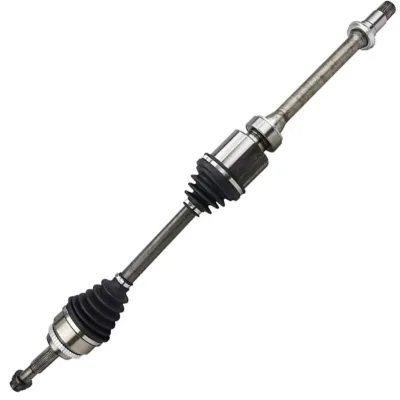
Source Right CV Axle Assembly for cars, trucks, and electric vehicles
Find 30 listings for the Right CV Axle Assembly suitable for cars, trucks, and electric vehicles. Buyers can compare specifications like material, warranty, and MOQ to identify the best fit for their replacement or repair needs.
Key considerations
Products List
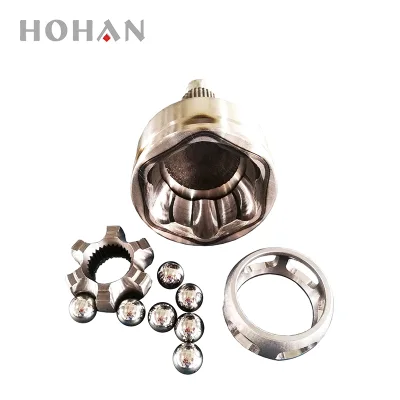
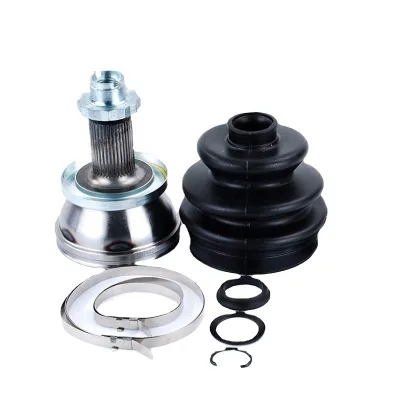
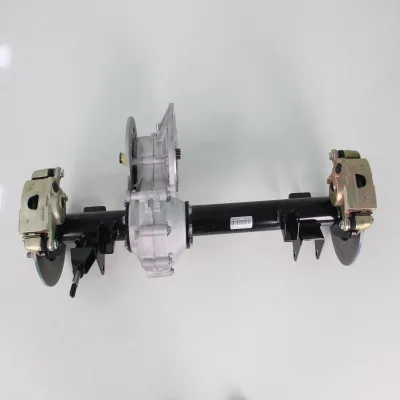
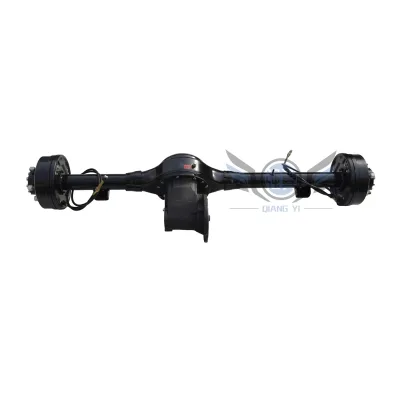


China Drive-Train Drive Axle Front Axle & Rear Axle Assembly From Tmg
$1000.00 - $12000.00
MOQ: 1 Pieces


Comprehensive Sourcing Guide
Strategic Sourcing Guide for Right CV Axle Assemblies
Understanding the Technical Architecture of CV Axle Assemblies
When sourcing a Right CV Axle Assembly, buyers must first distinguish between the specific application context, as the term "CV axle" often appears in listings alongside broader drive shaft and axle housing components. The core product identified in the available market data is the "CV Joint Assembly," which is explicitly categorized under "CV Joint Assembly Kits." These components are engineered for the "Right Drive Shaft" and "Left Drive Shaft" positions, confirming that a "right" specific unit is a distinct, non-symmetrical item requiring precise orientation. The material composition is a critical differentiator; the observed supply chain data indicates the use of "Steel" as the primary material, with specific axle materials cited as "45 steel" or "40CR." These are high-carbon alloy steels selected for their tensile strength and resistance to torsional stress, which are essential for transmitting power from the transmission to the wheel without failure.
The physical specifications of these assemblies vary significantly based on the vehicle class. While one data point lists a "Model Number" as "OEM Standard Size," another entry specifies a model number of "192" with a customizable length, suggesting that buyers cannot rely on a single universal dimension. The "Size" is noted as "According to request," and the "Length" is described as "customizable," indicating that the procurement process often involves a custom manufacturing agreement rather than the purchase of a stock item. The single package size for these units can range from 50x40x36 cm to larger dimensions like 130x40x60 cm, depending on whether the unit is a standalone joint or a complete axle assembly with housing. The "Single gross weight" is observed to be 20.000 kg for standard kits, while heavier axle assemblies can reach 40.000 kg, necessitating careful logistics planning for freight and handling.
Compliance, Certification, and Regulatory Verification
In the global automotive aftermarket, compliance is not merely a formality but a prerequisite for market access and liability protection. The supply chain data highlights "ISO9001/TS16949" as a high-confidence certification associated with these products. TS16949, now largely superseded by IATF 16949, was the specific quality management standard for the automotive industry, indicating that the manufacturing facility adheres to rigorous process controls. However, buyers must verify that this certification is current and covers the specific manufacturing site of the Right CV Axle Assembly in question, as certifications can be facility-specific rather than brand-wide.
Beyond the ISO standards, the data mentions "Certification:ISO" in the context of axle numbers, which may refer to specific component certifications or general quality assurance marks. For heavy-duty applications, such as those involving "Truck" or "Electric rear axle assembly" contexts, additional standards may apply. The "prod_standard" is listed as "normal," a vague term that requires clarification. Buyers should explicitly request the specific national or international standards (such as GB, DIN, or SAE) that the product meets. For instance, the material "45 steel" must meet specific chemical composition and mechanical property standards to ensure it does not fail under high-load conditions. The "Brand Name" is listed as "Neutral" or "QY," which suggests that many suppliers operate as OEM manufacturers without a consumer-facing brand, making the verification of the factory's internal quality records even more critical than relying on brand reputation.
Cost Drivers and Pricing Dynamics in the After-Market
The pricing structure for right CV axle assemblies is influenced by a complex interplay of material costs, customization requirements, and order volume. The observed price range in the market spans from $1 to $25,000 USD. This extreme variance reflects the difference between a simple CV joint boot and a complete, heavy-duty axle assembly for industrial or electric vehicles. The lower end of the spectrum likely represents basic replacement parts or small components, while the upper end corresponds to fully integrated systems, such as the "Electric rear axle assembly" which includes complex gearing and motor integration.
The Minimum Order Quantity (MOQ) is a significant cost driver. The data indicates an MOQ range of 1 to 1000 units, with a specific high-confidence fact stating an MOQ of 1000 PCS for certain listings. This suggests that for standard, non-customized right CV axle assemblies, buyers may need to commit to substantial volumes to access competitive pricing. However, the availability of "Sample" units and "Customized service" options allows for smaller initial orders, albeit potentially at a higher unit cost. The "Selling Units" are listed as "Single item," which implies that while the MOQ might be high, the transaction can be structured as a single bulk purchase rather than multiple small shipments. Buyers should also consider the "Woodencase" packing requirement for heavier units, as this adds to the overall landed cost and requires specialized handling equipment.
Typical Applications and Vehicle Compatibility
The versatility of the Right CV Axle Assembly is evident in the diverse range of applications listed in the market data. While the primary "Product Name" is "CV Joint Assembly," the "Car Make" field includes "All," indicating a broad compatibility that requires careful cross-referencing with the specific vehicle's OE number. The "OE NO." is listed as "Customised" or "Other," reinforcing the need for buyers to provide exact vehicle identification numbers (VIN) or original equipment part numbers to ensure a perfect fit.
Beyond standard passenger vehicles, the data reveals applications in specialized sectors. The "Car Make" field also lists "Tricycles, quadricycles, golf carts," suggesting that right CV axle assemblies are adapted for low-speed, high-torque applications in recreational and utility vehicles. Furthermore, the "Application" field explicitly mentions "Transmission System" and "Truck," highlighting the use of these assemblies in heavy-duty commercial transport. The "Electric rear axle assembly" data points to a growing market segment where CV joints are integrated into electric drive units, operating at voltages ranging from 48V to 96V. The "Fitting Position" is consistently noted as "CV JOINT," and the "Propeller Shafts Position" includes both "Front" and "Rear," meaning the right-side assembly must be selected based on the specific drivetrain configuration of the target vehicle. The "Purpose" is defined as "for replace/repair," which is the primary use case for the aftermarket sector, but the "Type" also includes "Front Axles, Rear Axles, Axle Bearing, Axle Housing," indicating that the right CV axle is often part of a larger system replacement strategy.
Supplier Evaluation and Geographic Sourcing Factors
Geographic location plays a pivotal role in the sourcing strategy for right CV axle assemblies. The "Place of Origin" is predominantly listed as "Zhejiang, China" and "Shandong, China." These regions are established manufacturing hubs for automotive components in China, offering a concentration of suppliers with established supply chains for steel and casting. However, the presence of multiple origin points suggests that buyers should not assume uniform quality across all suppliers from these regions. The "Brand Name" being "Neutral" or "QY" indicates that many suppliers are contract manufacturers, meaning the buyer's due diligence must focus on the factory's capabilities rather than the brand's marketing.
When evaluating suppliers, buyers should prioritize those who offer "Customized service" and have a clear history of producing "OEM Standard Size" components. The ability to provide samples is a strong indicator of a supplier's confidence in their product quality and their willingness to engage in a pre-production verification process. The "Warranty" period is another critical evaluation metric; the data shows warranties ranging from 1 Year to 2 Years. A 2-year warranty on a Right CV Axle Assembly suggests a higher confidence in the material integrity and manufacturing process, particularly given the high-stress nature of the component. Buyers should also verify the "Single gross weight" and "Single package size" to ensure the supplier has the logistics infrastructure to handle the specific dimensions and weight of the Right CV Axle Assembly, especially for the heavier units weighing up to 40 kg.
Quality Control Protocols and Long-Term Procurement Strategy
Ensuring the long-term reliability of right CV axle assemblies requires a robust quality control framework. The "Condition" of the products is listed as "New," but this is a baseline requirement. Buyers must implement incoming inspection protocols that verify the material composition, specifically checking for the presence of "45 steel" or "40CR" as specified. The "Color" is noted as "Black" or "As standard," which can be a visual indicator of the protective coating or heat treatment process applied to the steel. However, visual inspection alone is insufficient; buyers should request test reports that validate the tensile strength and fatigue resistance of the axle.
The "Type" of product, listed as "CV Joint Assembly Kits," implies that the Right CV Axle Assembly may come as a complete kit including boots, grease, and clamps. Quality control must extend to these ancillary components to ensure they match the performance of the axle itself. The "Number of half-shaft teeth" is specified as 6/18/22, a critical dimension that must be verified against the vehicle's differential and wheel hub specifications. Mismatched tooth counts can lead to immediate mechanical failure. For long-term procurement, buyers should establish a partnership with suppliers who offer "Customized service" and can adapt to changing vehicle models. The "Market" is identified as "After-Market," which is characterized by high demand for replacement parts but also high competition. To maintain a competitive edge, buyers should focus on suppliers who can guarantee consistent quality over time, rather than those who compete solely on price.
Comparative Analysis of Product Variants
To facilitate informed decision-making, buyers should compare the different variants of right CV axle assemblies available in the market. The following table summarizes the key differences based on the observed data points, helping to categorize products by application and specification.
| Feature | Standard CV Joint Assembly | Electric Rear Axle Assembly | Heavy Duty Truck Axle |
|---|---|---|---|
| Primary Material | Steel (45 steel / 40CR) | Steel / Iron | Iron / Steel |
| Typical Weight | 20.000 kg | 40.000 kg | Variable (Heavy) |
| Voltage Compatibility | N/A (Mechanical) | 48v/60v/72v/84v/96v | N/A (Mechanical) |
| Brake System | Disc/Drum (Integrated) | Disc/Drum (Integrated) | Disc/Drum (Integrated) |
| Warranty Period | 2 Years | 1 Year | Variable |
| Customization | Length, Size, OE Number | Length, Voltage, Teeth | Standard / Custom |
| Package Size | 50x40x36 cm | 130x40x60 cm | Woodencase |
| Target Market | After-Market (Cars) | After-Market (EVs) | After-Market (Trucks) |
This comparison highlights that while the core component (the right CV axle) remains similar, the surrounding system integration varies drastically. Buyers sourcing for electric vehicles must prioritize voltage compatibility and axle housing integration, whereas those sourcing for traditional trucks must focus on load-bearing capacity and brake system compatibility. The "Single gross weight" and "Single package size" differences also impact shipping costs and storage requirements, making it essential to select the correct variant for the specific application. By adhering to these structured evaluation criteria, buyers can navigate the complex landscape of Right CV Axle Assembly sourcing with confidence and precision.
FAQs
What is the minimum order quantity for Right CV Axle Assembly?
The minimum order quantity is 1000 pieces for standard listings. Some suppliers may offer samples or customized services for smaller initial orders, but bulk purchasing is typically required for competitive pricing.
Which certifications apply to Right CV Axle Assembly manufacturers?
High-confidence facts indicate ISO9001 and TS16949 certifications are associated with these products. Buyers should verify that the specific factory holds current certifications covering the manufacturing site for quality assurance.
Can I get a Right CV Axle Assembly with customized specifications?
Yes, customized service is available for Right CV Axle Assembly units. Buyers can request specific lengths, model numbers, and OE numbers, as the size is often determined according to specific customer requests.
What material is used for the Right CV Axle Assembly?
The primary material is steel, specifically 45 steel or 40CR for axle components. These high-carbon alloy steels are selected for their tensile strength and resistance to torsional stress in drive shaft applications.
How long is the warranty period for Right CV Axle Assembly?
Warranty periods range from one to two years depending on the specific product variant. Standard kits often carry a two-year warranty, while electric rear axle assemblies may have a one-year coverage period.
Where are Right CV Axle Assembly products manufactured?
Products originate from Zhejiang and Shandong provinces in China. These regions are established manufacturing hubs for automotive components, offering a concentration of suppliers with established supply chains for steel and casting.
What is the single gross weight of a Right CV Axle Assembly?
Standard kits weigh approximately 20 kilograms, while heavier axle assemblies can reach 40 kilograms. Buyers must consider these weights for logistics planning and freight handling requirements.